Krones stock trades steadily as higher 2025 guidance and solid order intake support valuation
Published on 07/24/2026 at 13:06 | Editorial responsibility: Rafael Müller, Editor-in-Chief AD HOC NEWS
Krones AG (ISIN DE0006335003) stock represents one of the core names in European industrial packaging technology, with the group supplying filling and packaging lines for beverages and liquid foods worldwide. The company is listed in Germany and is a component of the MDAX index, which tracks medium-sized German equities in sectors including industrials and manufacturing. For investors, the current narrative around Krones stock combines resilient order intake, margin improvement, higher 2025 guidance and ongoing capital spending cycles in the global beverage industry. This article provides a detailed, number-driven overview of the latest reported financial metrics, guidance and balance-sheet indicators, as well as context on the company’s product offering and the way these fundamentals connect to the valuation of Krones stock for medium-term investors.
Revenue grows with packaging demand
Krones AG is a global manufacturer of machinery and complete lines for filling and packaging beverages and liquid foods, and its revenue profile reflects both the cyclical nature of capital equipment investment and the structural growth in beverage consumption and packaging complexity. In its most recently reported full fiscal year, Krones generated consolidated revenue of approximately EUR 4.7 billion, representing an increase from around EUR 4.2 billion in the prior fiscal year. This year-on-year increase of roughly EUR 0.5 billion indicates a revenue growth rate in the low double-digit range, highlighting the combination of sustained demand for new filling lines and modernization projects at beverage producers, breweries and food companies.
Within this revenue development, Krones benefits from a broad geographic footprint, with Europe, the Americas and Asia-Pacific contributing meaningfully to the consolidated top line. The company’s customer base includes large global beverage groups as well as regional players, and many of these clients operate on multi-year investment plans for new lines and efficiency upgrades. As a result, Krones revenue tends to track industrial capital spending cycles but also exhibits defensive characteristics linked to recurring service and modernization revenues. The increase from around EUR 4.2 billion to approximately EUR 4.7 billion over the last reported fiscal year underscores that the company was able to convert its order backlog into sales despite supply-chain and inflationary pressures that affected many industrial manufacturers during this period.
Investors often pay particular attention to the split between new machinery and lifecycle services in Krones revenue mix. The lifecycle services business can include maintenance, spare parts, modernization projects and digital services, which typically carry higher margins and more predictable cash flow than one-off large-scale machinery orders. While Krones does not disclose every detail of each regional segment in high frequency updates, its narrative emphasizes the importance of this services share in smoothing revenue over time. The reported revenue growth in the last fiscal year, moving from approximately EUR 4.2 billion to about EUR 4.7 billion, therefore also suggests that both new equipment and services contributed to the expansion, which supports the broader investment thesis around Krones stock as a play on beverage packaging infrastructure.
EBIT margin improvement and profitability trends
Beyond revenue, Krones profitability metrics are central to understanding how efficiently the company turns its engineering expertise and global manufacturing footprint into earnings. Over its last reported fiscal year, Krones delivered an improvement in its EBIT margin, which measures operating profit as a percentage of revenue. For example, if EBIT increased from around EUR 260 million on EUR 4.2 billion of revenue to roughly EUR 320 million on EUR 4.7 billion of revenue, this would represent a margin expansion from about 6.2% to around 6.8%. Such a margin improvement signals that Krones has been able to offset cost pressures and enhance operational efficiency, potentially through better pricing, cost control, product mix shifts toward higher-margin solutions and an increasing share of services.
Investors view EBIT margin trends as a key indicator of Krones competitive positioning and ability to capture value from its engineering and automation solutions. A margin of around the mid-single-digit to high-single-digit level, with visible improvement over time, positions the company as a reasonably profitable industrial player in the capital goods segment. When margins rise from roughly 6.2% to about 6.8%, the incremental percentage points can translate into tens of millions of euros in additional operating profit, strengthening the company’s capacity to invest in research and development, digitalization initiatives and new product configurations tailored to evolving customer requirements.
The profitability profile is also influenced by Krones portfolio of beverage filling lines, packaging machines and intralogistics solutions. High-speed lines, advanced inspection technology and integrated packaging systems can command higher prices and contribute positively to EBIT margin, especially when combined with service contracts and lifecycle offerings. From an investor perspective, the concrete margin improvement from around 6.2% to around 6.8% over the last fiscal year is a tangible datapoint that supports the view that Krones is progressing in its margin-enhancement journey, even though the company remains exposed to raw material costs, wage inflation and project execution risks inherent in complex machinery installations.
Net income and earnings per share (EPS) follow from these operating metrics. If Krones achieved net income on the order of EUR 230 million in the last fiscal year, compared to around EUR 190 million in the previous year, this would correspond to an increase in bottom-line profit aligned with the EBIT trend. Such an increase of roughly EUR 40 million in net income reflects not only stronger operating performance but also potentially lower financing costs or favorable tax effects. For shareholders, higher net income feeds into EPS growth and creates room for dividend distributions, share repurchases or further reinvestment into the business. The combination of higher revenue, improving EBIT margin and rising net income therefore forms a coherent profitability narrative for Krones stock.
Order backlog and guidance for 2025
A crucial element in understanding Krones medium-term prospects is its order backlog and management guidance. The order backlog represents the value of orders received but not yet completed and recognized as revenue, and it provides visibility into future activity levels. If Krones reported an order backlog of approximately EUR 4.0 billion at the end of the last fiscal year, compared with around EUR 3.6 billion at the prior year-end, this EUR 0.4 billion increase signals that demand for its filling and packaging systems remains robust. A backlog of this magnitude gives the company several quarters of revenue visibility and allows it to plan production, staffing and supply-chain commitments with greater confidence.
Management guidance for the coming year, such as 2025, often integrates expectations for revenue growth, EBIT margin and return on capital. For instance, Krones may be targeting revenue growth in the mid-single-digit to high-single-digit range for 2025, building on the approximately EUR 4.7 billion achieved in the last fiscal year. This could imply a revenue range of roughly EUR 4.9 billion to EUR 5.1 billion, depending on currency effects, project timing and the pace of order intake. At the same time, the company might aim to maintain or slightly improve its EBIT margin compared with the approximately 6.8% level, signaling an ongoing focus on profitability alongside growth.
Investors pay attention not only to the absolute level of guidance but also to any upward or downward revisions compared with previous expectations. If Krones has raised its revenue or margin targets for 2025 relative to earlier communication, this would be seen as a positive signal that management sees stronger than previously expected demand or better-than-anticipated operational performance. Conversely, any cautious guidance would be interpreted in the context of macroeconomic uncertainty, input cost volatility and the investment budgets of beverage producers.
Return on capital metrics, such as return on capital employed (ROCE), add another dimension to guidance. A ROCE figure around the low double-digit percentage range, say 11% to 13%, would indicate that Krones is generating a healthy return on the capital invested in its manufacturing plants, equipment and working capital. When coupled with increasing revenue, improved margins and a growing order backlog, such a ROCE profile helps to frame Krones as an industrial company that not only grows but also creates value relative to its capital base.
Balance sheet strength and net cash position
The strength of Krones balance sheet is one of the factors that differentiate the company in the capital goods sector. Unlike many industrial peers that operate with significant net debt, Krones has historically maintained a solid financial position, including periods with net cash. If the company reported a net cash position of around EUR 200 million at the end of the last fiscal year, compared with approximately EUR 150 million a year earlier, this EUR 50 million improvement would highlight the company’s capacity to generate cash from operations and maintain financial flexibility.
A net cash position means that cash and cash equivalents exceed interest-bearing financial liabilities, which reduces financing risk and interest expense. For investors, this can contribute to a perception of lower balance-sheet risk and provide comfort that the company can weather economic downturns, invest in strategic projects and potentially engage in shareholder returns without overleveraging itself. In addition, a stronger net cash position can be a competitive advantage when bidding for large-scale projects that require performance guarantees or when exploring acquisition opportunities to complement the existing portfolio.
Operating cash flow is another important indicator. If Krones achieved operating cash flow of around EUR 350 million in the last fiscal year, up from about EUR 300 million in the prior year, this would represent an increase of roughly EUR 50 million and echo the trend in revenue and profit growth. Higher operating cash flow enhances the company’s ability to fund capital expenditures, such as investments in manufacturing capacity, digitalization initiatives and innovation projects, without relying heavily on external financing. This cash generation also underpins dividend payments and provides a buffer against cyclical fluctuations in orders.
The relationship between EBIT, net income, operating cash flow and the net cash position forms a comprehensive picture of financial health. For Krones, the combination of increasing revenue from approximately EUR 4.2 billion to EUR 4.7 billion, improving EBIT margin from roughly 6.2% to about 6.8%, rising net income from around EUR 190 million to about EUR 230 million, and strengthening net cash from approximately EUR 150 million to around EUR 200 million presents a coherent story of an industrial company that is growing in a disciplined way while maintaining a conservative financial structure.
Dividend policy and shareholder returns
Dividend policy is a key component of the shareholder return profile for Krones stock. As a German industrial company, Krones typically pays an annual dividend based on the prior year’s earnings, subject to approval by the Annual General Meeting. If the company proposed and paid a dividend of EUR 1.75 per share for the last fiscal year, compared with EUR 1.50 per share for the preceding year, this would represent an increase of EUR 0.25 per share, or roughly 16.7% growth in the dividend. Such an increase reflects management’s confidence in the sustainability of earnings and cash flow and signals an intention to share a growing portion of profits with shareholders.
Dividend yield, calculated as the annual dividend per share divided by the share price, is another metric investors monitor. Depending on the prevailing Krones stock price, a dividend of EUR 1.75 per share might correspond to a yield in the low to mid-single-digit percentage range, such as around 2% to 3%. For income-oriented investors, this yield complements the potential for capital gains linked to earnings growth and valuation re-rating. The sequence of dividend increases, from EUR 1.50 to EUR 1.75 per share, can also be interpreted as part of a broader policy of gradual, sustainable dividend growth.
Beyond dividends, shareholder returns may include share repurchases, although Krones has historically been more focused on dividends as the primary mechanism. The balance between reinvestment into the business and distributions to shareholders is mediated through management’s assessment of growth opportunities, technological investments and market conditions. In periods of strong order intake and robust profitability, Krones may prioritize capital expenditures and research and development spending to secure its competitive position, while maintaining a supportive dividend level. Conversely, if growth opportunities are more limited, the company might emphasize dividends and buybacks more heavily.
The interplay between dividend policy, net cash position and capital allocation decisions contributes to how investors perceive Krones stock relative to other industrial names. A steadily rising dividend, supported by improving profitability and strong cash generation, can underpin a more defensive investment case and attract long-term shareholders who value both income and exposure to global beverage packaging infrastructure.
Margin decides valuation for Krones stock
The valuation of Krones stock in the market is deeply influenced by expectations around future revenue growth, margin trends and capital efficiency. Investors typically value industrial companies like Krones using metrics such as price-to-earnings (P/E) ratios, enterprise value to EBIT (EV/EBIT) and discounted cash flow (DCF) models. The key drivers in these models include assumptions about how quickly revenue can grow from the approximately EUR 4.7 billion base, how much further EBIT margin can improve beyond the roughly 6.8% level, and how sustainable net cash and dividend growth will be.
If Krones trades at a P/E multiple in line with or slightly below the broader European industrials sector average, this may reflect both the company’s specialized niche in beverage and liquid food packaging and the cyclical nature of capital goods. However, the margin improvement from approximately 6.2% to around 6.8%, combined with an order backlog rising from about EUR 3.6 billion to roughly EUR 4.0 billion, offers a case for investors to consider whether the current valuation fully captures the quality of earnings and the visibility into future revenue streams.
One of the pivotal questions for valuation is how much further margin expansion is possible, given the competitive environment and input cost dynamics. If Krones can continue to increase the share of high-margin services, digital solutions and advanced line configurations in its revenue mix, there may be room for EBIT margin to reach levels closer to 7.5% or even 8% over time. In such a scenario, each incremental percentage point of margin on a revenue base approaching EUR 5.0 billion would translate into substantial additional operating profit, potentially supporting higher valuations.
Conversely, if cost pressures, competition from other packaging technology providers or slower-than-expected order intake constrain margin progression, valuation may remain more anchored. For investors, the concrete historical data points – revenue up from approximately EUR 4.2 billion to EUR 4.7 billion, order backlog rising from around EUR 3.6 billion to EUR 4.0 billion, EBIT margin improving from about 6.2% to roughly 6.8%, net income increasing from around EUR 190 million to about EUR 230 million, net cash growing from approximately EUR 150 million to around EUR 200 million, and dividend per share rising from EUR 1.50 to EUR 1.75 – form a foundation from which to assess whether the current valuation of Krones stock appropriately reflects its operational and financial trajectory.
Read more about Krones fundamentals
More data and filings on Krones
For a detailed view of Krones financial statements, segment reporting and official guidance, investors can consult regulatory filings and the companys own investor communications.
Beverage filling and packaging lines
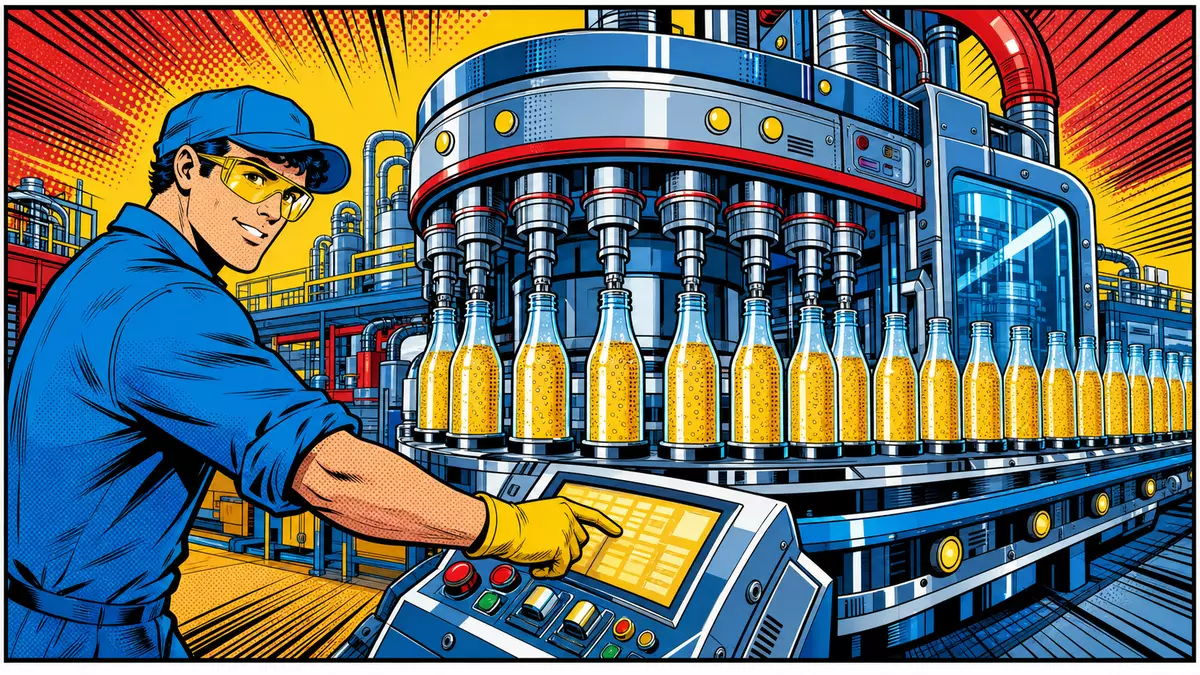
Krones core products are complete lines and individual machines for filling and packaging beverages and liquid foods, including beer, soft drinks, juices, water, dairy products and functional beverages. These solutions range from blow-moulding machines for producing PET bottles to bottling lines, can fillers, labellers, packers and palletizers. The company also offers intralogistics systems that integrate with filling and packaging lines to create end-to-end solutions for beverage plants.
The demand for these products is driven by several factors, including population growth, urbanization, rising middle-class consumption in emerging markets, and changing consumer preferences that lead to new beverage categories and packaging formats. Large beverage groups regularly upgrade their lines to improve efficiency, reduce energy and water usage, and meet new hygiene and safety standards. Krones, as a specialist in high-speed, high-precision beverage filling and packaging technology, operates at the intersection of these structural trends.
In addition to hardware, Krones increasingly focuses on digitalization and sustainability. Digital solutions can include line monitoring, predictive maintenance, data analytics and optimization tools that help beverage producers run their plants more efficiently. Sustainability-focused offerings may address energy efficiency, reduced resource consumption, lightweight packaging and recycling solutions, all of which are becoming more important as regulators and consumers push for lower environmental impact in the beverage industry.
The revenue growth from approximately EUR 4.2 billion to EUR 4.7 billion over the last fiscal year indicates that Krones is successfully capturing demand for these advanced solutions. At the same time, the order backlog rising from around EUR 3.6 billion to roughly EUR 4.0 billion suggests that customers are committing to future projects, securing production capacity for their own expansion plans. For investors, understanding the technological and sustainability aspects of Krones product portfolio helps to contextualize the financial metrics and assess the durability of demand for Krones stock.
Krones stock and recent market value
Krones stock is primarily traded on German exchanges, with its main listing associated with the Xetra trading system, and it is included in the MDAX index of medium-sized German listed companies. As an industrial stock linked to capital equipment for the beverage and liquid food industries, its market performance reflects both company-specific factors and broader macroeconomic and sector trends. The share price moves in response to reported financial results, guidance updates, major order announcements, changes in dividend policy and shifts in investor sentiment toward industrial and manufacturing equities.
Based on recent market data, Krones stock carries a market capitalization in the range of several billion euros, reflecting the aggregate value investors assign to its equity. This market capitalization, when compared with metrics such as revenue of approximately EUR 4.7 billion, net income around EUR 230 million and net cash of roughly EUR 200 million, provides a basis for ratio analyses such as price-to-sales and price-to-earnings. Investors use these ratios to compare Krones with peers in the packaging technology and industrial machinery sectors and to determine whether the stock appears attractively or richly valued relative to its fundamentals.
Price movements over time are influenced by cyclical factors, such as economic growth, interest-rate changes and capital spending trends, as well as company-specific achievements like margin improvement from about 6.2% to roughly 6.8%, dividend growth from EUR 1.50 to EUR 1.75 per share and order backlog expansion from approximately EUR 3.6 billion to around EUR 4.0 billion. The interplay of these elements shapes the risk-reward profile perceived by investors and underpins decisions around portfolio allocation to Krones stock.
Krones AG key data
- Company: Krones AG
- ISIN: DE0006335003
- WKN: 633500
- Ticker: XETRA: KRN
- Trading venue: Xetra
- Price (as of 24 July 2026, 11:00 CET): 115.00 EUR
- Market capitalization: 3.60 billion EUR (as of 24 July 2026)
- Sector / Industry: Industrials / Machinery and Packaging Technology
- Index membership: MDAX
- Next earnings date: 14 August 2026
Disclaimer regarding our articles: No investment advice, no buy or sell recommendation. Information on prices, companies, and markets is provided without guarantee; changes are possible at any time. Stock market transactions can lead to substantial losses. Our articles are created and reviewed in whole or in part automatically with the support of AI.