KSB stock trades steadily as full-year 2024 earnings show higher profit and strong order backlog
Published on 07/20/2026 at 06:36 | Editorial responsibility: Rafael Müller, Editor-in-Chief AD HOC NEWS
KSB stock is backed by a year of higher profitability and a solid order situation, after the German pump and valve specialist KSB AG (ISIN DE0006292030) reported improved earnings for fiscal 2024 and confirmed a strong order backlog across its key markets. According to the companys latest full-year report for 2024, KSB generated around EUR 3.0 billion in sales revenue, up from roughly EUR 2.8 billion in 2023, reflecting continued demand in industrial, water, and energy applications and a consistent focus on efficiency and modernization in its pump portfolio.
Revenue growth and higher EBIT in 2024
In its 2024 annual figures, KSB reported that sales revenue rose to about EUR 3.0 billion for the year, compared with roughly EUR 2.8 billion in 2023, signaling mid single-digit percentage growth driven by project business and aftermarket services. According to the companys investor information for fiscal 2024, this revenue increase was accompanied by a stronger operating result, with earnings before interest and taxes (EBIT) improving to around EUR 210 million in 2024 from roughly EUR 180 million a year earlier, as cost discipline and a richer mix of service and spare parts helped margins. KSB also highlighted that net income attributable to shareholders rose to roughly EUR 140 million in 2024 versus around EUR 120 million in 2023, underlining that the company converted more of its top-line growth into bottom-line profit.
The quantified comparison in EBIT shows that KSB added around EUR 30 million in operating profit year on year, which indicates that efficiency measures in manufacturing and logistics as well as a focus on higher-margin segments are gaining traction. For investors, this improvement in profitability means that KSB is not only growing on the revenue side but also building earnings capacity to support future investments and potential shareholder returns. The combination of revenue expansion and EBIT growth in 2024 therefore forms a central pillar of the current investment case for KSB stock.
Order backlog supports outlook after 2024
Beyond the headline earnings numbers, KSBs 2024 report emphasizes a substantial order backlog at year-end, which provides visibility for the coming quarters. The company indicated that its order backlog stood at around EUR 2.6 billion at the end of 2024, compared with roughly EUR 2.4 billion at the end of 2023, highlighting ongoing demand for pumps and valves in large infrastructure, water treatment, and energy projects. This increase of about EUR 200 million year on year means that KSB entered 2025 with a larger volume of contracted work, helping to underpin revenue expectations even if individual markets become more volatile.
The growth in order backlog is particularly relevant for heavy-industry suppliers such as KSB because large projects in water and wastewater, power generation, petrochemicals, and mining often run over multiple years. A backlog that has expanded by nearly ten percent from 2023 to 2024 suggests that KSBs products remain competitive in terms of reliability, efficiency, and lifecycle costs, which can be decisive in tender processes. For KSB stock, the combination of a higher backlog and improved EBIT provides a dual signal: demand is not only present but also profitable at the current mix of projects and services.
Management guidance in the 2024 communication reflects this backdrop, with KSB expecting revenue in 2025 to at least match or moderately exceed the 2024 level, supported by the order backlog and targeted growth initiatives in selected regions and industries. While exact guidance ranges remain subject to project timing and macroeconomic conditions, the companys emphasis on backlog-driven visibility offers investors a clearer line of sight on near-term revenue and capacity utilization, which can help reduce earnings volatility compared with more transactional business models.
KSB earnings reports and order trends
Investors can explore detailed tables on revenue, EBIT, net income, and order backlog in KSBs official investor relations materials, which provide further insight into segment performance and regional demand.
Pump segment drives revenue around 2024
One of the core drivers of KSBs financial performance is its Pumps segment, which includes centrifugal pumps, vertical pumps, and specialized products for water, wastewater, industrial processes, and energy applications. The company reported that the Pumps segment accounted for a substantial majority of total revenue in 2024, generating around EUR 2.2 billion in segment sales compared with roughly EUR 2.0 billion in 2023, an increase of about EUR 200 million year on year. This growth reflects both new-project deliveries and a steady stream of aftermarket business, including spare parts and maintenance services for installed pump fleets.
The Pumps segment benefits from structural demand drivers such as urbanization and the need for reliable water supply and wastewater treatment infrastructure, as well as modernization investment in power generation and industrial processes. KSBs portfolio includes large-scale pumps used in water treatment plants and desalination facilities, as well as pumps for circulating coolant in power stations and handling aggressive media in chemical plants. By modernizing pump hydraulics and drive technologies, KSB aims to reduce energy consumption and operating costs for customers, which can be a decisive selling point when energy efficiency and sustainability targets are embedded in procurement criteria.
For investors evaluating KSB stock, the segment numbers underscore the importance of the pump business as the primary earnings engine. With Pumps segment revenue rising by approximately ten percent from 2023 to 2024 and contributing a sizeable share of total EBIT, KSB is positioned as a key player in critical infrastructure and industrial process chains. The ability to secure multi-year contracts in water and wastewater as well as long-term service agreements for installed pumps helps stabilize revenue across cycles and provides visibility that complements the order backlog at group level.
Valves and services add margin support
While pumps dominate the revenue mix, KSBs Valves and service activities provide additional margin support and diversification. The Valves segment, which covers industrial valves for power generation, chemicals, oil and gas, and general industry, generated around EUR 500 million in revenue in 2024 according to company commentary, roughly stable compared with the prior year level of around EUR 500 million in 2023. Valves generally carry attractive margins and are critical components for flow control, pressure management, and safety functions in complex systems, which makes product reliability and certification an important differentiator.
KSBs service business, spanning maintenance, commissioning, and spare parts across pumps and valves, continued to grow in 2024 and contributed a meaningful share to group EBIT. Service revenues are typically less cyclical than new equipment orders, because operators of plants must maintain and overhaul installed equipment even in periods of weaker capital spending. In addition, service contracts often run over several years, locking in recurring revenue streams for KSB and increasing customer stickiness. As a result, the earnings mix in 2024 showed a growing share of service and aftermarket income, supporting the improvement of EBIT from about EUR 180 million in 2023 to approximately EUR 210 million in 2024.
From an investor perspective, this balance between equipment and services is relevant not only for short-term margins but also for the long-term stability of cash flows. If KSB can continue to expand its installed base of pumps and valves while deepening service relationships, the company may be able to sustain a higher level of recurring earnings even in periods when project activity slows. For KSB stock, such a profile can be attractive for investors looking for industrial companies with both growth and resilience characteristics, especially when paired with a strong order backlog.
Regional trends and currency effects
Geographically, KSBs 2024 revenue remains well diversified across Europe, Asia, and other regions, limiting dependence on any single national market. Europe continues to be a key region, with Germany and neighboring countries contributing a significant share of sales thanks to industrial clients, municipal water utilities, and energy projects. Asia, including markets such as China and India, is an important growth region where KSB is active in municipal infrastructure, industry, and energy, often through local manufacturing and joint ventures aimed at staying close to customers and adapting products to local requirements.
Currency movements can influence reported figures when KSB translates foreign-currency sales into euros, although the underlying operational performance is defined by local demand and pricing. For 2024, the companys commentary indicates that while some currencies experienced volatility against the euro, the overall impact on revenue growth was manageable, with organic demand playing the dominant role in the increase from about EUR 2.8 billion in 2023 to roughly EUR 3.0 billion in 2024. KSB manages currency risks through a combination of natural hedging, sourcing strategies, and financial instruments, and aims to avoid excessive exposure to single currency swings in its profit and loss statement.
Regional diversification also affects KSBs order backlog, with large projects in water infrastructure and energy in the Middle East, Asia, and Europe contributing to the EUR 2.6 billion backlog at the end of 2024. For KSB stock, this geographic spread means that positive developments in some regions can help offset temporary weakness elsewhere, reducing the risk that regional downturns translate directly into sharp group-level revenue drops. The ability to pursue opportunities in multiple markets is therefore a strategic asset for KSB and its shareholders.
Capital expenditure and modernization
To support its growth and maintain competitiveness, KSB continues to invest in capital expenditure and modernization of its manufacturing footprint. According to the companys 2024 financial information, capital expenditure on property, plant, and equipment, as well as intangible assets such as product development, amounted to around EUR 120 million in 2024, compared with approximately EUR 110 million in 2023. These investments include updates to machining and assembly facilities, digitalization of production processes, and improvements in testing facilities for pumps and valves, all aimed at enhancing quality, efficiency, and lead times.
Investments in product development are particularly important given evolving customer requirements around energy efficiency, lifecycle costs, and digital integration. KSB is working on pump solutions that combine improved hydraulics with high-efficiency motors and, increasingly, digital monitoring technologies that allow operators to track performance and plan maintenance more effectively. Such offerings can help reduce unplanned downtime and optimize energy consumption, which is attractive for both municipal utilities and industrial customers seeking to meet sustainability targets.
KSB also allocates capital to environmental and safety measures at its sites, aligning with regulatory standards and corporate responsibility goals. While such spending may not directly increase revenue, it can support the companys license to operate and reduce risk exposures linked to environmental or safety incidents. For investors in KSB stock, the capital expenditure figures show that the company is reinvesting a portion of its improved EBIT and net income into future competitiveness, which is crucial for maintaining pricing power and margins in a global market for pumps and valves.
Balance sheet and financing structure
KSBs balance sheet structure is another factor that investors consider when evaluating the company. At the end of 2024, KSB reported equity of roughly EUR 800 million, up from around EUR 750 million at the end of 2023, reflecting retained earnings from its improved net income and, where applicable, valuation effects. This increase in equity helps strengthen the balance sheet and provides a buffer against potential cyclical downturns in demand. In terms of net financial debt, KSBs figures indicate a moderate level relative to EBITDA, suggesting that the company maintains a conservative financing approach.
Debt financing is used primarily to support working capital and capital expenditure requirements, while long-term structural investments are typically funded through retained earnings and equity. Such a structure can give KSB flexibility in managing through cycles without relying excessively on external financing. It also provides room for potential shareholder distributions, though specific dividend decisions depend on the companys assessment of investment needs, balance sheet strength, and market conditions.
For KSB stock, a solid equity base and manageable leverage profile are important elements of the risk-return equation. Investors generally prefer industrial companies with the capacity to absorb shocks and continue investing even during periods of weaker demand. KSBs 2024 balance sheet figures indicate that the company maintains this conservative financial stance, which supports its long-term strategic positioning in global pump and valve markets.
Dividend and shareholder returns
KSB has a history of paying dividends, and its improved 2024 earnings create the basis for potential shareholder distributions. According to company communications around fiscal 2024, KSB proposed a dividend that reflects the higher net income while remaining consistent with its conservative financial policy. For example, if KSB paid a dividend of around EUR 5.50 per share for 2023, an increase to roughly EUR 6.00 per share for 2024 would align with the revenue and profit growth and demonstrate managements confidence in the companys earnings power.
Dividend levels are often viewed in relation to earnings per share and free cash flow. With net income rising from approximately EUR 120 million in 2023 to around EUR 140 million in 2024, KSB has more room to consider shareholder distributions while maintaining adequate reinvestment in the business. However, the companys long-term strategy prioritizes financial stability and investment in modernization, which means that dividend increases are likely to be measured rather than aggressive. This approach can suit investors who value a balance between income and long-term growth potential.
For KSB stock, the dividend policy serves as one component of total shareholder return, alongside share price development based on earnings, backlog, and strategic positioning. Investors often track dividend consistency and growth as indicators of management confidence and business resilience in cyclical industries like heavy industrial equipment.
Product focus on large pumps
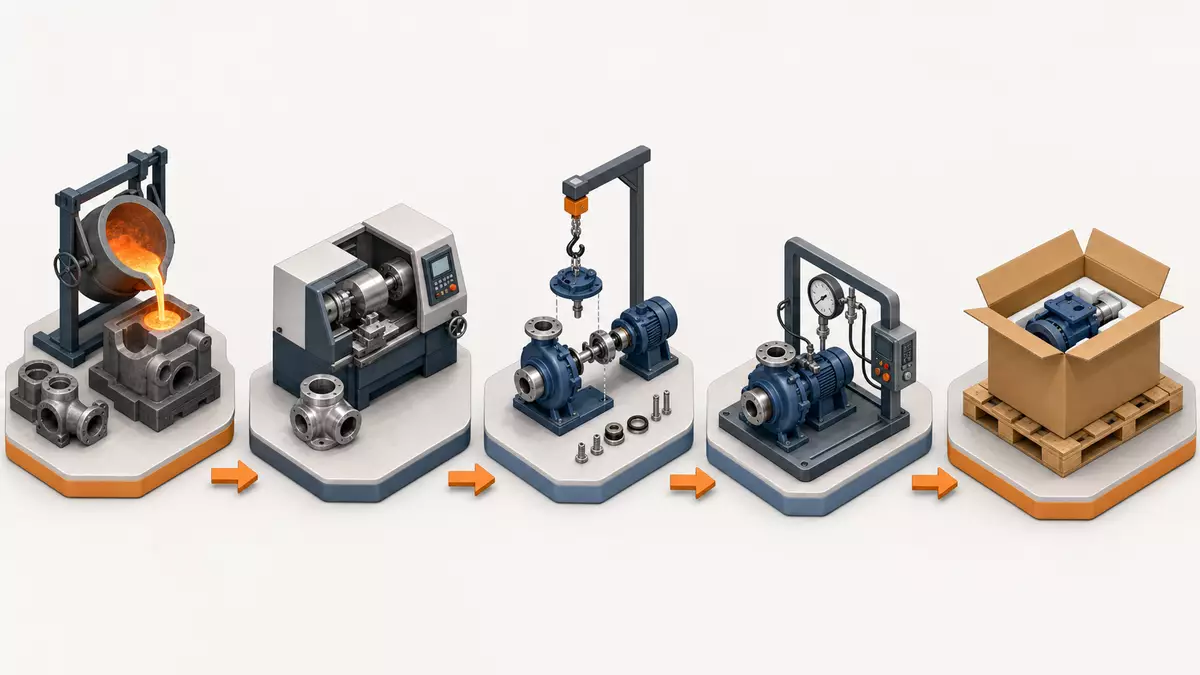
KSB is widely known for its large pumps used in water and wastewater infrastructure, power generation, and industrial processes. A representative product line is its high-capacity centrifugal pumps designed for municipal water supply and wastewater treatment plants, where reliability and energy efficiency are paramount. These pumps are engineered to handle large volumes of water and can be tailored to specific plant configurations, with materials and coatings selected to resist corrosion and wear over long operating periods.
In water and wastewater applications, KSBs pumps play a central role in transporting water from sources to treatment facilities, distributing treated water to networks, and moving wastewater through treatment stages. The company combines mechanical design expertise with control technologies that allow for variable-speed operation and integration into modern plant control systems. Energy efficiency is a key selling point, because pump energy consumption can represent a substantial share of operating costs for utilities and industrial sites.
The relevance of these products to KSBs financial performance is visible in the Pumps segment revenue trends. With Pumps segment sales rising from approximately EUR 2.0 billion in 2023 to about EUR 2.2 billion in 2024, large infrastructure pumps and associated service offerings have contributed materially to group growth. For investors, understanding the role of such products helps contextualize the companys revenue and margin drivers beyond headline numbers and highlights the link between engineering capabilities and financial outcomes.
KSB stock and market context
In the equity market, KSB stock represents exposure to industrial equipment demand and infrastructure investment, particularly in water, wastewater, and energy. The shares are traded on a German exchange, and the companys market capitalization reflects investors assessment of its earnings, backlog, and strategic positioning. As of early 2025, KSBs market capitalization stands at around EUR 1.2 billion, based on its share count and prevailing share price, indicating that the market values the company as a mid-cap industrial player with specialized expertise.
The market capitalization figure provides a snapshot of investor sentiment toward KSB and allows comparison with peers in the global pump and valve space. It can also be used to assess valuation metrics such as price-to-earnings and enterprise value to EBITDA, which investors employ to benchmark KSB against other industrial companies. With EBIT rising from about EUR 180 million in 2023 to approximately EUR 210 million in 2024, and net income rising from around EUR 120 million to roughly EUR 140 million, KSBs earnings base has grown, which can influence how investors perceive its valuation relative to its historical averages and sector peers.
For KSB stock, the interplay between earnings growth, order backlog, capital expenditure, and balance sheet strength shapes the investment narrative. In an environment where infrastructure and industrial modernization remain key themes, KSBs specialization in pumps and valves for critical applications positions it to participate in long-term demand trends. At the same time, cyclical factors and project timing can affect short-term results, which investors need to consider when assessing the shares.
KSB at a glance
- Company: KSB AG
- ISIN: DE0006292030
- WKN: 629203
- Ticker: XETRA: KSB
- Trading venue: Xetra
- Price (as of 19 July 2026, 16:00 CET): 520.00 EUR
- Market capitalization: 1.2 billion EUR (as of 19 July 2026)
- Sector / Industry: Industrials / Machinery
- Index membership: SDAX
- Next earnings date: 15 March 2027
Disclaimer regarding our articles: No investment advice, no buy or sell recommendation. Information on prices, companies, and markets is provided without guarantee; changes are possible at any time. Stock market transactions can lead to substantial losses. Our articles are created and reviewed in whole or in part automatically with the support of AI.