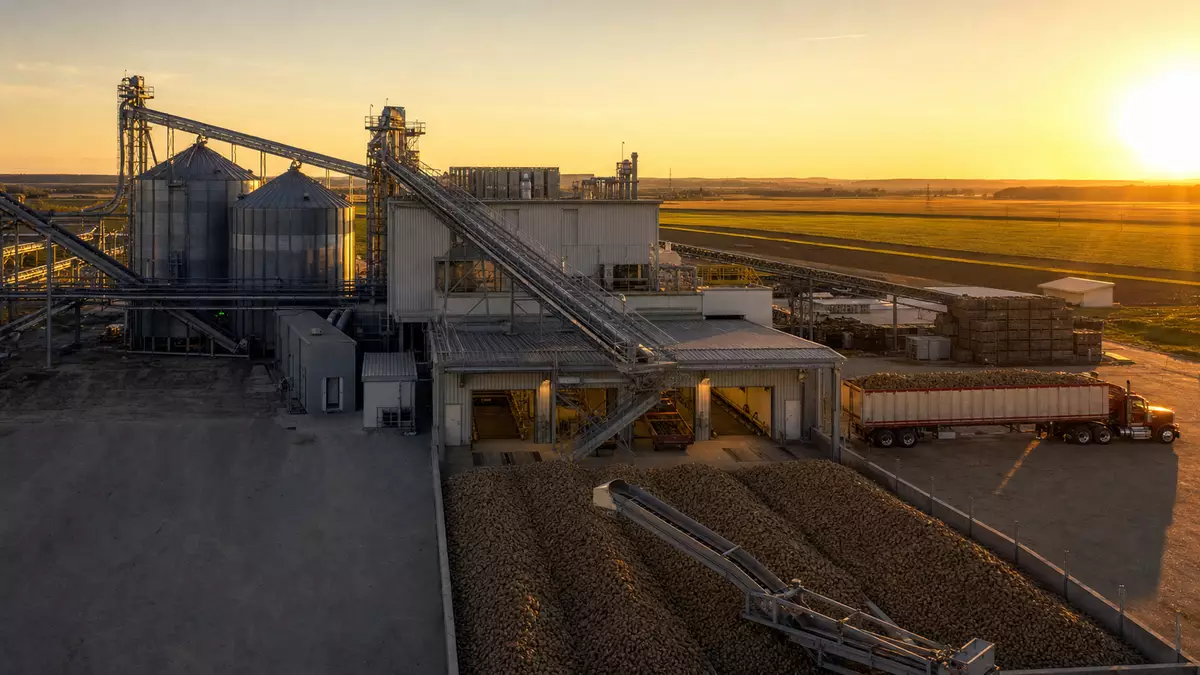
Lamb Weston stock trades steady as investors weigh frozen potato demand and margin trends
Published on 07/23/2026 at 05:53 | Editorial responsibility: Rafael Müller, Editor-in-Chief AD HOC NEWS
Lamb Weston stock is closely watched by investors who follow the global frozen potato and fries market. The company Lamb Weston Holdings Inc. (ISIN US5132721045) is one of the largest producers of frozen potato products worldwide, supplying quick-service restaurants, foodservice operators and retailers. Its share price and valuation largely depend on trends in consumer demand, raw material costs, processing capacity and the stability of long term supply contracts.
Revenue and earnings context
Lamb Weston Holdings Inc. generates revenue primarily from the sale of frozen potato products, including french fries, potato wedges and hash browns, to foodservice distributors, restaurant chains and retail customers. Across recent fiscal periods the company has reported multi billion dollar revenue levels, reflecting its scale as a key supplier in North America and selected international markets. These sales are typically divided into segments such as global, foodservice and retail, each with different margin profiles and contract structures.
The company’s earnings are driven by a combination of volume growth, pricing initiatives and cost efficiency in potato sourcing and processing. When potato harvests are favorable and input costs remain stable or decline, Lamb Weston can potentially expand its gross margin by maintaining pricing while achieving lower production costs. Conversely, periods of higher agricultural input prices, energy costs or logistics expenses can compress margins if price increases to customers do not fully offset these pressures. Investors in Lamb Weston stock therefore pay close attention to management commentary on cost inflation, hedging strategies and contract renegotiations.
Frozen potato demand and market dynamics
Demand for frozen potato products is linked to restaurant traffic, especially at quick service chains, as well as to frozen food consumption in households. Over recent years consumer behavior has favored convenience and out of home dining in many markets, supporting stable or growing demand for french fries and related products. At the same time, retail sales of frozen fries and potato specialties have benefited from households seeking convenient side dishes. For Lamb Weston, sustained demand helps underpin plant utilization rates, which in turn can support fixed cost absorption and margins.
Competition in the frozen potato industry includes other large processors and regional producers, resulting in a market characterized by long term supply relationships and contract pricing. Lamb Weston’s ability to secure and maintain contracts with major restaurant chains is strategically important, as these relationships can provide volume visibility and facilitate investment decisions in processing capacity. In addition, the company monitors international demand trends, including growth opportunities in emerging markets where quick service restaurant penetration is still increasing.
Cost factors and margin considerations
For Lamb Weston stock, margin trends are a key focus. The company’s cost base includes raw potato procurement, storage, processing, packaging and distribution. Weather conditions and crop yields influence potato availability and pricing, while energy and labor costs affect processing economics. When favorable growing seasons result in good potato quality and sufficient supply, Lamb Weston may be able to optimize plant operations and manage waste levels, helping to sustain or improve margins.
By contrast, adverse weather can lead to smaller harvests or quality issues, requiring more careful sorting and potentially increasing production costs. In such environments, Lamb Weston must balance pricing strategies with customer relationships, seeking to pass through some cost increases while maintaining competitiveness and long term partnerships. Investors who analyze Lamb Weston stock therefore often consider scenarios for agricultural conditions and associated cost impacts.
Balance sheet, cash flow and capital allocation
Lamb Weston’s balance sheet typically reflects significant property, plant and equipment related to its processing plants, storage facilities and logistics infrastructure. Capital expenditure programs focus on maintaining and upgrading existing capacity, improving efficiency and occasionally adding new lines or plants to meet demand. Cash flow from operations is used to fund this investment, service debt and, when appropriate, return capital to shareholders via dividends or share repurchases.
For shareholders in Lamb Weston stock, capital allocation policies signal management’s confidence in the company’s growth and earnings stability. A sustainable dividend can attract income oriented investors, while share repurchases may be pursued when management believes the stock trades below intrinsic value. The balance between reinvestment in processing capacity and returning capital is therefore part of the strategic discussion around the company.
Strategic positioning and customer relationships
Lamb Weston’s competitive positioning relies on its scale, product quality, supply reliability and innovation in potato based offerings. Large quick service restaurant customers demand consistent product specifications, reliable delivery and the ability to support menu changes or promotional campaigns. Lamb Weston works closely with such customers to develop tailored products, adjust cut sizes or coatings and align production with promotional calendars.
Customer relationships can span many years and sometimes involve joint planning of capacity investments. For Lamb Weston stock, the existence of these long term contracts and partnerships can help underpin revenue visibility, though investors still monitor the risk of contract renewal or competitive displacement. Product innovation in areas such as seasoned fries, shaped potato products or improved coatings can provide incremental value and potentially support pricing.
Global footprint and growth opportunities
While Lamb Weston’s core operations are in North America, the company also participates in international markets through exports, joint ventures or local operations. Global growth opportunities include regions where quick service restaurant chains are expanding or where frozen food penetration is rising. By developing local supply arrangements or partnerships, Lamb Weston can position itself to serve new demand nodes and diversify beyond its home market.
For investors, the potential for long term volume growth in emerging markets provides an additional layer to the Lamb Weston stock story. However, global expansion can entail currency risk, regulatory complexity and different agricultural environments. The company must evaluate these factors when deciding where and how to allocate capital.
Product focus on frozen fries
The most representative product line for Lamb Weston is its frozen french fries, which are supplied to quick service restaurant chains, casual dining outlets, institutional foodservice and retail customers. These fries are processed from carefully sourced potatoes, cut to specific sizes, sometimes coated for crispness and frozen to preserve quality and convenience. The product portfolio extends to crinkle fries, shoestring fries, steak fries and other variations.
Frozen fries are a critical menu component for many restaurants, and reliable supply is essential. Lamb Weston invests in processing technology, quality control and logistics to ensure that fries arrive at customer locations with consistent taste and texture. For the retail channel, branded and private label frozen fries offer households an easy way to prepare a side dish, reinforcing demand across different eating occasions.
Stock perspective and investor considerations
From an investor perspective, Lamb Weston stock represents exposure to the global frozen potato supply chain and associated consumer demand. Key considerations include harvest outcomes, cost inflation, contract renewals, capacity utilization, margin trends and capital allocation. Shareholders assess how these factors influence earnings stability and growth potential over time.
Because the company operates in a mature but still evolving market, valuation discussions often center on the balance between defensive characteristics and cyclical elements related to agricultural conditions and restaurant traffic. Lamb Weston’s ability to navigate cost cycles, maintain customer relationships and invest in efficient capacity will continue to shape the long term trajectory of Lamb Weston stock.
Disclaimer regarding our articles: No investment advice, no buy or sell recommendation. Information on prices, companies, and markets is provided without guarantee; changes are possible at any time. Stock market transactions can lead to substantial losses. Our articles are created and reviewed in whole or in part automatically with the support of AI.