Landlords Can Now Force Entry for Safety Checks, Court Rules
Published on 07/14/2026 at 10:59 | Redaktion boerse-global.de
A landmark County Court ruling has confirmed that landlords can legally force entry into rental properties to carry out mandatory gas and electrical safety inspections — a decision with significant implications for social housing providers and tenants across England and Wales.
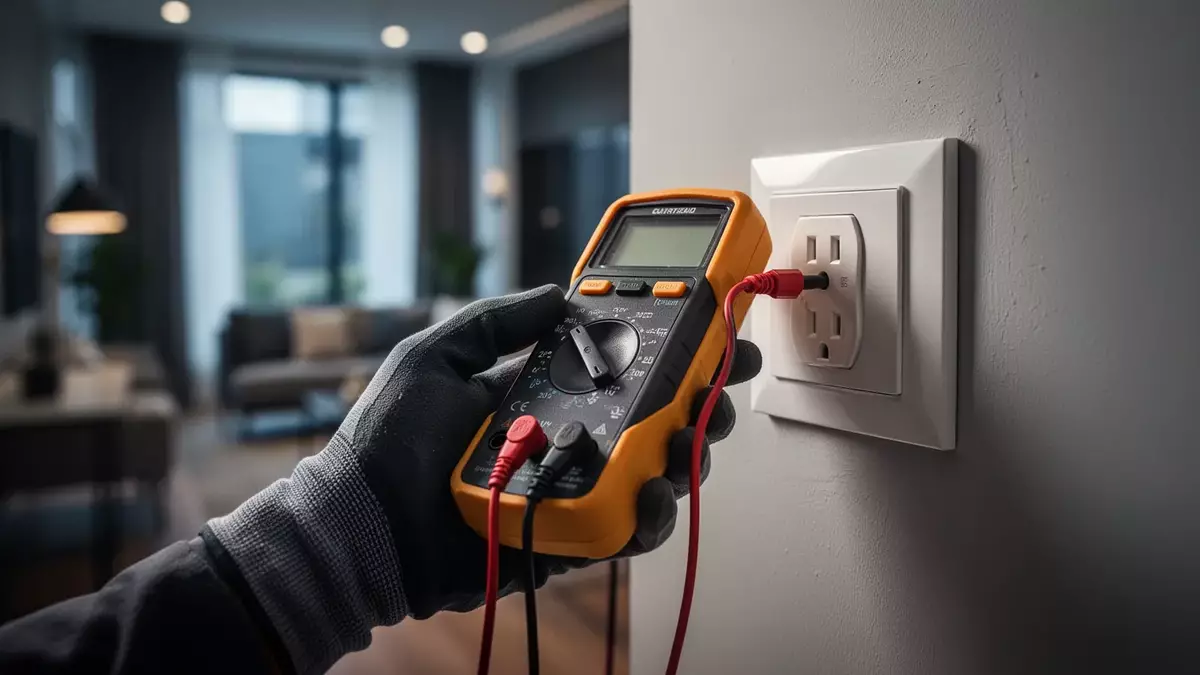
In the case of Stonewater v Harris, HHJ Glen ruled that Civil Procedure Rule 70.2A(2) gives courts the power to order forced entry specifically for gas and electrical safety checks. The dispute arose when a social landlord was unable to complete an Electrical Installation Condition Report after a tenant failed to comply with a previous injunction requiring access. The court dismissed arguments that such powers required explicit statutory authority, resolving conflicting prior decisions on the limits of court-ordered access.
Awaab’s Law Phase 2 Looms
The ruling comes as the government prepares to roll out the second phase of Awaab’s Law on 30 November 2026. Named after Awaab Ishak, who died from mould exposure in 2020, the legislation extends strict safety obligations for landlords to cover seven additional hazards — including electrical faults, fire and explosion risks, structural collapse, hygiene issues, and extremes of heat and cold.
With electrical faults, fire risks and structural hazards all now in scope under Awaab’s Law, proper risk assessment is more critical than ever. A free toolkit provides 41 ready-made templates, checklists and training materials covering fire safety, manual handling, first aid and lone working — everything you need to document your safety compliance efficiently. Download the free Risk Assessment Toolkit
Under the upcoming rules, which will affect around 4 million households, landlords must investigate reports of immediate danger within 24 hours. For other serious hazards, inspections must begin within 10 working days, followed by a written summary to the tenant within three working days. Urgent remedial work must be completed within five working days, while longer-term repairs have a 12-week deadline.
Heat Hazards and Rising Court Fees
Housing Minister Matthew Pennycook confirmed on 13 July 2026 that excess heat will be treated as a hazard under the new regulations if a property defect — such as a broken window — worsens the impact of high outdoor temperatures. The clarification follows the UK's third heatwave of the summer.
Phase 1 of Awaab's Law, focusing on damp and mould, has been in force since 27 October 2025. A third phase is scheduled for 2027.
Separately, civil court fees in England and Wales rose on 13 July 2026, with possession claims in the County Court increasing to £415 and non-money claims reaching £387. The adjustments, affecting around 170 different fees, were introduced to account for inflation and operational costs.
Disclaimer regarding our articles: No investment advice, no buy or sell recommendation. Information on prices, companies, and markets is provided without guarantee; changes are possible at any time. Stock market transactions can lead to substantial losses. Our articles are created and reviewed in whole or in part automatically with the support of AI.