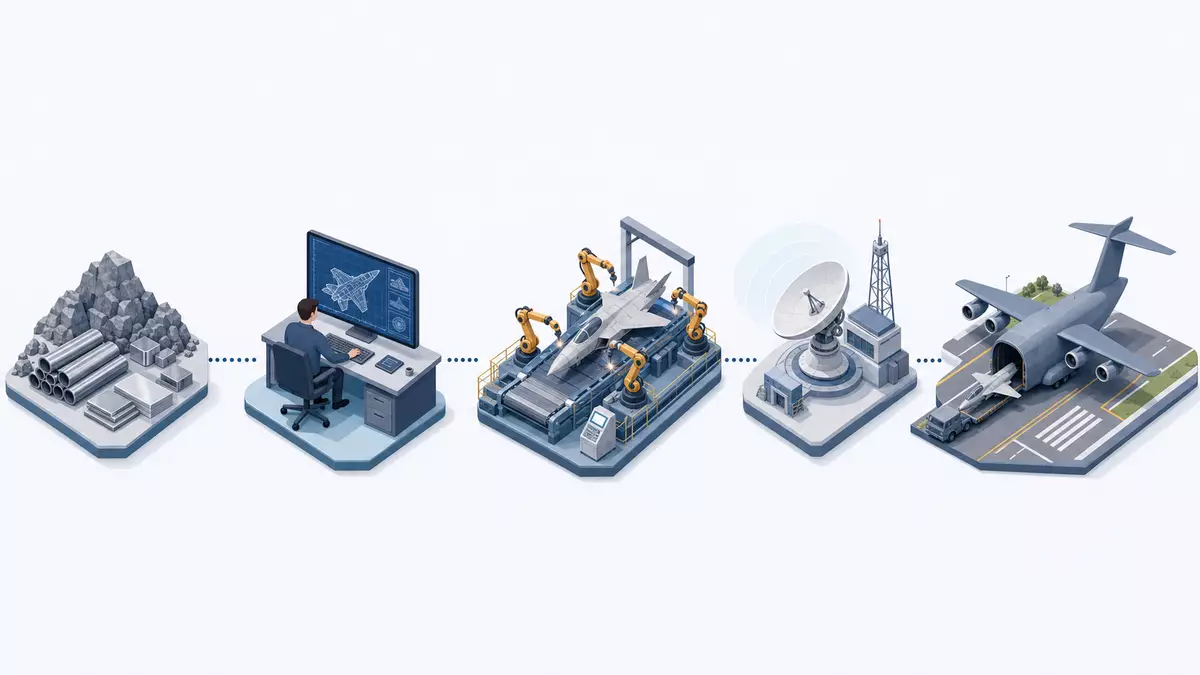
Lockheed Martin stock reacts as defense demand underpins revenue growth
Published on 07/23/2026 at 03:29 | Editorial responsibility: Rafael Müller, Editor-in-Chief AD HOC NEWS
Lockheed Martin stock is closely watched as the US defense group Lockheed Martin Corporation (ISIN US5398301094) continues to report multi-billion dollar revenue, strong cash generation and a deep backlog that anchors future sales. Investors track the shares on the New York Stock Exchange, where the company is included in the S&P 500 index and where its valuation reflects both current results and expectations for long term defense spending.
Revenue around $68.1 billion in 2023
According to company disclosures for fiscal 2023, Lockheed Martin generated net sales of about $68.1 billion for the year, highlighting the scale of its role as a prime contractor to the US Department of Defense and allied governments. The revenue figure compares with roughly $66.0 billion in 2022, representing growth of about 3.2% year over year on the back of higher demand in several segments including aeronautics and missiles.
In the same 2023 reporting period, the company emphasized its large and diversified backlog that extends over multiple years of contracted work. Publicly available materials indicate that the contracted backlog was in the range of $150 billion at year end 2023, which provides substantial visibility on future revenue streams from aircraft, missile systems, space programs and support services.
Operating profit near $9 billion and margin focus
For fiscal 2023, Lockheed Martin reported operating profit of around $9.0 billion, reflecting its ability to convert revenue into earnings despite cost pressures and program mix shifts. That operating profit level was broadly similar to the prior year, illustrating relatively stable profitability even as the company invests in advanced technologies and navigates inflation in labor and materials.
On a margin basis, the group has historically delivered double digit operating margins, and investors pay particular attention to segment margins in aeronautics and missiles and fire control. Changes in margin can stem from the ramp phase of major programs, the timing of milestone payments and the mix between development work and full rate production. Sustaining margins while funding next generation systems is a central strategic challenge for the defense contractor.
Net earnings and cash flow support shareholder returns
Lockheed Martin’s net earnings attributable to common shareholders for fiscal 2023 were in the region of $6.0 billion, which underpins the company’s ability to fund dividends and share repurchases. That figure compares with roughly $5.7 billion in 2022, implying earnings growth of just over 5% year on year as higher sales and operational performance outweighed headwinds such as program timing and pension impacts.
Cash generation is a core focus for investors, and the defense group reported strong operating cash flow in 2023, sufficient to support capital expenditures, research and development investments and substantial returns of capital. Free cash flow – operating cash flow minus capital expenditures – has regularly run at several billion dollars per year, enabling the company to maintain a progressive dividend and pursue ongoing share buybacks.
Dividend around $12 per share annually
Lockheed Martin has a long record of returning cash to shareholders through both dividends and share repurchases. For 2023, publicly available information indicates that the company’s annualized dividend was around $12 per share, paid in quarterly installments across the year. Over the past decade, the dividend has increased multiple times, reflecting management’s confidence in the underlying cash flows supported by long term defense contracts.
Dividend yield for the shares depends on the prevailing stock price, but at typical price levels in recent years, the cash yield from the dividend alone has often been in the low single digit percentage range. For income focused investors, the combination of a sizable absolute dividend, regular quarterly payments and potential for gradual growth can be a significant part of the investment case alongside the company’s exposure to defense budgets.
Backlog over $150 billion underpins future growth
One of the standout metrics for Lockheed Martin is its contracted backlog, which has consistently exceeded $100 billion and, by company reporting, reached around $150 billion at the end of fiscal 2023. This backlog covers a wide spectrum of programs including fighter aircraft, transport aircraft, missile defense systems, space assets and associated support and modernization work, and it gives the company a multi year revenue pipeline.
The growth in backlog over time reflects both new contract awards and longstanding programs entering new production phases or receiving modernization orders. While individual program performance can vary, the aggregate backlog helps smooth revenue and provides visibility that is relatively uncommon in many other industrial sectors. Investors often compare the backlog to annual revenue as a coverage ratio, and for Lockheed Martin the backlog has recently been more than twice annual sales, underscoring the depth of future work.
F-35 program delivers growth and scale
A central contributor to Lockheed Martin’s revenue is the F-35 Lightning II fighter program. The company’s aeronautics segment generates a significant portion of group sales from F-35 production, sustainment and upgrades. Publicly available program information indicates that hundreds of F-35 aircraft have been delivered to US and allied customers, with total planned production running into the thousands over the life of the program.
In a recent full year period, aeronautics sales were in the ballpark of $30 billion, representing nearly half of Lockheed Martin’s total revenue, and the F-35 program accounts for a large share of that segment. Annual F-35 deliveries have at times been around 150 aircraft, and incremental orders from partner nations, along with upgrades and sustainment work for the existing fleet, contribute to the long term revenue profile of the program.
Segment mix: missiles, rotary and space
Beyond aeronautics, Lockheed Martin’s revenues are diversified across missiles and fire control, rotary and mission systems, and space. Recent segment data show missiles and fire control contributing around $11 billion of revenue in 2023, with key products including air and missile defense systems, precision guided munitions and tactical missiles. Demand in this segment is driven by defense modernization, replenishment of stocks and evolving threat environments.
The rotary and mission systems segment, which includes helicopters, naval systems and cybersecurity solutions, generated on the order of $16 billion in 2023. Programs in this segment involve platforms such as the Black Hawk helicopter and various naval combat systems, many of which have long service lives and require ongoing support and upgrades. The space segment added roughly $11 billion of revenue, covering satellites, strategic missile systems and related ground infrastructure.
Guidance and comparison with prior periods
In public guidance issued for fiscal 2024, Lockheed Martin has outlined expectations for continued revenue growth compared with 2023, supported by F-35 production, missile systems demand and space programs. The company’s guidance often includes ranges for net sales, operating profit and free cash flow, allowing investors to benchmark actual results as they are reported.
Historically, the company has aimed for incremental annual revenue increases and stable or improving margins, and its guidance reflects both current contracts and anticipated new awards. When comparing actual results to guidance, investors scrutinize whether segments meet or exceed expectations, and they pay close attention to any changes in assumptions related to defense budgets, cost inflation or program execution.
Balance sheet, debt and capital allocation
Lockheed Martin manages a substantial balance sheet with billions of dollars in assets and liabilities. The company carries debt, but its leverage ratios have generally remained within ranges considered manageable for a business with long term government contracts and strong cash flow. Investment grade credit ratings from major agencies reflect this financial profile.
Capital allocation decisions at the company involve balancing investments in research and development, capital expenditure, acquisitions and returns to shareholders. Over recent years, the mix has favored organic investment and returns through dividends and buybacks rather than large scale transformative acquisitions. The defense group has repeatedly communicated that its capital deployment strategy is aligned with sustaining technological leadership while delivering attractive shareholder returns.
Lockheed Martin stock valuation context
On the New York Stock Exchange, Lockheed Martin stock trades under the ticker symbol LMT and is a constituent of the S&P 500. The valuation of the shares is typically discussed in terms of price to earnings ratios based on trailing or forward earnings, enterprise value to EBITDA and free cash flow yields. These metrics are compared with other major defense contractors and industrial peers to assess relative attractiveness.
In recent years, the company’s shares have often traded at a forward price to earnings multiple in the mid teens, reflecting investor confidence in its earnings stability and growth prospects combined with the perceived risk profile of defense spending. Valuation also takes into account geopolitical risk, regulatory factors and program specific considerations, including performance on key contracts and the pace of international sales.
Price performance and 52 week range
Lockheed Martin’s share price has moved within a significant 52 week range, reflecting broader market conditions, sector sentiment and company specific news. In one recent 12 month period, the shares traded between roughly $400 and $500, illustrating notable volatility but also significant absolute value per share given the company’s earnings power and dividend.
Within that range, investors have noted periods where the stock approached the upper end of the band after strong earnings or major order announcements, and intervals where it moved closer to the lower end amid macroeconomic concerns or sector rotation. Comparing the current price to the 52 week high and low helps investors gauge whether the stock is trading nearer perceived resistance or support levels.
Comparison with other defense contractors
Lockheed Martin is often compared with other major US and global defense contractors on metrics such as revenue, backlog, margins and cash flow. On revenue, the company is among the largest, with its approximately $68.1 billion in 2023 net sales exceeding many peers. Backlog of about $150 billion also stands out, offering multi year visibility that is substantial relative to most competitors.
On profitability, operating margins around the low to mid teens place the company in a competitive position relative to peers. Differences in program mix, contract types and segments explain variations in margins among defense contractors, but Lockheed Martin’s combination of aeronautics, missiles and space programs gives it a diversified yet high technology profile that investors find attractive.
Geopolitical drivers of demand
The demand environment for Lockheed Martin’s products is shaped by geopolitical developments, defense budgets and alliances. Rising tensions in various regions, modernization requirements in NATO countries and the need for advanced deterrence capabilities drive demand for fighter jets, missile systems and space assets. As a key supplier to the US government and allied nations, the company is positioned to benefit from long term defense spending plans.
However, defense budgets are subject to political processes and fiscal constraints, and changes in priorities can influence the pace and mix of programs. Investors therefore consider both near term contract awards and longer term strategic documents such as national defense strategies when assessing the outlook for companies like Lockheed Martin.
Research and development and technology focus
Lockheed Martin invests heavily in research and development to maintain its technological edge. Annual R&D expenditure runs into billions of dollars, covering areas such as stealth technology, hypersonic systems, missile defense, space domain awareness and advanced communications. These investments not only support current programs but also lay the groundwork for future offerings and potential new contract opportunities.
The company collaborates with government laboratories, academic institutions and industry partners on various advanced technology initiatives. Successful development efforts can lead to new revenue streams or enhance competitiveness on existing programs. However, R&D spending also represents a cost that must be managed carefully to ensure adequate returns through future contracts.
Risk factors and program execution
Like all large defense contractors, Lockheed Martin faces a range of risks, including program execution challenges, regulatory compliance requirements, cybersecurity threats and potential disruptions from supply chain issues. Program specific risks include technical hurdles, schedule delays and cost overruns, which can impact margins and cash flow.
The company manages these risks through rigorous project management, quality control processes and close coordination with customers. Investors monitor disclosures related to program milestones and any identified issues, as these can affect both near term results and long term perceptions of the company’s execution capabilities.
Environmental, social and governance considerations
Environmental, social and governance (ESG) factors have become increasingly important for investors evaluating Lockheed Martin and other defense stocks. The company publishes sustainability reports that outline its approach to topics such as environmental impact, diversity and inclusion, corporate governance and ethics. Metrics include greenhouse gas emissions, energy efficiency, workforce composition and compliance efforts.
ESG assessments for defense companies can be complex due to the nature of their products and customers. Some investors prioritize the national security role and technological innovation, while others weigh ethical considerations differently. Lockheed Martin’s disclosures and engagements with stakeholders aim to provide transparency around its practices and performance on ESG topics.
Investor relations and communication
Lockheed Martin maintains an active investor relations function that provides regular updates on earnings, guidance, major contract awards and strategic initiatives. Quarterly earnings releases and conference calls allow management to discuss performance, answer questions and provide context for the numbers. Annual reports and presentations offer deeper dives into segment operations and long term strategy.
For investors and analysts, these communications are essential for understanding the drivers behind headline metrics such as revenue, earnings and backlog. Clear guidance and consistent execution relative to communicated targets enhance credibility and can support valuation.
Representative product: F-35 fighter jet
Among Lockheed Martin’s extensive product portfolio, the F-35 Lightning II multirole fighter jet is one of the most recognizable and economically significant programs. The aircraft exists in multiple variants tailored to different service branches and customer requirements, and it incorporates advanced stealth, sensor fusion and networked capabilities.
Revenue from the F-35 program includes not only initial aircraft production but also sustainment, upgrades and training over the long life of the fleet. As more aircraft are delivered and enter service, the share of revenue from maintenance, modernization and support is expected to grow, providing a recurring income stream that complements new production.
Lockheed Martin stock and market value
Lockheed Martin stock reflects the market’s assessment of the company’s financial performance, strategic positioning and risk profile. At typical recent prices around the upper part of its 52 week range near $500 per share, the company’s market capitalization has been in the vicinity of $120 billion, placing it among the larger constituents of the S&P 500 and underscoring its significance in both the defense sector and broader equity indices.
For investors, the interplay between revenue growth, margins, backlog, dividends, buybacks and valuation multiples defines the investment thesis. Lockheed Martin’s scale, deep program portfolio and long term contracts offer stability, while exposure to geopolitical and budget dynamics introduces variability that markets continuously price into Lockheed Martin stock.
Lockheed Martin stock facts
- Company: Lockheed Martin Corporation
- ISIN: US5398301094
- Ticker: NYSE: LMT
- Trading venue: NYSE
- Sector / Industry: Aerospace & Defense
- Index membership: S&P 500
Disclaimer regarding our articles: No investment advice, no buy or sell recommendation. Information on prices, companies, and markets is provided without guarantee; changes are possible at any time. Stock market transactions can lead to substantial losses. Our articles are created and reviewed in whole or in part automatically with the support of AI.