Micron’s Record Quarter Sparks $2,000 Price Target — and Talk of a Stock Split
Published on 06/29/2026 at 15:13 | Redaktion boerse-global.de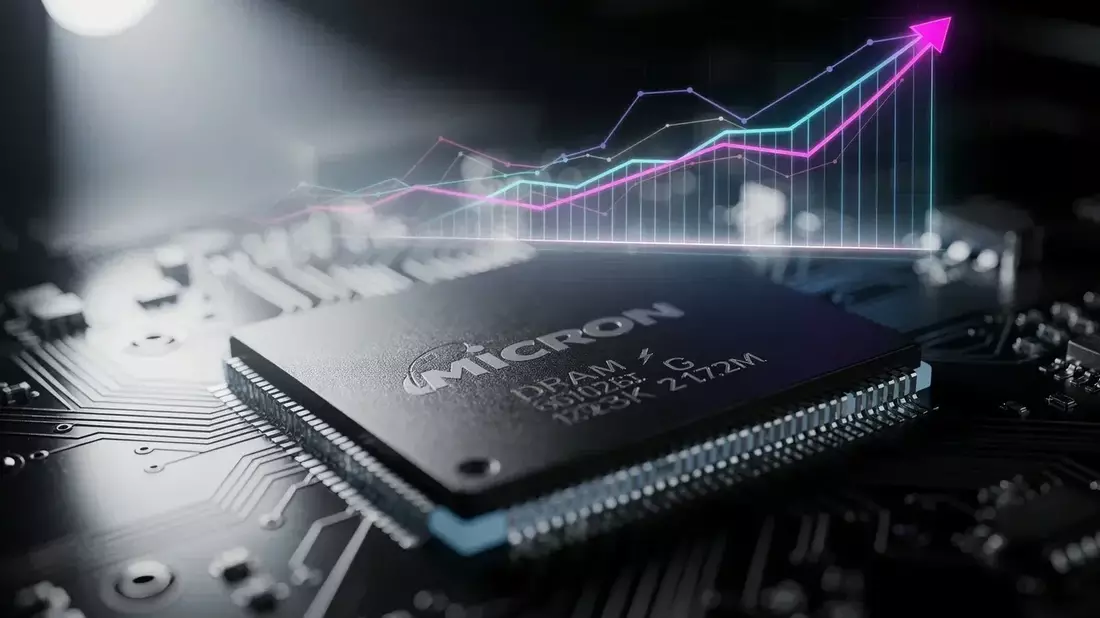
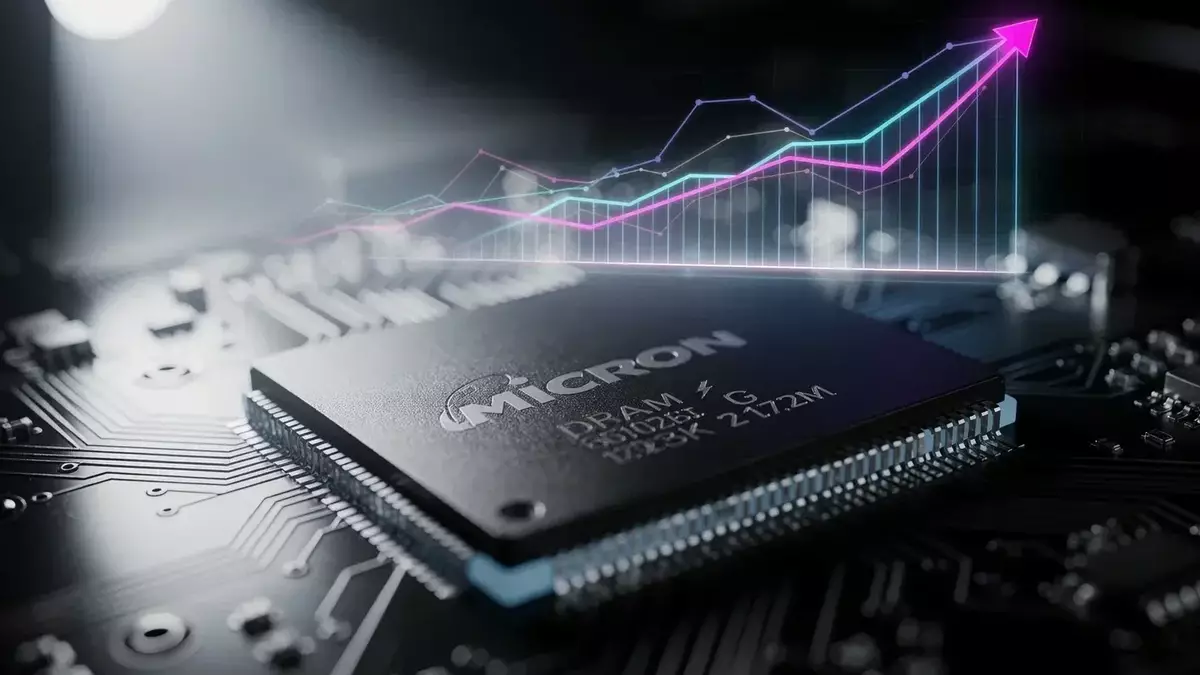
Wall Street’s boldest call on Micron Technology arrived hot on the heels of a quarterly report that shoved conventional chip-cycle thinking out the window. Susquehanna lifted its price target to $2,000 — the highest on the Street — while retail investors started whispering about a stock split as the share price brushed $1,000 in Europe. The common root of both developments is a set of numbers that few analysts had pencilled in.
Micron booked $41.46 billion in revenue for its third fiscal quarter, nearly four and a half times the $9.30 billion it posted a year earlier. Adjusted earnings per share reached $25.11, blowing past the consensus estimate of $20.80. Those results sent the stock up roughly 270% year-to-date, though it has since retreated about 10% from its 52-week high of $1,103.80 to trade near $991. The 52-week low of $90.64, set in August 2025, means the shares have multiplied tenfold in less than a year.
What caught Susquehanna’s eye even more than the top line was the gross margin. On a non-GAAP basis, Micron’s third-quarter gross margin hit 84.9% — a figure that outperforms Nvidia, the undisputed king of AI chips, whose gross margin stands at 74%. Analysts attribute the gap not to higher volume but to pricing power. High Bandwidth Memory, the crucial component for AI accelerators, is sold out through the end of 2026, and the overall supply squeeze for AI memory is expected to persist beyond 2027.
That pricing power is underpinned by an unusual structural shift. Micron has signed 16 multi-year Strategic Customer Agreements that guarantee a minimum of $100 billion in revenue, some running as far out as 2030. Customers have already paid $22 billion in advance, $18 billion of it in cash, and the contracts are non-cancellable. The agreements cover roughly 20% of Micron’s DRAM output and 33% of its NAND production. Susquehanna estimates this visibility will allow the company to generate more than $110 billion in free cash flow by fiscal 2027.
Should investors sell immediately? Or is it worth buying Micron?
The scale of those commitments — and the margin performance — has driven analyst enthusiasm. Of the 43 analysts covering Micron, 38 recommend buying. Phillip Securities raised its target from $530 to $1,870, and DA Davidson also set a $2,000 goal. The market capitalization recently eclipsed $1.2 trillion. For the current fourth quarter, management expects revenue of $49 billion to $51 billion — the midpoint aligns with the $50 billion consensus — and adjusted EPS of $31.
Yet the stock’s breathtaking ascent has created a practical hurdle for individual investors. With the share price hovering near the $1,000 mark in euro terms, the cost of a single lot has become prohibitive for many retail accounts. Other semiconductor companies have executed stock splits under similar circumstances to improve liquidity, and speculation is building that Micron could follow.
The technology driving the run-up is HBM4, which is already in high-volume production. Revenue from that generation has surpassed $1 billion. HBM4 is based on 1-beta DRAM and is essential for the latest AI accelerators. According to management, it is ramping twice as fast as its predecessor, HBM3E. Micron has already sent qualification samples of HBM4E, built on the advanced 1-gamma DRAM node, to multiple customers, with series production slated for 2027.
Micron at a turning point? This analysis reveals what investors need to know now.
To support the expansion, Micron has lifted its capital expenditure guidance for the current year to more than $25 billion, up from an earlier $20 billion. The money is going into cleanroom capacity and advanced manufacturing equipment. At the end of the quarter, the company held $30.2 billion in cash and marketable securities.
After the initial euphoria following earnings, the shares have entered a consolidation phase. The relative strength index stands at 59.3, indicating that the early momentum has faded. Annualised volatility remains exceptionally high at over 100%. The next concrete milestone is the fourth-quarter report, which will show whether Micron can actually hit the ambitious $51 billion upper end of its revenue range. Until then, the market watches a stock that has rewritten margin benchmarks, locked in a century of backlog, and now faces the kind of price-level decision that only the winners of this cycle have to make.
Ad
Micron Stock: New Analysis - 29 June
Fresh Micron information released. What's the impact for investors? Our latest independent report examines recent figures and market trends.
Disclaimer regarding our articles: No investment advice, no buy or sell recommendation. Information on prices, companies, and markets is provided without guarantee; changes are possible at any time. Stock market transactions can lead to substantial losses. Our articles are created and reviewed in whole or in part automatically with the support of AI.