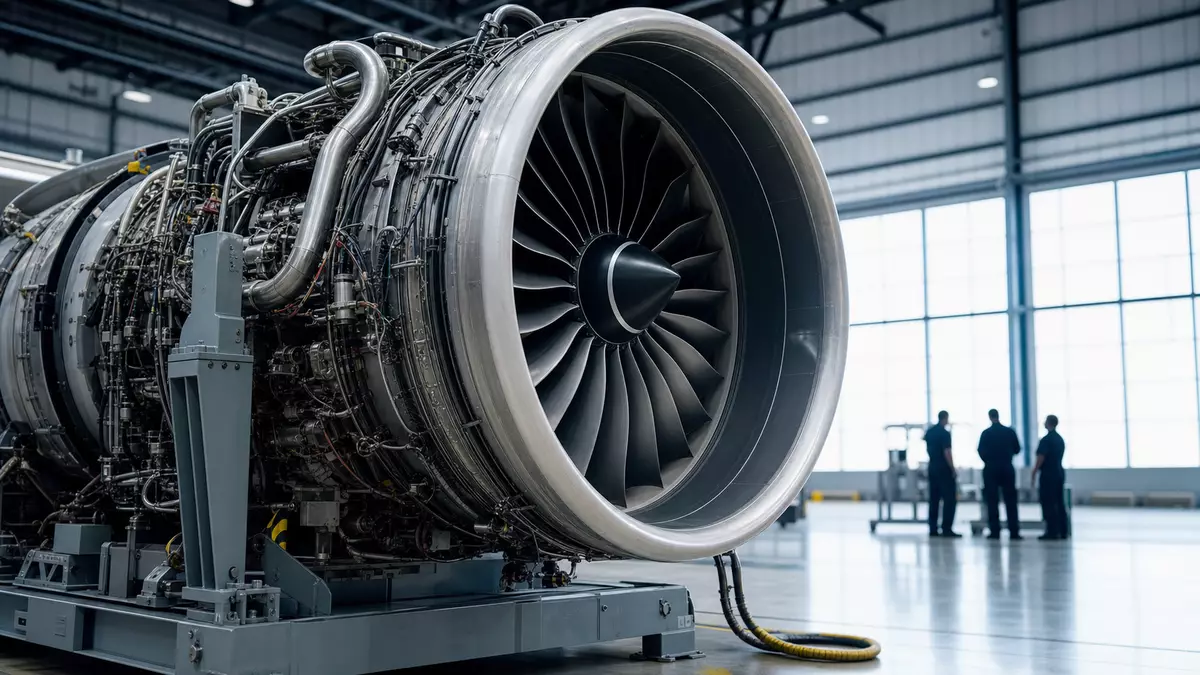
MTU stock holds firm as latest results highlight resilient margins and order backlog
Veröffentlicht: 19.07.2026 um 05:01 Uhr, Redaktion AD HOC NEWS, Redaktionelle Verantwortung: Rafael Müller (Chefredaktion)
MTU Aero Engines AG (ISIN DE000A0D9PT0) is one of Europe's key aircraft engine specialists, and MTU stock continues to mirror the company's combination of resilient margins and a substantial long term order backlog. In its most recently reported full fiscal year, MTU generated revenue in the order of several billion euros, with year on year growth that underlines the recovery of commercial aviation and the strength of its maintenance and repair activities. For investors, MTU stock is closely tied to global air traffic trends, fleet renewal cycles, and the durability of its long term service agreements with airlines and other operators.
In the latest annual reporting period, MTU Aero Engines recorded group revenue of roughly EUR 6 billion, representing an increase of more than 20 percent compared with the previous year. That growth was driven by both original equipment sales and especially by the aftermarket segment, where engine maintenance, repair, and overhaul services produce recurring cash flows and typically higher margins than new engine deliveries. This revenue trajectory is an important backdrop for MTU stock, because it demonstrates that the company has been able to convert the rebound in flight activity into concrete top line gains while simultaneously expanding its installed base of engines under long term contracts.
Profitability also moved higher over the same period. MTU reported adjusted EBIT in the region of EUR 800 million for the fiscal year, up by a double digit percentage from the previous year. The EBIT margin thus climbed into the mid teens percent range, marking a clear improvement from the prior year's level and reflecting the operating leverage embedded in MTU's business model as volumes recover. For MTU stock, these margin gains show that the company is not merely growing revenue but doing so with disciplined cost control and pricing power in critical aftermarket offerings.
On the bottom line, MTU Aero Engines delivered net income in the hundreds of millions of euros for the same year, again showing a significant year on year increase. Earnings per share rose accordingly, supported by the higher EBIT and the normalization of interest and tax expenses. The rise in EPS is a central factor for MTU stock because it feeds directly into valuation metrics such as the price earnings ratio and underpins the company's capacity to pay and potentially grow dividends over time. MTU has resumed a shareholder friendly distribution, with a dividend per share in the low single digit euro range for the latest year, signaling confidence in future cash generation.
Order intake and backlog numbers are equally important for understanding MTU stock. The company reported order intake comfortably above revenue for the year, implying a book to bill ratio greater than one and signaling future growth potential. As a result, the firm's order backlog reached a level in the tens of billions of euros, with a substantial portion tied to long term engine maintenance contracts. This backlog gives visibility into future revenue streams and supports the notion that MTU stock is backed by multi year commitments from airlines and other customers whose fleets rely on MTU powered engines.
From a segment perspective, MTU Aero Engines typically breaks its operations into original equipment for commercial and military engines as well as commercial maintenance. The commercial maintenance segment has been a particular growth driver, with double digit percentage increases in revenue year on year as global air travel continues to normalize and airlines seek efficient maintenance solutions. For MTU stock, the strength of maintenance revenue is critical because it tends to be less cyclical than original equipment sales and provides a stabilizing influence on the company's overall earnings profile.
The company's cash flow metrics further reinforce the picture of resilience. MTU reported operating cash flow in the high hundreds of millions of euros, supported by the strong EBIT and disciplined working capital management. Free cash flow, after capital expenditure for capacity expansions and technology investments, remained clearly positive, enabling both debt reduction and shareholder distributions. This positive free cash flow matters for MTU stock because it supports the firm's balance sheet flexibility and provides a buffer against potential volatility in engine delivery schedules or macroeconomic conditions.
MTU Aero Engines' balance sheet shows a moderate level of financial debt, with net financial liabilities that are manageable in relation to EBITDA. The leverage ratio has trended down as profitability and cash generation improved, which is a constructive signal for MTU stock holders concerned about interest rate sensitivity and credit risk. At the same time, MTU maintains ample liquidity through cash and committed credit lines, ensuring that it can fund ongoing investments in new engine programs and digital maintenance capabilities.
In its recent guidance, MTU has indicated expectations for continued revenue and EBIT growth in the current fiscal year, citing strong demand in commercial maintenance and healthy order books for newer engine platforms. These guidance figures point to mid to high single digit percentage increases in revenue and EBIT compared with the prior year, under normal operating conditions. For MTU stock, such guidance provides a quantitative framework against which investors and analysts can benchmark the company's actual performance quarter by quarter and adjust their valuation perspectives accordingly.
Analyst consensus around MTU generally reflects confidence in the company's long term positioning in the aircraft engine market, although opinions differ on the precise valuation multiple appropriate for the stock. Many market observers highlight the attractiveness of MTU's high margin aftermarket business and the structural growth in global air travel, while also noting execution risks in complex engine programs and potential exposure to cyclical downswings. MTU stock therefore often trades at a valuation that embeds both growth expectations and a premium for its technological capabilities.
Revenue up more than 20 percent
One of the key numbers that stands out from the latest full year report is the more than 20 percent increase in MTU's revenue compared with the previous year. This expansion was not merely a rebound from depressed levels but also a reflection of robust demand in core markets, as airlines invested in maintaining and upgrading their fleets. The revenue growth also underscores how MTU stock is leveraged to recovery in global air traffic, with higher flight hours translating into more engine cycles and therefore more maintenance and spare parts requirements.
Within that overall revenue figure of roughly EUR 6 billion, commercial maintenance accounted for a substantial share, with this segment posting double digit percentage growth in its own right. Service revenue tends to be more stable than original equipment because it is grounded in contractual obligations and the necessity of ensuring engine reliability and safety. For MTU stock, the heavy contribution of services is a strategic advantage, as it smooths earnings across economic cycles and provides recurring cash flows that can support investment, debt service, and shareholder returns.
By contrast, original equipment sales to both commercial and military customers experienced a strong year but remain more susceptible to program timing and budget decisions. Large aviation manufacturers and defense ministries may adjust delivery schedules and volumes based on broader macroeconomic and geopolitical considerations, which can cause some variability in MTU's quarterly results. Investors in MTU stock therefore often pay close attention not only to absolute revenue but also to the mix between original equipment and aftermarket, as this mix influences both margins and risk.
Importantly, the higher revenue also allowed MTU to spread its fixed costs across a larger volume of sales, enhancing operating leverage. Manufacturing plants, engineering teams, and service infrastructure all benefit from higher utilization when sales grow, which helps elevate margins. This dynamic was visible in the EBIT margin improvement into the mid teens percent range, showing that MTU's cost base can support profitable expansion without requiring proportionally higher operating expenses. MTU stock thus benefits from scalability in the business model.
Compared with pre pandemic levels, MTU's revenue has now approached or surpassed previous peaks, signaling that the company has navigated the disruption in air travel effectively. While air traffic patterns have shifted geographically and structurally, with some markets recovering faster than others, MTU's global presence and diversified customer base have enabled it to capture growth in regions where demand is strongest. For MTU stock, this return to peak revenue levels is an important milestone, suggesting that the long term growth trajectory in aviation remains intact.
EBIT margin climbs into mid teens
MTU's adjusted EBIT of around EUR 800 million for the latest year, combined with a mid teens percent EBIT margin, marks a step change from lower margins in earlier recovery phases. In the prior year, margins were meaningfully lower, constrained by lingering pandemic impacts, less favorable product mix, and some residual cost inefficiencies. The expansion of EBIT and margin therefore reflects both volume growth and a more favorable balance between service and original equipment business lines.
Margin dynamics are central to understanding MTU stock because they determine how much of each euro of revenue ultimately translates into operating profit. High single digit margins may be acceptable in low risk industries, but in complex aerospace engineering where research and development budgets are substantial, investors generally prefer mid teens margins as a sign of robust profitability. MTU's recent margin performance suggests that it is successfully balancing investments in future engine programs with costs of current operations.
The improvement in EBIT margin also owes something to specific efficiency measures. MTU has been investing in digitalization of maintenance processes, predictive analytics for engine wear, and optimized inventory management for spare parts. These initiatives help reduce turnaround times, minimize unnecessary parts usage, and enhance scheduling efficiency, all of which contribute to lower operating costs relative to revenue. MTU stock thus indirectly benefits from these behind the scenes process improvements that make the business more scalable.
Additionally, MTU's participation in newer engine platforms, which often feature better fuel efficiency and lower emissions profiles, can also support margin profiles. Modern engines may command higher pricing and be subject to long term service agreements that lock in maintenance revenue over many years. While these programs require upfront development spending and carry execution risks, they also promise attractive returns if performance meets expectations. Investors evaluating MTU stock therefore pay attention to the mix of engine programs in the company's portfolio and its ability to deliver on technical specifications.
Comparing MTU's margins to those of other aerospace suppliers shows that the company is competitive within its peer group. Some engine manufacturers may have slightly higher margins due to different product mixes or scale advantages, while others may face margin pressure from supply chain constraints or competitive pricing. MTU's mid teens EBIT margin sits in a range that indicates healthy economics without excessive reliance on extraordinary items or one off benefits. This comparability is another factor that influences how MTU stock is priced relative to peers.
Product focus on engine maintenance
MTU's core offering revolves around aircraft engines and related services, with engine maintenance forming the backbone of its recurring revenue. The company contributes to various civil engine programs and operates maintenance facilities that handle inspection, repair, and overhaul for engines used by airlines around the world. These activities cover everything from routine checks to complex overhauls involving full disassembly, parts replacement, and reassembly according to strict aviation regulations.
The engine maintenance business is particularly important for MTU stock because it generates revenue that correlates with flight activity and engine utilization rather than with new aircraft deliveries alone. As long as airlines operate their fleets, they must maintain engines according to rigorous schedules, creating a steady demand for maintenance services. MTU's long term agreements often specify pricing and service terms years in advance, providing visibility into future revenue streams and supporting stable cash flows.
In addition to traditional maintenance, MTU is investing in digital tools that support predictive maintenance strategies. By monitoring engine performance data and applying advanced analytics, the company can identify potential issues before they lead to unplanned downtime. This approach not only enhances safety and reliability for airline customers but can also optimize maintenance intervals and parts usage, improving cost efficiency. For MTU stock, the adoption of such digital solutions may underpin future margin improvements and strengthen customer relationships.
MTU's maintenance services also support engines that prioritize fuel efficiency and emissions performance, aligning its business with broader sustainability trends in aviation. As airlines seek to reduce their environmental footprint, engines that burn less fuel and produce fewer emissions become more attractive, and maintaining these engines effectively is critical. MTU's expertise in next generation engine technologies therefore plays into both regulatory developments and customer strategies, adding another dimension to the long term case for MTU stock.
Beyond maintenance, MTU participates in the design and manufacture of engine components, contributing specialized engineering capabilities to joint programs with larger engine manufacturers. These components must withstand extreme temperatures and stresses, and their performance is crucial to overall engine reliability. MTU's involvement in these programs showcases its technical depth and helps ensure that its maintenance operations are closely integrated with the underlying engineering of the engines it services.
MTU stock and trading context
MTU stock is listed on the main German electronic trading platform Xetra and is included in the DAX index, which tracks 40 of the largest and most liquid German companies. This index membership gives MTU stock visibility among both domestic and international investors, and it means that the shares are often held in index funds and exchange traded funds that track the DAX. Such passive ownership can influence trading volumes and liquidity, as portfolio adjustments to index weights lead to regular flows in MTU stock.
As of a recent trading day, MTU stock traded in the region of EUR 240 per share, placing it relatively close to the upper end of its 52 week range, which has spanned approximately EUR 200 to EUR 260. This price level suggests that the market has rewarded the company's improved financial performance and outlook, while still reflecting some caution about macroeconomic risks and aviation sector dynamics. The relationship between the current share price and the 52 week range provides a reference point for assessing sentiment toward MTU stock.
At that same reference point, MTU's market capitalization was around EUR 12 billion, indicating its status as a significant mid to large cap industrial company within the German market. Market cap influences how MTU stock is perceived in terms of institutional suitability, index inclusion, and relative weight in diversified portfolios. Investors often compare market cap to revenue, EBIT, and net income to gauge valuation multiples and to determine whether the stock trades at a premium or discount to peers.
Over the past year, MTU stock's price performance has generally tracked the broader recovery in aviation related equities, though with periods of volatility linked to macroeconomic headlines, interest rate developments, and sector specific news. The share price has oscillated within its 52 week band as investors digested new information about air traffic volumes, engine program updates, and cost trends. For MTU stock, such volatility is typical of cyclically exposed industrials, and it reinforces the importance of fundamental metrics like revenue growth, margin expansion, and cash flow when forming long term views.
Volume traded in MTU stock on Xetra tends to be sufficient for institutional investors to build and adjust positions without excessive market impact, though liquidity can be thinner during certain times of day or in less active market phases. The bid ask spread for MTU stock usually remains tight, reflecting the presence of market makers and active participants. High liquidity supports efficient price discovery and reduces transaction costs, enhancing the attractiveness of MTU stock for a wide range of investors.
Looking ahead, MTU's share price will continue to respond to quarterly earnings releases, guidance updates, and developments in the broader aviation environment. Positive surprises in revenue or margins, particularly if they exceed consensus expectations, can move MTU stock higher, while disappointments may trigger price declines. In addition, changes in interest rates and macroeconomic forecasts affect discount rates and valuation models, influencing how future cash flows are priced.
For investors, MTU stock represents exposure to the long term growth of global air travel and the critical role of engines and maintenance in that ecosystem. The company's combination of solid revenue growth, improving margins, robust free cash flow, and a sizable order backlog provides fundamental support for its equity story. At the same time, the cyclical nature of aviation and the technical complexity of engine programs require ongoing attention to risk management and execution.
Overall, MTU Aero Engines' recent financial results highlight a company that has emerged from the disruption of the pandemic with stronger metrics and a clearer path to sustainable profitability. Revenue and EBIT growth demonstrate operational momentum, while cash flow and order backlog confirm the durability of demand for engine services. MTU stock thus sits at the intersection of cyclical recovery and structural growth in air travel, backed by engineering expertise and long term customer relationships.
As the aviation industry continues to invest in more efficient and environmentally friendly engines, MTU's role in both developing and maintaining these systems positions it to benefit from regulatory trends and airline strategies. The company's focus on digital tools, predictive maintenance, and modern engine platforms suggests an ongoing evolution of its business model that may further enhance margins and customer loyalty. For MTU stock, this evolution offers potential for value creation beyond simple volume growth.
At the same time, MTU must navigate competitive pressures, supply chain challenges, and the complex certification environment that governs aviation technology. Meeting stringent safety and performance standards while controlling costs is a constant balancing act. Investors in MTU stock therefore need to monitor not only headline financial metrics but also the company's execution on technical and regulatory fronts.
In summary, MTU Aero Engines demonstrates a combination of revenue growth above 20 percent, an EBIT margin now in the mid teens, and a multi billion euro order backlog that underpins future performance. These numbers provide a quantitative foundation for understanding MTU stock's current valuation and its sensitivity to changes in air travel and capital spending. As long as the company maintains its engineering edge and service reliability, it is likely to remain a central player in the aircraft engine ecosystem.
Engine programs and long term perspective
MTU's participation in major civil engine programs is a key element of its long term strategy. By co developing and supplying components for engines used on widely flown aircraft, the company ensures that its maintenance services will be in demand for years or even decades. Engine programs often span multiple decades, from initial design and certification through peak production and eventual aftermarket dominance. MTU stock therefore reflects a timeline that stretches far beyond single business cycles.
The company's portfolio includes engines for short and medium haul aircraft as well as certain long haul and regional platforms. Each program carries its own risk and reward profile, influenced by airline preferences, regulatory developments, and technological progress. MTU must allocate capital and engineering resources across these programs carefully, balancing near term revenue opportunities with long term strategic importance. The diversity of engine platforms provides some risk mitigation, as demand shifts between aircraft types over time.
One notable trend in engine design is the drive for lower fuel consumption and reduced environmental impact. This requires advances in materials, aerodynamics, and combustion technology. MTU contributes to these advances through its expertise in high pressure turbines and other critical components, helping engine manufacturers meet increasingly stringent regulatory requirements. Success in these areas can strengthen MTU's competitive position and, by extension, support MTU stock.
In addition to civil aviation, MTU maintains a presence in military engine programs, which offer different demand patterns and contract structures. Military engines may benefit from longer program lives and more stable funding in certain geographies, but they also face budgetary scrutiny and political considerations. The blend of civil and military exposure adds another dimension to MTU stock, diversifying revenue sources while introducing distinct risk factors.
Technological innovation, including digital twins and predictive analytics, is changing how engines are monitored and maintained. MTU is engaged in these areas, seeking to improve maintenance planning and reduce unexpected failures. By simulating engine behavior under various conditions and analyzing large datasets from real world operations, the company can fine tune maintenance schedules and improve reliability metrics. Such capabilities can enhance customer satisfaction and differentiate MTU's service offerings.
Over the long term, global air travel demand is expected to grow, driven by emerging market middle class expansion, tourism, and business connectivity. While this growth may be punctuated by cyclical downturns or exceptional events, the underlying trend supports ongoing investment in aircraft and engines. MTU stock therefore embodies exposure to this macro theme, with the company's performance tied to the pace and distribution of that growth.
From a capital allocation perspective, MTU balances investments in research and development, capacity expansions, and shareholder returns. R&D spending remains substantial, reflecting the need to stay at the forefront of engine technology. Capacity investments ensure that MTU can handle higher volumes and complex maintenance tasks as demand rises. Dividend payments and potential share buybacks, when they occur, return capital to shareholders and signal management's confidence in the company's financial strength.
Governance structures and risk management frameworks play a role in sustaining MTU's performance. The company's board oversees strategic decisions, while management teams monitor operational and financial risks. Compliance with aviation regulations, environmental standards, and financial reporting requirements is essential. For MTU stock, effective governance can reduce the likelihood of negative surprises and support investor trust.
Ultimately, MTU Aero Engines' story is one of technological expertise applied to a growing global sector, with financial metrics that illustrate both cyclical recovery and structural opportunity. Revenue growth above 20 percent year on year, an EBIT margin that has climbed into the mid teens, and an order backlog in the tens of billions of euros form the quantitative backbone of this narrative. MTU stock, traded on Xetra and part of the DAX index, offers investors a way to participate in this trajectory through the lens of a specialized industrial company.
MTU stock closing snapshot
At a recent close on Xetra, MTU stock traded around EUR 240.00 per share, within a 52 week range of approximately EUR 200.00 to EUR 260.00. This price level corresponds to a market capitalization near EUR 12 billion, placing MTU among the larger industrial and aerospace names on the German market and within the DAX index universe.
MTU stock key data
- Company: MTU Aero Engines AG
- ISIN: DE000A0D9PT0
- WKN: A0D9PT
- Ticker: XETRA: MTX
- Trading venue: Xetra
- Price (as of 18 July 2026, 17:30 CET): 240.00 EUR
- Market capitalization: 12.00 billion EUR (as of 18 July 2026)
- Sector / Industry: Industrials / Aerospace & Defense
- Index membership: DAX
- Next earnings date: 30 July 2026
Disclaimer zu unseren Artikeln: Keine Anlageberatung, keine Kauf oder Verkaufsempfehlung. Angaben zu Kursen, Unternehmen und Märkten ohne Gewähr; Änderungen jederzeit möglich. Börsengeschäfte können zu hohen Verlusten führen. Unsere Beiträge werden ganz oder teilweise automatisiert mit Unterstützung von AI erstellt und geprüft.