New Guidance Clarifies COSHH Responsibilities for UK Construction Firms
Published on 07/19/2026 at 18:48 | Redaktion boerse-global.de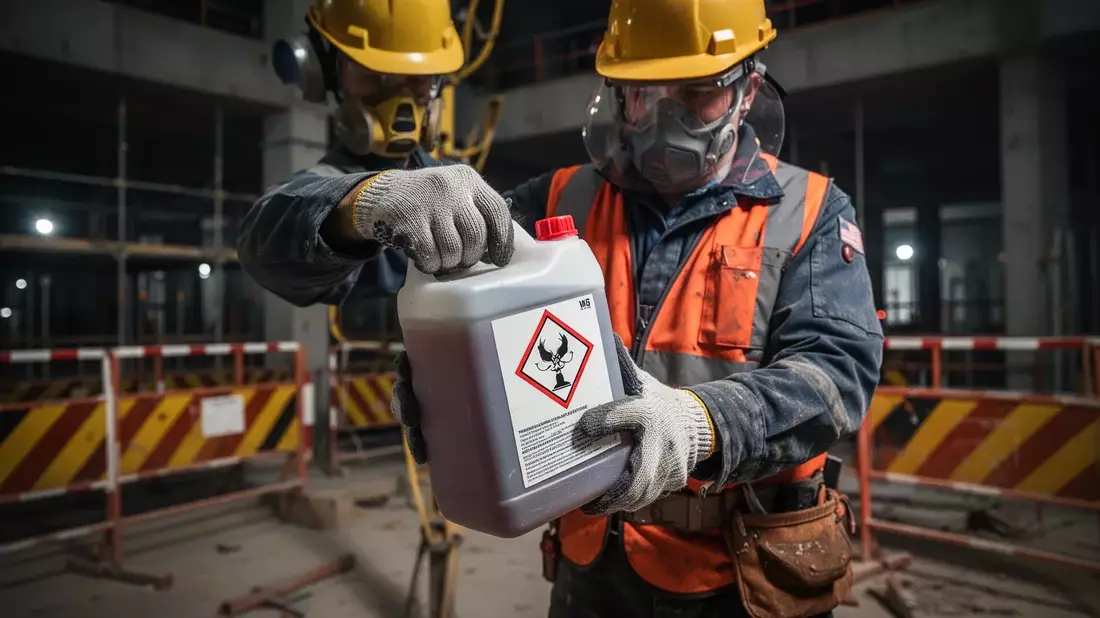
Updated industry guidance has set out the full scope of hazardous substance management for construction employers, reinforcing that the Control of Substances Hazardous to Health (COSHH) regulations cover a broad spectrum of on-site materials — from chemicals and silica dust to fumes, vapours and nanomaterials. The guidance also serves as a reminder that specific high-risk substances, including asbestos, lead and radioactive materials, fall under separate dedicated legislation rather than COSHH.
Pictograms and Practical Risk Assessment
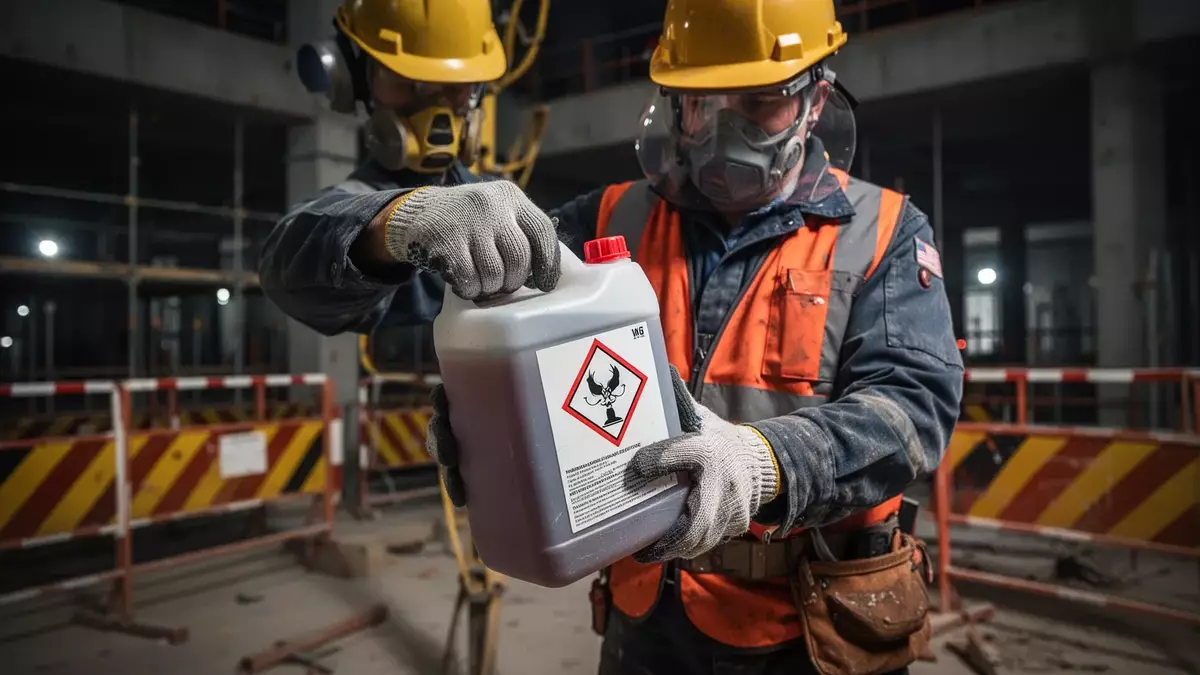
To help employers meet their legal duties, the updated safety documentation details nine hazard pictograms used under the GB CLP regulations for supply labelling. Commonly referred to as COSHH symbols in construction, these identify materials that are explosive, flammable, oxidising or corrosive, as well as those posing risks from gases under pressure, acute toxicity, environmental harm, or health effects such as irritation and long-term systemic damage.
Ensuring your COSHH assessments cover all hazardous substances on site doesn't have to mean hours of paperwork. A free COSHH Risk Assessment Toolkit provides 43 fully customisable templates, checklists and toolbox talks designed to help you meet your legal duties efficiently. Download the free COSHH Risk Assessment Toolkit
Safety specialists stress that a compliant assessment must focus on the specific task and the route of exposure — not rely solely on product labels. This task-based approach is designed to protect workers from respiratory risks and skin contact during high-hazard activities.
Legacy Pollution and Underground Exposure Concerns
Renewed concerns over historical industrial waste have emerged in recent days. Former employees of the Corby Steelworks, dismantled in the 1980s, have alleged that billions of tonnes of toxic sludge were deposited in quarries around the town. Local families have linked the pollution to cases of cancer and birth defects, reporting that 10 children were diagnosed with cancer in 2025 alone. Although calls for a public inquiry continue, local authorities have not disclosed the specific locations of the dump sites.
Separately, a whistleblower and former London Underground employee has raised alarms about toxic dust in the transit system. The worker claimed that commuters and staff were breathing in waste containing asbestos, chromium, arsenic and iron oxide. A tribunal found the concerns to be genuine, but London Underground maintained that it operates strict controls in compliance with existing asbestos regulations.
Tech Innovation and Industry Developments
Technology is also reshaping chemical safety. Researchers at Georgia Tech have developed a computational model that estimates chemical vapour concentrations in confined spaces, such as tanker trucks, following a spill. Using benzene as a test case, the model predicts how concentrations vary over time and at different heights. The eventual aim is to create a mobile application for rapid on-site exposure estimates.
Keeping accurate risk documentation is just as critical as adopting new safety technology. The free Risk Assessment Toolkit gives you 41 ready-to-use templates and checklists for workplace hazards ranging from fire safety to manual handling — all designed to help you stay compliant. Download the free Risk Assessment Toolkit
In the procurement sector, the £1.5 billion YORbuild Major Works 2 framework became operational on 6 July 2026. Managed by Leeds City Council, the framework includes major contractors Kier, Morgan Sindall and Wates, and is designed to drive public infrastructure projects across the North of England through 2030 with a focus on modern building standards.
The industry is also preparing for the return of UK Construction Week Birmingham, scheduled for 29 September to 1 October 2026 at the NEC. Themed "The Construction Reset", the event will feature more than 200 speakers and 250 brands, focusing on responsible and smarter building practices. These developments coincide with a growing market for rock wool composite panels, valued between USD 8 billion and USD 10 billion in 2026, driven by tightening fire safety and energy efficiency regulations.
Disclaimer regarding our articles: No investment advice, no buy or sell recommendation. Information on prices, companies, and markets is provided without guarantee; changes are possible at any time. Stock market transactions can lead to substantial losses. Our articles are created and reviewed in whole or in part automatically with the support of AI.