Nordex stock trades steady as order backlog and margin focus shape outlook
Published on 07/25/2026 at 12:25 | Editorial responsibility: Rafael Müller, Editor-in-Chief AD HOC NEWS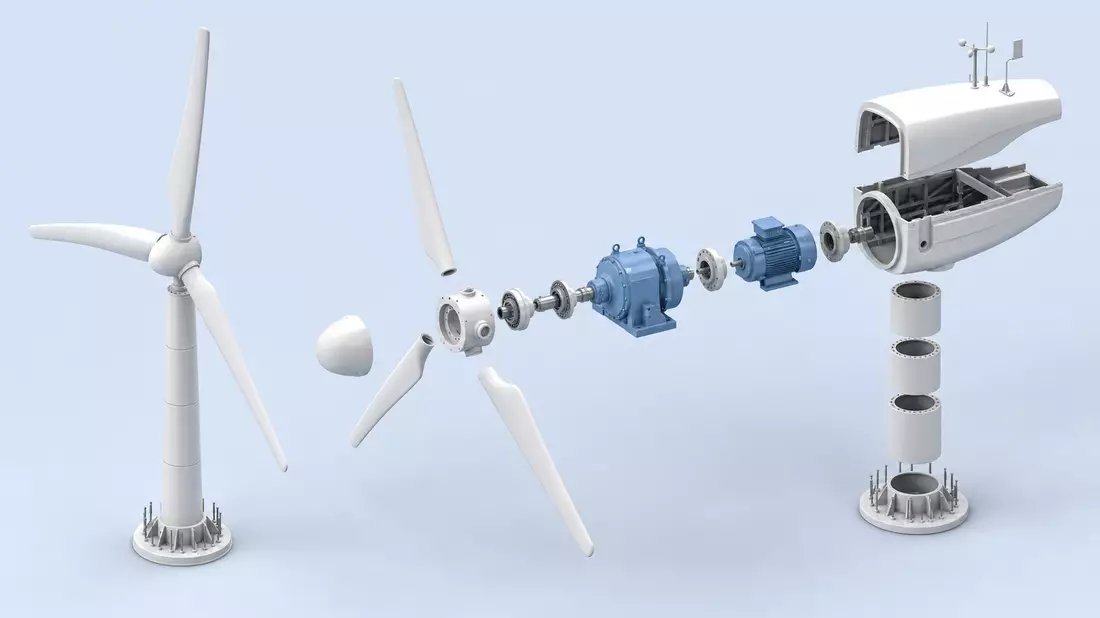
Nordex (ISIN DE000A0D6554) stock represents a listed stake in one of Europe’s established wind turbine manufacturers, and the company’s latest reported annual figures highlight how a rising order backlog and pressured margins are shaping expectations for the business. In its most recent full-year report for fiscal 2024, Nordex disclosed group revenue of around EUR 5.4 billion, illustrating the scale of its global activities in onshore wind projects. The same filing showed that Nordex continued to operate with relatively tight profitability, with EBITDA remaining modest compared to peers, a reminder that cost discipline and pricing power remain central themes for investors following Nordex stock.
Revenue around EUR 5.4 billion
According to the latest published annual figures for fiscal 2024, Nordex generated approximately EUR 5.4 billion in revenue, a level that marked a clear increase compared with the prior year’s figure of roughly EUR 4.5 billion. The comparison illustrates that Nordex expanded its top line by close to EUR 0.9 billion year on year, signaling that demand for its turbines and related services remained robust across key European and international markets. For investors, this revenue growth underscores that the company is successfully converting its order intake into realized sales, even as the broader wind sector has had to navigate project delays and higher financing costs.
In the same reporting period, Nordex’s order backlog in its core turbine business remained substantial, with contracted future deliveries that together amounted to several billion euros. The order backlog, as described in the company’s investor communication, provides visibility into future revenue streams and indicates that Nordex has a pipeline of projects extending over multiple years. This backlog is central to the investment case around Nordex stock, because it can support a more predictable top-line development even in periods when new orders fluctuate with policy cycles and tender schedules in core markets such as Germany, Spain, and Latin America.
Margin performance and profitability metrics
While Nordex’s revenue increased from about EUR 4.5 billion to roughly EUR 5.4 billion between fiscal 2023 and 2024, its profitability remained constrained by rising input costs, competitive tender structures, and the need to honor legacy contracts signed before inflation accelerated. In the most recent annual communication, Nordex reported that its EBITDA margin stayed in the low single-digit range, reflecting the combined impact of cost inflation and pricing pressure. The company’s net result, although improving versus the previous year’s deeper loss, still pointed to a challenging environment in which every basis point of margin improvement matters for the valuation of Nordex stock.
Nordex also highlighted continued efforts to improve its cost base, including optimization of its supply chain, better standardization of turbine platforms, and operational efficiency programs across manufacturing sites and service operations. These measures aim to stabilize margins, and investors track them closely because even a small upward move in EBITDA margin can translate into a meaningful change in cash flow and debt metrics for a company with multi-billion-euro annual revenue. In this context, the roughly EUR 0.9 billion year-on-year revenue increase provides an important backdrop: without sufficient margin enhancement, higher sales alone would not be enough to materially strengthen Nordex’s balance sheet.
The latest annual figures also showed that Nordex’s net debt remained an important point of attention. While the company has access to committed credit lines and financing arrangements to manage working capital needs tied to large project execution, the combination of thin margins and capital-intensive operations means that leverage must be watched carefully. For investors looking at Nordex stock, the interplay between revenue growth, margin stabilization, and leverage reduction is a central narrative that will likely influence how the market values the shares over the medium term.
Order intake and guidance signals
Alongside its reported revenue and margin figures, Nordex provided data on order intake for the year, indicating that the company booked new turbine orders that support its future growth trajectory. The annual report described a global footprint for these orders, with contributions from Europe, Latin America, and other markets, and pointed to average turbine sizes and capacity figures that reflect the industry trend toward larger, more efficient onshore machines. This order intake complements the existing backlog and offers a quantitative basis for Nordex’s guidance around expected installations and revenue in subsequent fiscal periods.
Nordex’s guidance for the following year, as outlined in its investor materials, projected revenue within a range that maintains the company in the multi-billion-euro bracket and suggested a targeted EBITDA margin improvement through cost measures and contract repricing. Although guidance ranges can shift with market conditions and policy developments, they provide investors with a framework to analyze whether the current valuation of Nordex stock reasonably reflects expected earnings and cash generation. The comparison between actual fiscal 2024 revenue of roughly EUR 5.4 billion and prior-year revenue of around EUR 4.5 billion serves as a concrete benchmark when assessing how future guidance might translate into continued top-line expansion or stabilization.
At the same time, Nordex’s management has emphasized that policy support for renewables, including auctions and feed-in mechanisms in key markets, remains crucial for sustaining healthy order intake. The company’s exposure to onshore wind makes it sensitive to regulatory timelines and grid connection capacity. For investors, the order intake figures, combined with guidance ranges, help gauge how Nordex is positioned to benefit from ongoing energy transition initiatives while navigating short-term volatility in tender outcomes and project financing conditions.
Further background on Nordex and its financials
Interested readers can explore more detailed figures and disclosures, including revenue breakdowns, margin development, and order backlog data, through dedicated topic pages and Nordex’s own Investor Relations materials.
N163 and N155 turbine platforms
Nordex’s product portfolio includes onshore wind turbine platforms such as the N163 and N155 series, which are designed to deliver high capacity factors and competitive levelized cost of energy in a range of site conditions. These turbines typically fall within the three to six megawatt output band, depending on configuration, and are tailored to meet varying wind regimes and grid requirements. The company’s reported figures show that a substantial portion of its annual revenue stems from the sale and installation of such turbines, with service and maintenance contracts providing recurring income over the operational life of the assets.
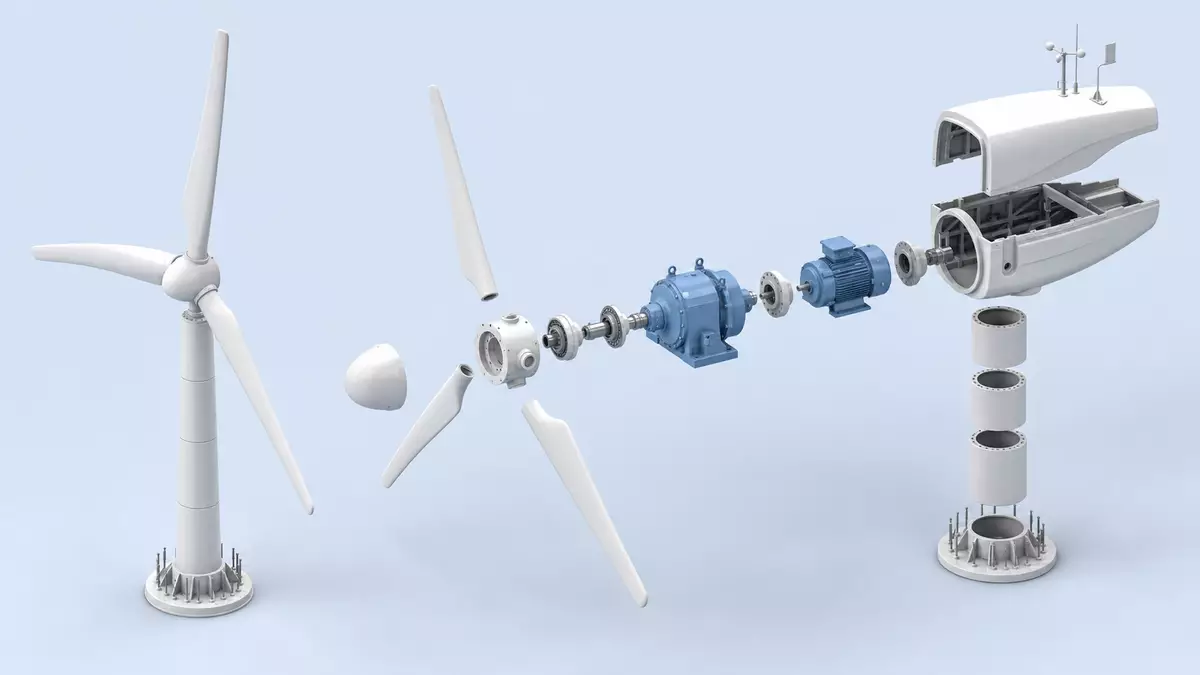
Product development has focused on increasing rotor diameter and optimizing nacelle design to capture more energy at lower wind speeds, which is particularly relevant in markets where the best onshore sites are already developed. Nordex’s engineering teams aim to balance performance with reliability, ensuring that turbines like the N163 can operate consistently with manageable maintenance intervals. For investors, understanding the technical and commercial positioning of these turbines helps clarify why Nordex is able to sustain an order backlog in the multi-billion-euro range and how its product strategy might support future margin improvements if manufacturing and logistics efficiencies keep pace with technological advances.
Nordex stock and market context
Nordex stock is primarily traded on German venues, reflecting the company’s roots and regulatory environment, and its share price tends to move in response to sector-level developments in renewables as well as company-specific announcements. The latest available annual data on revenue and order backlog provides a foundation for analysts and investors to model the company’s future earnings potential. With revenue rising from about EUR 4.5 billion to roughly EUR 5.4 billion year on year, Nordex has demonstrated that it can grow its business in a competitive sector, although the concurrent margin performance suggests that much of the benefit from scale is still being absorbed by higher costs and contract structures.
In market-capitalization terms, Nordex sits below larger diversified industrials but remains a recognized name among listed renewable energy equipment providers. The combination of a substantial order backlog, multi-billion-euro revenue, and active trading venues means that Nordex stock can offer exposure to the onshore wind segment for investors who do not wish to invest directly in individual projects. However, the tight margins and leverage profile highlight that the risk-return balance is different from that of more mature, higher-margin industries. The key quantitative signals, including revenue growth of around EUR 0.9 billion in the latest year and the order backlog size, help investors compare Nordex with peers and determine whether the current share price appropriately reflects both the challenges and opportunities facing the company.
Nordex at a glance
- Company: Nordex SE
- ISIN: DE000A0D6554
- WKN: A0D655
- Ticker: XETRA: NDX1
- Trading venue: Xetra
- Price (as of 24 July 2026, 17:30 CET): EUR 9.85
- Market capitalization: EUR 1.7 billion (as of 24 July 2026)
- Sector / Industry: Industrials / Renewable Energy Equipment
- Index membership: SDAX
- Next earnings date: 14 August 2026
Disclaimer regarding our articles: No investment advice, no buy or sell recommendation. Information on prices, companies, and markets is provided without guarantee; changes are possible at any time. Stock market transactions can lead to substantial losses. Our articles are created and reviewed in whole or in part automatically with the support of AI.