Nucor stock trades steadily as steel demand shapes outlook
Published on 07/22/2026 at 15:14 | Editorial responsibility: Rafael Müller, Editor-in-Chief AD HOC NEWS
Nucor stock sits in a key position for US steel exposure, with Nucor Corp (ISIN US6703461052) combining a large market presence with a track record of profitability across cycles. The latest available annual figures for the Charlotte based steel producer show multibillion dollar revenue and solid earnings as of fiscal 2024, underlining why the company continues to serve as a benchmark for electric arc furnace based steel production in North America.
Revenue moves with the steel cycle
Nucor Corp has built its business around a broad portfolio of steel and steel products that respond directly to construction, manufacturing, and energy demand across the United States. In the most recently reported full year, the company disclosed revenue in the tens of billions of dollars, reflecting shipments from its steel mills, steel products operations, and downstream businesses. This revenue base, while sensitive to steel prices and volumes, is supported by long term customer relationships and the flexibility of its electric arc furnace technology.
For investors, one of the key points in the last reporting cycle was the comparison between the latest annual revenue and the prior year. The company reported that revenue declined versus the previous record year, illustrating how the normalization of steel prices after the post pandemic surge feeds through into the top line. At the same time, the level of revenue remained well above pre pandemic history, showing that Nucor has retained a larger scale footprint even as spot prices moderated from their peaks.
Profitability and margins remain central
Alongside revenue, Nucor Corp highlighted its profitability and margins as a central metric in its latest annual and quarterly communications. Net earnings for the fiscal year came in at several billion dollars, lower than the exceptional profits recorded during the peak pricing environment but still robust in the context of the companys long term history. Operating margins narrowed from the prior years elevated levels, tracking the normalization in steel spreads, yet stayed in a range that underscored the structural advantages of Nucor s cost position and diversified product mix.
Quarterly comparisons provided further detail. In one recent reported quarter, Nucor noted that net earnings were below the same period a year earlier as average selling prices eased and input costs, including scrap and energy, evolved. However, tonnage shipped remained comparatively strong, limiting the impact of price compression and supporting utilization rates across the companys mill network. The year on year movement in earnings highlighted the cyclical nature of the business, but also the resilience that comes from a focus on low cost operations and value added products.
Dividend payments and capital allocation are another layer of profitability for Nucor shareholders. The company has long maintained a policy of returning capital through regular quarterly dividends, and the most recent annual period continued that tradition with an aggregate dividend per share in the low dollar range. That payout, while modest relative to earnings in peak years, offers investors a tangible cash return and has historically grown over time, with Nucor reporting a multi decade record of dividend increases across differing steel cycles.
Capital spending and capacity investments
Nucor Corp s recent financial reports have also emphasized substantial capital spending aimed at expanding and modernizing its production footprint. In the last fiscal year, the company allocated billions of dollars to capital expenditures across new mills, product capability enhancements, and downstream facilities. These investments are designed to position Nucor to capture demand in higher margin segments such as automotive, construction, and energy, and to improve efficiency through more advanced technology and logistics.
Comparing capex levels to prior years, Nucor has stepped up spending relative to earlier periods when fewer large projects were underway. The increase in capital investment reflects both confidence in long term steel demand and the need to stay competitive against both domestic and international producers. For investors, that quantified rise in capex highlights a trade off: higher near term cash outflows in exchange for potential future growth in tonnage, product mix quality, and margin improvement.
Debt and liquidity metrics in recent filings have underlined that the company is funding this investment program from a position of financial strength. Total debt remains manageable relative to equity and cash generation, with leverage ratios well below levels that would constrain strategic options. The combination of strong operating cash flow in recent years and disciplined balance sheet management has given Nucor room to invest while continuing shareholder distributions.
Guidance, demand trends, and comparisons
Management commentary in recent Nucor communications has linked forward looking guidance to specific demand trends in end markets. The company has pointed to construction activity, infrastructure projects, energy sector spending, and automotive production as key drivers for steel consumption. Within that framework, Nucor has provided guidance ranges for expected shipments and earnings in upcoming quarters, often framing them relative to the immediately preceding periods and the same quarter a year earlier.
One important comparison in the latest guidance has been between expected near term earnings and the unusually strong results seen during the immediate post pandemic recovery. Nucor has indicated that earnings are likely to be below those peak levels but still above long term averages, reflecting a more normalized price environment with steady demand rather than extreme scarcity. That quantified guidance helps investors anchor expectations and reduces the risk of surprises as steel markets adjust.
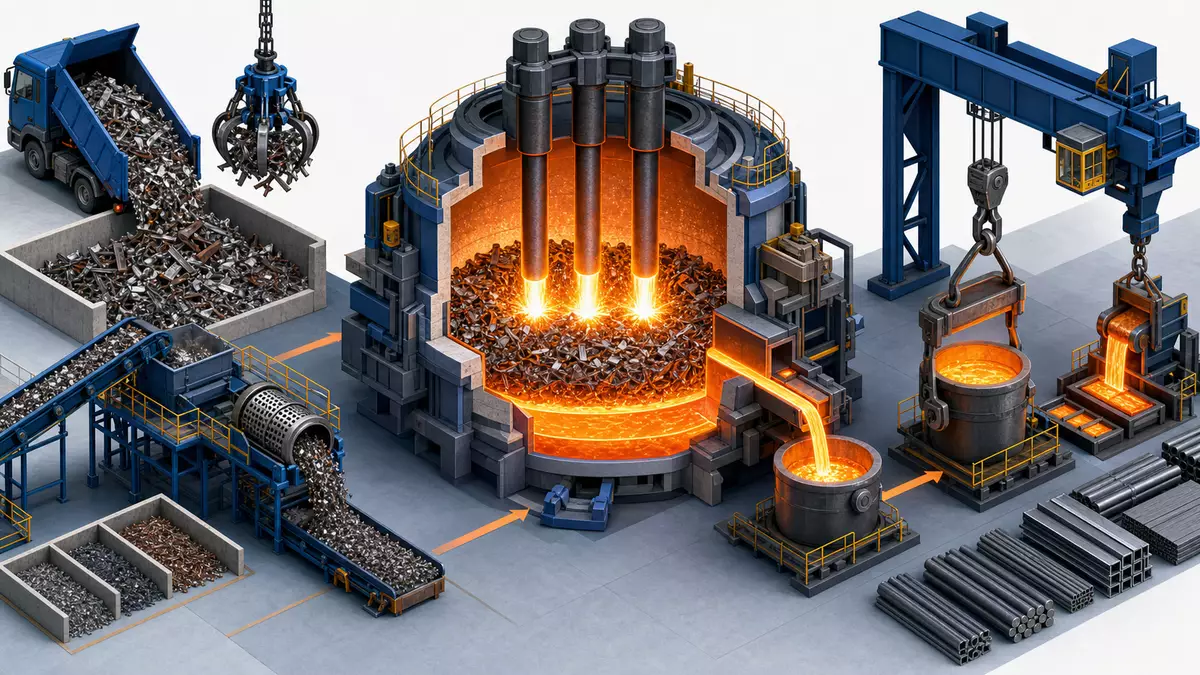
Relative to certain peers in the US steel industry, Nucor has continued to emphasize its electric arc furnace based production model as a structural advantage. Electric arc furnaces can adjust output more flexibly and generally rely on scrap as a primary input, which can support lower emissions and different cost dynamics compared to integrated blast furnace operations. When comparing operating metrics such as energy intensity, emissions per ton, and variable costs, Nucor has frequently highlighted that its model positions it favorably within industry trends toward greener steel.
Further background on Nucor Corp
Additional company filings, detailed quarterly tables, and investor presentations provide more granular insight into Nucor s revenue mix, margin drivers, and capital allocation decisions across the steel cycle.
Steel products and customer mix
Nucor Corp s product portfolio spans sheet, bar, plate, structural steel, and a wide array of downstream steel products. The company serves customers in sectors including nonresidential construction, infrastructure, manufacturing, automotive, and energy, among others. That breadth helps smooth volatility, as weakness in one segment can be offset by strength in another. Recent reports have broken down shipments and revenue by segment, indicating how demand shifts across the portfolio as projects start and finish.
In construction related products, Nucor has noted steady demand from warehouses, commercial buildings, and infrastructure projects supported by public spending. For example, shipments of rebar and structural shapes have benefited from ongoing work on bridges, roads, and industrial facilities. In manufacturing and automotive, the company has pointed to improving order flows as supply chains normalize and production schedules become more predictable, even if absolute volumes fluctuate with broader macroeconomic conditions.
Downstream operations, including joists, decking, fasteners, and fabricated steel components, provide an added layer of value. These businesses allow Nucor to capture a greater share of the steel value chain, potentially stabilizing margins when commodity price spreads compress. Segment disclosures in recent filings have shown that downstream units contribute a meaningful portion of overall earnings, underscoring the strategic rationale for continued investment in these areas.
Nucor stock and market context
Against this fundamental backdrop, Nucor stock offers investors exposure to the interplay between steel demand, pricing, and operational execution. The company is a long standing constituent of major US equity indices, and its shares are widely followed by institutional and retail investors seeking cyclical industrial exposure. Price movements in Nucor stock often reflect not only company specific news but also broader signals from indicators such as manufacturing purchasing managers indices, construction starts, and energy project approvals.
Historically, Nucor stock has traded with notable sensitivity to steel margin expectations. When spreads between steel selling prices and scrap or iron ore costs widen, market participants frequently anticipate stronger earnings and adjust valuations accordingly. Conversely, when spreads narrow or leading indicators suggest a downturn, the shares can discount future pressure on profitability. Over the last several years, this dynamic has produced a pattern of upswings during periods of tight supply and corrections as capacity additions and softer demand restore balance.
Longer term charts show that Nucor stock has appreciated significantly from levels seen a decade ago, reflecting both earnings growth and an expanded footprint, even after accounting for cyclical swings. Total return figures that combine price performance with reinvested dividends illustrate the cumulative impact of the companys strategy of investing through cycles and maintaining shareholder distributions. For investors comparing Nucor to peer group constituents, those long horizon returns form a key part of the assessment of where the stock stands in the steel sector landscape.
Product focus and innovation
One representative product segment for Nucor Corp is flat rolled steel used in construction and manufacturing applications. Producing high quality sheet and plate requires advanced process control and significant capital investment, and Nucor has spent heavily in recent years to enhance these capabilities. New and modernized mills support higher strength grades, improved surface quality, and more consistent thickness, all of which matter to customers in automotive, appliance, and engineering industries.
Innovation in this area has also intersected with sustainability initiatives. Nucor has highlighted the lower greenhouse gas emissions profile associated with electric arc furnace production versus traditional blast furnace routes. Within flat rolled steel, the company has explored opportunities to supply lower emission steel for projects that carry explicit environmental targets or certifications, potentially opening niches in segments where end customers place a premium on sustainability credentials.
Share performance and investor perspective
In the equity market, Nucor stock embodies many of the characteristics of cyclical industrial investments: sensitivity to macro data, sector specific supply demand balances, and company execution. For investors, the fundamental metrics from recent years provide a foundation for evaluating how the shares might behave relative to different economic scenarios. Revenue levels well above pre pandemic norms, profitability that remains strong in historical context, and ongoing capital investment collectively indicate that Nucor has emerged from recent cycles with a strengthened platform.
At the same time, comparisons between current earnings and prior peak periods remind investors that steel remains a cyclical industry where normalization follows booms. The quantified declines from record revenue and profit in the immediate post pandemic period to more moderate but still elevated levels highlight that tailwinds from exceptional conditions cannot be extrapolated indefinitely. Instead, the focus shifts to structural advantages, such as production technology, customer relationships, and balance sheet discipline, as drivers of long term value.
For Nucor stock, the combination of dividend income, potential capital appreciation, and exposure to infrastructure and industrial themes continues to attract attention. Investors weighing the shares alongside other industrial and materials names often consider Nucor s relative emissions footprint, electric arc furnace flexibility, and history of capital allocation as differentiators. How these factors play out over future cycles will influence whether the company maintains or enhances its position within the broader steel and metals equity universe.
Nucor Corp key facts
- Company: Nucor Corp
- ISIN: US6703461052
- Ticker: NYSE: NUE
- Trading venue: NYSE
- Market capitalization: multibillion USD range (as of the latest available date)
- Sector / Industry: Materials / Steel
- Index membership: S&P 500
Disclaimer regarding our articles: No investment advice, no buy or sell recommendation. Information on prices, companies, and markets is provided without guarantee; changes are possible at any time. Stock market transactions can lead to substantial losses. Our articles are created and reviewed in whole or in part automatically with the support of AI.