Nvidia’s Pivot to the Desktop and a $0.25 Dividend Signal a Week of Reckoning
Published on 06/14/2026 at 07:31 | Redaktion boerse-global.de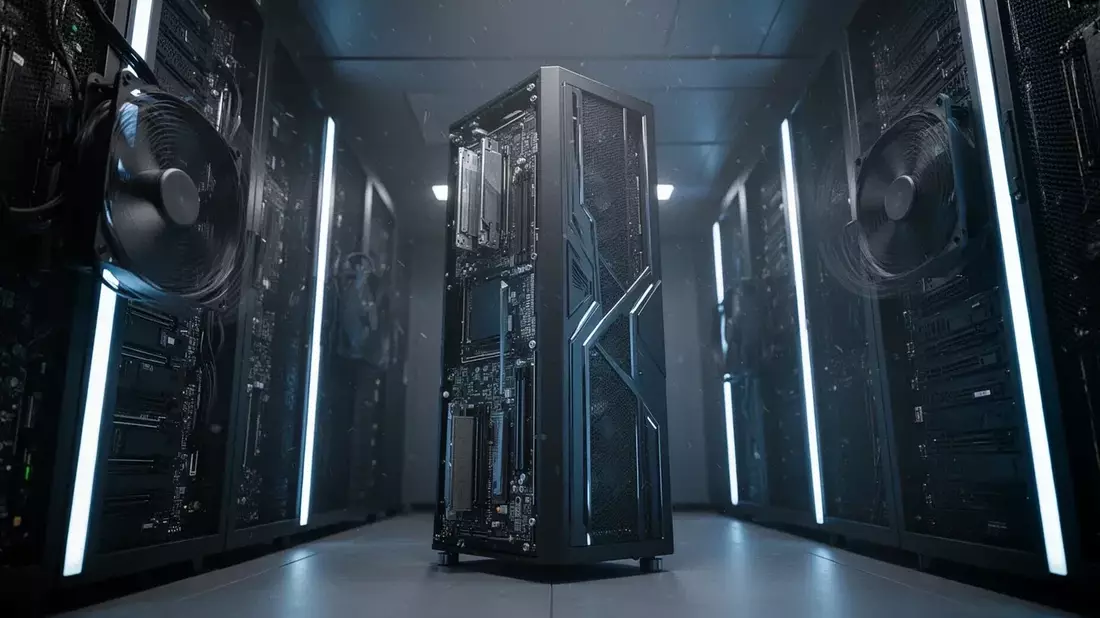
The Nvidia narrative has long been a single-chapter story about data-centre dominance. But as the chipmaker’s shares hover precisely on their 50-day moving average at €177.28, two separate developments this week are forcing investors to look beyond the hyperscaler boom. On Wednesday the company holds its annual general meeting, two days later it will pay a quarterly dividend that has just been raised twenty-five-fold to $0.25 a share, and meanwhile the Federal Reserve’s rate decision looms as a near-term jolt. Underneath that busy calendar, the real story is how Nvidia is quietly building a second earnings pillar: the PC.
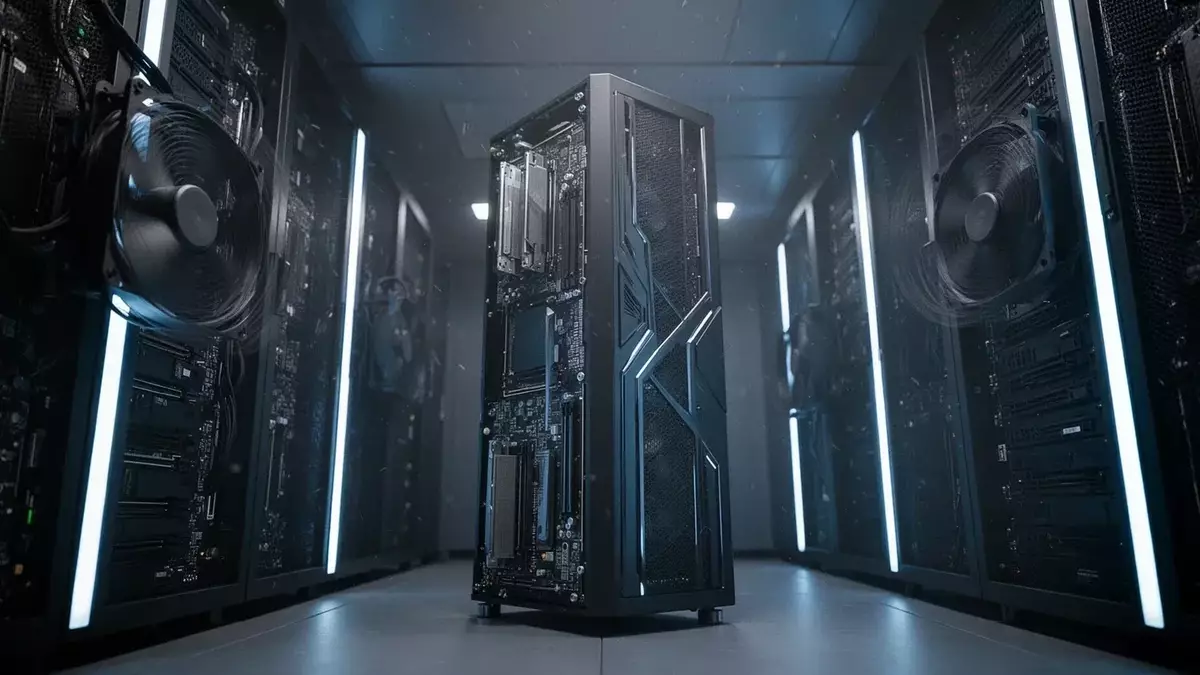
At the Computex trade show in Taipei, Jensen Huang unveiled the RTX Spark, a single 3-nanometre TSMC package that combines an Arm-based Grace CPU, a Blackwell GPU and up to 128 gigabytes of memory. OEMs including Asus, Dell and Lenovo will ship the first RTX Spark desktops this autumn. The move is a direct assault on the PC market, an arena where Nvidia has historically been a component supplier, not a platform owner. The ambition is nothing less than controlling every node of the artificial intelligence infrastructure, from the cloud to the edge.
That edge business is already visible in the books. Nvidia reorganised its reporting segments to create a dedicated Edge Computing unit, which generated $6.4 billion of revenue in the fiscal first quarter, up 29 per cent from the prior period. The data-centre division, still the engine room, delivered a record $75.2 billion, a 92 per cent increase year-on-year. Combined, the company posted total revenue of $81.6 billion, 85 per cent higher than a year ago. For the current quarter, management guided for roughly $91 billion — a number that deliberately excludes China-bound shipments of Hopper data-centre chips, which last year accounted for $4.6 billion in sales.
Should investors sell immediately? Or is it worth buying Nvidia?
The expansion into PCs dovetails with a capital-return programme that borders on the extraordinary. The board authorised an additional $80 billion in share buybacks in May with no expiration date, on top of the roughly $20 billion the company returned to shareholders during the first quarter. The raised quarterly dividend — from a penny to a quarter — is hardly a yield play at current levels, but it is a powerful statement of confidence from a management team that sees a long runway of growth ahead.
That growth is increasingly global. Huang extended his stay in Seoul for meetings with LG, SK, Hyundai, Naver and Doosan. With LG, Nvidia is building a so-called AI factory for robotics, autonomous driving and GPU cloud services; with Doosan the collaboration targets physical AI and robotics. Analysts view the Korean offensive as a bid to embed Nvidia as the backbone of an entire local AI ecosystem, not merely a chip vendor.
Yet the stock remains stuck. It has fallen roughly 8 per cent over the past month, is about 12 per cent below its May all-time high, and its relative strength index of 45.6 signals neither oversold conditions nor urgency. The Fed’s two-day meeting starting June 16 will be the first major catalyst; persistent inflation at 4.2 per cent could prompt a hawkish tone that would punish richly valued equities. The AGM on June 24 will add colour on governance — shareholders will vote on four proposals, including one calling for greater disclosure of greenhouse-gas emissions, all of which the board recommends rejecting.
The consensus among analysts is that the recent pullback has been overdone. Their average price target of €258.25 implies upside of roughly 46 per cent from current levels. For long-term holders, the true test is whether the RTX Spark hybrid model — a PC that can run AI locally while feeding the cloud — becomes a new revenue stream rather than a cannibalisation of the data-centre cash cow. The answer will start to appear on August 26, when Nvidia reports its next quarterly results.
Ad
Nvidia Stock: New Analysis - 14 June
Fresh Nvidia information released. What's the impact for investors? Our latest independent report examines recent figures and market trends.
Disclaimer regarding our articles: No investment advice, no buy or sell recommendation. Information on prices, companies, and markets is provided without guarantee; changes are possible at any time. Stock market transactions can lead to substantial losses. Our articles are created and reviewed in whole or in part automatically with the support of AI.