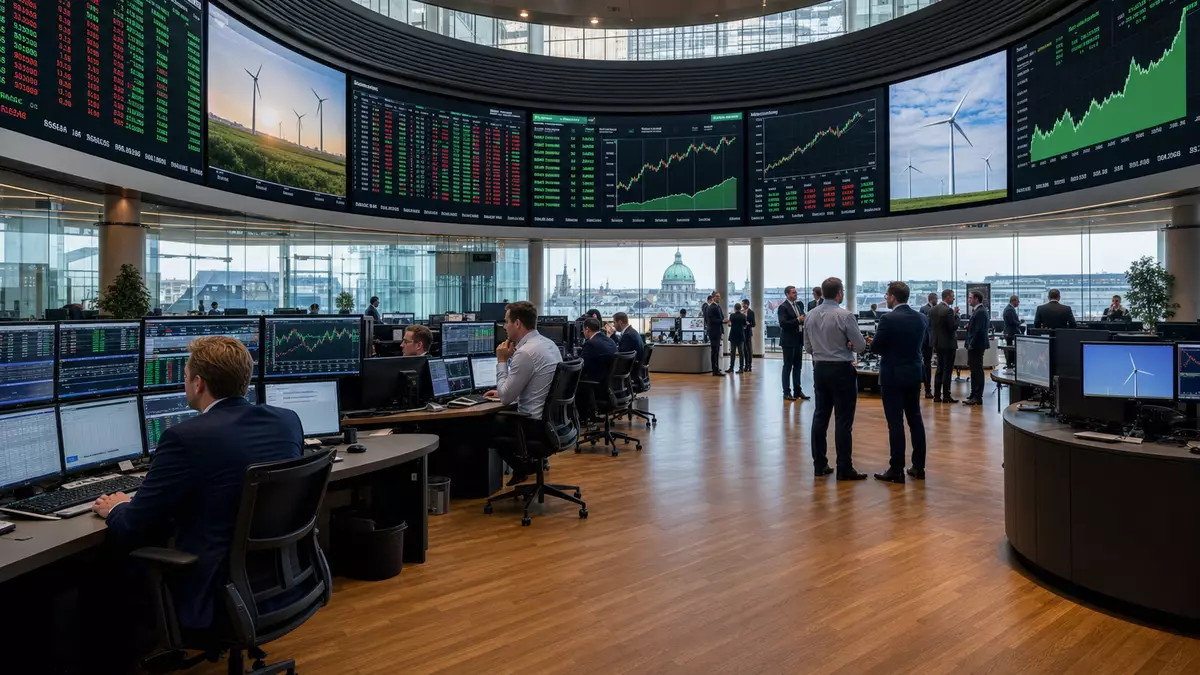
Orsted stock steadies as offshore wind writedowns reshape earnings profile
Veröffentlicht: 19.07.2026 um 04:17 Uhr, Redaktion AD HOC NEWS, Redaktionelle Verantwortung: Rafael Müller (Chefredaktion)
Orsted A/S (ISIN DK0060094928) has seen Orsted stock stabilize after a turbulent period marked by major offshore wind project impairments and a strategic reset of its US portfolio, with recent financial results showing the impact of these charges on earnings and cash flow. According to Orsted's investor materials for fiscal 2023, the Danish renewable energy group reported significant writedowns on offshore projects that reshaped headline profitability and shifted investor attention to long term value creation and balance sheet strength.
Revenue and earnings after offshore wind impairments
In its published annual figures for fiscal 2023, Orsted reported group revenue in the tens of billions of Danish kroner, reflecting a diversified portfolio across offshore wind, onshore renewables, and power-to-X activities. The company simultaneously disclosed large non cash impairments on selected US offshore wind projects, which converted what would otherwise have been a profitable year into one with substantially reduced net income and pressured key return metrics. These impairments were concentrated in the offshore segment and were driven by updated assumptions for project costs, supply chain inflation, and long term power price expectations, underscoring how sensitive offshore wind economics can be to changes in financing and construction costs.
Management highlighted in its fiscal 2023 communication that underlying operating performance, such as EBITDA from fully operational offshore wind farms in Europe, remained comparatively resilient when viewed before impairment charges. However, the combination of higher interest rates, equipment cost inflation, and regulatory changes in some markets forced Orsted to reassess planned capacity additions and negotiate updated contract terms, particularly in its US pipeline. For investors, the distinction between reported earnings including impairments and underlying cash generation has become central to evaluating Orsted stock as the company navigates this new cost environment.
Cash flow, capital expenditure, and portfolio adjustments
Alongside earnings, Orsted's fiscal 2023 and subsequent guidance materials emphasized capital expenditure on new projects, with investment levels measured in tens of billions of Danish kroner across the planning horizon. The company described a re prioritization of capital allocation, giving preference to projects with clearer long term returns and stronger contractual frameworks, while exiting or restructuring some previously announced US offshore projects that no longer met return thresholds under updated assumptions. This portfolio adjustment included decisions to cease development on certain assets and to pursue renegotiated offtake agreements or alternative partnership structures where possible.
The resulting cash flow profile shows substantial gross operating cash generation from existing offshore and onshore assets, counterbalanced by high investment outlays as Orsted continues to build new capacity. Debt metrics and liquidity buffers have thus become a point of focus, with ratings agencies and investors closely monitoring how impairments and project changes affect leverage and funding needs. Orsted's management has reiterated its ambition to maintain a strong investment grade profile and to use a mix of equity, green bonds, and project level financing to support its pipeline, signaling that future growth will be paced by the ability to secure economically attractive contracts and capital structures.
Offshore wind capacity and long term growth ambitions
Orsted's strategic plan still targets substantial growth in installed offshore wind capacity by 2030, with a pipeline that spans Europe, North America, and Asia. The company already operates multiple gigawatts of offshore wind capacity and has additional projects at various stages of development or construction. Despite recent impairments, management continues to frame offshore wind as a core pillar of Orsted's value proposition, emphasizing that lessons learned from recent challenges will inform stricter capital discipline and more robust risk sharing with partners and offtakers.
For investors evaluating Orsted stock, this long term capacity ambition interacts with near term earnings volatility and project specific risks. In particular, the contrast between fully operational assets with stable cash flows and pre financial close projects subject to regulatory and cost uncertainty is critical. Orsted's disclosures suggest that future investment decisions will involve more cautious assumptions about cost inflation, supply chain reliability, and permitting timelines, which could moderate the pace of capacity additions but potentially improve risk adjusted returns.
Onshore renewables and diversification beyond offshore wind
Orsted has steadily expanded its onshore renewables portfolio, including onshore wind and solar photovoltaic projects in Europe and North America. Revenue and EBITDA from this segment contribute to diversification and can help smooth earnings relative to the lumpier profile of large offshore projects. While onshore assets generally involve smaller individual project sizes and shorter construction times than offshore wind farms, they still require careful capital allocation and risk management to maintain overall portfolio returns.
In its recent financial communications, Orsted has described a pipeline of onshore projects that adds incremental renewable capacity and supports relationships with corporate and utility customers seeking long term power purchase agreements. This segment's growth helps Orsted position itself as a broad based renewable energy supplier rather than a pure offshore wind specialist, potentially expanding its customer base and enabling cross segment synergies such as integrated energy solutions and combined renewable portfolios for large industrial clients.
Power to X initiatives and emerging technologies
Beyond traditional wind and solar, Orsted is investing in power to X initiatives, including projects that convert renewable electricity into green hydrogen and other e fuels. These emerging technologies are generally earlier stage and involve partnerships with industrial consumers, technology providers, and sometimes governments. While power to X currently contributes a relatively small portion of revenue compared with offshore wind, its strategic importance lies in opening new markets for renewable energy and supporting decarbonization of hard to abate sectors such as heavy industry and transport.
Orsted's investor materials outline several demonstration and early commercial projects in this space, with capacity and investment figures that are modest relative to the offshore pipeline but potentially significant in terms of future growth options. For Orsted stock, successful development of these projects could provide additional earnings streams and help differentiate the company among renewable peers, though the timing and scale of cash flows from power to X remain uncertain given technology and regulatory evolution.
Balance sheet, funding strategy, and dividend considerations
The series of offshore wind impairments and project adjustments has prompted closer scrutiny of Orsted's balance sheet and funding strategy. The company has detailed its debt structure, including green bonds and other instruments used to finance large scale renewable projects. Investor communications emphasize maintaining a solid credit profile and ensuring that cash flow from operational assets covers interest and a portion of capital expenditures, while access to capital markets and partnerships supports remaining investment needs.
Dividend policy is another area of interest, as large non cash impairments can affect reported earnings and, in turn, the metrics traditionally used to assess dividend sustainability. Orsted has set its dividend decisions in the context of long term growth plans, leverage targets, and the need to retain capital for investment. For holders of Orsted stock, understanding how management balances shareholder returns with funding requirements for the project pipeline is important in assessing the overall investment case and expected return profile over the coming years.
Regulatory landscape and contract structures
Regulation and contract design play a crucial role in offshore wind economics. Orsted's experience in markets such as the US has underscored how shifts in inflation, interest rates, and supply chain costs can interact with fixed price contracts and regulatory frameworks to erode project returns if not properly accounted for. As a result, Orsted has signaled that future projects will place greater emphasis on flexible contract structures, indexation mechanisms, and risk sharing arrangements that better accommodate macroeconomic variability.
In Europe, support schemes, auctions, and power market regulations continue to evolve, affecting how Orsted and its peers bid for and develop new capacity. Transparency about these frameworks and their impact on expected returns helps investors contextualize earnings and cash flow projections. For Orsted stock, alignment between regulatory conditions and project economics is a key determinant of whether capacity growth translates into sustainable value creation rather than episodic impairments.
Competitive positioning among global renewables players
Orsted operates in a competitive landscape that includes other large European and global renewable energy companies, many of which are also active in offshore wind, onshore renewables, and emerging power to X projects. The company is often viewed as a pioneer in offshore wind development, with deep technical expertise, a strong track record of delivering complex projects, and a large portfolio of operational assets. However, recent impairments and project reconfigurations have highlighted that even experienced players can face significant challenges when macroeconomic conditions and cost assumptions shift.
Investors comparing Orsted stock with peers may consider metrics such as installed capacity, pipeline size, earnings volatility, leverage, and exposure to specific markets. Orsted's strategy of focusing predominantly on renewable assets, rather than maintaining a large fossil fuel portfolio, differentiates its earnings mix and long term transition story. At the same time, this focus increases sensitivity to renewable specific risks, which the company aims to mitigate through diversification across geographies and segments, as well as through improved contract and financing structures.
Environmental, social, and governance profile
Orsted emphasizes its environmental, social, and governance (ESG) profile as a core part of its corporate identity, highlighting rapid transitions away from fossil fuel generation and ambitious targets for carbon neutrality. ESG oriented investors often consider Orsted stock in the context of portfolios that prioritize climate solutions and sustainable infrastructure. The company reports on metrics such as carbon intensity of its generation portfolio, progress toward net zero goals, and engagement with communities and stakeholders affected by renewable projects.
Social and governance considerations include workforce safety, stakeholder consultation in project development, and board level oversight of risk and strategy. Orsted's public reporting and investor communications aim to demonstrate that ESG considerations are integrated into project selection and execution, not treated as separate from financial decision making. For investors, alignment between ESG commitments and actual project outcomes, including how risks are managed and disclosed when challenges arise, is a determinant of long term trust and valuation.
Operational performance and availability of offshore assets
Operational performance of existing offshore wind farms is a critical driver of Orsted's revenue and cash flow. Metrics such as turbine availability, capacity factors, and maintenance efficiency influence how much energy is produced and sold relative to installed capacity. Orsted's experience in operating large offshore installations informs its approach to predictive maintenance, logistics, and technology upgrades, all of which can help optimize output and reduce downtime.
Investors following Orsted stock often pay close attention to reported operating metrics and any commentary on issues such as component reliability, supply chain constraints for spare parts, or weather related disruptions. While offshore wind farms are designed for long term operation in challenging marine environments, unexpected technical issues can affect short term earnings and project economics. Orsted's ability to manage these operational risks efficiently contributes to the stability of its cash flows and supports its case for ongoing investment in new capacity.
Project pipeline visibility and risk management
Visibility into Orsted's project pipeline, including timelines for construction and commissioning, helps investors assess future revenue and earnings trajectories. The company provides information on projects that have reached final investment decision, those in advanced development, and earlier stage prospects. Each category involves different levels of risk, with projects closer to operation generally carrying more predictable returns and earlier stage projects subject to permitting, regulatory, and financing uncertainties.
Risk management practices, such as scenario analysis, stress testing of project economics under different cost and price environments, and disciplined application of investment thresholds, are increasingly central to Orsted's narrative following recent impairments. Investors examining Orsted stock can use pipeline and risk management disclosures to gauge how effectively the company is adapting to a more volatile macroeconomic backdrop while still pursuing ambitious capacity and growth targets.
Technology evolution and cost trends in offshore wind
Technological innovation continues to reshape offshore wind economics, with larger turbines, improved installation techniques, and digital optimization tools offering potential efficiency gains. Orsted participates actively in deploying and testing new technologies, leveraging its scale and experience to help bring down costs and improve project performance. However, recent years have demonstrated that cost trends are not one directional, as supply chain inflation, commodity price movements, and macroeconomic factors can offset technology driven efficiency gains.
For Orsted stock, understanding how technology and cost trends interact is key to judging the sustainability of project returns. The company’s communications on turbine selection, partnerships with equipment suppliers, and adoption of digital monitoring tools provide insight into how it aims to capture the benefits of technology while managing associated risks. Over time, successful deployment of more efficient technologies could support higher capacity factors and lower operations and maintenance costs, bolstering cash flows from existing and new assets.
Stakeholder relations and community engagement
Large scale renewable projects, particularly offshore wind farms and associated infrastructure, can have significant local impacts. Orsted engages with communities, local authorities, and other stakeholders to address concerns, secure permits, and build support for projects. This engagement may involve environmental impact assessments, consultations on visual and noise impacts, and discussions of economic benefits such as jobs and local investment.
Stakeholder relations play into Orsted’s broader risk profile, as delays or opposition rooted in local concerns can affect project timelines and costs. Transparent communication and efforts to demonstrate tangible benefits for host communities can help reduce these risks. For Orsted stock, effective management of stakeholder relations contributes indirectly to earnings stability by supporting smoother project development and operation.
Strategic priorities after the US offshore reset
Following its reset of the US offshore wind portfolio, Orsted has clarified strategic priorities that emphasize disciplined capital allocation, focus on projects with robust contractual frameworks, and active portfolio management. This includes the willingness to exit or restructure projects that no longer meet risk adjusted return thresholds and to seek partnerships that share risks and returns more evenly. The strategic messaging positions Orsted as responsive to changing conditions and determined to protect long term shareholder value, even at the cost of near term earnings impacts from impairments.
Investors assessing Orsted stock may interpret this strategic stance as a signal that future growth will be more selective, with a premium placed on regulatory clarity, cost predictability, and financing terms. The experience in the US could also inform how Orsted approaches new markets, encouraging more cautious assumptions and flexible contract structures that can adapt to shifts in macroeconomic and industry conditions.
Market perception, valuation considerations, and analyst views
Market perception of Orsted stock integrates both its status as a leading renewable energy developer and the recent challenges in offshore wind economics. Valuation considerations include the balance between operational assets that generate relatively stable cash flows and development pipelines that carry more uncertainty. Analysts and investors may use metrics such as enterprise value to EBITDA, price to book ratios, and implied returns on invested capital for new projects to gauge whether the market is appropriately pricing risks and opportunities.
In environments where interest rates and inflation are elevated, sensitivity analyses on project economics often feature prominently in valuation work. For Orsted, the impact of these macro factors on discount rates and cost assumptions influences the perceived value of its long term pipeline. As the company adjusts its strategy and contract structures, shifts in analyst views and valuation multiples can reflect changing confidence in sustainability of returns and pace of growth.
Investor focus on governance and transparency
Given the scale of recent impairments and project changes, governance and transparency have become key themes in discussions about Orsted stock. Investors expect clear communication about the assumptions underlying project decisions, timely disclosure of risks and challenges, and evidence that lessons learned from past experiences are incorporated into future planning. Board oversight of strategy and risk, as well as alignment of management incentives with long term value creation, are important governance considerations.
Orsted’s reporting on risk factors, sensitivity analyses, and project specific developments supports investor assessments of governance quality. The company’s willingness to adjust or exit projects when economics deteriorate can be seen as a manifestation of governance discipline, provided decisions are accompanied by transparent disclosures. Over time, consistent governance practices can help rebuild or strengthen market confidence even after periods of earnings volatility.
Macro environment and demand for renewable energy
Orsted operates against a macro backdrop in which global demand for renewable energy is driven by climate policy, corporate decarbonization commitments, and technological advances. Government targets for emissions reduction and renewable capacity expansion provide long term structural support for companies like Orsted. At the same time, short term macroeconomic factors such as interest rates, inflation, and currency movements influence project economics and capital allocation decisions.
For Orsted stock, the interplay between structural demand for renewables and cyclical macro pressures shapes investor expectations about growth and risk. Long term policy signals and commitments may encourage continued investment, while near term cost pressures require careful project selection and risk management. Orsted’s strategy and financial communications aim to show how it navigates this dual reality, seeking to capture long term opportunities while managing short term constraints.
Representative offshore wind product and customer solutions
One representative product of Orsted’s business is the electricity generated by its offshore wind farms and delivered under long term power purchase agreements to utilities and corporate customers. These agreements typically span many years and involve fixed or indexed pricing structures that provide revenue visibility for Orsted and stable supply for customers seeking low carbon energy. The company’s ability to design and manage such contracts is central to monetizing its offshore wind capacity and supporting the investment case for Orsted stock.
Orsted also develops customer solutions that may bundle renewable electricity, certificates, and additional services such as balancing or flexibility options. These offerings help corporate clients meet sustainability targets and manage energy cost risks, while providing Orsted with diversified revenue streams linked to its asset base. As the renewable market evolves, such products can play a role in differentiating Orsted’s commercial proposition and deepening customer relationships.
Orsted stock and current market context
In the current market context, Orsted stock reflects both the challenges of recent offshore wind impairments and the long term potential of a large renewable energy portfolio. Price levels incorporate market assessments of project risks, balance sheet strength, and growth prospects, and may fluctuate as new information emerges about contracts, costs, and regulatory developments. Dated price and market capitalization metrics from exchange and financial portal data show how investor sentiment has evolved over recent reporting periods, with valuation movements often coinciding with major announcements on project pipeline changes or financial results.
For investors, the decision to follow or hold Orsted stock involves weighing near term uncertainties against structural drivers of renewable deployment. The company’s ongoing communication, strategic adjustments, and operational performance will continue to inform market views, while broader sector trends and policy developments shape the environment in which Orsted operates.
Key facts on Orsted
- Company: Orsted A/S
- ISIN: DK0060094928
- Ticker: LSE: ORSTED
- Trading venue: Copenhagen and secondary listings
- Sector / Industry: Renewable Energy / Utilities
- Index membership: Included in major Nordic and European indices
Disclaimer zu unseren Artikeln: Keine Anlageberatung, keine Kauf oder Verkaufsempfehlung. Angaben zu Kursen, Unternehmen und Märkten ohne Gewähr; Änderungen jederzeit möglich. Börsengeschäfte können zu hohen Verlusten führen. Unsere Beiträge werden ganz oder teilweise automatisiert mit Unterstützung von AI erstellt und geprüft.