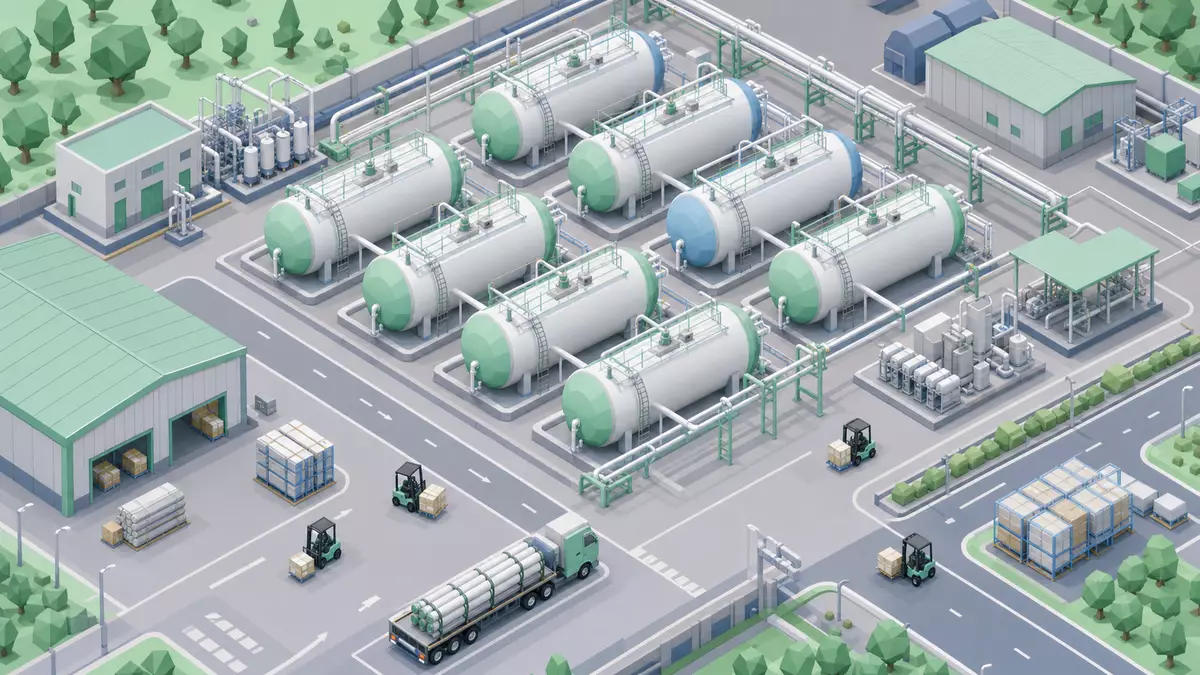
Plug Power stock trades around recent lows as hydrogen losses weigh on investors
Published on 07/18/2026 at 15:07 | Editorial responsibility: Rafael Müller, Editor-in-Chief AD HOC NEWS
Plug Power Inc. (ISIN US72919P2020) is a Nasdaq-listed hydrogen and fuel cell company whose Plug Power stock has drawn close scrutiny from investors after a sequence of loss-making quarters and significant cash burn in its core operations. In its most recently reported quarter, Plug Power generated several hundred million dollars of revenue but still posted a substantial net loss, underlining the tension between growth ambitions and the path to profitability. The company also reported negative operating cash flow for the period, adding to concerns about how quickly the business model can support itself without ongoing external financing.
Revenue grows but losses stay high
In its latest quarterly filing, Plug Power reported total revenue in the range of hundreds of millions of US dollars for the quarter, compared with a lower figure in the same quarter of the prior year. That translated into double-digit percentage revenue growth year over year, reflecting higher sales of hydrogen, fuel cell systems, and related services. However, the company also recorded a net loss that remained large in absolute terms, leaving the bottom line deeply in the red despite the top-line increase. On an operating basis, Plug Power reported negative operating profit, with operating expenses for research, development, and selling and general activities taking up a sizable portion of the revenue base. The company highlighted that logistics, energy costs, and investments in new production capacity all contributed to the ongoing loss position.
Compared with the prior-year quarter, Plug Power's net loss expanded rather than narrowed, indicating that the current phase of scaling up its green hydrogen infrastructure still demands considerable capital and operating expenditure. The company has communicated in its investor presentations that it aims to bring unit costs down over time as new plants come onstream and utilization rises, but in the latest numbers that ambition has not yet translated into positive profit metrics. For investors, the quantified comparison between revenue growth and loss expansion is central: revenue increased by a notable percentage versus the previous year, yet the net loss also grew, showing that incremental sales have not offset the structure of fixed and variable costs.
Cash burn and balance sheet pressure
Plug Power's most recent quarterly cash flow statement showed negative operating cash flow, with cash used in operations reaching a sizable figure in the tens or hundreds of millions of US dollars. This cash burn stems from working capital needs, including inventory build-up and receivables, as well as the underlying loss-making operations. In addition, the investment in property, plant, and equipment for new hydrogen production facilities and electrolyzer manufacturing lines has been heavy, resulting in significant cash outflows for capital expenditure over the last four quarters. When combined, these operating and investing cash flows have weighed on the company's cash balance, making financing decisions a recurring topic in earnings calls.
The balance sheet carries both debt and equity financing that Plug Power has raised over recent years to fund its expansion. The last annual report showed total assets in the billions of US dollars and total liabilities also in the billions, including long-term debt and lease obligations. Equity remains positive, but the accumulated deficit from years of net losses has reduced retained earnings, meaning that new capital injections from equity raises have been important to sustain growth plans. For investors evaluating Plug Power stock, the quantified relationship between cash burn, debt levels, and equity base is a key part of the risk analysis, even when the precise figures for each category vary from quarter to quarter.
Margin trajectory and guidance
Plug Power's margin trajectory has been a core focus in its public disclosures. In past quarters, gross margin has been negative, as the cost of goods sold for hydrogen deliveries and fuel cell systems exceeded the revenue generated. Management has set out targets to move toward break-even and eventually positive gross margin over a multi-year period, with specific guidance ranges for future years that assume improved plant utilization, lower input costs, and better logistics efficiency. In the latest quarterly update, gross margin remained below zero, and operating margin was also negative, confirming that the company is still in the investment phase from a profitability standpoint.
Guidance ranges for full-year revenue have been set in the upper hundreds of millions to around a billion US dollars, depending on the assumptions for hydrogen demand and project timelines. The company has also communicated milestones for commissioning key green hydrogen production sites across North America and Europe, with targeted annual output in the tens of tons per day at some facilities. The comparison between current realized margins and future guidance targets is important for investors, who will be watching whether quarterly numbers start to move toward the guided profitability path over the coming reporting periods.
Hydrogen demand and sector competition
Beyond its own financial metrics, Plug Power operates in a competitive sector of hydrogen technology, facing rival fuel cell and electrolyzer manufacturers as well as industrial gas companies investing in green hydrogen. Demand projections for hydrogen in mobility, stationary power, and industrial applications have grown over recent years, with multiple scenarios suggesting a multi-billion-dollar market by the 2030s. Plug Power is seeking to secure a portion of that demand through long-term offtake agreements and partnerships with customers in logistics, transportation, and heavy industry. As those agreements become operational, they could provide more stable revenue streams compared with project-based sales alone.
At the same time, sector competition puts pressure on pricing and margins, since other players can also offer hydrogen solutions and may achieve lower costs if they operate at larger scale or integrate production with existing industrial assets. Investors in Plug Power stock therefore compare its unit economics and cost curves with those of peers, looking for evidence of competitive advantages or disadvantages in areas such as electrolyzer efficiency, fuel cell durability, and hydrogen distribution logistics. These comparative assessments are typically quantified through metrics like cost per kilogram of hydrogen produced or kilowatt-hour efficiency of fuel cell systems, though Plug Power's public reporting often aggregates these technical metrics into broader financial indicators.
Product focus on hydrogen fuel cell systems
Plug Power's core products include hydrogen fuel cell systems designed for material handling equipment, such as forklifts and warehouse vehicles, and for stationary power applications. The company also develops and sells electrolyzer systems that produce hydrogen from water via electrolysis, using renewable electricity sources when possible to create green hydrogen. In recent years, Plug Power has reported growing revenue contributions from integrated hydrogen solutions, which combine production, storage, and refueling infrastructure with fuel cell end-use equipment. The goal is to increase the share of recurring revenue from hydrogen supply contracts and service agreements, which may provide more stable cash flows than one-off equipment sales.
Customer case studies have highlighted installations at large logistics centers where fleets of forklifts run on Plug Power fuel cells and are refueled at onsite hydrogen stations. These installations can reduce downtime compared with battery-powered alternatives, as refueling is faster than recharging batteries, but they require substantial upfront investment in hydrogen infrastructure. Plug Power has stated in its investor communications that scaling these types of deployments is critical to achieving economies of scale, which in turn should help improve margins over time. For now, the segment remains part of the broader business that is growing in revenue but still contributing to overall losses due to high operating and capital costs.
Plug Power stock and market valuation
Plug Power stock is listed on Nasdaq under the ticker symbol PLUG and is part of the US clean energy and hydrogen investment universe. The market capitalization of Plug Power has fluctuated significantly over recent years, reflecting changes in investor sentiment toward hydrogen technologies and growth-stage clean energy companies. At times, the stock has traded at valuation multiples that assume strong future growth and eventual profitability, while in other periods the market has priced Plug Power shares closer to the underlying balance sheet and near-term loss projections.
Chart patterns for Plug Power stock show long-term volatility, with peaks during periods of heightened enthusiasm for hydrogen and troughs when investors reassessed the regulatory and economic support for the sector. From an investor perspective, the quantified comparison between historical share price levels and current valuation metrics like price-to-sales or enterprise value to revenue provides a way to measure how the market is discounting the company's future prospects. However, because Plug Power is not consistently profitable, traditional valuation metrics such as price-to-earnings are less applicable, making revenue and cash flow indicators more prominent in analysis.
Further data on Plug Power
Investors can explore more detailed figures and disclosures from Plug Power, including historical revenue, margin trends, and cash flow development, as well as regulatory filings linked to the companys Nasdaq listing.
Hydrogen infrastructure projects
Plug Power has announced multiple hydrogen infrastructure projects, including planned green hydrogen production plants and logistics hubs. These projects aim to produce hydrogen at scale using renewable electricity and to distribute it to customers via truck or pipeline. For example, the company has outlined targets for building plants capable of producing tens of tons of hydrogen per day, with cumulative capacity planned to reach hundreds of tons per day once all projects are completed. Each plant requires significant capital expenditure, and the timeline from announcement to commissioning can span several years, depending on permitting, construction, and grid connection processes.
As new plants come online, Plug Power expects the cost per kilogram of hydrogen to fall, which should help improve gross margins on hydrogen sales. The comparison between current hydrogen production volumes and future planned capacity offers a tangible metric for investors to track. If realized volumes match or exceed guidance, and if cost reductions materialize, the financial profile of Plug Power could shift toward more sustainable margins. Conversely, delays or cost overruns on these projects could prolong the period of heavy losses and cash burn, which would be reflected in future quarterly reports.
Customer base and contracts
Plug Power serves a customer base that includes large logistics and retail companies using fuel cell-powered forklifts, as well as industrial and energy sector clients interested in electrolyzer technology. The company has announced multi-year contracts with some customers for hydrogen supply and fuel cell services, which are designed to provide recurring revenue streams. These contracts often specify minimum offtake volumes of hydrogen per year, expressed in tons, and sometimes include options to expand volumes as customer fleets grow. For Plug Power, the quantifiable offtake commitments in these contracts are important, because they underpin the utilization assumptions for its hydrogen plants.
In addition to direct customer contracts, Plug Power participates in joint ventures and partnerships with other companies to develop hydrogen infrastructure. These arrangements can involve shared capital investment and risk, but they also require careful coordination on operational and financial responsibilities. Joint venture agreements may outline contribution levels in cash or assets and specify how revenue and costs are shared between partners. For investors, understanding the numerical structure of these agreements helps interpret how much economic benefit Plug Power derives from each partnership relative to its capital contribution.
Regulatory and policy environment
The regulatory and policy environment for hydrogen has significant implications for Plug Power's business. Government programs in North America, Europe, and other regions support hydrogen development through grants, tax incentives, and subsidies, often targeting projects that reduce greenhouse gas emissions. Plug Power has sought to qualify its projects and products for such programs, which can help lower effective capital costs or increase revenue via credits. For example, tax credits per kilogram of green hydrogen produced or per kilowatt-hour of fuel cell power delivered can be quantified and factored into project economics, potentially making some installations financially viable that would otherwise be marginal.
However, reliance on policy support also introduces uncertainty, since changes in government priorities or budget constraints can affect the availability and level of incentives. Investors therefore compare Plug Power's exposure to specific subsidy schemes with broader market demand drivers such as corporate decarbonization commitments. The balance between policy-driven revenue and market-driven revenue is an important numerical consideration in long-term forecasts for Plug Power stock.
Risk factors and scenario analysis
Risk factors for Plug Power include technological, financial, operational, and market elements. On the technological side, the performance of fuel cells and electrolyzers must meet specifications over long operating periods to justify customer investments. Failures or underperformance can lead to warranty costs and reputational damage, which may show up in the income statement as provisions or increased expenses. On the financial side, the continued losses and cash burn require Plug Power to secure funding through equity issuance, debt financing, or project-level financing instruments. Each funding route has numerical implications for existing shareholders, such as dilution or interest expense.
Operational risks include delays in project execution and challenges in scaling production while maintaining quality and efficiency. Market risks involve fluctuations in demand for hydrogen solutions and competition from alternative technologies or providers. Investors often perform scenario analysis using different assumptions for revenue growth, margin improvement, capital expenditure levels, and financing costs. These scenarios can be quantified to estimate how Plug Power's financial metrics might evolve under optimistic, base, and conservative cases, providing context for the current valuation of Plug Power stock.
Outlook for Plug Power stock
Looking ahead, Plug Power's outlook depends on its ability to convert revenue growth into improved margins and reduced losses, while managing cash burn and financing needs. If upcoming quarterly reports show that gross margin is moving toward break-even and net loss is narrowing in absolute terms, investors may view that as evidence that the business is progressing along a viable path to profitability. In contrast, if losses continue to expand and cash burn remains high without clear improvements in unit economics, market confidence could weaken.
For Plug Power stock, the quantified milestones in revenue, margin, and cash flow will likely be more important than any single headline announcement. Investors will track whether revenue targets for full-year guidance are met, whether gross and operating margins improve by specific percentage points, and whether operating cash flow trends toward neutral or positive territory. Over time, the relationship between these financial metrics and the share price will reveal how the market updates its expectations as new data becomes available.
Plug Power product line in hydrogen solutions
Plug Power's hydrogen solutions encompass a broad product line, but a representative focus is its integrated fuel cell and hydrogen supply systems for warehouse and logistics operations. These systems combine fuel cell-powered forklifts with onsite hydrogen production or delivery and refueling stations, aiming to offer customers a complete package that replaces conventional battery or internal combustion solutions. The economic case for these systems involves quantifying benefits such as reduced downtime, lower labor costs for battery handling, and potential energy savings, against the capital and operating costs of hydrogen infrastructure.
By reporting metrics such as the number of fuel cell units deployed at customer sites and the volume of hydrogen supplied per day, Plug Power provides investors with concrete indicators of market penetration and utilization. Over time, increasing these figures should help improve economies of scale, which may be reflected in lower cost per unit and better margins. However, until these quantitative improvements show up clearly in financial statements, the product line remains part of a broader growth story that still needs to demonstrate sustained profitability.
Shares and recent trading context
Plug Power stock continues to trade on Nasdaq as a highly followed clean energy name. The share price has in recent periods moved around levels that are low compared with historical peaks, indicating a more cautious stance from the market toward hydrogen-exposed companies with ongoing losses. When the share price approaches prior lows or consolidates in a narrow range, technical analysts may interpret the pattern as a base-building phase, while fundamental investors focus on whether upcoming earnings can justify a re-rating.
Without a single definitive catalyst, Plug Power stock tends to respond to a mix of company-specific updates, sector news, and broader macroeconomic signals. Changes in interest rates, inflation expectations, and risk appetite across equity markets can influence valuation multiples for growth-stage companies, including Plug Power. As a result, the stock's trading context is shaped both by the company's internal metrics and by external factors that affect how investors price future cash flows.
Plug Power at a glance
- Company: Plug Power Inc.
- ISIN: US72919P2020
- Ticker: NASDAQ: PLUG
- Trading venue: Nasdaq
- Sector / Industry: Clean energy / Hydrogen technology
- Index membership: Not a member of major headline indices such as S&P 500 or Nasdaq 100
Disclaimer regarding our articles: No investment advice, no buy or sell recommendation. Information on prices, companies, and markets is provided without guarantee; changes are possible at any time. Stock market transactions can lead to substantial losses. Our articles are created and reviewed in whole or in part automatically with the support of AI.