
Record Heat Across Europe and Asia Sparks New Workplace Safety Rules
Published on 07/06/2026 at 21:59 | Editorial boerse-global.de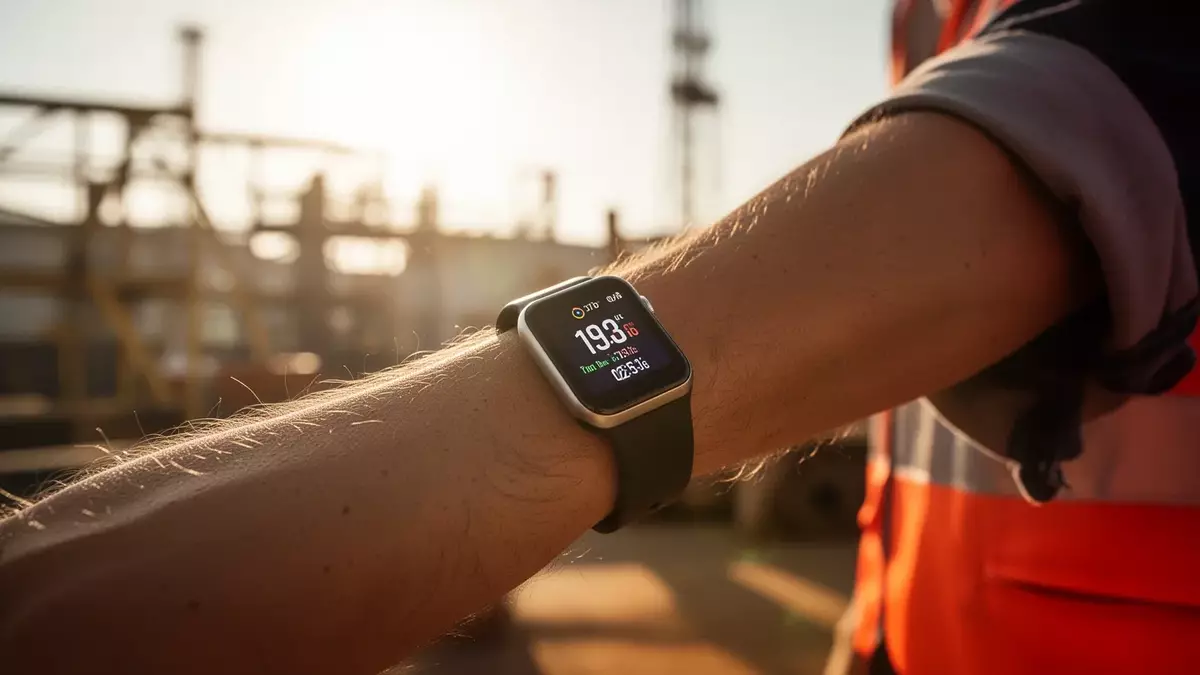
As parts of Europe experienced their hottest June on record in 2026, governments and employers are scrambling to formalise heat safety protocols that were previously left to informal guidance. From smart bracelets in Barcelona to mandatory midday breaks in the UAE, a wave of new regulations, legal challenges and technological interventions is reshaping how workers are protected from extreme temperatures.
Smart Technology and Stricter Rules
Barcelona’s municipal authorities have begun distributing around 1,400 smart bracelets to outdoor workers in sanitation, lighting and park maintenance. The devices monitor body temperature and sound an alarm when a high-risk heat threshold is detected. The initiative follows a month in which Spain recorded more than 1,000 excess deaths linked to extreme heat.
In the United Arab Emirates, the Ministry of Human Resources and Emiratisation (MoHRE) is enforcing its mandatory midday break from June 15 to September 15. Outdoor work is banned between 12:30 p.m. and 3:00 p.m. to protect workers from peak solar radiation. Employers face fines of Dh5,000 per worker, up to a maximum of Dh50,000. The rules now explicitly cover delivery riders, with a specific ban on on-foot deliveries during restricted hours.
Malta has also tightened working conditions. The 2026 Wage Regulation Orders, effective from June 30, cover broader employment rights including immediate access to sick leave and the abolition of age-based minimum wages.
Even as new heat rules emerge, many employers overlook the formal risk assessment that should underpin any safety policy. A free Risk Assessment Toolkit provides 41 ready-to-use templates – covering extreme temperature risks alongside fire, manual handling and lone working – to help you document hazards consistently. Download the free Risk Assessment Toolkit
The Economic Toll of Heat Exposure
According to the European Trade Union Institute (ETUI), around 130 million workers across the European Union are currently exposed to the risk of heatstroke. The health consequences are stark: an estimated 277,000 hospitalisations and 230 deaths occur annually from workplace heat exposure.
The economic impact is increasingly measurable. Productivity drops by 2% for every degree Celsius above 16°C. During extreme heatwaves, losses can reach 25% in Southern Europe and 14% in Central Europe. In Germany, a single day above 30°C costs the economy an estimated €430 million in lost productivity — partly because only half of the nation’s offices have air conditioning.
In Bangladesh, where mandatory heat policies are absent, the toll is severe. Around 250 million workdays were lost in 2024 due to heatwaves, resulting in an economic loss of $1.78 billion — roughly 0.4% of the country’s GDP.
Staying compliant with health and safety legislation is a year-round task that directly affects your bottom line. The free Health & Safety Toolkit gives you instant access to risk assessments, checklists and templates covering COSHH, PUWER, fire safety and more — the same resources trusted by over 37,000 UK companies. Get the free Health & Safety Toolkit
When Can Workers Refuse to Work in the Heat?
Legal experts and labour organisations are clarifying the conditions under which employees may legally refuse to work due to heat. In most jurisdictions, the right to refuse work depends on a demonstrable "serious health and safety risk" rather than a specific temperature trigger. However, some regions have set clearer benchmarks:
- California: Employers must implement heat illness prevention for outdoor workers once temperatures reach 80°F, with additional "high heat" measures required at 95°F.
- Hungary: Legislation includes specific maximum temperature triggers that can mandate a work stoppage.
- Ontario, Canada: While there is no statutory maximum indoor temperature, safety associations recommend a range of 23–26°C for summer work.
- New York: The State Insurance Fund offers small businesses a 10% premium credit for purchasing cooling personal protective equipment (PPE), such as ventilated hard hats and cooling vests.
In the United States, recent "Code Red" heat alerts — such as one issued in Lancaster County, Pennsylvania, on July 1, 2026 — have highlighted the potential for litigation. Legal theories including negligence and premises liability are increasingly being used to hold employers, landlords and event organisers accountable for heat-related injuries or wrongful deaths.


