Rocket Lab’s Busiest Week: An Engine Test, an $8 Billion Acquisition, and a Double-Digit Stock Drop
Published on 07/20/2026 at 14:03 | Redaktion boerse-global.de
Rocket Lab has delivered a flurry of strategic news in recent days — a successful long-duration test of the engine that will power its next-generation Neutron rocket, the largest single launch contract in its history, and an $8 billion acquisition of satellite operator Iridium. Yet the market response has been anything but celebratory: the stock closed Friday at $67.62, down 11.87% over the week, even as it eked out a 0.40% gain on the final trading day.
The disconnect illustrates a central tension for investors. Rocket Lab’s operational milestones are piling up, but the share price has been in retreat for weeks. The stock now sits 55.22% below its 52-week high of $151.00, reached on May 27, and has shed 36.95% over the past 30 days. With a 14-day relative strength index of 30.1, technicians classify the equity as oversold — a condition that often precedes a bounce but offers no guarantee of a trend reversal.
Neutron Nears a Critical Deadline
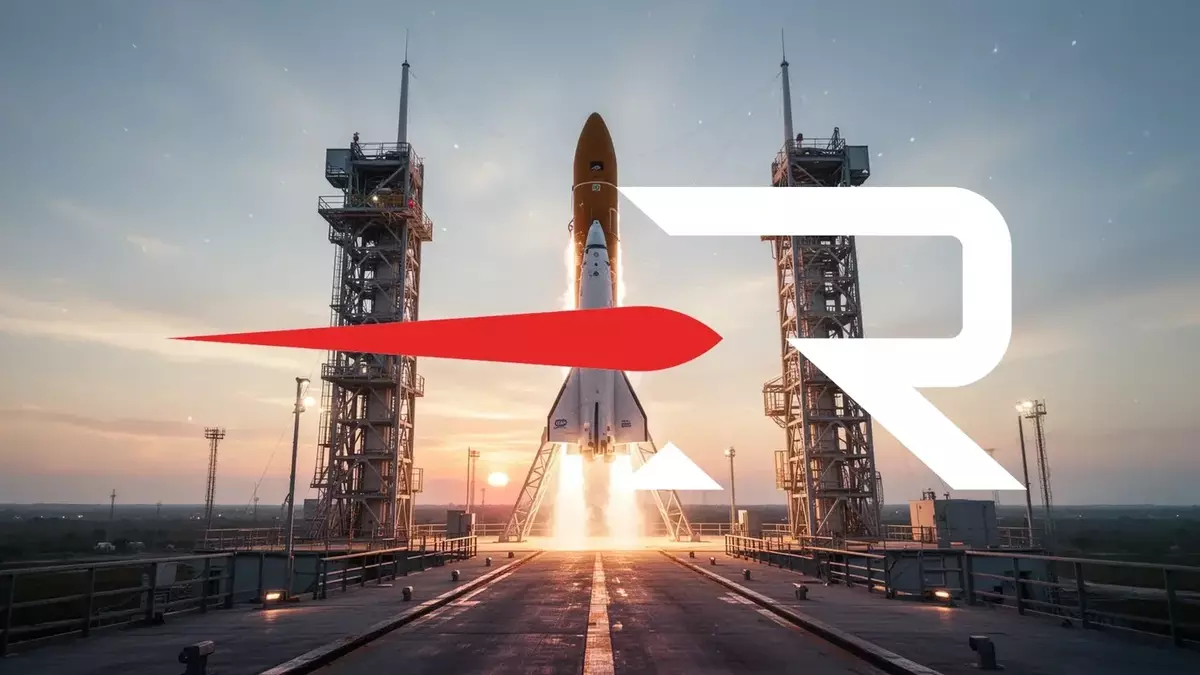
The engine test marks a key step toward the first flight of Neutron, a reusable medium-lift rocket designed to carry payloads of up to 13,000 kilograms to low Earth orbit. Rocket Lab’s engineering team completed a full-duration burn of the second stage’s Archimedes engine, bringing the company closer to a debut that Chief Executive Peter Beck now targets for the fourth quarter of 2026. The original plan called for an early-2026 launch, but a failed tank test on the first stage forced a delay.
Beck has tried to temper expectations by pointing to concrete milestones as they occur. The next signal, he said, will be “placing components on test stands,” and the company is working on an “aggressive schedule” to reach the launch pad. The first stage is designed to land on a recovery vessel named Return on Investment, a 122-meter ship being built by Bollinger Shipyards in Louisiana. That vessel is slated to be ready for Neutron’s second flight, not its first.
Should investors sell immediately? Or is it worth buying Rocket Lab USA?
Delays are hardly unusual for new rockets. Falcon 9, New Glenn, Vulcan and Ariane 6 all postponed their debut flights because of structural, propulsion or supply-chain challenges. Rocket Lab’s own small Electron rocket, now a workhorse with more than 50 launches, suffered its share of setbacks early on.
A Backlog That Outpaces the Flight Schedule
While the hardware is still being qualified, the sales team has been unusually busy. In the first quarter of 2026, the company signed 36 new launch contracts — more than it flew in all of 2025, when it completed 21 missions. Of those new agreements, 31 are for Electron and its suborbital variant HASTE; the remaining five are firm orders for Neutron. The combined manifest now stands at more than 70 missions, with a total backlog valued at roughly $2.2 billion. Launch contracts account for 41.5% of that figure.
That backlog got a further boost this week from a single eight-start contract with an undisclosed customer. Three of those launches will use Electron; the other five are booked on Neutron, even though the rocket has not yet flown. The contracts span 2026 through 2029, underscoring customer confidence in the development timeline.
Iridium and the Space Force Add Strategic Weight
The most transformative deal, however, is the planned acquisition of Iridium, a satellite communications operator with an L-band network and more than 2.5 million subscribers. Rocket Lab has offered approximately $8 billion, or $54 per share, representing a 24.1% premium to Iridium’s previous stock price. The transaction is expected to close by mid-2027 and would turn Rocket Lab into a vertically integrated provider spanning launch, satellite manufacturing and direct-to-consumer connectivity.
Adding to the strategic momentum, Rocket Lab was recently selected for a U.S. Space Force launch program valued at $5.6 billion. It also completed the Victus-Haze mission for the military, a demonstration of operational responsiveness. These wins, combined with the Iridium deal, position the company as a contender in both the commercial and national-security markets.
Rocket Lab USA at a turning point? This analysis reveals what investors need to know now.
Why the Stock Keeps Falling
Despite the news flow, investors appear focused on the risks that accompany the company’s ambitious agenda. The Iridium acquisition will require significant financing, and the Neutron schedule — now pegged to late 2026 — leaves little room for further delays. Every test success buys goodwill, but any hint of a slip could exacerbate the selling pressure.
For now, the market is pricing in those risks. The stock has given up more than half its value from the May peak, and the oversold RSI reading suggests that much of the pessimism may already be discounted. The coming months will be dominated by hardware testing at the Neutron integration facility and work at Launch Complex 3 in Virginia. If the fourth-quarter 2026 timeline holds, each successful test could begin to rebuild confidence. If not, the current slide may prove to have further to run.
Ad
Rocket Lab USA Stock: New Analysis - 20 July
Fresh Rocket Lab USA information released. What's the impact for investors? Our latest independent report examines recent figures and market trends.
Disclaimer regarding our articles: No investment advice, no buy or sell recommendation. Information on prices, companies, and markets is provided without guarantee; changes are possible at any time. Stock market transactions can lead to substantial losses. Our articles are created and reviewed in whole or in part automatically with the support of AI.