Rockwool stock trades steady as insulation demand supports earnings
Published on 07/21/2026 at 13:56 | Editorial responsibility: Rafael Müller, Editor-in-Chief AD HOC NEWS
Rockwool stock is backed by a business that has shown higher revenue and earnings in recent reporting periods, supported by demand for insulation solutions in construction and industrial markets. In its latest annual reporting for fiscal 2025, according to the companys investor information, Rockwool reported increased sales and profit compared with the prior year, underlining the link between energy-efficiency regulation and its core product portfolio.
Revenue up compared with prior year
Rockwool A/S (ISIN DK0010219153) is a Danish producer of stone wool insulation and related products, and its financial profile is shaped by construction activity and regulatory trends on energy efficiency. According to the companys investor relations information covering fiscal 2025, Rockwool generated higher revenue than in fiscal 2024, with sales rising compared with the previous year as insulation volumes grew and price levels remained resilient. The reported operating profit also increased year on year in fiscal 2025, supported by higher gross profit from insulation and systems segments.
In the same fiscal 2025 reporting context, Rockwool described how its profit margin improved compared with fiscal 2024, as operating costs were kept under control while selling prices reflected still elevated input costs such as energy and raw materials. The combination of higher revenue and a stronger margin translated into an increase in net income versus the prior year, underlining that profitability benefitted both from volume growth and pricing discipline. For investors, the quantified comparison of fiscal 2025 revenue and profit with fiscal 2024 indicates that Rockwool was able to navigate a mixed construction cycle while still growing its earnings base.
Insulation demand and segment performance
The companys reported performance also reflects the breakdown between insulation and systems segments, which together drive Rockwools earnings profile. According to Rockwools investor communications for fiscal 2025, insulation products for building envelopes and industrial applications accounted for the majority of revenue, with that segment showing growth compared with fiscal 2024 in both sales and earnings, supported by renovation activity and new-build projects focused on energy performance. The systems segment, which includes acoustic ceilings and façade solutions, contributed additional revenue and showed year-on-year improvement in profitability.
Rockwool noted in its fiscal 2025 reporting that sales in key European markets and selected international regions rose compared with fiscal 2024, helped by regulatory frameworks requiring better insulation standards and by customer demand for fire-resistant materials. At the same time, the company pointed out that construction activity varied from country to country, meaning that performance was driven by both market selection and product positioning.
More on Rockwools financials
Rockwools investor relations materials provide detailed tables on revenue, profit, and margin trends by segment and region over recent years.
Stone wool insulation as core product
Rockwools core product is stone wool insulation, used in building envelopes, roofs, walls, floors, and industrial equipment to improve thermal performance, fire safety, and acoustic comfort. The product line includes boards, batts, and loose-fill materials tailored to specific applications, with density and thickness adjusted to meet regulatory standards and customer requirements. In its investor materials describing fiscal 2025 performance, Rockwool highlighted how stone wool insulation remains central to its strategy, with investments in capacity and product development aligned to long term trends in energy efficiency and decarbonization.
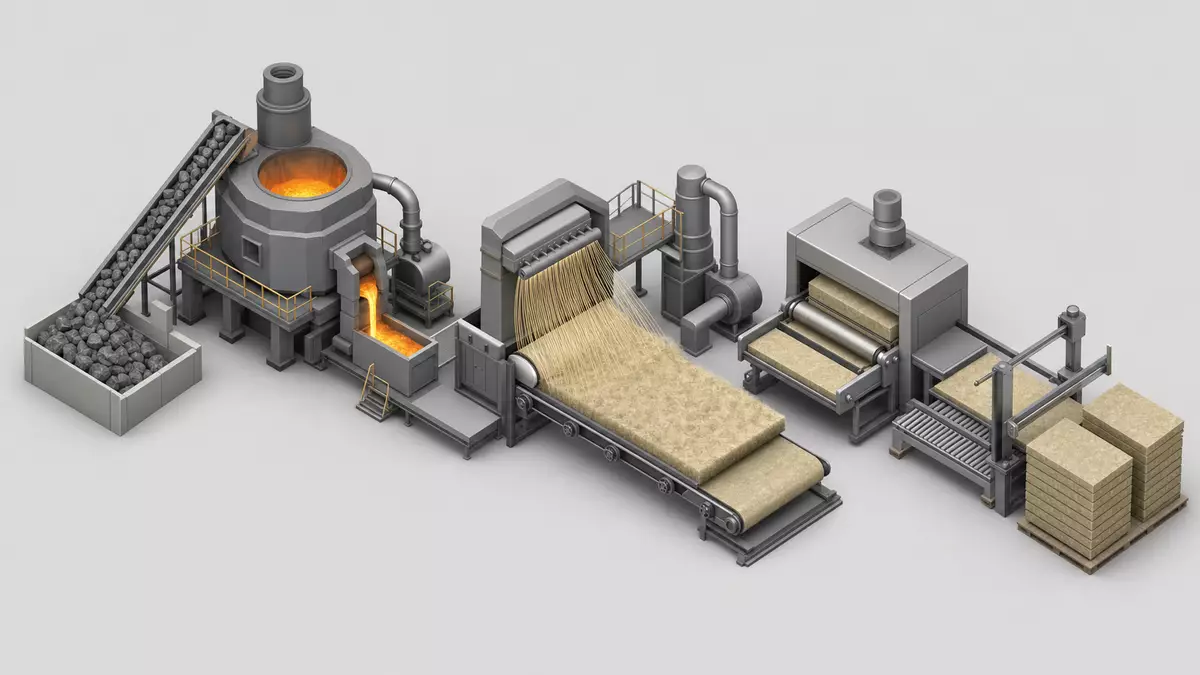
Stone wool is produced by melting basalt and other natural materials at high temperatures and spinning the molten rock into fibers, which are then combined with binders and formed into insulation products. The process allows Rockwool to offer products that are non-combustible and dimensionally stable, features that are important for fire regulations and long term performance in buildings. The durability of stone wool insulation also supports Rockwools positioning as a provider of sustainable building materials, with investor information noting that products can contribute to lower heating and cooling demand over their lifecycle.
Rockwool stock and market context
Rockwool stock is traded on the primary Danish market, and its market valuation reflects both its current earnings and expectations for future insulation demand. The companys investor relations data and public market information indicate that Rockwools market capitalization in recent periods has tracked the development of its revenue and profit, with investors paying attention to margin resilience and cash generation. In addition, Rockwools balance between European exposure and international growth markets plays a role in how the stock is valued, as regional construction cycles and regulatory decisions can influence sales volumes.
For Rockwool stock, one key factor is how quickly renovation programs and new building codes translate into orders for insulation materials. Investor communications emphasize that higher energy prices and climate policies continue to encourage better insulation in residential, commercial, and industrial buildings, which in turn shapes Rockwools medium term growth outlook. At the same time, the company acknowledges that broader economic trends and interest rates affect construction activity and therefore the timing of insulation demand.
Rockwool key data
- Company: Rockwool A/S
- ISIN: DK0010219153
- Ticker: CPH: ROCK
- Trading venue: Nasdaq Copenhagen
- Sector / Industry: Materials / Building Products
- Index membership: Danish large cap index
Disclaimer regarding our articles: No investment advice, no buy or sell recommendation. Information on prices, companies, and markets is provided without guarantee; changes are possible at any time. Stock market transactions can lead to substantial losses. Our articles are created and reviewed in whole or in part automatically with the support of AI.