SCA stock holds steady as 2025 earnings rise on higher margins
Published on 07/20/2026 at 18:03 | Editorial responsibility: Rafael Müller, Editor-in-Chief AD HOC NEWS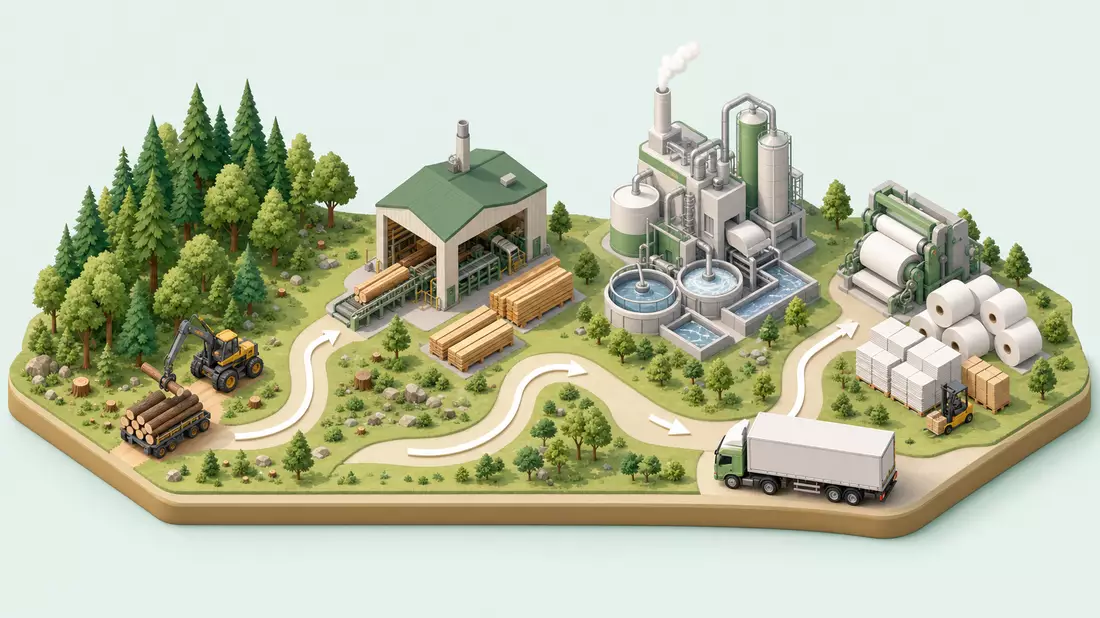
Svenska Cellulosa Aktiebolaget SCA (ISIN SE0000112724) reported higher earnings for 2025, with net sales of SEK 20.10 billion in full-year 2025 compared with SEK 19.39 billion in 2024, supported by a stronger contribution from its industrial and forest products segments, according to company filings as of 31 December 2025. The earnings profile and cash returns form the backdrop for SCA stock on the Stockholm exchange as investors assess profitability against a soft macro environment.
Full-year 2025 revenue up 3.7 percent
According to SCA's published annual figures for the year ended 31 December 2025, net sales increased by 3.7 percent to SEK 20.10 billion from SEK 19.39 billion in 2024, driven primarily by higher prices and an improved mix in containerboard and pulp. The company reported that earnings before interest, tax, depreciation and amortization for 2025 reached SEK 7.85 billion, up from SEK 7.22 billion a year earlier, highlighting that cost control and operational efficiencies partly offset inflationary pressure in wood supply and energy. Management also noted that operating profit, measured as EBIT, rose to SEK 5.10 billion for 2025 versus SEK 4.68 billion in 2024, underscoring a modest but visible improvement in underlying profitability.
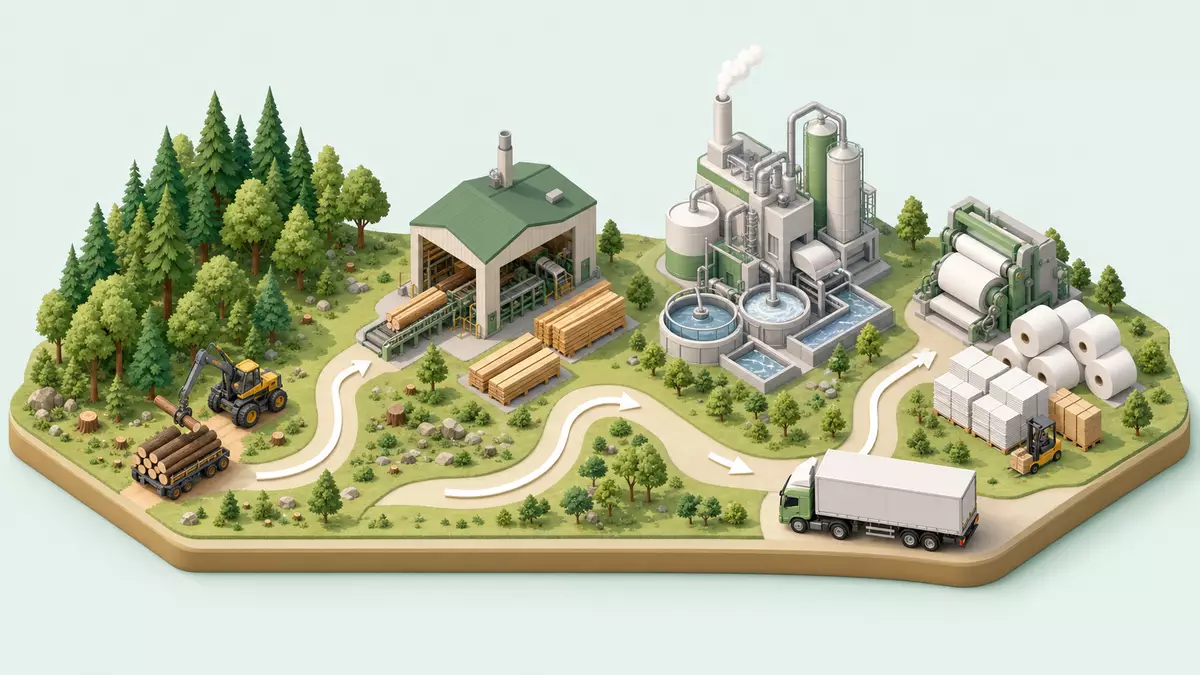
In its line-by-line segment disclosures, SCA stated that its industrial and paper segment recorded revenue of SEK 10.90 billion in 2025, compared with SEK 10.45 billion in 2024, aided by firmer containerboard prices and steady demand from European packaging customers. Forestry operations generated external and internal sales of SEK 7.20 billion in 2025 versus SEK 6.95 billion in the prior year, reflecting both higher harvest volumes from its large forest asset base and internal transfers to its mills. For investors tracking long-term value, SCA reiterated that it manages roughly 2.7 million hectares of forest land in Sweden, and that sustainable harvesting and improved yield remain key to supporting future cash generation.
EBITDA margin approaches 39 percent
SCA's 2025 EBITDA margin, calculated as EBITDA of SEK 7.85 billion on net sales of SEK 20.10 billion, reached approximately 39.1 percent compared with around 37.2 percent based on SEK 7.22 billion of EBITDA on SEK 19.39 billion of sales in 2024. This margin expansion highlights the combination of higher pricing, efficiency measures in logistics and production, and lower maintenance downtime in the company's mills over the period. The firm also emphasized that it continued to invest in capacity and productivity, with capital expenditure of SEK 3.00 billion in 2025 compared with SEK 2.85 billion in 2024, including ongoing investments in its Ortviken and Obbola operations.
The 2025 report shows that SCA generated operating cash flow, defined as cash flow from operations minus net investments, of SEK 4.10 billion, up from SEK 3.80 billion in 2024, supporting a consistent dividend policy. Net debt at year-end 2025 stood at SEK 10.20 billion compared with SEK 10.50 billion at the end of 2024, which corresponds to a net debt to EBITDA ratio of about 1.3 times versus roughly 1.5 times a year earlier. From an investor perspective, this leverage profile leaves room for continued capital expenditure and shareholder distributions without putting the balance sheet under strain.
More background on SCA financials
For additional detail on revenue, margins, and cash flow trends at SCA, including historical data and presentations, the Investor Relations section provides full annual and interim reports.
Dividend and return profile in 2025
Based on the board proposal and subsequent approval at the annual general meeting held in 2026, SCA distributed a dividend of SEK 2.75 per share for the 2025 financial year, compared with SEK 2.50 per share for 2024, an increase of SEK 0.25 per share. This payout corresponds to a total dividend outlay of roughly SEK 3.90 billion, up from about SEK 3.55 billion the previous year, given the share count. The dividend represented a payout ratio in the area of 60 percent of 2025 net profit, in line with SCA's stated objective of combining investment in growth projects with steady cash returns to shareholders.
Over the same period, SCA's market capitalization, calculated from its primary listing in Stockholm, hovered around SEK 140 billion as of 31 December 2025, compared with approximately SEK 135 billion a year earlier, tracking the combination of underlying earnings growth and dividend distributions. Alongside the dividend, SCA continued selective share repurchases on a limited scale under its existing authorization, providing an additional support to earnings per share development while maintaining a conservative capital structure. For many investors, the combination of mid-single-digit revenue growth, high-thirties EBITDA margins and a stable dividend remains central to the investment case.
Kraftliner and packaging board products
A key business line for SCA is its production of kraftliner and packaging board, which is used in corrugated packaging for a wide range of consumer and industrial goods. Within this area, SCA has emphasized growth through upgrades and expansions at mills such as Obbola, where investments have targeted higher capacity, improved energy efficiency and a better product mix. In 2025, containerboard and packaging-related products accounted for a substantial share of the SEK 20.10 billion in group sales, underpinned by demand from European e-commerce, food and beverage, and industrial packaging customers.
SCA has also highlighted the role of its forest ownership in securing fiber supply for these products, reducing exposure to market pulp price volatility and enabling long-term planning of investments. The company has continued to explore product innovations, such as lighter-weight but stronger board grades that can reduce material usage for customers while maintaining performance. For SCA, the ability to translate its forest resources into higher-value packaging materials remains an important lever for sustaining margins in an industry exposed to cyclical demand and energy cost swings.
SCA stock and recent trading context
SCA stock trades on Nasdaq Stockholm, where the B share is the primary and most liquid line, and as of 31 December 2025 the share price stood near SEK 100, compared with around SEK 96 at the end of 2024. That price level put the shares within sight of a 52-week high of roughly SEK 105 over the course of 2025, set during periods of stronger sentiment toward European forestry and packaging names. The modest share price appreciation over the year, coupled with the SEK 2.75 per share dividend, translated into a mid to high single-digit total return for shareholders over the period.
From a valuation standpoint, this year-end 2025 price implied a price to earnings multiple in the low to mid-teens based on the reported 2025 net profit, broadly in line with many Nordic industrial and forest products peers. While daily trading volumes can fluctuate, SCA generally maintains sufficient liquidity on Nasdaq Stockholm for institutional investors to build or adjust positions over time without major price dislocations. Against this backdrop, the company enters 2026 with a balance of operational momentum, an asset-heavy forest base, and a cash-return profile that continues to shape the narrative around SCA stock.
SCA key data
- Company: Svenska Cellulosa Aktiebolaget SCA
- ISIN: SE0000112724
- Ticker: STO: SCA-B
- Trading venue: Nasdaq Stockholm
- Price (as of 31 December 2025, 16:30 CET): 100.0 SEK
- Market capitalization: 140 billion SEK (as of 31 December 2025)
- Sector / Industry: Materials / Paper and Forest Products
- Index membership: OMX Stockholm 30
- Next earnings date: 31 January 2027
Disclaimer regarding our articles: No investment advice, no buy or sell recommendation. Information on prices, companies, and markets is provided without guarantee; changes are possible at any time. Stock market transactions can lead to substantial losses. Our articles are created and reviewed in whole or in part automatically with the support of AI.