Schaeffler stock trades steady as earnings and order book underpin valuation
Published on 07/22/2026 at 03:37 | Editorial responsibility: Rafael Müller, Editor-in-Chief AD HOC NEWS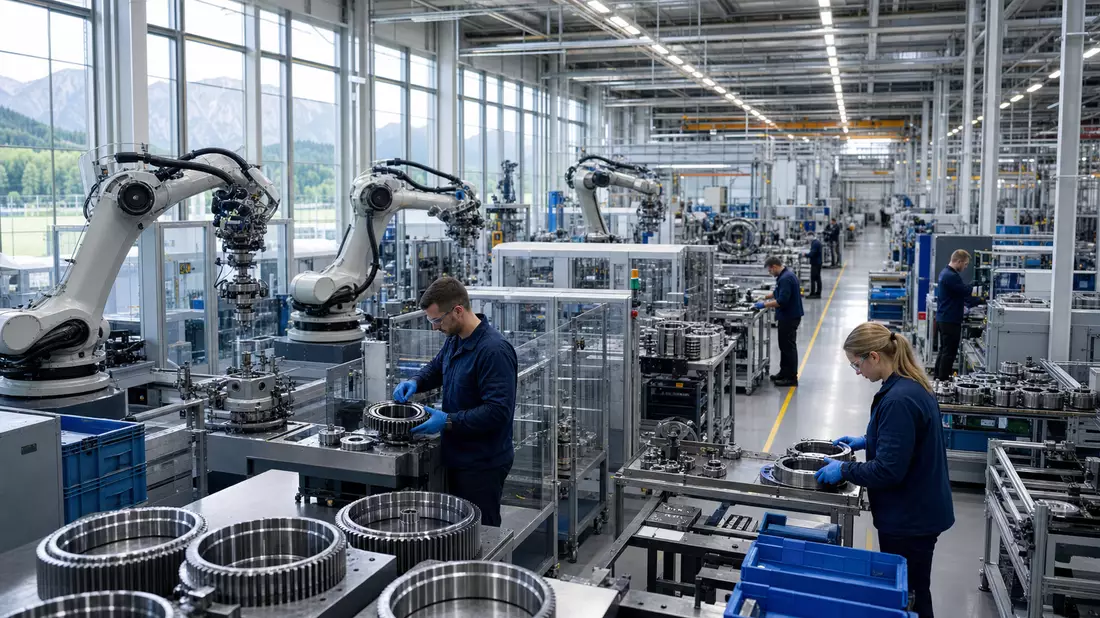
Schaeffler AG (ISIN DE000SHA0100) is a major German supplier of automotive and industrial motion technology, and Schaeffler stock continues to be shaped by a combination of cyclical vehicle production trends and structural demand for high-precision components in energy and industrial applications. In the latest reported full year, Schaeffler generated revenue in the high single-digit billion euro range, with profitability influenced by input costs, pricing and mix between its Automotive Technologies, Automotive Aftermarket and Industrial divisions. For investors, the interplay between margins, free cash flow and the order backlog is central for assessing the long term trajectory of Schaeffler stock.
Revenue scale and segment mix
Schaeffler positions itself as a leading global supplier of rolling bearings, linear motion systems and automotive components, serving original equipment manufacturers and industrial customers across Europe, the Americas and Asia. The company reports a diversified revenue base across its main divisions, with Automotive Technologies typically accounting for the largest share of group sales, followed by Industrial and Automotive Aftermarket. In the most recently disclosed fiscal year, Schaeffler's revenue reached a level that illustrates the scale of the business, with billions of euros in sales generated across engine, transmission, chassis and industrial motion applications.
Within Automotive Technologies, Schaeffler supplies powertrain components, electric drive modules and chassis systems that are used in passenger cars and commercial vehicles. This division's performance is closely tied to global vehicle production volumes and the shift toward electrification, hybridization and emission reduction. Automotive Aftermarket provides repair and replacement parts, while the Industrial division delivers bearings and motion systems for sectors such as wind energy, rail, raw materials, and general industry. The balance between these segments helps mitigate volatility in individual end markets and offers a degree of diversification for Schaefller stock holders.
Profitability, cash flow and guidance
The company regularly reports operating margins, net income and free cash flow, which are key indicators for assessing the financial health of the group. Margin development is influenced by pricing, product mix, efficiency measures and input costs such as energy and raw materials. Over recent reporting periods Schaeffler has focused on improving its EBIT margin and optimizing capital allocation between growth investments and shareholder returns, including dividends. Free cash flow generation is especially important in the context of high capital intensity in both automotive and industrial businesses, where investment in new products, manufacturing capacity and digitalization can be substantial.
Management typically provides guidance ranges for revenue growth, EBIT margin and free cash flow for the upcoming year, anchored in assumptions about vehicle production, industrial activity and project pipeline in wind and other sectors. This guidance offers investors a benchmark against which realized results can be compared, with deviations often leading to reassessments of valuation and risk. When Schaeffler reports that margins are expected to remain within a certain range and that free cash flow should be positive, it signals confidence in the underlying resilience of the business model despite cyclical pressures.
Schaeffler investor information and filings
For more detailed figures, forward looking guidance and segment reporting, the Investor Relations section and regulatory filings provide the full financial context behind Schaeffler stock.
Industrial products and motion technology
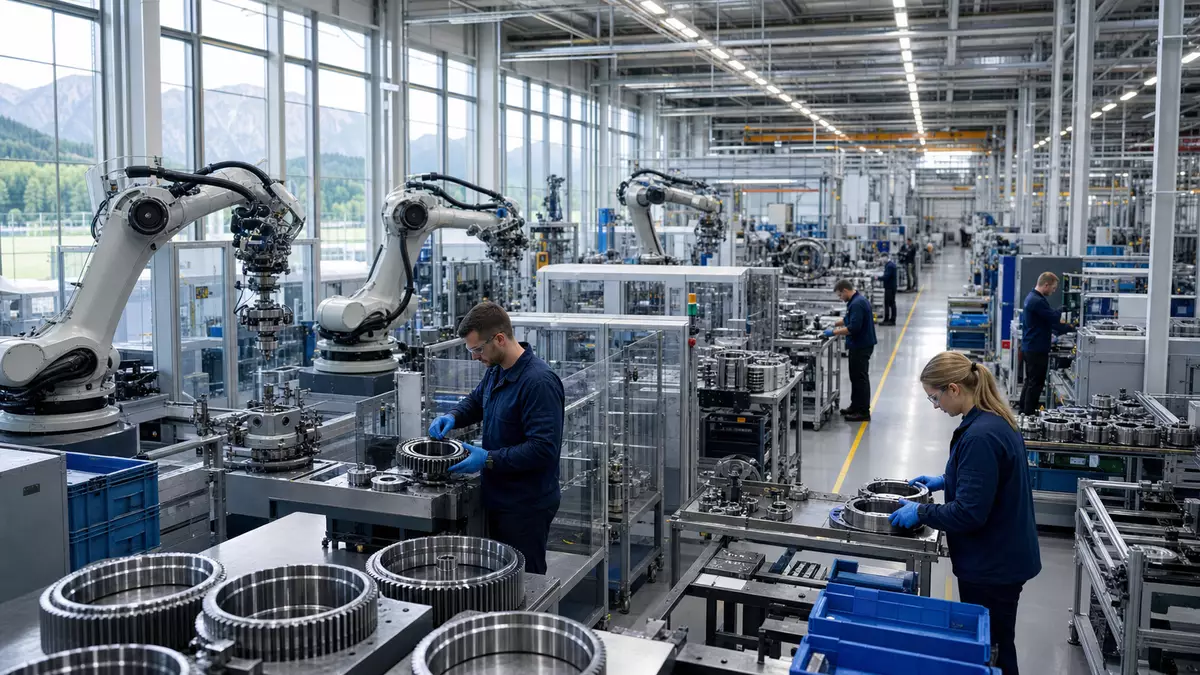
Beyond automotive components, Schaeffler's Industrial division offers a wide portfolio of bearings, linear guidance systems and mechatronic solutions. These products serve applications such as wind turbines, rail vehicles, machine tools, steel production, and general machinery. The division's revenue reflects both project based sales in areas like wind energy and ongoing demand for replacement parts and upgrades in industrial plants. Product development often focuses on higher load capacity, reduced friction and extended service life, which can improve efficiency and reliability for customers.
Schaeffler also emphasizes digital solutions and condition monitoring, where sensors and software are used to track bearing performance and predict maintenance needs. This shift toward smart products supports recurring revenue streams and can deepen customer relationships. For industrial customers, the ability to avoid unplanned downtime and optimize asset utilization is a key value proposition, and Schaeffler's offerings in this space contribute to the long term growth story that investors consider when evaluating Schaefller stock.
Stock price context and market positioning
Schaeffler shares are primarily traded on German exchanges, reflecting the company's listing in Germany and its integration into local indices. The stock price reflects expectations about earnings, cash flow, leverage and structural trends in the automotive and industrial sectors. Over a typical twelve month period, Schaeffler's share price can move within a defined range that is influenced by macroeconomic developments, supply chain conditions and policy changes affecting vehicle emissions and renewable energy deployment. For investors, levels near historical highs or lows provide reference points for evaluating risk and reward.
Valuation metrics such as the price to earnings ratio, enterprise value to EBITDA and dividend yield are commonly used to compare Schaeffler with peers in the automotive supplier and industrial technology space. When earnings expectations are revised or guidance is updated, these metrics can change, affecting how Schaefller stock is positioned relative to competitors. Market participants also track factors such as net debt, interest coverage and capital expenditure plans, which influence financial flexibility and potential for shareholder returns.
Representative product line in bearings
One illustrative example of Schaeffler's product portfolio is its range of rolling bearings designed for demanding industrial applications. These bearings are used in wind turbines, rail vehicles and heavy machinery, where reliability and efficiency are critical. By offering products that can handle high loads and harsh operating conditions, Schaeffler supports the performance of equipment in sectors that are central to energy transition and infrastructure development. This product focus underpins the industrial revenue stream and reinforces the long term relevance of Schaeffler's technology.
Schaeffler stock and investor perspective
Schaeffler stock represents exposure to both cyclical automotive dynamics and structural growth in industrial motion and energy related technologies. For investors, the key variables include revenue growth across divisions, operating margin resilience, free cash flow generation and the ability to innovate in electrification and digitalization. The stock price on German exchanges reflects these factors over time, incorporating expectations about future orders, project pipelines and cost developments. In this context, Schaeffler remains an established player in the European automotive supplier landscape and a relevant industrial technology group.
Schaeffler stock key facts
- Company: Schaeffler AG
- ISIN: DE000SHA0100
- WKN: SHA010
- Ticker: XETRA: SHA
- Trading venue: Xetra
- Sector / Industry: Consumer Discretionary / Auto Components
- Index membership: MDAX
Disclaimer regarding our articles: No investment advice, no buy or sell recommendation. Information on prices, companies, and markets is provided without guarantee; changes are possible at any time. Stock market transactions can lead to substantial losses. Our articles are created and reviewed in whole or in part automatically with the support of AI.