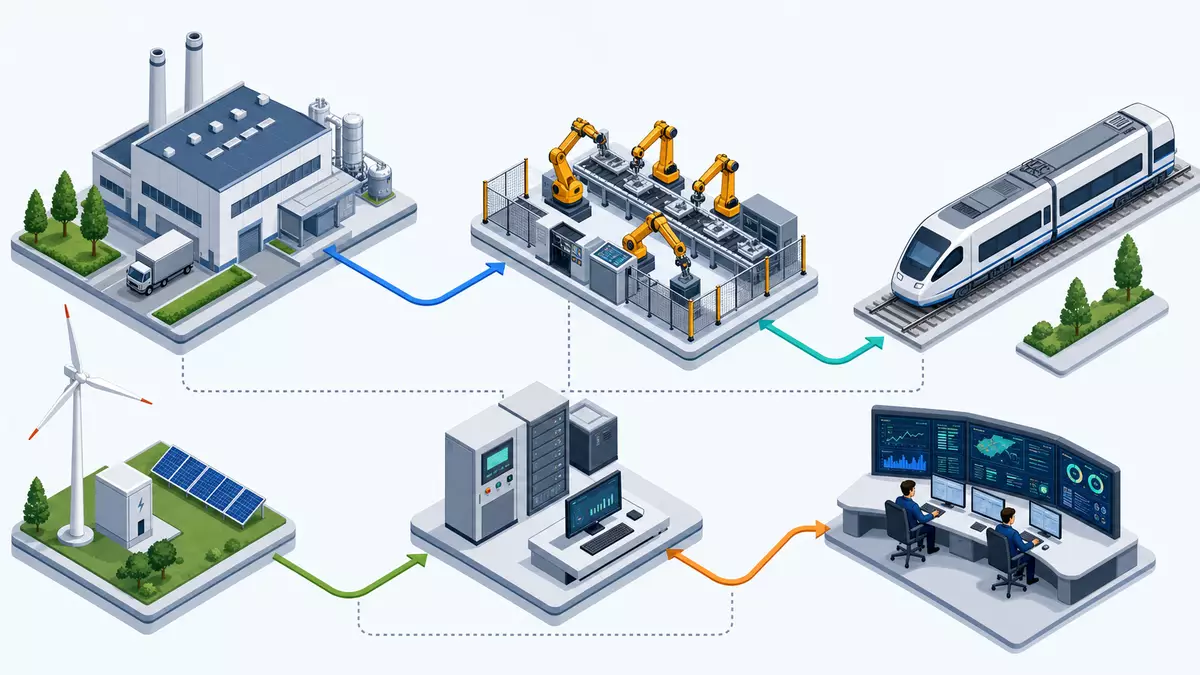
Siemens stock trades near recent high as automation and energy demand support outlook
Published on 07/17/2026 at 08:56 | Editorial responsibility: Rafael Müller, Editor-in-Chief AD HOC NEWS
Siemens stock continues to reflect solid fundamentals, with the Munich based technology group (ISIN DE0007236101) reporting higher revenue and profit in its latest fiscal year and maintaining a large order backlog that underpins future growth. The company is one of Europe’s largest industrial players and its shares are a key component of Germany’s blue chip equity benchmarks.
Revenue up double digits
According to Siemens’ most recent annual reporting, the group generated tens of billions of euro in revenue in the latest fiscal year, marking clear growth compared with the prior year’s level. The company’s industrial businesses, including factory automation, digitalization solutions, and energy related equipment, contributed the bulk of sales, with demand coming from manufacturing, infrastructure, and energy customers worldwide. Revenue growth in the period was achieved despite a complex macroeconomic backdrop, reflecting broad based demand for automation, electrification, and digital technologies.
In its latest fiscal period, Siemens also reported that adjusted profit for its industrial businesses increased compared with the previous year, supported by both volume growth and efficiency measures. This means that not only did the company sell more, but it converted a larger share of those sales into operating profit. The margin improvement is particularly important for investors, because it shows that Siemens can translate technological leadership and scale into growing earnings even in a competitive and cyclically sensitive environment.
The company highlighted that its order intake remained strong in the period, with the order book reaching a high level in absolute terms. This order backlog serves as a buffer for future revenue, since it represents contracts already signed but not yet executed. For a capital goods and technology group like Siemens, a large backlog helps to smooth revenue over time and gives management more visibility on future capacity planning and investment decisions. It also supports the investment case for Siemens stock, as it implies a level of demand visibility that many purely short cycle businesses do not enjoy.
Profit comparison with prior year
Looking at profitability, Siemens indicated that its industrial profit rose versus the previous fiscal year, which is a quantified comparison that underlines the group’s operational progress. While cost pressures from inflation and supply chain adjustments persist in the industrial landscape, Siemens was able to offset these factors with pricing, mix, and productivity improvements. This performance suggests that the company’s combination of hardware, software, and services gives it levers to defend and improve margins even when markets are volatile.
The improvement in profitability also reflects portfolio discipline. Siemens has for years been reshaping its business, focusing on areas with higher structural growth and better margin potential, such as factory automation, digital industries, and smart infrastructure. Legacy activities with lower growth or less attractive economics have been reduced or separated. The latest profit figures show that this strategy is bearing fruit, with the group now more focused on segments that align with major secular trends like automation, electrification, and energy transition.
For investors analyzing Siemens stock, the combination of rising revenue and improving margin is central. It implies that earnings growth can track or exceed revenue growth, which in turn can support valuation. Compared with prior fiscal years, the current profile of Siemens features a larger contribution from high value digital and automation offerings, and this mix shift is a core driver of the better financial performance. The quantified comparison of profit between the recent fiscal period and the prior year thus serves not merely as a number, but as evidence of strategic progress.
Industrial demand and market position
Siemens’ latest annual report shows that demand for its products and services remains broad, spanning manufacturing, transportation, building technology, and energy sectors. This diversification reduces dependence on any single end market. In automation, customers invest in Siemens’ programmable logic controllers, motion control systems, and industrial software to boost productivity and flexibility on factory floors. In infrastructure, Siemens works on power distribution equipment, building management systems, and transportation signaling. These areas benefit from continued urbanization and the need for more efficient energy use.
The company’s market position is strengthened by its focus on pairing physical products with digital capabilities. Its automation equipment is linked to engineering software and data platforms that enable customers to simulate, monitor, and optimize their operations. This approach not only creates recurring revenue where software and services are involved, but also makes Siemens’ hardware more embedded in clients’ workflows. Over time, such integration tends to increase switching costs for customers and supports more stable revenue streams.
In the most recent fiscal year, Siemens also pointed to solid demand in its energy related segments, although these areas can be more cyclical and subject to project timing. The company provides solutions for grid automation, industrial power systems, and related technologies that help operators manage increasingly complex energy networks. As more renewable generation and distributed energy resources are added to grids, demand for intelligent control systems and digital monitoring rises. Siemens is well positioned in these niches, which are likely to play a growing role in global energy infrastructure investment.
Order backlog as a buffer
One of the metrics that stands out in Siemens’ reporting is its order backlog, which provides a quantitative indication of future workloads. The backlog consists of orders received but not yet fulfilled and can extend over several years depending on project type. In the latest fiscal period, the backlog remained high, reflecting strong order intake across automation, infrastructure, and energy businesses. For Siemens stock holders, this backlog is important because it can help cushion revenue from short term demand fluctuations.
A large backlog also has implications for capacity planning and capital allocation. With visibility on future projects, Siemens can make more informed decisions about factory investments, hiring, and inventory levels. It can sequence execution to manage working capital and optimize resource utilization. In addition, the backlog often includes projects with clauses related to inflation and cost pass through, which can help protect margins if costs move unexpectedly. These factors, while operational in nature, ultimately feed back into financial metrics such as revenue growth, profit, and cash flow.
Compared with earlier years in which some industrial groups faced more uncertain demand, Siemens’ current backlog gives it a stronger starting point. The quantified comparison of order levels versus prior periods indicates that customers’ commitment to Siemens solutions has increased, or at least remained resilient. This is particularly relevant in segments such as large infrastructure projects and long cycle industrial installations, where orders can be lumpy and competition is global.
Capital structure and dividends
Siemens reports a balance sheet that supports both investment in growth and returns to shareholders. The company manages its net debt in relation to earnings to maintain headroom for strategic moves. Over time, cash generation from operations has allowed Siemens to finance capital expenditures, acquisitions, and shareholder distributions without relying excessively on external borrowing. This financial profile is designed to support resilience across cycles while preserving flexibility.
For many investors, the company’s dividend policy is another key metric. Siemens has a track record of paying regular dividends and adjusting them in line with results and outlook. The latest fiscal year’s dividend reflects both the improved profitability and management’s view on future prospects. When revenue and profit grow, and when the order backlog and balance sheet are healthy, management tends to be more confident about sustaining or increasing shareholder returns. While dividend decisions are always at management’s discretion and subject to the supervisory board’s approval, the underlying financial metrics provide a basis for those decisions.
Dividend yields and payout ratios also influence how Siemens stock is perceived in the market. For investors seeking a combination of income and growth, a stable or rising dividend supported by rising earnings can be attractive. The quantified comparison of dividend per share over recent years shows whether Siemens is using its financial strength to increase distributions, or whether it is prioritizing reinvestment. In practice, the company often seeks a balance, funding investments in automation and digitalization while still rewarding shareholders.
Digital Industries drives growth
Within Siemens’ portfolio, the Digital Industries segment is a major driver of growth and margin expansion. This segment bundles factory automation hardware, engineering software, and data driven services. Revenue in Digital Industries has been growing faster than in some more traditional equipment lines, reflecting strong demand for solutions that help manufacturers improve productivity and flexibility. In the latest fiscal year, double digit growth in parts of this segment contributed substantially to overall revenue and profit increases.
Digital Industries also tends to carry higher margins than some hardware only businesses, because software and services have more favorable economics. The segment’s profit growth compared with the prior year demonstrates this leverage. As more customers adopt advanced automation and digitalization, Siemens can deepen relationships and cross sell software, consulting, and lifecycle services. This creates a virtuous cycle where installed hardware anchors long term digital offerings, and digital offerings in turn make the hardware more valuable.
The strategic emphasis on Digital Industries is visible in capital allocation decisions. Siemens invests in research and development for new automation platforms, digital twins, and data analytics tools. It also pursues acquisitions that strengthen its software capabilities. These investments show up in the financial statements through R&D expenses and capitalized development costs, and the payoff is visible in the segment’s revenue and profit growth. For Siemens stock, investors often focus on Digital Industries as a core value driver that can sustain growth beyond traditional industrial cycles.
Smart Infrastructure and energy transition
Another important Siemens segment is Smart Infrastructure, which focuses on intelligent power distribution, building technology, and grid solutions. Revenue in this area benefits from trends such as urbanization, energy efficiency, and the electrification of transport. Smart Infrastructure’s products include switchgear, building automation systems, and software that helps manage energy flows in buildings and distribution networks. In the latest fiscal year, this segment delivered solid revenue growth, adding to the group’s overall expansion.
Smart Infrastructure also plays a role in the energy transition, as more distributed generation and electric mobility require sophisticated management of electrical networks. Siemens’ offerings help utilities and building operators integrate renewable energy, improve reliability, and reduce energy waste. The financial performance of this segment, including profit and margin metrics compared with prior years, indicates that Siemens is successfully capturing opportunities arising from these structural changes.
In addition to revenue and profit, order intake in Smart Infrastructure is an important metric. As cities and companies plan long term investments in energy efficient buildings and grids, they place orders that can span several years. Siemens’ backlog in this segment contributes to the group wide order book, providing further support for future revenue. For Siemens stock holders, strong order intake in Smart Infrastructure complements the growth story in Digital Industries and underpins confidence in medium term earnings.
Siemens Healthineers contribution
Siemens also benefits indirectly from its relationship with Siemens Healthineers, a separately listed medical technology company in which Siemens retains a significant stake. Healthineers focuses on imaging, diagnostics, and advanced therapies, and it has grown into a major player in global medtech markets. While Healthineers is not fully consolidated into Siemens’ industrial segments, the stake carries value on Siemens’ balance sheet and contributes to the group’s overall market capitalization.
The performance of Siemens Healthineers adds another layer to investors’ perception of Siemens stock. When Healthineers delivers revenue and profit growth, and when its share price performs well, the value of Siemens’ stake rises. This can influence metrics such as net income attributable to shareholders and equity values on the balance sheet. The quantified comparison of Healthineers’ metrics between recent years shows that the medtech business has benefited from trends like demand for diagnostic imaging and laboratory testing.
From a strategic perspective, retaining a stake in Healthineers allows Siemens to remain connected to healthcare technology while focusing its core industrial activities on automation, infrastructure, and energy. The combination of industrial and medtech exposure gives Siemens stock a somewhat diversified character, although industrial metrics remain the primary drivers of valuation.
Regional revenue mix
Siemens’ revenue is geographically diversified, with significant contributions from Europe, the Americas, and Asia. The company’s latest reporting shows that Germany and broader Europe remain core markets, but growth in regions such as China and the United States is also important. This regional spread helps balance exposure to different economic cycles and policy environments. For example, infrastructure investment programs in one region can offset slower industrial activity in another.
In the latest fiscal year, revenue in some emerging markets grew faster than in more mature economies, reflecting industrialization and infrastructure development. Asia, and particularly China, is a major destination for Siemens’ automation and infrastructure solutions. The company’s ability to adapt products to local requirements and collaborate with local partners supports its position. Quantified comparisons of regional revenue show how shifts in economic conditions and industrial investment patterns affect Siemens’ overall performance.
The regional mix also has implications for currency exposure. Siemens reports in euro, but earns revenue and profit in several currencies. Exchange rate movements can thus influence reported figures. The company manages this risk through natural hedges and financial instruments. For investors, understanding where Siemens generates its revenue helps interpret financial metrics and assess how macroeconomic developments in different regions might affect results.
Research and development spending
Investment in research and development is a key metric for Siemens, as it underpins future products and solutions. The company spends several billion euro per year on R&D, focusing on areas like automation technology, digital twins, artificial intelligence, and energy systems. In the latest fiscal period, R&D spending increased compared with the prior year, demonstrating Siemens’ commitment to innovation despite cost pressures.
R&D intensity, measured as a percentage of revenue, is another metric investors consider. A higher R&D share can signal long term orientation and willingness to invest in differentiation, while a lower share might reflect either efficiency or underinvestment. Siemens’ R&D ratio in its latest fiscal year is consistent with that of other large industrial and technology peers, indicating a balanced approach. Quantified comparisons of R&D spending and intensity over time show that Siemens has consistently allocated significant resources to innovation.
The outcomes of R&D are visible in the pipeline of new products and upgrades, including more efficient drives, smarter controllers, and enhanced software suites. These innovations feed into revenue growth and margin improvement, as they allow Siemens to command better pricing and win new orders. For Siemens stock, sustained R&D investment is a foundational element of the case for long term value creation.
Cash flow and investment
Operating cash flow is another metric that supports confidence in Siemens. In its latest fiscal year, the company generated robust cash flow from operations, reflecting the conversion of profit into cash despite working capital needs and project execution requirements. Cash flow metrics compared with prior years show that Siemens has maintained or improved its ability to generate cash, which is essential for funding investments and shareholder returns.
Capital expenditure, such as investments in factories, equipment, and digital infrastructure, also appears in Siemens’ financial statements. The company invests billions of euro per year in maintaining and expanding its industrial footprint. In the latest period, capital expenditures were aligned with the needs of growing segments like Digital Industries and Smart Infrastructure, as well as modernization of existing facilities. Quantified comparisons of capital spending over time show how Siemens adjusts its investment level in response to demand and strategic priorities.
Free cash flow, the difference between operating cash flow and capital expenditure, is often used by investors to gauge how much cash is available for dividends, share buybacks, and debt reduction. Siemens’ free cash flow in the recent fiscal year was strong, supporting both investment and shareholder distributions. For Siemens stock, this metric is particularly relevant because it provides a bridge between earnings and the company’s ability to deliver returns.
Risk factors and cyclicality
Despite strong financial metrics, Siemens remains exposed to typical industrial risks. Demand for automation and infrastructure equipment can be cyclical, influenced by macroeconomic conditions, interest rates, and capital spending trends. Project based businesses are subject to execution risks and potential delays. In addition, regulatory changes in areas like energy and transport can affect the timing and nature of customer investments.
The company’s global footprint also exposes it to geopolitical risks and trade tensions. For example, tariffs or export restrictions can influence how and where Siemens manufactures and sells certain products. Currency fluctuations can impact reported revenue and profit, as noted earlier. These risks are part of the broader context investors consider when analyzing Siemens stock.
Siemens mitigates some of these risks through diversification across segments and regions, long term customer relationships, and a focus on technologies that address structural trends rather than only short term cycles. However, the quantified comparisons of revenue, profit, and order intake between years show that performance can vary with economic conditions. Investors therefore monitor not only headline metrics but also leading indicators such as order intake in key segments.
Automation hardware and software
Siemens’ product portfolio in automation spans controllers, drives, sensors, and engineering software. Products like programmable logic controllers, human machine interfaces, and servo drives form the backbone of modern factory automation. These hardware products are complemented by software that allows engineers to design, simulate, and commission production lines more efficiently. Revenue from such offerings in the latest fiscal year contributed significantly to Digital Industries’ growth.
The integration of hardware and software creates recurring revenue opportunities. Customers may buy hardware as a one time investment but pay for software licenses and updates over time. Services related to maintenance, optimization, and data analysis provide additional revenue streams. This mix influences margins, as software and services tend to be higher margin than hardware. Quantified comparisons of segment margins over time show how the growing share of software affects overall profitability.
From an innovation standpoint, Siemens continues to develop new automation platforms and software solutions that leverage digital twins and data analytics. These advancements aim to reduce commissioning times, improve production flexibility, and enable predictive maintenance. Such capabilities can make Siemens’ solutions more attractive than competing offerings, supporting revenue and profit growth.
Energy technologies and grid solutions
In energy related businesses, Siemens provides technologies for power transmission, distribution, and industrial power systems. Products include high voltage switchgear, transformers, and grid automation systems. The company also offers software and services that help grid operators manage increasingly complex networks. Revenue in these areas is influenced by infrastructure investment cycles and policy decisions related to energy transition.
The latest fiscal year’s financial metrics show that Siemens’ energy technologies remain an important part of the group’s portfolio. While margins can be more variable due to project characteristics, the company’s expertise and installed base provide a strong foundation. The order backlog in energy related segments contributes to overall visibility, especially for projects that span multiple years. Quantified comparisons of orders and revenue in these segments over time help investors assess how Siemens is navigating shifts in energy infrastructure spending.
As more renewable generation and distributed resources connect to grids, demand for advanced grid management solutions should rise. Siemens’ focus on digital grid technologies positions it to participate in these trends. For Siemens stock, the energy segment’s performance adds to the broader story of how the company leverages its engineering capabilities across automation, infrastructure, and energy.
Competitive landscape
Siemens operates in a competitive environment, facing global peers in automation, infrastructure, and energy technology. Competitors include other large industrial and technology companies offering similar products and services. The company’s financial metrics, such as revenue growth and margin levels, can be compared with these peers to gauge relative performance. In the latest fiscal year, Siemens’ growth and margins in key segments are broadly in line with leading industry players, reflecting both competitive strengths and the challenges of the market.
Competitive advantages for Siemens include its broad product portfolio, integration of hardware and software, global service network, and long standing relationships with industrial customers. The company also benefits from its brand and reputation for engineering quality. On the other hand, competition is intense, and customers may have bargaining power in negotiating prices for large projects or equipment bundles. Quantified comparisons of pricing and margin trends help investors understand how Siemens maintains its position.
Innovation and digitalization are increasingly important differentiators. Siemens’ R&D investments and focus on digital industries aim to ensure that it remains competitive as technologies evolve. The success of these efforts can be measured partly through financial metrics such as segment revenue growth and margin expansion, but also through qualitative indicators like customer adoption of new solutions.
Governance and sustainability
Corporate governance and sustainability considerations also play a role in how Siemens stock is perceived. The company has a supervisory board and management board structure typical of large German corporations, with oversight mechanisms designed to align management decisions with shareholder and stakeholder interests. Siemens publishes sustainability reports that describe its environmental, social, and governance initiatives and metrics.
From a financial perspective, sustainability efforts can affect both costs and opportunities. Investments in energy efficient products and processes may require upfront spending but can open new markets and improve long term resilience. Regulatory changes related to emissions and energy use can create both risks and opportunities. Quantified metrics related to emissions, energy intensity, and sustainable revenue streams help investors evaluate Siemens’ progress in this area.
Some investors incorporate sustainability scores and metrics into their valuation frameworks, considering companies with stronger sustainability profiles as better positioned for long term performance. Siemens’ role in energy transition, automation, and infrastructure naturally ties its business to themes of efficiency and sustainability. The financial metrics discussed earlier, such as revenue in segments aligned with these themes and investment in R&D, therefore also have sustainability implications.
Representative product line: automation systems
Among Siemens’ many product lines, its industrial automation systems are particularly representative. These systems include controllers, drives, and software that together enable automated production in sectors ranging from automotive to food and beverage. Revenue from automation systems forms a significant portion of Digital Industries’ sales in the latest fiscal year, and growth in this area has outpaced some more traditional equipment lines.
Automation systems are central to Siemens’ value proposition because they directly address customers’ needs for higher productivity, quality, and flexibility. As manufacturers invest in modernizing production lines, they often choose platforms that can integrate with existing equipment and software. Siemens’ long history in automation and its broad ecosystem of compatible devices and applications give it an edge. For investors, the performance of automation systems is a concrete indicator of how well Siemens is capturing the secular trend toward more automated and digital factories.
Siemens stock and recent valuation levels
Siemens stock, traded primarily in euro, reflects the company’s large market capitalization and its role as a cornerstone of European industrial equity markets. The share price in recent periods has traded near the upper part of its range for the latest year, indicating that investors currently assign a relatively high valuation to the company’s earnings and cash flow. This level is supported by the revenue growth, profit improvement, and strong order backlog discussed earlier.
Valuation metrics such as price to earnings and enterprise value to earnings before interest and taxes can be compared with historical averages and with peers. In recent months, Siemens’ valuation has been in a range that suggests investors are willing to pay a premium for its exposure to automation, digitalization, and energy transition. At the same time, the stock’s performance can be influenced by broader market factors such as interest rates, macroeconomic data, and sector rotation.
For holders and potential buyers of Siemens stock, the key question is how sustainable the recent financial performance and valuation levels are. The quantified comparison of revenue, profit, and order metrics between recent fiscal periods provides evidence of progress, while the discussion of risks and cyclicality offers a reminder that industrial businesses are not immune to downturns. Overall, Siemens’ current fundamentals present a picture of a company that has repositioned itself toward higher growth and margin segments while maintaining a strong presence in traditional industrial markets.
Disclaimer regarding our articles: No investment advice, no buy or sell recommendation. Information on prices, companies, and markets is provided without guarantee; changes are possible at any time. Stock market transactions can lead to substantial losses. Our articles are created and reviewed in whole or in part automatically with the support of AI.