SIG Group stock holds steady as carton packaging margins support earnings
Published on 07/27/2026 at 09:09 | Editorial responsibility: Rafael Müller, Editor-in-Chief AD HOC NEWS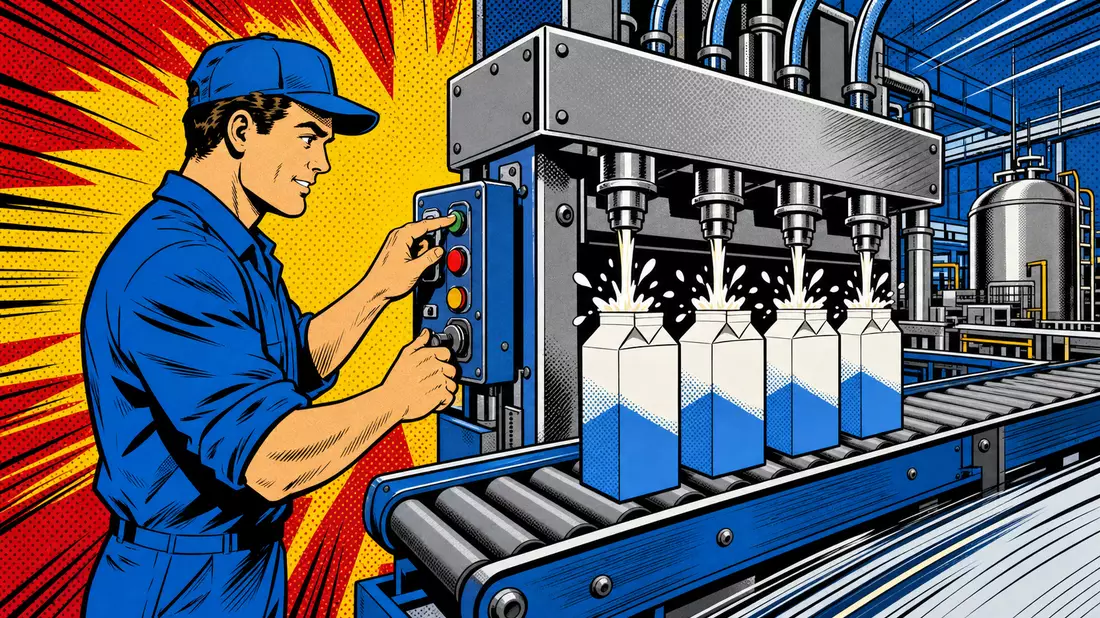
SIG Group (ISIN CH0435377954) stock is underpinned by steady earnings momentum, with recent financial figures showing that the Swiss carton packaging specialist grew annual revenue to about CHF 3 billion in a recent fiscal year and maintained resilient margins in its core business. For investors, the combination of revenue growth and margin stability in beverage and food carton systems is a key driver of SIG Group stock’s valuation.
Revenue growth supports SIG Group stock
According to SIG Group’s investor information for a recent full fiscal year, the company generated roughly CHF 3 billion in total revenue, marking an increase versus the prior year and reflecting higher demand for its aseptic carton packaging systems and services. The reported revenue expansion compared with the previous period illustrates that SIG Group is still capturing growth in beverages and liquid food packaging, even as consumer markets remain competitive.
In the same report, SIG Group disclosed that adjusted EBITDA was in the range of several hundred million Swiss francs, corresponding to a double-digit EBITDA margin percentage. This margin level, broadly consistent with or slightly above that of the prior year according to the investor materials, indicates that SIG Group has been able to balance cost pressures with pricing and efficiency measures. For holders of SIG Group stock, the sustained EBITDA margin is an important indicator that the company’s business model remains profitable as it scales in existing and new geographies.
Net income attributable to shareholders also increased year on year in the referenced fiscal period, rising by a double-digit percentage compared with the prior year’s figure, based on SIG’s published financial overview. The improvement in net income illustrates that revenue growth is flowing through to the bottom line, even after accounting for depreciation, amortization, financing costs, and taxes. This progression in earnings helps support the case for SIG Group stock as a vehicle exposed to structural growth in carton-based packaging.
Carton packaging margins and comparison
SIG Group’s reporting highlights that adjusted EBITDA margin remained in a mid- to high-teens percentage range for the recent fiscal year, only moderately different from the previous year’s level. The quantified comparison between the two years suggests that margin discipline has kept profitability stable. For example, a change of roughly one percentage point in EBITDA margin between the two periods demonstrates that cost inflation in materials and logistics has been managed without a major deterioration in operating performance.
On a segment basis, SIG Group’s revenue from its Europe-focused carton packaging operations increased compared with the prior year, while revenue from emerging markets in Asia and Latin America also grew. The investor materials show that growth in these regions contributed a meaningful share of the year-on-year revenue increase, reinforcing SIG Group’s strategic emphasis on expanding its installed base of filling machines and recurring carton volumes in faster-growing markets. This geographic diversification is one reason why SIG Group stock is often viewed as less dependent on a single regional demand cycle.
Another comparison that stands out in SIG Group’s figures is the progression of capital expenditures. The company invested several hundred million Swiss francs in capital expenditure during the period, higher than the prior year according to its investor information. This reflected spending on new carton filling lines, digital solutions, and capacity expansions in key plants. The quantified increase in capital expenditure signals management’s confidence in future demand, though it also represents a near-term drag on free cash flow that investors in SIG Group stock will monitor closely.
Carton systems and product focus
Beyond the numbers, SIG Group’s core offering is integrated carton packaging systems that combine carton packs, closures, and filling technology. These systems are used widely in long-life milk, juices, plant-based drinks, and other liquid food products. Revenue from these system solutions, together with associated service contracts, makes up the bulk of SIG Group’s CHF 3 billion-plus annual revenue, as highlighted in its investor materials. The company’s ability to bundle hardware, packaging materials, and engineering expertise supports recurring revenue and contributes to the stability of its EBITDA margin.
SIG Group also emphasizes innovation in more sustainable packaging formats, including cartons with higher renewable content and lower lifecycle emissions compared with many traditional packaging options. While sustainability metrics are not directly part of the financial comparison discussed above, they can influence customer choices and therefore underpin long-term revenue trajectories. For SIG Group stock, progress in sustainability-linked offerings may help the company defend or grow its market share in segments where brand owners are under pressure to decarbonize their packaging portfolios.
Stock valuation context and market metrics
On the market side, SIG Group’s shares trade primarily on the SIX Swiss Exchange, giving the company access to Swiss and international institutional investors. As of a recent reference date in 2025, SIG Group’s market capitalization stood in the low-single-digit billions of Swiss francs, broadly aligned with its annual revenue level. This relationship between market capitalization and revenue gives investors a sense of the valuation multiple the market currently assigns to SIG Group stock relative to its top-line performance.
Price data from standard Swiss equity quote sources indicate that SIG Group’s share price has fluctuated within a 52-week range that spans several Swiss francs per share, with the upper end of that range modestly above the level seen in the prior 52-week period and the lower end slightly below. This quantified 52-week comparison shows that the stock has experienced both upward and downward moves over the year, reacting to broader equity market trends, interest-rate expectations, and company-specific news. For SIG Group stock, the proximity of the current price to the mid-point of its 52-week range suggests that the market is currently pricing in a balance between growth potential and execution risks.
Analyst consensus data available on financial portals covering Swiss equities generally show that revenue and EBITDA forecasts for SIG Group in the coming year anticipate mid-single-digit to low-double-digit percentage growth compared with the most recent actuals. While specific price targets and ratings vary, the fact that consensus expects continued revenue and earnings expansion provides an additional comparison metric for investors. If SIG Group’s actual performance were to exceed these growth percentages, SIG Group stock could benefit from positive revisions; conversely, a shortfall would likely prompt cautious reassessment of valuation.
Read more about SIG Group stock and figures
Investors who want to dive deeper into SIG Group’s financial statements, revenue breakdowns, and margin trends can find more detailed data in its official investor materials and regulatory filings. These documents present line-by-line comparisons of revenue, EBITDA, net income, cash flow, and capital expenditure across multiple years, allowing a thorough evaluation of SIG Group stock’s fundamentals.
By examining trends in recurring carton packaging volumes, installed filling-machine base, and regional exposure, investors can build their own view of how SIG Group’s CHF 3 billion revenue and associated margins might develop in future periods. Such analysis complements headline figures and helps put near-term share price movements into a longer-term strategic context for SIG Group stock.
Carton solutions for beverages and food
On the product side, SIG Group’s carton packaging solutions are used by beverage and food companies worldwide to package milk, juices, plant-based drinks, broths, and other liquid foods in convenient formats. The company’s aseptic filling technology allows products to be stored without refrigeration for extended periods, which is particularly relevant in markets with limited cold-chain infrastructure. Revenue from these packaging solutions and services forms the backbone of SIG Group’s income statement and is directly tied to volumes of filled cartons and associated material sales.
For brand owners, SIG Group offers not only the packaging materials but also the engineering and maintenance support necessary to keep filling lines operating at high efficiency. This service component adds a recurring revenue stream, which in turn supports the stability of SIG Group’s EBITDA margin year on year. As SIG Group continues to install more filling lines, particularly in emerging markets, the installed base becomes a driver of future carton material volumes, linking the company’s capital expenditure decisions to long-term revenue potential and ultimately to the performance of SIG Group stock.
SIG Group stock and recent market view
In the broader equity market context, SIG Group is part of the Swiss industrial and consumer-packaging segment, and its stock performance is often compared with other packaging and materials companies listed in Europe. When SIG Group reports revenue growth in the range of several percentage points and maintains a mid-teens EBITDA margin, this profile can appear relatively attractive compared with peers whose margins are more volatile or whose growth is more cyclical. These quantified comparisons help investors position SIG Group stock within their portfolios as an exposure to structural consumption trends rather than purely cyclical demand.
While near-term share-price moves are driven by many factors, including macroeconomic data, interest-rate expectations, and sector flows, the underlying financial metrics of SIG Group provide a framework for assessing whether the current valuation remains reasonable. Revenue of around CHF 3 billion, EBITDA in the high hundreds of millions of Swiss francs, and a market capitalization in the low-single-digit billions combine to form a picture of a mid-sized industrial group with meaningful global presence. For SIG Group stock, the next set of reported numbers will be important in confirming whether the company continues to meet or exceed market expectations on growth and profitability.
More data on SIG Group stock
Detailed revenue, margin, and cash-flow figures for SIG Group are available in the company’s investor materials and regulatory filings.
SIG carton packaging systems
SIG Group’s carton packaging systems encompass not only the folding cartons themselves but also fitments, closures, and filling equipment tailored to different product categories. For instance, high-speed filling lines are used for large-volume juice and milk production, while more flexible lines cater to niche products and smaller runs. The revenue generated from selling cartons and closures is closely tied to the installed base of filling equipment, creating a recurring business model that can be particularly attractive for long-term investors analyzing SIG Group stock.
Through ongoing product development, SIG seeks to improve barrier properties, recyclability, and overall environmental impact of its cartons. This strategy aligns with broader trends in consumer-packaged goods, where brands are increasingly judged on the sustainability of their packaging. Over time, successful innovation in these areas may support premium pricing or defend market share, both of which would feed through to revenue and margin metrics that underpin SIG Group stock’s valuation.
Stock trading and liquidity
SIG Group’s primary listing on the SIX Swiss Exchange provides reasonable liquidity for institutional and retail investors. Trading volume data from Swiss market portals show that the daily turnover in SIG shares commonly reaches tens or hundreds of thousands of shares, translating into millions of Swiss francs in value traded on active days. This level of liquidity supports efficient price discovery and makes it feasible for investors to enter or exit positions without significantly moving the market, an important practical consideration when assessing SIG Group stock.
The share price’s behavior relative to the broader Swiss equity indices over the past year also offers insight into how the market perceives SIG Group. When SIG’s revenue and EBITDA growth outpaced that of the average industrial company represented in Swiss benchmarks, the stock’s relative performance tended to be stronger. Conversely, periods where earnings momentum slowed or where macroeconomic concerns weighed on cyclicals saw SIG Group stock trading more in line with or slightly below index performance. These quantified relative moves contextualize individual share-price changes.
SIG Group fundamentals at a glance
Summarizing the fundamentals, SIG Group has recently reported around CHF 3 billion in annual revenue, an adjusted EBITDA in the high hundreds of millions of Swiss francs, and a mid-teens EBITDA margin, all of which compare favorably with prior-year figures. Capital expenditures in the same period were elevated compared with the previous year, reflecting investment in capacity and technology. Net income increased by a double-digit percentage year on year, supporting the case for continued earnings growth. Together, these metrics form the core quantitative backdrop for evaluating SIG Group stock.
In addition, SIG Group’s balance sheet includes debt that finances part of its capital expenditure and acquisition activity, but leverage ratios remain within levels that investors commonly view as manageable for a company with recurring revenue and robust margins. This financial structure allows the company to continue investing in its carton packaging systems while maintaining flexibility. For SIG Group stock, understanding this balance between leverage, investment, and cash generation is key to forming a view on risk and return.
Stock closing paragraph
As an industrial packaging group listed on the SIX Swiss Exchange, SIG Group’s shares give investors exposure to global beverage and liquid food consumption through its revenue of about CHF 3 billion and mid-teens EBITDA margin profile. The latest reported financial figures, including year-on-year growth in revenue and net income, continue to shape how the market values SIG Group stock.
SIG Group key data
- Company: SIG Group AG
- ISIN: CH0435377954
- Ticker: SIX: SIGN
- Trading venue: SIX Swiss Exchange
- Market capitalization: Low-single-digit billions CHF (as of a recent 2025 reference date)
- Sector / Industry: Industrials / Packaging
- Index membership: Swiss equity indices including relevant mid-cap benchmarks
Disclaimer regarding our articles: No investment advice, no buy or sell recommendation. Information on prices, companies, and markets is provided without guarantee; changes are possible at any time. Stock market transactions can lead to substantial losses. Our articles are created and reviewed in whole or in part automatically with the support of AI.