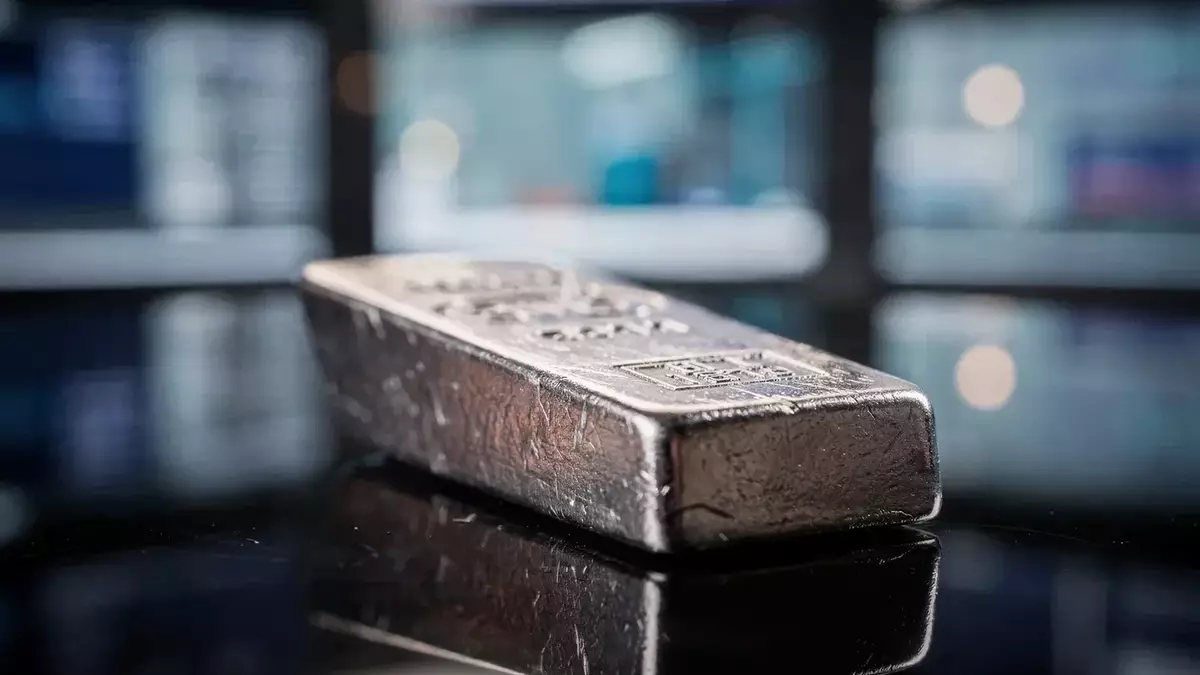
Silver's Fractured Market: India's Import Squeeze Meets a Geopolitical Rally
Published on 07/23/2026 at 13:32 | Redaktion boerse-global.de
Silver is caught between two worlds. On Wednesday, the metal closed at $60.02 per ounce, a 1.61% gain that extended its weekly rally to 7.63%. By Thursday, it had slipped to $58.77, a 1.59% decline. The whipsaw action reflects a market being pulled in opposite directions by forces that have little to do with each other — and everything to do with the metal's unique dual identity as both an industrial commodity and a haven asset.
India's Administrative Bottleneck
The immediate source of Thursday's weakness originates not in the futures pits of Chicago or London, but in New Delhi. India, traditionally one of the world's largest physical silver buyers, has seen its import pipeline slow dramatically due to a new licensing regime. The administrative hurdle has pushed local premiums to multi-month highs even as buyer interest remains robust.
This creates a peculiar disconnect: physical demand in India is strong, but bureaucratic friction is choking the flow. The result is a growing divergence between spot markets driven by real metal and the paper markets where most price discovery occurs. For now, the terminal markets are winning that tug-of-war, dragging the headline price lower despite genuine physical appetite.
Geopolitical Sparks on Two Fronts
While India's import snag exerts downward pressure, geopolitical turmoil is providing a powerful counterweight. Iran-aligned Houthi militias have claimed attacks on two Saudi oil tankers in the Red Sea, stoking fears of broader disruption to global energy routes. President Trump has warned of consequences should vessels in the Strait of Hormuz come under fire, while simultaneously dashing hopes for near-term diplomatic talks with Tehran.
Should investors sell immediately? Or is it worth buying Silber Preis?
The oil market has responded sharply, with crude prices hitting a six-week high. That feeds inflation expectations, which in turn complicates the outlook for interest-rate-sensitive assets like silver. Yet the same geopolitical instability is driving safe-haven flows into precious metals, creating a schizophrenic environment where the same news event both supports and undermines the metal.
Adding to the mix, unidentified attackers have repeatedly struck the Caspian Pipeline Consortium's terminal on Russia's Black Sea coast, compounding supply-chain anxiety.
Labor Market Data Shifts the Fed Calculus
The macro picture is further complicated by a cooling US labor market. ADP data shows private employers added an average of just 16,500 jobs per week in the four weeks through July 4 — down from 19,250 and marking the fourth consecutive slowdown. That weakening trend strengthens the case for the Federal Reserve to hold rates steady at next week's meeting.
Markets currently price a 61% probability of a rate hike in September, down from more aggressive expectations earlier this year. For silver, which carries no yield, the trajectory of interest rates remains a central uncertainty. Lower rates would remove a key headwind; higher rates would intensify it.
A Rare Ratio Signal
Amid the noise, one technical development has caught analysts' attention. The gold-silver ratio has fallen from above 70.7 to roughly 68.7, meaning silver has outperformed gold in the recent rally. A declining ratio is traditionally interpreted as a sign that industrial and physical buyers are returning to the market after a selloff.
Historically, such compression often precedes a period where silver takes the leadership role among precious metals. Whether that pattern holds this time depends on whether the current geopolitical and administrative shocks prove temporary or become entrenched.
Silber Preis at a turning point? This analysis reveals what investors need to know now.
The Structural Backdrop
Beneath the short-term turbulence lies a persistent fundamental reality. The World Silver Survey 2026, published by the Silver Institute, projects a sixth consecutive annual supply deficit. Demand from solar panel manufacturing, electric vehicles, and electronics continues to outstrip production from key mining regions in Mexico and Peru.
This structural tightness makes silver acutely sensitive to demand shocks — whether from geopolitical fear, industrial consumption, or administrative disruptions like India's licensing change. The metal's price is currently being shaped by all three simultaneously, a rare convergence that explains the sharp swings.
With the Fed meeting next week and India's import situation still unresolved, the near-term path for silver remains unusually fragmented. Local premiums in Mumbai and global prices in New York are telling very different stories — and for now, neither narrative has fully won out.
Ad
Silber Preis Stock: New Analysis - 23 July
Fresh Silber Preis information released. What's the impact for investors? Our latest independent report examines recent figures and market trends.
Disclaimer regarding our articles: No investment advice, no buy or sell recommendation. Information on prices, companies, and markets is provided without guarantee; changes are possible at any time. Stock market transactions can lead to substantial losses. Our articles are created and reviewed in whole or in part automatically with the support of AI.