Silver's Two-Front War: A Structural Deficit That Lifts the Floor While a Hawkish Fed Caps the Ceiling
Published on 07/21/2026 at 22:32 | Redaktion boerse-global.de
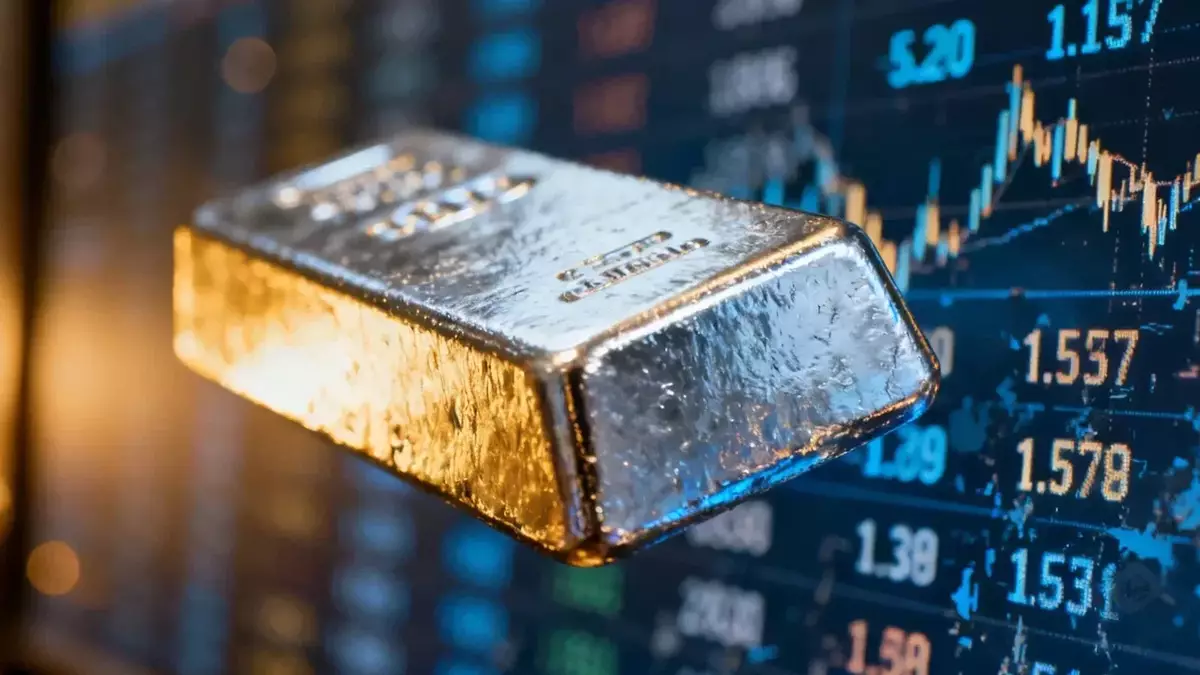
Silver staged a sharp recovery on July 21, surging more than 4% to approach $59 an ounce as it broke decisively out of a two-month downtrend channel that had gripped the metal since May. The move marks the most significant technical development in weeks for the white metal, which had been halved from its January record above $100 before finding a floor near $56 in mid-July.
Chart watchers see multiple confirming signals. A double-bottom pattern around $55, coupled with a bullish divergence on the Relative Strength Index, bolsters the case for a genuine reversal. The next upside target sits at $68.88, the 61.8% Fibonacci retracement level. Yet the same analysts caution that a resurgent US dollar remains the single biggest threat to sustained recovery.
The rebound comes as the market digests a starkly divided outlook. UBS has lowered its recommended buy zone for silver from below $55 to a range of $48 to $50, citing near-term headwinds that include Middle East tensions, elevated oil prices, dollar strength, and a Federal Reserve unlikely to cut rates before December 2026 or the first quarter of 2027. The gold-to-silver ratio currently sits just above 70, according to UBS strategist Dominic Schnider.
But the Swiss bank's long-term view tells a different story. UBS projects silver at $65 by September, $70 by December, and $75 by the first half of 2027. ETF data offers tentative support for that optimism: while total holdings have fallen by 38 million ounces since January to 784 million ounces, July has already seen a modest uptick of 1.86 million ounces, suggesting institutional buyers are beginning to step back in after the correction.
Should investors sell immediately? Or is it worth buying Silber Preis?
The Supply Squeeze That Won't Quit
Underpinning the bullish thesis is a supply dynamic that grows more constrained by the year. The Silver Institute projects 2026 will mark the sixth consecutive annual supply deficit, this time reaching 46.3 million ounces. Physical demand is expected to rise 20% to 227 million ounces. The World Silver Survey 2026, published jointly by the Silver Institute and Metals Focus on April 15, pegged the 2025 deficit at 40.3 million ounces, meaning the shortfall has widened by 15% in a single year.
The structural bottleneck lies in mining economics. Roughly 74% of silver supply comes as a byproduct of copper, lead, and zinc mining, meaning production levels are dictated by the economics of those base metals, not by silver demand. Miners cannot simply ramp up output when silver prices rise.
Above-ground inventories are absorbing the strain. Since 2021, stockpiles have shrunk by 762 million ounces. The strain became acutely visible in London last September, when unencumbered warehouse inventory fell to a historic low of just 17%, triggering a physical liquidity crunch that sent lease rates for silver spiking in October.
The New Demand Engine: AI Data Centers
Silver's industrial consumption runs deep and is diversifying. Photovoltaics consumed roughly 197 million ounces in 2024, accounting for nearly a fifth of global demand, with each solar panel requiring about 20 grams of silver paste that no economic substitute has yet replaced. Electric vehicles add another 85 million ounces annually, using nearly twice as much silver per vehicle as internal combustion engines.
Now a third force is accelerating. Within electronics, no segment is growing faster than data centers and artificial intelligence. The scale of capital deployment is staggering: Amazon, Microsoft, Alphabet, and Meta have collectively announced roughly $725 billion in capital expenditures for 2026, a 77% increase year-over-year, with the bulk directed at AI data centers. US construction spending on data centers hit a monthly rate of $45.1 billion in December 2025, an 85% surge in just two years.
Silber Preis at a turning point? This analysis reveals what investors need to know now.
Industrial fabrication still consumes the largest share at 639.6 million ounces, or about 57% of total demand, though that figure dipped 3% from 2025 as solar industry growth moderated. The AI segment is rapidly filling that gap.
Sprott strategist Paul Wong describes silver as occupying a "strong positive position" despite the sharp correction from January's highs. He points to a structural market deficit that has persisted for five years, driven by demand from solar, AI, electrification, and the military sector, and expects these deficits to continue for another seven to eight years, with physical markets increasingly dominating paper trading.
For investors, the calculus is straightforward but uncomfortable in the near term. A technical breakout and a structural supply deficit that is only widening provide powerful arguments for medium-term gains. But between a hawkish Fed, a strong dollar, and geopolitical flare-ups from the Middle East, the path higher will likely remain choppy. UBS's lowered buy zone acknowledges that reality, while its year-end targets insist the fundamentals will eventually win out.
Ad
Silber Preis Stock: New Analysis - 21 July
Fresh Silber Preis information released. What's the impact for investors? Our latest independent report examines recent figures and market trends.
Disclaimer regarding our articles: No investment advice, no buy or sell recommendation. Information on prices, companies, and markets is provided without guarantee; changes are possible at any time. Stock market transactions can lead to substantial losses. Our articles are created and reviewed in whole or in part automatically with the support of AI.