SK Hynix: A 23% Correction Masks an Impending Memory Crunch That Analysts Say Will Only Deepen
Published on 07/16/2026 at 18:14 | Redaktion boerse-global.de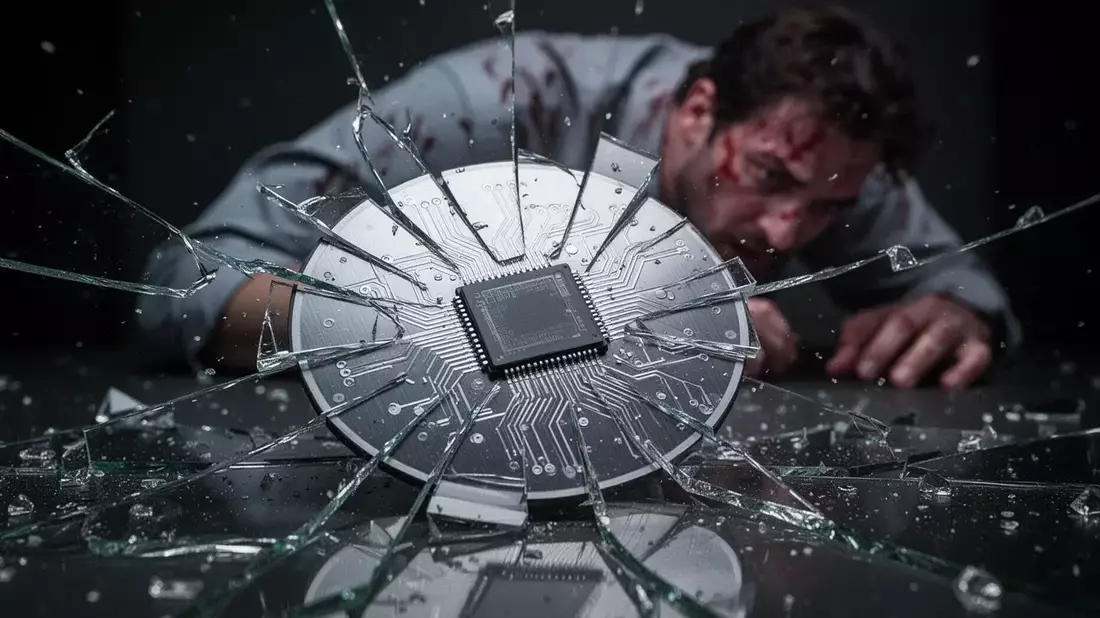
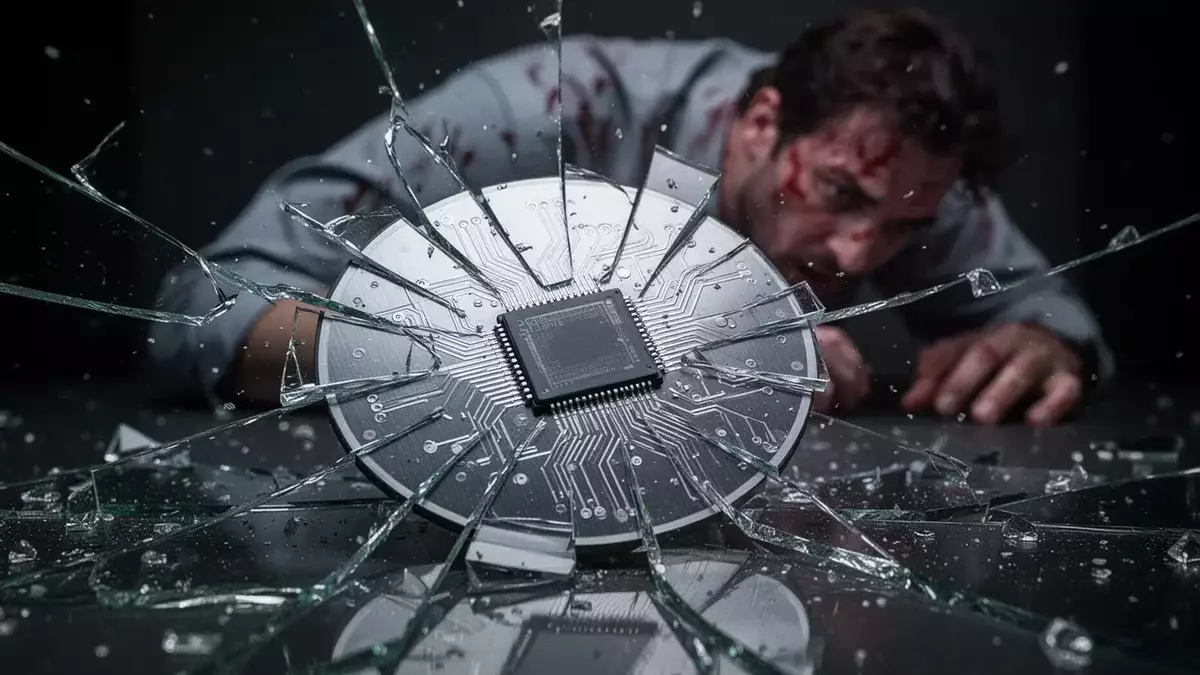
The whiplash that has gripped SK Hynix since its landmark Nasdaq listing shows no sign of easing. The South Korean memory giant shed 11.53 percent on Thursday, closing at 1,842,000 won and erasing the prior session’s 8 percent rebound in a single stroke. The 30-day slide now stands at 22.67 percent, and the stock sits 38.33 percent below its all-time high of 2,987,000 won set just three weeks ago. Yet for all the carnage, the shares are still up 172.63 percent year-to-date — a reminder that even a brutal correction leaves the stock deep in record territory.
The trigger for Thursday’s rout was a global sell-off in semiconductor names that rippled from Wall Street across Asia. Micron Technology plunged 8 percent overnight, Intel lost more than 4 percent, and both Lam Research and AMD gave up around 3 percent. In Seoul, the damage was broad: Samsung Electronics fell over 7 percent, Seoul Semiconductor dropped more than 5 percent, and Samsung SDI and LG Innotek each slid 2 percent and 1 percent respectively. Japan’s chip-equipment makers fared no better — Advantest slumped 6 percent, SoftBank Group lost nearly 7 percent, and Tokyo Electron and Renesas Electronics surrendered 5 percent and 4 percent.
The KOSPI index opened 4.45 percent lower at 6,960.50 points and touched an intraday low of 6,753, triggering its 37th automatic trading halt — a sidecar — of the year. The benchmark is now technically in bear-market territory. Market participants largely attribute the sell-off to overstretched positioning rather than deteriorating fundamentals. Semiconductor stocks now account for roughly 20 percent of the S&P 500, compared with just over 8 percent during the dot-com bubble and a historical average of 2 to 5 percent. “The extreme concentration in the chip sector had to unwind at some point,” said Louis Kondratev, a trader at XFUNDs. ASML, the Dutch lithography giant, underscored the disconnect by raising its full-year revenue forecast for the second time to between €43 billion and €45 billion, above analyst expectations, while planning to ramp up EUV machine production.
SK Hynix, however, faces a set of headwinds that go beyond broad sector rotation. Three shocks landed almost simultaneously. The Bank of Korea unexpectedly raised its benchmark rate to 2.75 percent — the first hike in more than three years — pressuring leveraged positions across the Korean market. Margin warnings from TSMC and a moratorium on new data centers in New York added to the global angst. Compounding the pressure, the company’s $8.6 billion Nasdaq listing via American Depositary Receipts, completed on July 10, has introduced a two-market dynamic that many investors are still digesting. The ADR premium, which recently exceeded 40 percent, could shrink toward historical norms, adding another layer of uncertainty.
Should investors sell immediately? Or is it worth buying SK Hynix?
The most immediate threat to the bull case is China’s ChangXin Memory Technologies (CXMT), which plans to list on Shanghai’s STAR Market on July 27 with a potential valuation of up to 126 trillion won. CXMT aims to triple its HBM3 production capacity and capture a 20 percent global market share by 2035. That ambition could shift the high-bandwidth memory market from structural shortage toward oversupply, putting pressure on the premium margins SK Hynix currently enjoys — margins that are already facing cost headwinds from energy prices and the expensive transition to 2-nanometer manufacturing.
Yet the very factors that drove the stock to record highs remain firmly in place, and analysts argue they are likely to intensify. SK Hynix controls 56 to 58 percent of the HBM market, a segment seen as the backbone of AI infrastructure. CEO Kwak has repeatedly warned that DRAM shortages could persist until 2030, and the company is described as “more than sold out” for the foreseeable future. The Nasdaq listing has provided fresh capital in the billions of won, allowing SK Hynix to accelerate factory expansions in Yongin and Cheongju — both critical to meeting long-term supply commitments to partners such as Nvidia. TSMC, despite its recent margin caution, raised its annual revenue growth forecast to over 40 percent, signaling that underlying AI demand — and therefore demand for SK Hynix’s HBM3E chips — remains intact.
Kim Sunwoo, senior analyst at Meritz Securities, told Reuters that DRAM suppliers can currently meet only 75 to 80 percent of demand, and that the gap will widen in the second half of 2026, with coverage likely to fall to around 60 percent in 2027. That scenario would support rising memory prices and higher profits. HSBC echoed the view, citing improved profitability at AI services companies as a reason to expect continued heavy cloud investment.
Technically, the stock is now 15.86 percent below its 50-day moving average of 2,189,304 won, a sign that the intermediate uptrend has broken. The relative strength index at 40.5 is nearing oversold territory, which could attract value-oriented institutional buyers. The annualized volatility of 127.39 percent underscores the magnitude of the swings.
SK Hynix at a turning point? This analysis reveals what investors need to know now.
Two dates stand out on the calendar. The quarterly earnings report, expected around July 22 or 24, will test whether gross margins — last seen at roughly 79.3 percent — can hold up under rising costs. If HBM3E deliveries remain contractually locked in and pre-financed, a return to the 50-day average is within reach. But if CXMT’s IPO triggers a broader revaluation of memory stocks, or if the ADR premium continues to compress, the next floor is the 100-day average at 1,609,276 won. A wild card is the pace of capacity expansion: Bank of America estimates that only one-sixth of planned capacity in Gwangju and Jeolla may actually be operational by 2028, which would keep supply tight but also cap absolute revenue growth.
For now, SK Hynix is caught between a global sector unwinding and a domestic memory shortage that shows no signs of abating. The next few weeks will determine whether the 23 percent correction is a buying opportunity or the beginning of a deeper repricing.
Ad
SK Hynix Stock: New Analysis - 16 July
Fresh SK Hynix information released. What's the impact for investors? Our latest independent report examines recent figures and market trends.
Disclaimer regarding our articles: No investment advice, no buy or sell recommendation. Information on prices, companies, and markets is provided without guarantee; changes are possible at any time. Stock market transactions can lead to substantial losses. Our articles are created and reviewed in whole or in part automatically with the support of AI.