SK Hynix Faces a Crucial Test: Can a $29.4 Billion Nasdaq Listing and a Radical Pricing Shift Restore Investor Confidence?
Published on 07/05/2026 at 21:15 | Redaktion boerse-global.de
SK Hynix is hurtling toward one of the most consequential weeks in its recent history, juggling a landmark Nasdaq debut, a multi-billion-dollar factory buildout, and a sweeping overhaul of its commercial terms with major clients. Yet the stock that has tripled in value over the past year is suddenly looking shaky, leaving investors to question whether the AI memory boom has hit a speed bump or something more serious.
The shares closed at 2,425,000 won on Friday, shedding 5.27 percent in a single session and 9.28 percent over the week. That leaves the stock a full 18.81 percent below the 52-week high of 2,987,000 won reached on June 25. Despite the pullback, the year-to-date gain stands at an extraordinary 258 percent, and on a monthly basis the stock is still up 5.53 percent. The wild swings are underscored by an annualized 30-day volatility reading above 114 percent.
The immediate trigger for the recent slide was a broader sell-off in semiconductor names that gathered force on July 2, when SK Hynix plunged 14.5 percent in tandem with Samsung Electronics. The spark came from Meta Platforms, which is reportedly building a cloud business to sell excess AI computing capacity rather than continuing to expand its own data centers. Markets interpreted the move as a potential sign that hyperscaler demand for memory chips is cooling faster than anticipated. While some analysts dismissed the panic as overblown, the doubt over the durability of AI capital expenditure has not been fully dispelled.
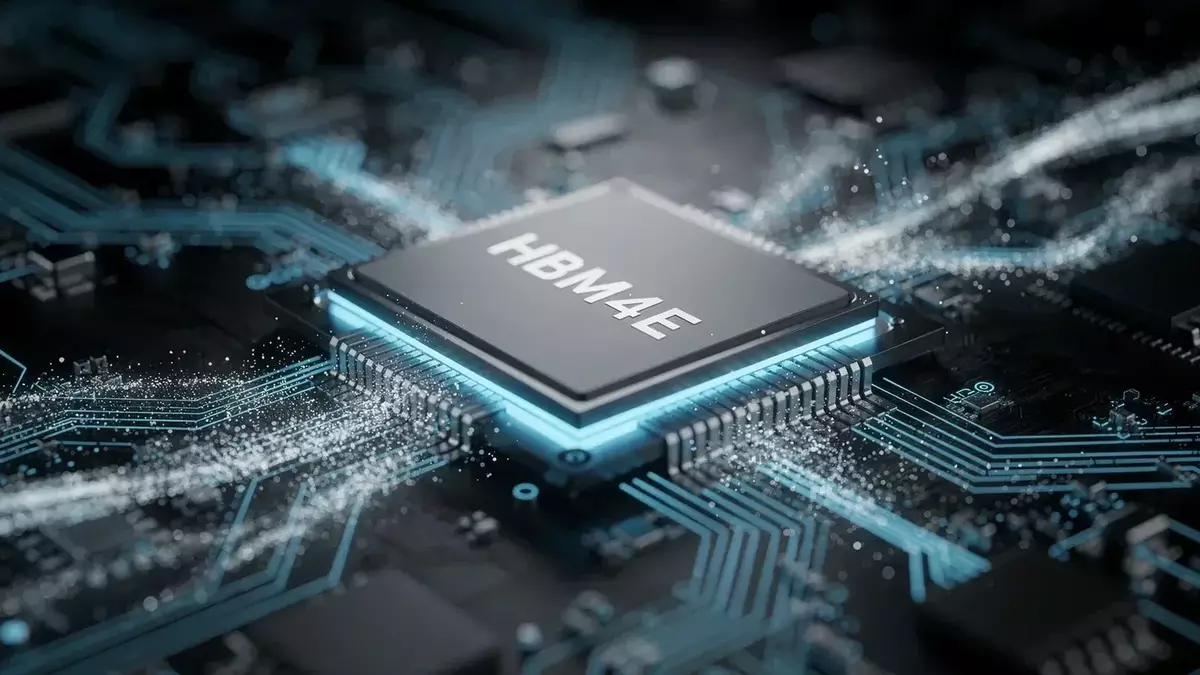
Into that uneasy atmosphere steps SK Hynix’s planned listing of American Depositary Receipts on the Nasdaq, slated to begin trading around July 10. The company aims to raise up to $29.4 billion by issuing 17.79 million new shares, in what would rank among the largest equity placements ever by a foreign company on a U.S. exchange. The final offer price will be set on July 9. Proceeds from the listing will fund construction of new fabrication plants in Yongin, packaging facilities in Cheongju, and the purchase of EUV lithography equipment, all geared toward expanding production of high-bandwidth memory (HBM) chips.
Should investors sell immediately? Or is it worth buying SK Hynix?
The U.S. listing is also seen as a strategic move to close a persistent valuation gap with American rivals such as Micron Technology. HSBC analysts note that over the past 13 years Micron has commanded an average premium of 35 percent over SK Hynix, thanks in part to easier access to U.S. investors and a higher beta. The Nasdaq debut could serve as a catalyst to narrow that discount, but it also risks triggering a classic "buy the rumor, sell the fact" reaction once the shares start trading.
Parallel to the capital markets push, SK Hynix is making a bold change to its commercial playbook. According to disclosures on July 2, the company is removing price caps from long-term supply contracts. In periods of tight supply, spot market increases will now flow fully into contract prices. At the same time, contract durations are being extended from the standard one year to between three and five years, giving customers more planning certainty while exposing them to greater price risk during boom cycles.
These maneuvers are backed by a financial foundation that looks formidable. In the first quarter of 2026, SK Hynix posted a net profit of 40.3 trillion won (roughly $26 billion) on revenue of 52.6 trillion won, a 198 percent surge year-on-year. The operating margin hit a record 72 percent. The company commands a 56.4 percent global market share in HBM and ranks second in DRAM (29.1 percent) and NAND (18.5 percent). Hard data from Mirae Asset points to global technology investment of $806 billion this year, up 73 percent from a year earlier, while outstanding orders at the major tech groups stand at $2.1 trillion, 24 percent higher than the previous quarter.
Bulls argue that supply tightness and SK Hynix’s strengthening hand in HBM4, ahead of Nvidia’s Rubin platform launch, will keep pricing power intact. The removal of price caps is the clearest signal yet that the company believes demand will outstrip supply for years to come.
Bears, however, warn that the stock is extremely overbought and vulnerable to any negative signal. A single day in late June saw SK Hynix and Samsung drag the Kospi index down by more than 12 percent, producing the heaviest daily loss for SK Hynix in years. Morningstar flags a longer-term risk: Chinese memory makers are ramping capacity at a furious pace, which could unleash a supply glut once the HBM4 competition intensifies in the second half of 2026. Samsung, meanwhile, is reported to have closed both the technological and pricing gap in negotiations with major AI clients.
SK Hynix at a turning point? This analysis reveals what investors need to know now.
Two dates now dominate the calendar. On July 7, Samsung will release preliminary second-quarter figures, widely viewed as the next real test of whether the AI memory narrative remains intact. Two days later, SK Hynix will lock in the price of its Nasdaq offering, with trading commencing on July 10. If hyperscaler commentary remains constructive, the recent decline from the June 25 peak may prove to be a healthy correction within the AI supercycle, and the path back toward record levels could reopen. If not, the first technical support lies at the 50-day moving average of 2,046,220 won, with the 100-day average at 1,499,840 won representing a sharper scenario.
SK Hynix is entering a defining stretch where its $29.4 billion bet on U.S. capital markets, its radical renegotiation of pricing power, and its multibillion-dollar factory ambitions will all be tested against a single, unresolved question: Is AI memory demand accelerating, or is it merely pausing for breath?
Ad
SK Hynix Stock: New Analysis - 5 July
Fresh SK Hynix information released. What's the impact for investors? Our latest independent report examines recent figures and market trends.
Disclaimer regarding our articles: No investment advice, no buy or sell recommendation. Information on prices, companies, and markets is provided without guarantee; changes are possible at any time. Stock market transactions can lead to substantial losses. Our articles are created and reviewed in whole or in part automatically with the support of AI.