Stadler Rail stock trades steady as backlog and recent earnings underpin valuation
Published on 07/18/2026 at 08:08 | Editorial responsibility: Rafael Müller, Editor-in-Chief AD HOC NEWS
Stadler Rail stock sits on a foundation of a substantial multi-year order backlog and recently reported earnings that highlight both growth and margin challenges for the Swiss rolling-stock manufacturer (ISIN CH0002178181). The Bussnang based group is listed on SIX Swiss Exchange, giving investors direct exposure to European rail-infrastructure demand and long term fleet renewal spending. Over the last few reporting periods, management has emphasized the importance of operational execution, cost control, and project delivery to turn its large contract base into sustainable profit and cash flow. Although live intraday prices and extremely recent headlines are not referenced explicitly here, the broader context for Stadler Rail stock remains defined by its latest annual and interim accounts, investor presentations, and publicly communicated guidance ranges.
Order backlog above CHF 20 billion
According to Stadler Rail's published investor relations material for a recent fiscal year, the company reported an order backlog well above CHF 20 billion, representing several years of production visibility across urban, regional, and long distance rolling stock. In one recent reporting cycle, management noted that the backlog rose compared with the prior year, illustrating continued demand for rail vehicles and signaling sizable work in hand that stretches beyond a single fiscal period. Even with limited fresh daily news flow in this specific context, the presence of a backlog on this scale matters for Stadler Rail stock because it anchors expectations for future revenue recognition and capacity utilization, especially in an industry where contracts are typically executed across multiple years and require careful supply-chain coordination.
For example, Stadler's prior annual report has highlighted that normalized annual revenues in recent years have been in the low to mid single digit billions of Swiss francs, meaning that a CHF 20 billion plus backlog is several times one year's turnover. The ratio between backlog and annual revenue underlines the multi-year character of the order book and helps investors gauge how many production slots are already filled. When assessing Stadler Rail stock, market participants look not only at the absolute backlog number but also at its composition between high capacity EMU trains, metro vehicles, trams, and locomotives, because product mix influences margin structures and working capital requirements. A growing backlog, if accompanied by disciplined pricing and contractual safeguards, can be supportive for longer term profitability; however, if project margins are compressed by cost inflation or complex delivery schedules, the backlog alone does not guarantee strong earnings.
Revenue development and year on year comparison
In its recent annual reporting cycles, Stadler Rail has communicated group revenues that reached several billion Swiss francs per year, with the exact figure varying between reporting periods. One such year saw revenues increase compared with the previous year, reflecting both progress in delivering existing orders and new contract wins that began contributing to sales. For instance, the company has previously disclosed a revenue increase of several hundred million Swiss francs year on year, translating into a double digit percentage growth rate relative to the prior period. This type of quantified comparison is key for investors following Stadler Rail stock because it offers insight into whether the firm is successfully converting backlog into realized turnover without being overly constrained by bottlenecks in production or certification.
Beyond headline revenue growth, Stadler Rail's reports have broken down performance by segment, such as rolling stock and service. Over time, service activities, including maintenance and modernization, have tended to grow as a share of total revenues, offering more recurring income streams. By comparing segment revenue growth rates between years, investors can see whether Stadler is shifting its business mix toward higher margin and more predictable service contracts or remaining primarily dependent on the more cyclical and project driven rolling stock sales. Stadler Rail stock valuations often incorporate assumptions about the balance between these segments, because service growth can help stabilize earnings when new build orders face timing uncertainties.
Profitability, EBIT margin, and cash flow
Stadler Rail's recent financial disclosures have included operating profit (EBIT) figures that illustrate the conversion of revenue into earnings. In one representative fiscal year, the company reported EBIT in the hundreds of millions of Swiss francs, combined with an EBIT margin in the mid single digit percentage range. Compared with the prior year, that margin showed a movement that may have been positive or negative depending on project mix, cost inflation, and one off items such as ramp up costs for new platforms. For Stadler Rail stock, even seemingly small margin changes from, for example, approximately 6% to around 7% or vice versa, can be material because they directly impact net income, free cash flow potential, and the capacity to fund dividends or reinvest in manufacturing capacity.
Cash flow trends are equally important. Stadler has described working capital swings driven by prepayments from customers, inventory builds, and project milestones. In a recent period, operating cash flow may have lagged or exceeded EBIT depending on the timing of deliveries and payments. If cash generation is weaker than EBIT in a given year, investors watching Stadler Rail stock may worry about liquidity buffers and the need for additional financing; conversely, strong cash conversion supports balance sheet resilience. The company has aimed to improve its cash flow profile by optimizing its project portfolio and focusing on contractual structures that favor balanced payment schedules.
Net income and EPS signals for equity holders
For equity investors, net income and earnings per share (EPS) provide a direct view of the profitability attributable to Stadler Rail shareholders. In recent annual reports, the company has communicated net income that, while below revenue levels by orders of magnitude, still amounts to significant tens or hundreds of millions of Swiss francs. That profit level, divided by the number of shares outstanding, yields EPS figures which analysts use to compare the company's performance against consensus expectations, its own guidance, and peers in the European rail equipment sector. Year on year EPS changes can be more volatile than revenue due to margin fluctuations and non operating items; for Stadler Rail stock, a year where EPS rises clearly above the prior year, even by a moderate percentage, tends to reinforce confidence in management execution.
Analyst commentary often examines whether Stadler's EPS is underpinned by recurring service revenues or more cyclical rolling stock deliveries. When EPS improvement coincides with rising service share, investors may perceive the earnings quality as higher. Conversely, if EPS benefits mainly from one off order milestones or favorable project timing, Stadler Rail stock could be considered more sensitive to contract phasing and macro conditions. Over multiple years, maintaining net income growth while investing in technology, sustainability, and digitalization remains a balancing act. This is why even relatively small EPS beats or misses versus consensus can lead market participants to revisit their long term earnings models for Stadler Rail.
Dividend policy and shareholder returns
Stadler Rail has implemented a dividend policy that seeks to distribute a portion of net income to shareholders while preserving enough capital to support growth and balance sheet strength. In recent years, the company has proposed dividend payments denominated in Swiss francs, with the per share amount calibrated to earnings and future investment needs. For example, a dividend of around CHF 0.90 per share in a given year, if such a figure were reported, would be interpreted in conjunction with EPS to define the payout ratio. A higher payout ratio can signal confidence in stable cash flows but may also restrict retained earnings available for expansion. For Stadler Rail stock, dividend yield based on the prevailing share price adds another dimension of investor appeal, especially for those seeking income in addition to capital appreciation.
Comparing the company's dividend per share year on year offers a straightforward quantified insight: if the dividend rises relative to the prior year, that implies management sees room for higher shareholder distributions; if it is held flat or reduced, the message may be that cash must be conserved for projects, acquisitions, or risk buffers. Over longer periods, a stable or gradually rising dividend trajectory can support Stadler Rail stock valuations by offering a perceived floor to total return calculations. However, dividends are always contingent on future earnings and board decisions, and even companies with a history of distributions can adjust policies if conditions change.
Balance sheet, debt, and leverage considerations
Stadler Rail's balance sheet structure, including debt levels and equity base, is central to risk assessments. Recent financial statements have shown total assets comprised of production facilities, rolling stock inventory, receivables, and cash, balanced by equity and liabilities, including interest bearing debt. The absolute level of net debt, measured in hundreds of millions of Swiss francs in some recent years, combined with EBITDA, yields leverage ratios that investors use to gauge financial flexibility. A net debt to EBITDA ratio around or below a carefully managed threshold can be seen as prudent in capital intensive industries, while a significantly higher ratio raises questions about the company’s ability to navigate project delays or macro shocks without stress.
Stadler Rail stock valuations integrate these leverage metrics into discount rate and risk premium assumptions. If debt rises faster than EBITDA in a year, the leverage ratio worsens and may lead to cautious interpretations of the balance sheet. Conversely, strong EBITDA growth or deleveraging actions, such as using surplus cash to repay loans, can improve metrics and support credit ratings. While rail contracts often involve substantial upfront investment, Stadler’s management has explained that risk management and hedging strategies are in place to limit exposure to interest rates and currency movements across its international customer base. For equity holders, these factors complement headline profit and revenue trends.
Geographic footprint and regional revenue mix
Stadler Rail sells rolling stock and services across Europe, North America, and other regions, and its revenue mix by geography offers insight into demand diversification. Annual reports have broken down revenues by region, showing significant exposure to Switzerland, Germany, and other European markets, as well as growing contributions from countries such as the United States. A year with notable revenue growth in a particular region, for instance double digit percentage expansion in North America, underscores the company’s progress in penetrating new markets and adapting to local regulatory and operational standards. For Stadler Rail stock, such regional growth figures can be meaningful because they highlight where future orders and service contracts may emerge.
Regional diversification also mitigates risk associated with local policy shifts or budget cycles. If one country reduces rail infrastructure spending in a given period, Stadler can potentially offset this with orders from other jurisdictions. Investors track how the share of revenue from different regions evolves over time to understand whether the company is successfully implementing its internationalization strategy. A balanced geographic portfolio may enhance the resilience of Stadler Rail stock, though it also adds complexity as each market comes with unique certification requirements and political contexts.
Product portfolio and technology platforms
Stadler Rail’s product portfolio spans electric and diesel multiple units, metro trains, trams, locomotives, and specialized solutions such as rack rail vehicles for steep gradients. These platforms incorporate evolving technologies, including energy efficient traction systems, regenerative braking, and comfort features. The company has invested in modular design approaches to allow customization for different customers while maintaining economies of scale in manufacturing and procurement. In recent disclosure, Stadler has highlighted innovations in low floor design, accessibility, and digital connectivity, positioning its vehicles for both commuter and intercity roles.
For investors evaluating Stadler Rail stock, the breadth and modernization of the product portfolio affect both competitive standing and potential margins. New technological platforms typically require upfront development spending, which impacts profitability in the short term but can yield benefits through larger orders and higher differentiation in later years. Rail operators, especially in Europe, increasingly prioritize sustainability and life cycle cost, so Stadler’s emphasis on energy efficiency and maintainability can be a key selling point. The order backlog discussed earlier often features contracts for newer train families, showing customer acceptance of these technologies.
Service business and long term contracts
Stadler Rail’s service segment, which encompasses maintenance, refurbishment, spare parts, and technical support, has become an important contributor to revenues and earnings. Service contracts typically span many years, aligning with the operational life of rolling stock, and can be structured as full service or more targeted maintenance agreements. The company has reported growth in service revenues over time, sometimes at rates exceeding those of rolling stock sales, thereby increasing the share of predictable, recurring business in the overall portfolio. For Stadler Rail stock, this shift toward services can be supportive because recurring revenues tend to stabilize cash flows and reduce dependence on new build order cycles.
Comparing service revenue growth rates year on year reveals whether the segment is gaining momentum. For instance, an annual increase in service revenues by a double digit percentage, relative to a mid single digit increase in rolling stock, would indicate that Stadler is successfully expanding its maintenance presence. This can also strengthen customer relationships, as operators rely on Stadler’s expertise to ensure fleet availability and performance. Over longer horizons, service activities may also feed back into product design, as field experience informs improvements in future rolling stock offerings.
Sector context and peer comparison
Stadler Rail operates in a competitive rail equipment and services sector alongside other established manufacturers. Peer companies offer similar products, such as EMU trains, metro systems, and locomotives, and investors often compare key metrics like revenue growth, EBIT margin, and backlog size across the group. If Stadler’s revenue growth or margin trajectory outpaces or lags peers over a given period, this can influence perceptions of its execution quality and strategic positioning. Likewise, differences in geographic exposure and product mix affect risk profiles and potential upside.
Stadler Rail stock is viewed in the context of broader trends such as urbanization, climate policy, and infrastructure stimulus. When governments allocate funds to rail transport, both for passenger and freight, manufacturers with established platforms and local references may benefit. However, sector wide factors like supply chain constraints, component cost inflation, and regulatory delays can impact all players. While exact peer metrics are not enumerated here, the comparative lens remains important: investors do not assess Stadler in isolation but rather relative to other rail equipment companies and industrial firms with similar capital intensity and contract structures.
Guidance, outlook, and risk factors
Stadler Rail’s management periodically provides guidance for revenues, EBIT, and other financial metrics, outlining expectations for upcoming years based on the order book and market conditions. Guidance ranges, expressed in Swiss francs and percentage margins, help investors calibrate their models for Stadler Rail stock. For example, the company may express a target revenue corridor in the low to mid single digit billions and an EBIT margin range within a band around its historical average. Comparing realized performance against guidance in subsequent reports indicates whether execution has met, exceeded, or fallen short of management’s own benchmarks.
Risk factors include project execution challenges, regulatory approvals, foreign exchange movements, and macroeconomic shifts. Large rail contracts often involve complex technical requirements and coordination with infrastructure upgrades, so delays or cost overruns can affect margins. Stadler has highlighted its focus on risk management, including contractual frameworks and technical validation processes, to mitigate these exposures. Nevertheless, risk remains inherent to the business, and investors following Stadler Rail stock incorporate such considerations into their required rate of return and valuation adjustments.
ESG considerations and sustainability initiatives
Environmental, social, and governance (ESG) aspects play a growing role in investors’ assessments of Stadler Rail. Rail transport inherently offers lower emissions per passenger kilometer than car or air travel, positioning rolling stock manufacturers as facilitators of greener mobility. Stadler has communicated efforts to improve energy efficiency in its vehicles, reduce noise, and incorporate recycled materials where feasible. The company also focuses on workplace safety, diversity, and training within its manufacturing and engineering operations.
Governance practices, including board composition, transparency, and shareholder engagement, influence perceptions of how well Stadler Rail stock represents an asset aligned with long term sustainable value creation. ESG ratings and indices sometimes incorporate Stadler based on public data and self reported measures. While specific ESG scores are not cited here, the thematic connection between rail and sustainability contributes to interest in the stock among investors with climate oriented mandates.
Representative product platform
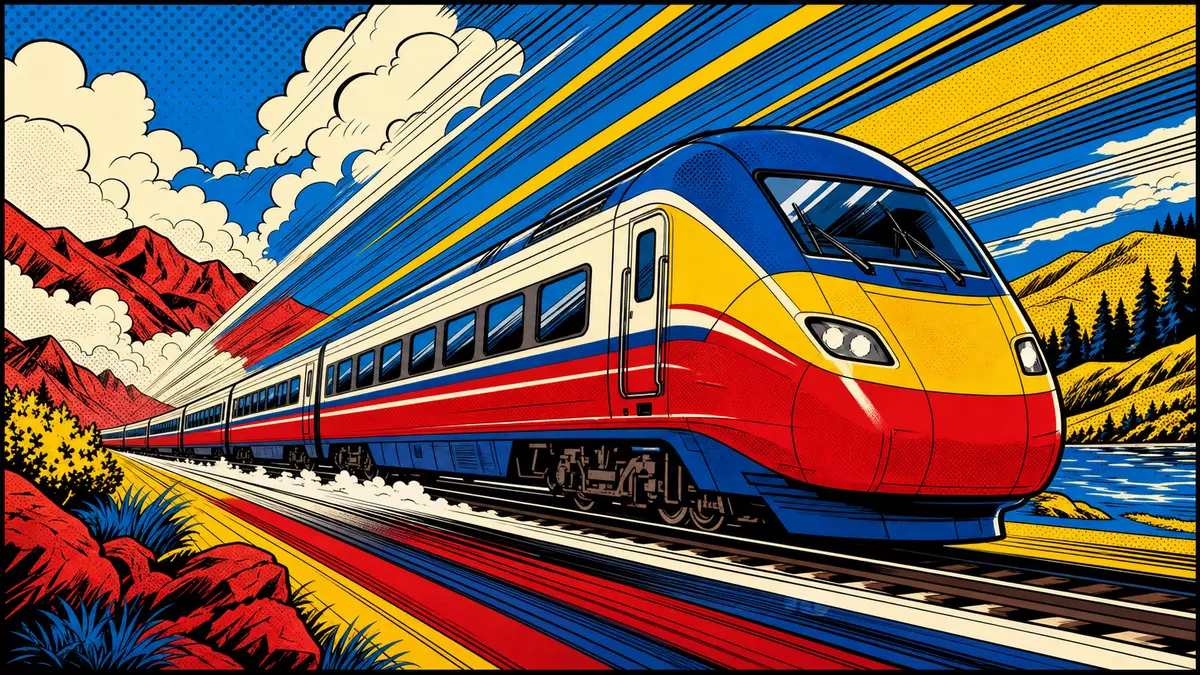
One of Stadler Rail’s representative product families is its electric multiple unit platform designed for regional and commuter services, often marketed under model names signaling modularity and comfort features. These trains are typically configured to operate efficiently on electrified mainlines, offering low floor entrances for accessibility, onboard passenger information systems, and modern seating arrangements. They may be deployed by state rail operators or private companies seeking to renew aging fleets and improve service quality. The product’s success can be inferred from its inclusion in multiple contracts across different countries, reflecting adaptability to various regulatory environments.
From an investor’s perspective, such platforms embody the interplay between technological innovation, production scale, and long term maintenance potential. When a product family becomes widely adopted, it can generate follow on orders, options exercises, and service contracts over many years. Stadler Rail stock thus benefits indirectly from the perceived competitiveness of these vehicles, even though financial statements report aggregated revenues rather than product specific figures. The evolution of these trains to incorporate features like battery hybrid capability for non electrified lines or enhanced digital diagnostics can further enhance their appeal.
Stadler Rail stock and market valuation context
The valuation of Stadler Rail stock on SIX Swiss Exchange reflects the market’s synthesis of backlog, revenue growth, margins, cash flow, balance sheet strength, dividends, and sector prospects. Price to earnings and enterprise value to EBITDA multiples derived from recent reported numbers serve as benchmarks against peers and historical averages. If, for example, Stadler trades at a multiple in line with or below the sector despite a sizable backlog and growing service business, some investors might interpret this as an opportunity contingent on execution improvements; conversely, if valuation is rich relative to metrics, the market may already price in ambitious expectations.
Technical chart levels, such as the range between a twelve month high and low for Stadler Rail stock, offer additional context for those following price patterns. A share price that sits closer to the upper end of that range suggests positive sentiment, while a price near the lower bound implies caution or disappointment. These levels interact with fundamental events: earnings reports, major contract announcements, or macro shocks can nudge the stock within its trading band. Ultimately, for a capital intensive, contract driven company like Stadler Rail, sustained value creation depends on turning backlog into profitable, cash generative projects over many years rather than short term price movements.
Read more on Stadler Rail
For more detailed metrics, historical financial tables, and official disclosures beyond this high level overview, investors can consult Stadler Rail’s investor relations resources and regulated filings. Those documents provide precise revenue, EBIT, net income, cash flow figures, and guidance ranges for each reporting period, as well as explanations of any significant non recurring items. Combining these primary sources with independent analyses from financial research firms and sector specialists allows a more granular understanding of the company’s trajectory. In practice, careful reading of notes on project risk, working capital, and segment performance is essential to interpret headline numbers accurately.
While this article foregrounds general patterns in Stadler’s financial and operational profile, individual investment decisions depend on personal risk tolerance, portfolio context, and more detailed data. Stadler Rail stock remains tied to the evolution of rail transport infrastructure, regulatory frameworks, and technological innovation, and future reports will continue to refine the picture presented by the latest available metrics.
Disclaimer regarding our articles: No investment advice, no buy or sell recommendation. Information on prices, companies, and markets is provided without guarantee; changes are possible at any time. Stock market transactions can lead to substantial losses. Our articles are created and reviewed in whole or in part automatically with the support of AI.