T1 Energy's Index Windfall Gives Way to Reality Check as Factory Financing Comes Into Focus
Published on 06/23/2026 at 14:25 | Redaktion boerse-global.de
The euphoria that swept T1 Energy after its inclusion in the S&P Semiconductors Select Industry Index has already begun to fade. The solar manufacturer’s stock surged 11.23 percent to $10.40 on the day of the announcement, fueled by forced buying from exchange-traded funds tracking the benchmark. But the gains are proving brittle: the shares have since slipped back to €8.70, a 4.4 percent daily decline that market participants describe as a healthy consolidation after a four-week run of more than 22 percent.
Index membership, announced on June 22 by S&P Dow Jones Indices, triggered a predictable wave of institutional demand. Trading volume spiked to nearly 49 million shares, well above the daily average of 41 million, as the stock oscillated between $9.21 and $10.90. Yet the mechanical lift has limits. Analyst consensus points to a price target of just €8.79 — barely one percent above the current level — leaving little room for further upside without a catalyst from the company’s own operations.
A Battery Bet for the AI Era
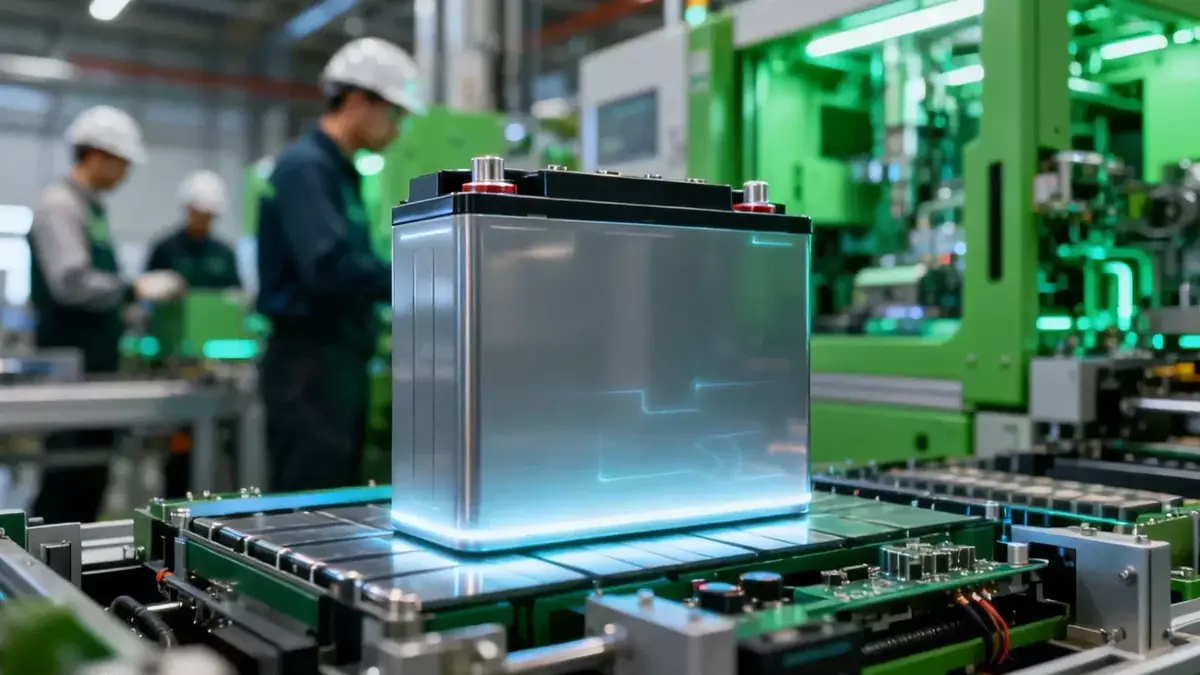
What separates T1 Energy from a pure-play solar stock is its aggressive pivot toward energy storage. The planned acquisition of KORE Power for approximately $32 million gives the company access to battery systems designed to power the voracious data centers demanded by artificial intelligence. Management expects the deal to contribute positive EBITDA from 2026, with significantly higher contributions the following year.
The market capitalization of €2.28 billion reflects this narrative: investors are pricing in future potential rather than current earnings. But the strategic repositioning carries execution risk. T1 Energy must simultaneously ramp solar module production, integrate battery manufacturing, and serve the AI infrastructure market — all without straining a capital structure that already faces heavy demands.
Should investors sell immediately? Or is it worth buying T1 Energy?
Factory Progress and a $225 Million Hole
Operationally, the company has made tangible strides. Its G1_Dallas solar module plant — with 5 gigawatts of capacity — earned an “A” bankability rating from Intertek CEA in April, a credential that matches leading tier-one suppliers. Production guidance for 2026 remains at 3.1 to 4.2 gigawatts from that facility.
The next milestone is the G2_Austin solar cell factory, a 2.1-gigawatt facility scheduled to begin production in the fourth quarter of 2026. The price tag: $225 million. T1 Energy will need to raise that capital, and the recent shareholder vote to double authorized common shares to one billion — approved on June 17 with 201.6 million votes in favor — grants the board the flexibility to do so. The measure does not issue new equity immediately, but it signals that a capital raise is on the table.
Volatility and Open Risks
Annualized 30-day volatility of nearly 159 percent underscores the speculative nature of the stock. The shares have more than tripled from an April low of €3.24 but remain 21 percent below the June peak of €11.00. Over a 12-month span, the range has been even wider: $1.15 to $12.49.
T1 Energy at a turning point? This analysis reveals what investors need to know now.
Bernstein rates the stock “Market Perform” with a $9 price target, noting that current levels already reflect uncertainties around financing and ramp-up risks. Meanwhile, a patent dispute over TOPCon solar technology adds a legal wildcard whose outcome is uncertain. T1 Energy has achieved much on paper — index inclusion, factory accreditation, a bold acquisition — but the next chapter will test whether it can translate ambition into industrial reality without breaking the bank.
Ad
T1 Energy Stock: New Analysis - 23 June
Fresh T1 Energy information released. What's the impact for investors? Our latest independent report examines recent figures and market trends.
Disclaimer regarding our articles: No investment advice, no buy or sell recommendation. Information on prices, companies, and markets is provided without guarantee; changes are possible at any time. Stock market transactions can lead to substantial losses. Our articles are created and reviewed in whole or in part automatically with the support of AI.