The Icon of the Seas. Royal Caribbean bets on megaship families
Published on 07/23/2026 at 08:23 | Editorial responsibility: Rafael Müller, Editor-in-Chief AD HOC NEWS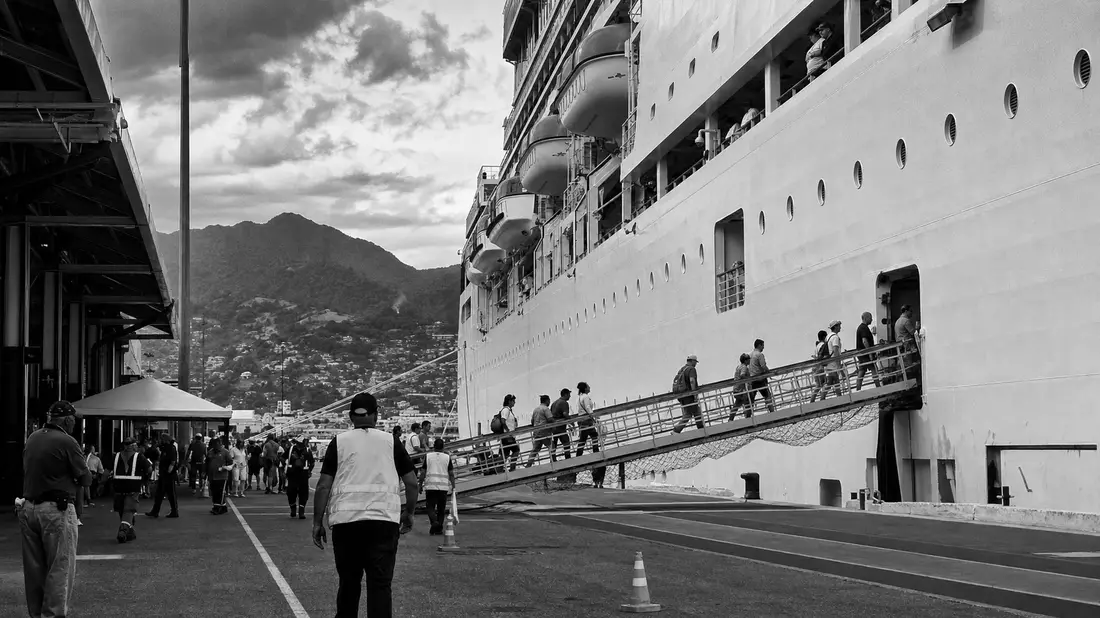
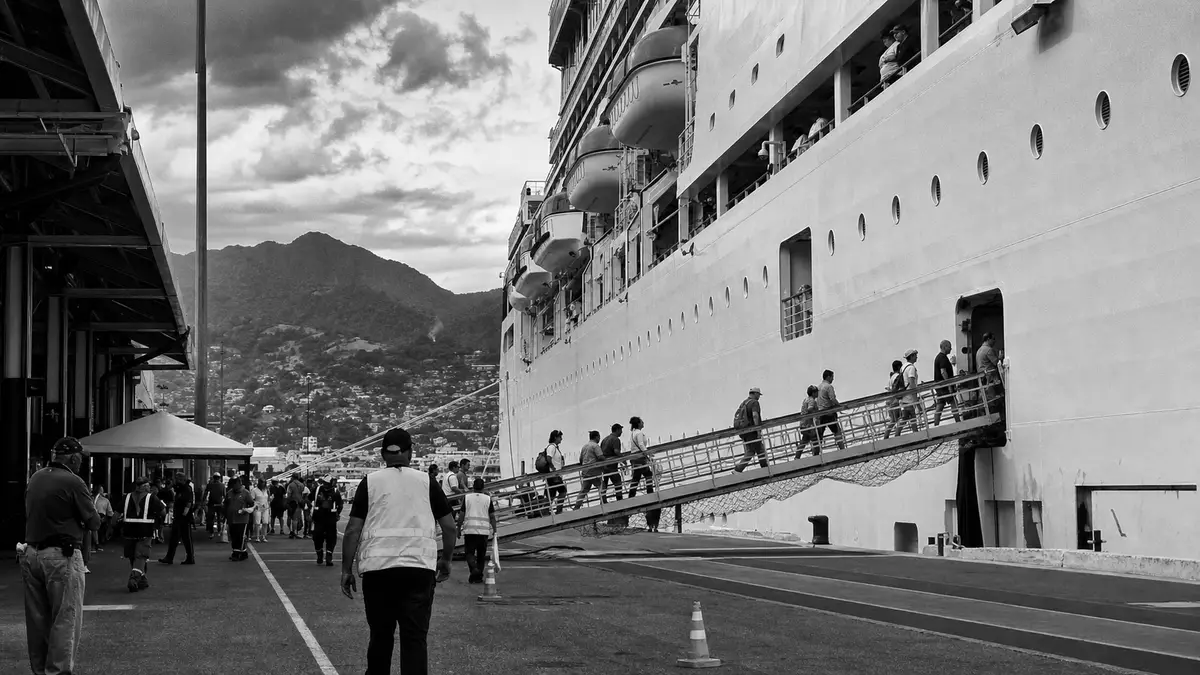
Icon of the Seas by Royal Caribbean greets passengers in Miami with the smell of sea salt and fresh paint rising from the gangway as steel hull and turquoise water meet just a few meters below. Children press their hands against the glass, staring up at the orange-and-teal water slides twisting off the top deck. Royal Caribbean Group CEO Jason Liberty has called the ship a "family vacation icon" and you understand why as soon as you step into the multi-level Royal Promenade with its LED sky and thumping background music.
Gigantic ship, clear family focus
Icon of the Seas is the first vessel in Royal Caribbean’s new Icon class and sailed its maiden revenue voyage from Miami in January 2024, after being delivered by Meyer Turku shipyard in Finland in late 2023. At around 365 meters in length and a gross tonnage of roughly 248,000 GT, the ship ranks among the largest cruise vessels in the world and can host up to about 7,600 guests at maximum occupancy, with a normal double occupancy just over 5,600 passengers. Royal Caribbean markets the ship heavily to families and multi-generational groups, combining classic Caribbean itineraries of typically 7 nights with a resort-style onboard concept.
In capacity terms, Icon of the Seas concentrates a floating resort and water park into one hull, divided into eight distinct "neighborhoods" such as Surfside for young families, the open-air Central Park, and the high-adrenaline Thrill Island. The Surfside neighborhood, for example, is designed so that parents can sip a coffee or cocktail within a few steps of splash pads and small slides, while older kids drift toward an arcade and family-friendly eateries. On the top decks, the Category 6 water park bundles six slides, including the steep Frightening Bolt drop slide and Hurricane Hunter raft slide, making the ship visually stand out in port with its cluster of bright tubes rising over the bow.
Royal Caribbean Group and the Icon class in the portfolio
How Icon of the Seas slots into Royal Caribbean Group’s capacity growth and booking trends.
Technical platform and energy mix
From an engineering perspective, Icon of the Seas is Royal Caribbean’s first ship powered primarily by liquefied natural gas (LNG), using multiple Wärtsilä engines that can burn LNG and marine gas oil. The vessel is also equipped with fuel cell technology for auxiliary power and includes an advanced waste heat recovery system that helps cover part of the hotel load. A shore power connection enables the ship to plug in when ports provide compatible infrastructure, reducing emissions while docked.
The ship’s technical specification reflects the wider cruise industry’s shift toward lower-emission fuels and more efficient onboard systems, without changing the basic economics of a high-capacity Caribbean ship. Royal Caribbean positions Icon of the Seas as a step toward its longer-term decarbonization goals, such as a commitment to achieve net zero emissions by 2050 on a company-wide basis. Onboard, guests notice some of this in small details: LED lighting throughout corridors, smart thermostats in staterooms, and a quieter engine vibration profile compared with older tonnage, especially in aft balcony cabins.
Cabins, suites and ticket pricing
The cabin mix on Icon of the Seas ranges from standard interior staterooms to high-end suites like the three-level Ultimate Family Townhouse with in-room slide and private white picket fence entrance along the Surfside neighborhood. Many mid-tier cabins are water-facing, including the reimagined Ocean View Balconies overlooking the open sea and neighborhood-facing balconies over Central Park or Surfside, which trade ocean views for people-watching and proximity to activity. Royal Caribbean has stressed the family focus in its design language, increasing the number of cabins that can sleep three or more and tightening walking distances from staterooms to kid-focused venues.
Pricing for Icon of the Seas has run above earlier Royal Caribbean classes according to travel agents, reflecting very strong early demand and the broader recovery in Caribbean cruise pricing after the pandemic. Published fares for a 7-night Caribbean cruise on Icon of the Seas from Miami can vary widely by season, but booking engines show inside cabins in the low season starting in the mid-hundreds of US dollars per person before taxes and fees, while peak sailings and suites can run into several thousand dollars per guest. Passengers then face typical optional spending for beverage packages, specialty restaurants and shore excursions, which are important revenue contributors for Royal Caribbean on such high-capacity ships.
Onboard experience: water, noise, crowds
Walking the outdoor decks, you hear the constant rush of water from pools and splash zones, a signature of Icon’s resort approach. Royal Caribbean’s senior vice president of hotel operations, Sean Treacy, has described the ship internally as a "water-first" concept where multiple pools, whirlpools and water features are never more than a short walk away for guests. The Chill Island neighborhood offers a series of pools with different atmospheres, from a quieter adult area to livelier bars with music, while the Hideaway combines an infinity pool overlooking the ship’s wake with a beach club vibe and DJ sets.
Crowd management is central to the product design, given the passenger numbers involved. Royal Caribbean uses digital tools within the Royal app for pre-booking of shows and virtual queueing, but travelers still report classic peak-time bottlenecks in buffet areas and at elevator banks during embarkation and disembarkation. On sea days, the top-deck water park and main pool areas can feel dense, while early mornings and port days open up quieter corners, especially around Central Park and the ship’s aft lounges. For families, that trade-off is part of the package: more activities and dining venues than you can reasonably cover in a week, but a constant baseline of ambient noise and motion.
Food, beverages and upsell logic
Royal Caribbean equips Icon of the Seas with more than 20 dining venues, including included main dining rooms, self-service buffets and casual outlets, and a set of specialty restaurants that carry additional charges. Concept names like Empire Supper Club, Izumi, Chops Grille and Giovanni’s Italian bring familiar Royal Caribbean branding into the new class, while Surfside Eatery and Surfside Bites are tailored to families moving between water play and quick meals. Guests can choose traditional fixed dining times or a more flexible approach through the cruise line’s My Time Dining system.
Beverage packages and dining add-ons follow Royal Caribbean’s usual revenue strategy, with pre-cruise booking discounts often highlighted in emails and the cruise planner interface. Travelers who commit to water park access, Wi-Fi and drinks packages before boarding tend to see lower headline prices than those who decide onboard, but the line still gains meaningful incremental spend per guest. This layering of optional extras is one reason Royal Caribbean emphasizes Icon of the Seas as not only a hardware showpiece but also a platform for higher onboard revenue yields compared with older ships.
Safety, regulation and port infrastructure
Icon of the Seas is registered in the Bahamas and operates under international maritime regulations, including SOLAS (Safety of Life at Sea) standards and environmental rules set by IMO MARPOL conventions. The ship’s size requires ports with suitable berthing capacity, turning basins and shore-side services. Homeport Miami has invested heavily in cruise terminal infrastructure and can handle large vessels, but some Caribbean ports on the itineraries are still adapting their facilities to handle the new Icon class on a regular basis.
From a passenger’s perspective, safety drills and signage largely mirror what regular cruisers know from other ships: life jacket locations, muster stations marked on cabin doors and stairwells, and crew-led briefings before departure. Royal Caribbean has integrated more technology into this process, such as app-based checklists and video briefings that passengers can complete in their cabins or bars before visiting their muster station in person. It reduces the old-style mass gathering on deck but still leaves the final verification to staff who scan cruise cards at the assigned station.
Where Icon sits in the Royal Caribbean portfolio
Royal Caribbean Group operates multiple brands, including Royal Caribbean International, Celebrity Cruises and Silversea, and Icon of the Seas belongs to the core Royal Caribbean International fleet segment. In capacity terms it extends the company’s Caribbean focus alongside existing Oasis-class ships, but with updated hardware and higher revenue potential per berth thanks to the family and water park focus. That makes Icon important not only for Royal Caribbean International but also for the wider Royal Caribbean Group metrics that investors and analysts track.
In recent quarters, company presentations and earnings calls have repeatedly highlighted Icon of the Seas as a driver of record booking volumes and pricing, with strong uptake from North American families and groups. CFO Naftali Holtz has pointed to the ship’s early performance as evidence that consumers are willing to pay a premium for newer ships with more onboard activities, even in a period of higher interest rates and cost-of-living pressures. For Royal Caribbean, that suggests that hardware investments in newbuilds like Icon can support both top-line growth and margin expansion, assuming operating and financing costs remain manageable.
Reservations, distribution and competitive landscape
Bookings for Icon of the Seas primarily flow through travel agents, Royal Caribbean’s own website and call centers, and large online travel agencies that bundle flights, hotels and cruises. Early sailings reportedly sold out quickly for key holiday periods like spring break and Christmas, underlining the product’s appeal among families planning well in advance. The ship’s deployment on 7-night Eastern and Western Caribbean itineraries from Miami keeps air connectivity relatively straightforward for US and international guests, which matters as airfares remain volatile.
Competitively, Icon of the Seas enters a market where Carnival Corporation and Norwegian Cruise Line Holdings also deploy large, feature-rich ships in the Caribbean, while MSC Cruises continues its North American expansion. Icon’s very visible water park and family neighborhoods help differentiate Royal Caribbean’s offering. But rival lines respond with their own hardware investments, private island developments and loyalty program tweaks, so Icon is one piece in a moving competitive puzzle rather than a static advantage. For consumers, this competition generally translates into a wider choice of itineraries and ship concepts at different price points.
Financial context and Royal Caribbean stock
For Royal Caribbean Group, Icon of the Seas represents a multi-billion-dollar capital expenditure and a central element in its capacity growth over the middle of the decade, alongside upcoming sister ships like Star of the Seas. The company balances this investment with a focus on deleveraging after the heavy borrowing during the pandemic shutdown, meaning that ships like Icon need to generate strong cash flows in addition to headline booking records. Analysts watch key metrics such as net yields, onboard spend per passenger and load factors on Icon sailings to gauge the broader health of Royal Caribbean’s business.
On the stock market, Royal Caribbean Group stock trades in US dollars on the New York Stock Exchange, and investor sentiment often moves with booking commentary and macroeconomic data rather than day-to-day ship reviews. Icon of the Seas, however, plays a visible role in the company’s narrative toward investors, as management credits the new class with boosting demand and pricing in the Caribbean core.
Key facts: Icon of the Seas
- Product: Icon of the Seas
- Manufacturer: Royal Caribbean Group
- Category: Software/Service/Subscription (cruise service)
- Market launch: First revenue sailing January 2024 from Miami
- MSRP / Price: Dynamic cruise pricing, inside cabins from mid-hundreds of US dollars per person before taxes and fees, higher for peak dates and suites
- Availability: Year-round and seasonal 7-night Caribbean itineraries from PortMiami, bookable via Royal Caribbean and travel agents
- Target group: Families, multi-generational groups, couples and friends seeking resort-style Caribbean cruises with extensive water attractions
- Highlight / USP: Combines LNG-powered megaship platform with dedicated family neighborhoods and one of the largest water parks at sea
Disclaimer regarding our articles: No investment advice, no buy or sell recommendation. Information on prices, companies, and markets is provided without guarantee; changes are possible at any time. Stock market transactions can lead to substantial losses. Our articles are created and reviewed in whole or in part automatically with the support of AI.