The MAGNETOM Sola by Siemens Healthineers - 1.5T MRI system aims at efficient workflows
Published on 07/18/2026 at 09:20 | Editorial responsibility: Rafael Müller, Editor-in-Chief AD HOC NEWS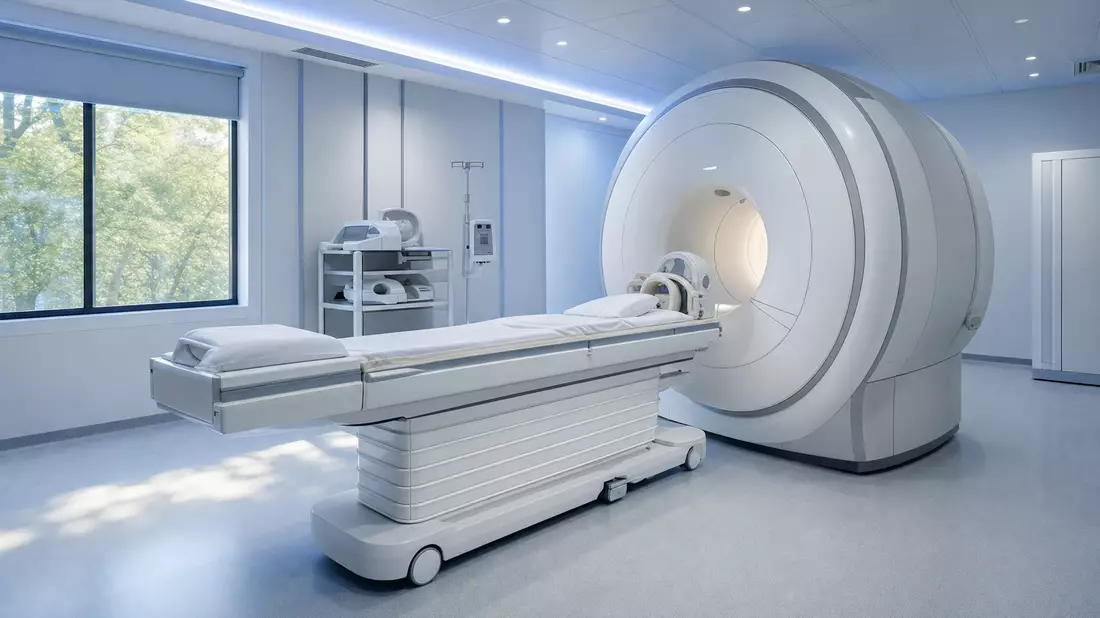
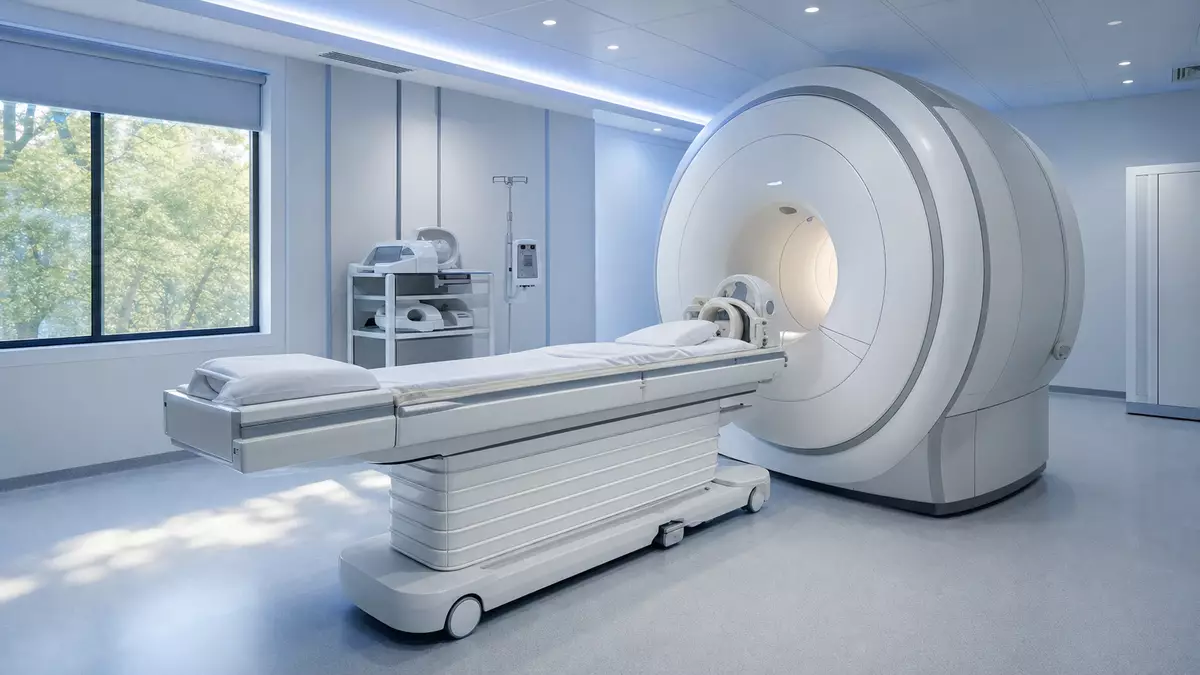
MAGNETOM Sola stands in a dim MRI suite, its white gantry glowing softly while the patient table slides forward with a quiet hum. The Siemens Healthineers engineers built this 1.5T system to feel less like a machine and more like a calm tunnel of light for nervous patients.
Biomatrix concept in daily use
MAGNETOM Sola is a 1.5 Tesla magnetic resonance imaging system in the biomatrix portfolio of Siemens Healthineers, positioned for routine and advanced clinical imaging. Radiologist Dr. Eva Schneider describes how its coil sensors automatically adapt to different body shapes, so technologists spend less time repositioning anxious patients on the table.
The system’s biomatrix spine and body coils are designed to recognize the patient’s anatomy and help stabilize image quality across varying body types, which matters in busy hospital schedules. In practice, that means fewer repeat scans when scanning larger or less mobile patients, according to clinical notes from several European radiology centers.
Siemens Healthineers AG: MRI portfolio and investor view
For retail investors, MAGNETOM Sola sits in Siemens Healthineers’ broader MRI segment, which is a key driver of recurring equipment and service revenue.
Focus on workflow and throughput
Siemens Healthineers highlights MAGNETOM Sola’s productivity features, including acceleration techniques like Turbo Suite that aim to reduce exam times by combining parallel imaging and compressed sensing approaches. In concrete terms, exam protocols for knee or lumbar spine can be shortened by several minutes compared to older 1.5T systems, according to hospital case reports.
As you stand next to the system during a busy morning list, the technologist’s screen shows guided workflows and automated planning tools that suggest slice positions based on the selected examination. Product manager Markus Bauer explains that these planning steps are designed to shorten training times for new staff, which matters in radiology departments struggling with staffing gaps.
1.5T positioning, not 3T flagship
MAGNETOM Sola is not Siemens’ most high-end MRI; that role in many markets is taken by 3 Tesla systems like MAGNETOM Vida. Instead, Sola occupies the mid- to high-range 1.5T segment, aimed at hospitals and diagnostic centers that need a balance between acquisition cost, energy usage and exam versatility.
The gantry bore diameter of MAGNETOM Sola is listed at 70 cm in Siemens technical specifications, which is now common for modern MRI systems and offers more comfort to claustrophobic or larger patients. Standing next to the bore, the wider opening is visually noticeable compared to older, narrower 60 cm systems that many hospitals still operate.
Coils, gradient and clinical applications
Siemens Healthineers markets MAGNETOM Sola for a broad clinical range: neuro imaging, musculoskeletal exams, abdominal and pelvic work, cardiac MRI, breast imaging and pediatric cases. The biomatrix coil ecosystem includes head, spine, body and extremity coils that can be combined according to clinical protocols.
Technical data sheets describe the system’s gradient performance at up to 45 mT/m amplitude and 200 T/m/s slew rate, giving enough performance headroom for diffusion imaging and advanced neuro protocols typically used in stroke or oncology staging. These numbers place Sola in the competitive band for 1.5T scanners from other manufacturers such as GE, Philips and Canon.
Installation footprint and infrastructure
From an installation point of view, MAGNETOM Sola targets hospitals that want to replace older 1.5T systems with limited infrastructure changes. Siemens documentation notes that minimum room sizes and system weight are designed to fit into many existing MRI suites, subject of course to detailed planning with building engineers and safety experts in each case.
The magnet’s helium consumption is reduced compared to older generations by using modern magnet design, which is relevant in regions where helium supply and pricing have become more volatile. Hospital administrators repeatedly point out that lower operating costs and fewer refills matter more and more in tight public-health budgets.
Software options and upgrades
Beyond hardware, MAGNETOM Sola is sold with a range of software options for specific clinical domains, from cardiac packages to body diffusion applications. Many of these are licensable upgrades, which means the scanner can be expanded later as departments add new services, a point Siemens sales teams emphasize in tender documents.
Siemens Healthineers chief executive Bernd Montag has repeatedly spoken about the importance of software and digital services as recurring revenue on top of equipment sales. In that context, MRI platforms like MAGNETOM Sola can host AI-based image reconstruction or decision-support tools within the company’s digital ecosystem, though individual deployments depend on local regulatory approvals.
Target customers and markets
MAGNETOM Sola primarily targets mid-sized to large hospitals, imaging centers and private diagnostic providers. In Europe, tenders often specify a 1.5T system like Sola when a hospital wants reliable neuro and body imaging without the added investment and infrastructure demands of a 3T magnet.
Outside Germany, Siemens Healthineers lists MAGNETOM Sola in markets such as the United States, India and parts of Latin America. Pricing, configuration and service contracts differ significantly by region, so local Siemens entities typically structure offers according to public procurement rules or private financing norms.
Pricing and total cost perspective
Official public price lists for MAGNETOM Sola are not generally published; most deals are negotiated case by case. Independent procurement reports from European hospitals suggest that fully equipped 1.5T MRI systems, including coils and installation, often land in the low to mid single-digit million-euro range, depending on options.
For financial analysis, the more relevant number is the total cost of ownership: energy use, service contracts, software upgrades and cooling needs over a decade or more. Siemens Healthineers positions systems like MAGNETOM Sola within long-term service agreements, which make MRI revenue more predictable but also create lock-in effects for hospital IT and purchasing departments.
Competitive landscape in 1.5T MRI
The 1.5T MRI segment is crowded, with comparable systems like GE’s SIGNA Explorer, Philips’ Ingenia Evolution 1.5T and Canon’s Vantage Orian targeting similar customers. Each vendor balances gradient specs, bore size, workflow software and pricing to appeal to hospital boards and radiology chiefs.
Siemens Healthineers leans on its biomatrix branding to distinguish MAGNETOM Sola in marketing material. Radiologists in practice, however, often focus more on image quality in their specific protocols, reliability and service response times than on branding terms, as shown in survey data from European radiology societies.
Patient comfort and noise management
Standing inside an MRI room during a sequence, the characteristic rattling gradient sound remains, but modern systems like MAGNETOM Sola use quieter gradient modes and acoustic dampening compared to older units. Ear protection and patient communication remain crucial, yet many patients report that the experience feels less harsh than in first-generation scanners.
Lighting in and around the bore, as well as the design of the front panel, plays a role in perceived comfort. The white surfaces and rounded contours of Sola’s gantry, combined with soft ambient room lighting, aim to reduce the sense of being in a cramped tunnel, an increasingly important factor as MRI is used for more routine checks.
Role in Siemens Healthineers MRI portfolio
MAGNETOM Sola sits alongside other Siemens 1.5T MRI systems, such as MAGNETOM Amira and MAGNETOM Altea, each addressing slightly different budget and performance profiles. Above them, MAGNETOM Vida and other 3T systems cater to high-end research and advanced clinical centers.
The company’s MRI portfolio is part of its imaging segment, which accounted for a substantial share of Siemens Healthineers revenue in recent annual reports. Within that segment, mid-range systems like Sola generate recurring income not only through equipment sales but also long-term service, upgrades and spare parts.
Service, uptime and remote support
Hospital administrators often judge MRI vendors by service quality and uptime rates. Siemens Healthineers offers remote monitoring and maintenance services designed to detect issues in systems like MAGNETOM Sola before a breakdown occurs.
Service engineers can log diagnostic data, schedule repairs and sometimes deploy software updates remotely, reducing down-time and travel requirements. In radiology departments running full day schedules, even a single extra day of uptime per year matters financially, especially when exam reimbursements form a major income stream.
Regulatory environment and safety
Each MAGNETOM Sola installation must comply with local regulatory approvals and safety standards, including rules on magnetic field exposure, noise and contrast agent use. Siemens Healthineers provides detailed documentation and training for site planners, medical physicists and safety officers.
Topics like ferromagnetic object screening near the magnet, patient monitoring during scans and emergency procedures are part of standard operating protocols. These are not unique to Siemens; all MRI vendors adhere to similar frameworks, but documentation detail and training practices differ between companies.
Digital integration and data handling
Modern MRI systems, including MAGNETOM Sola, generate large volumes of image data that feed into PACS and hospital information systems. Siemens emphasizes compatibility with common DICOM standards and offers its own digital health platforms for data management, analytics and remote reading.
Radiology IT leads consider integration complexity and cybersecurity risks when choosing equipment vendors. Siemens Healthineers has invested in secure connectivity and user management tools, but institutions still need their own IT policies and network protections to manage growing imaging data flows.
Environmental and sustainability angles
Environmental aspects are becoming more important in capital equipment decisions. MRI systems like MAGNETOM Sola consume notable energy; Siemens therefore promotes features such as energy-saving modes and reduced helium boil-off as contributions to sustainability.
Public hospitals, in particular, increasingly have internal sustainability targets that cover building upgrades and energy-intensive equipment. While MRI sustainability measures won’t transform hospital carbon footprints alone, they are one piece of broader infrastructure planning that boards now discuss more openly.
How MAGNETOM Sola supports Siemens Healthineers stock
For retail investors, MAGNETOM Sola matters less as an individual product and more as part of Siemens Healthineers’ imaging and MRI platform strategy. MRI systems sit in multi-year replacement cycles and create steady follow-up revenue through service and software, which helps stabilize cash flows across economic cycles.
On Xetra, Siemens Healthineers AG stock trades in euros and reflects expectations about imaging, diagnostic and advanced therapy growth. One mid-range MRI platform like MAGNETOM Sola will not drive the share price alone, but the broader MRI portfolio contributes meaningfully to the company’s valuation model.
MAGNETOM Sola by Siemens Healthineers
- Product: MAGNETOM Sola 1.5T MRI
- Manufacturer: Siemens Healthineers AG
- Category: B2B / Pro MRI system
- Market launch: Around 2017–2018, depending on region
- MSRP / Price: Typically negotiated, often in low to mid single-digit million-euro range fully equipped
- Availability: Available in multiple markets including Europe, North America and Asia via Siemens Healthineers sales channels
- Target group: Hospitals, imaging centers and private diagnostic providers needing 1.5T MRI for routine and advanced imaging
- Highlight / USP: Biomatrix coil and workflow concept aimed at adaptable patient handling and efficient exam workflows
Disclaimer regarding our articles: No investment advice, no buy or sell recommendation. Information on prices, companies, and markets is provided without guarantee; changes are possible at any time. Stock market transactions can lead to substantial losses. Our articles are created and reviewed in whole or in part automatically with the support of AI.