UK Emergency Services Battle Wildfires as New £500 Million Building Safety Framework Launches
Published on 07/24/2026 at 22:37 | Redaktion boerse-global.de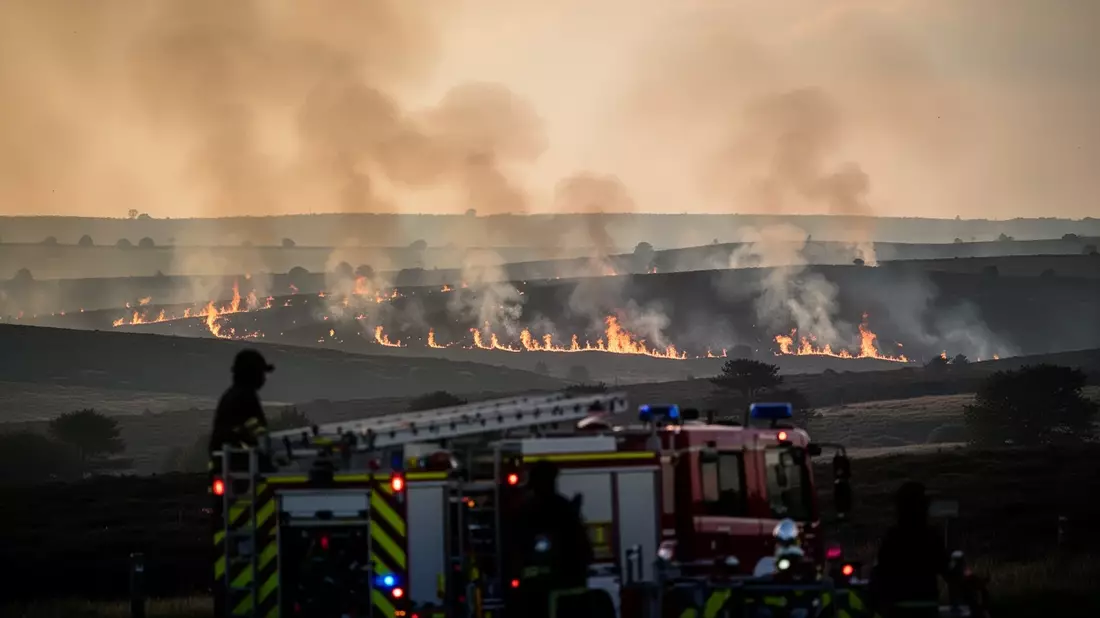
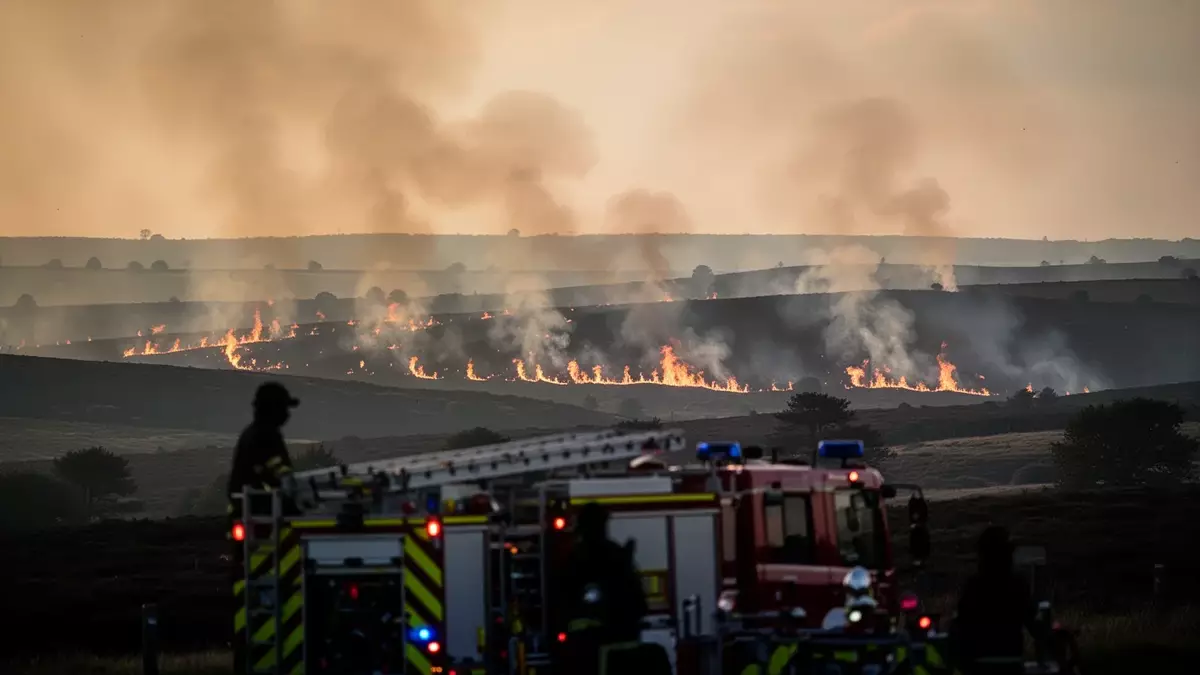
Emergency response teams across the United Kingdom are managing multiple large-scale wildfires and agricultural blazes, while national authorities have introduced a new £500 million framework to address long-term building safety requirements. The twin developments highlight the competing pressures on the UK's emergency and regulatory infrastructure.
Wildfires Continue to Burn Across Scotland and Wales
In the Scottish Highlands, a wildfire at the RSPB Abernethy reserve in the Cairngorms entered its tenth day on July 24. A change in wind direction the previous day caused a significant flare-up, sending smoke visible as far as 97 miles away in Aberdeen. More than 100 firefighters, 11 engines, and various drones and helicopters have been deployed to the site.
First Minister John Swinney confirmed he is reviewing the resources available to combat the blaze, which has necessitated the creation of firebreaks extending several miles to the east and west.
The Welsh government activated crisis management protocols following significant fires in Rhinogydd and Blaenavon. The Rhinogydd fire, which began on July 13, has burned 951 hectares and was large enough to be monitored via satellite. A drought was declared in North Wales and the Upper Severn regions earlier this month.
While a perimeter line has been completed at the 220-hectare Blaenavon fire, smoke has reached as far as Cardiff. Welsh Cabinet Minister Siân Gwenllian noted on July 23 that there is currently no UK-based military aerial firefighting capacity. As a result, Natural Resources Wales deployed a specialised helicopter to the Rhinogydd site.
Public Health Wales has advised residents in affected areas to remain indoors and keep windows closed due to the presence of fine particles and gases such as carbon monoxide.
As the UK faces more frequent wildfires, having a robust fire safety plan is no longer optional for employers. A free Fire Safety Toolkit gives you a complete set of documents, including risk assessments, evacuation plans, and extinguisher training materials, to help you meet your legal duties. Download the free Fire Safety Toolkit
Power Outages and Agricultural Fires in Southern England
A major grassland fire near Trowbridge, Wiltshire, on July 24 led to widespread infrastructure disruptions. The blaze, which originated from a bonfire before spreading to a 3km by 3km area of fields, forced the closure of the A361 Hilperton Drive. At the request of the fire service, Scottish and Southern Electricity Networks (SSEN) isolated the local grid, initially leaving more than 12,000 properties without power. By the afternoon, the number of affected homes had been reduced to 114.
In Dorset, fire crews responded to two separate agricultural incidents. On July 24, a 40-metre-long barn at Throop Hollow containing 1,000 tonnes of hay was left to burn out under supervision. This followed a fire on July 23 in Whitchurch Canonicorum involving 100 tonnes of hay, where farmers used machinery to move fodder and relocate cattle while four crews worked to extinguish the flames.
New £500 Million Building Safety Framework Opens
Concurrent with the emergency responses, a new £500 million building safety framework was launched on July 24. The four-year agreement, managed by Prosper, is scheduled to run from October 2026 through October 2030.
The framework is divided into four lots covering consultancy, passive fire protection, active fire protection, and principal contracting. It is designed for use by housing associations, local councils, and the NHS across six regions. The deadline for supplier applications is September 4, 2026.
The launch coincides with recent warnings from the Building Safety Regulator. The Building Engineering Services Association (BESA) recently backed the regulator's stance that main contractors must provide stronger evidence of competence and quality management on higher-risk buildings. BESA officials indicated that their current assessment standards are now aligned with the requirements of the Building Safety Act.
With the Building Safety Act raising the bar for competence and documentation, many organisations are reviewing their health and safety processes from the ground up. A free Health & Safety Toolkit provides ready-to-use risk assessments, checklists, and templates covering key UK regulations — helping you stay compliant and protect your workforce. Download the free Health & Safety Toolkit
Fire Service Training Facilities Upgraded
In Buckinghamshire, local authorities granted approval on July 24 for the construction of a new 13.5-metre steel training tower at the Princes Risborough Fire Station. The new structure will replace an existing tower. Heritage officers concluded that the replacement would not cause harm to the surrounding conservation area, allowing the fire and rescue service to proceed with the modernisation of its training facilities.
Disclaimer regarding our articles: No investment advice, no buy or sell recommendation. Information on prices, companies, and markets is provided without guarantee; changes are possible at any time. Stock market transactions can lead to substantial losses. Our articles are created and reviewed in whole or in part automatically with the support of AI.