UK-Recyclingkrise: Lithium-Batterien verursachen 71% mehr Brände
Published on 07/05/2026 at 18:27 | Redaktion boerse-global.de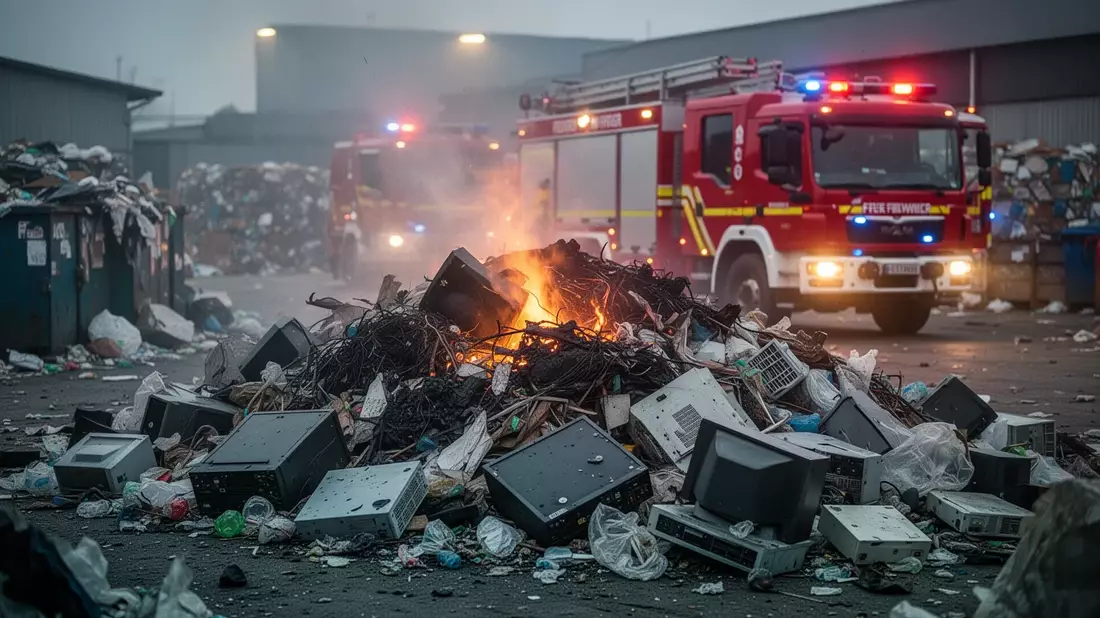
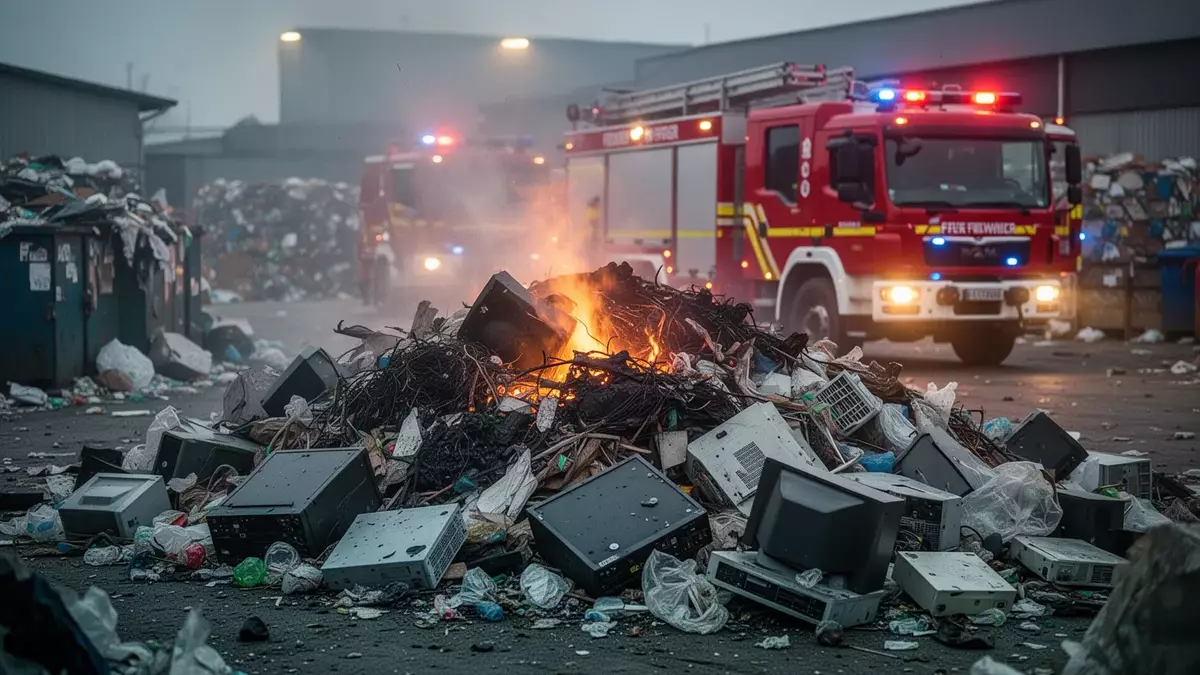
Firefighters across the UK responded to major fires at waste and recycling facilities on 5 July 2026, as emergency services warned of a sharp rise in incidents linked to improperly discarded lithium-ion batteries. The blazes in Dorset and London forced residents to stay indoors and caused significant travel disruption, underscoring a growing safety crisis that is costing councils and taxpayers millions.
Emergency Response to Major July Blazes
Shortly after midday on 5 July, crews from eight fire stations were dispatched to a recycling centre on Kennington Road in Poole. Firefighters used breathing apparatus and foam to contain the flames, while local authorities advised nearby residents to keep windows and doors closed and avoid the Nuffield Road area.
At the same time, a major incident was declared in New Cross, London, where a fire at a recycling centre mobilised more than 100 firefighters and 15 engines. The London Fire Brigade reported that the blaze caused severe disruption to Kent-bound rail services, with Southeastern trains diverted from London Bridge and Charing Cross to Victoria and St Pancras. Disruption lasted until approximately 10.30pm.
Surge in Waste Facility Fire Statistics
The latest incidents follow a sustained rise in fire risks across the UK waste sector. Battery fires in waste facilities reached 1,200 during the 2023-24 period — a 71% increase. Around 6 billion batteries were discarded in the UK in 2024 alone, many in standard household bins rather than dedicated recycling points.
Waste management firm Veolia reported 370 suspected battery fires across its operations in 2025. The incidents frequently involve lithium-ion batteries, which can undergo thermal runaway when damaged by waste-processing machinery. Such fires often destroy facilities, push up insurance premiums, and pass significant costs on to local councils and taxpayers.
Cumulative Damage and Regional Incidents
The financial and structural toll has been substantial in recent months. In March 2026, a fire in Bletchley destroyed a building valued at more than £1 million. In late June 2026, a bin lorry fire in Herefordshire broke out on Crooked Well and Llewellin Road after a lithium battery was placed in household waste. No injuries were reported, but Herefordshire Council reminded residents to place batteries in clear bags on top of bins for safe collection.
Earlier incidents show the long-term disruption these fires cause:
- Yapton, West Sussex: A fire at a scrap metal yard on 2 May 2026 was linked to improper battery disposal. West Sussex Fire and Rescue Service noted that batteries found in vapes, mobile phones, power tools, and e-bikes are an increasing problem.
- Rushden, Northamptonshire: In May 2025, 15 fire crews attended a major blaze at the Monoworld warehouse. The fire, deemed accidental and likely caused by a battery, produced smoke visible for miles and triggered health warnings for local residents.
- Elstow, Bedfordshire: A fire at a waste transfer station in July 2025 burned for six days and led to the demolition of the building due to structural damage.
Fire services and recycling yards continue to urge the public to remove batteries from electronic devices before disposal and use designated recycling points to prevent further facility losses.
Disclaimer regarding our articles: No investment advice, no buy or sell recommendation. Information on prices, companies, and markets is provided without guarantee; changes are possible at any time. Stock market transactions can lead to substantial losses. Our articles are created and reviewed in whole or in part automatically with the support of AI.