US Chemical Incidents Rise 50% as Regulators Pursue Major Polluters
Published on 07/11/2026 at 21:39 | Redaktion boerse-global.de
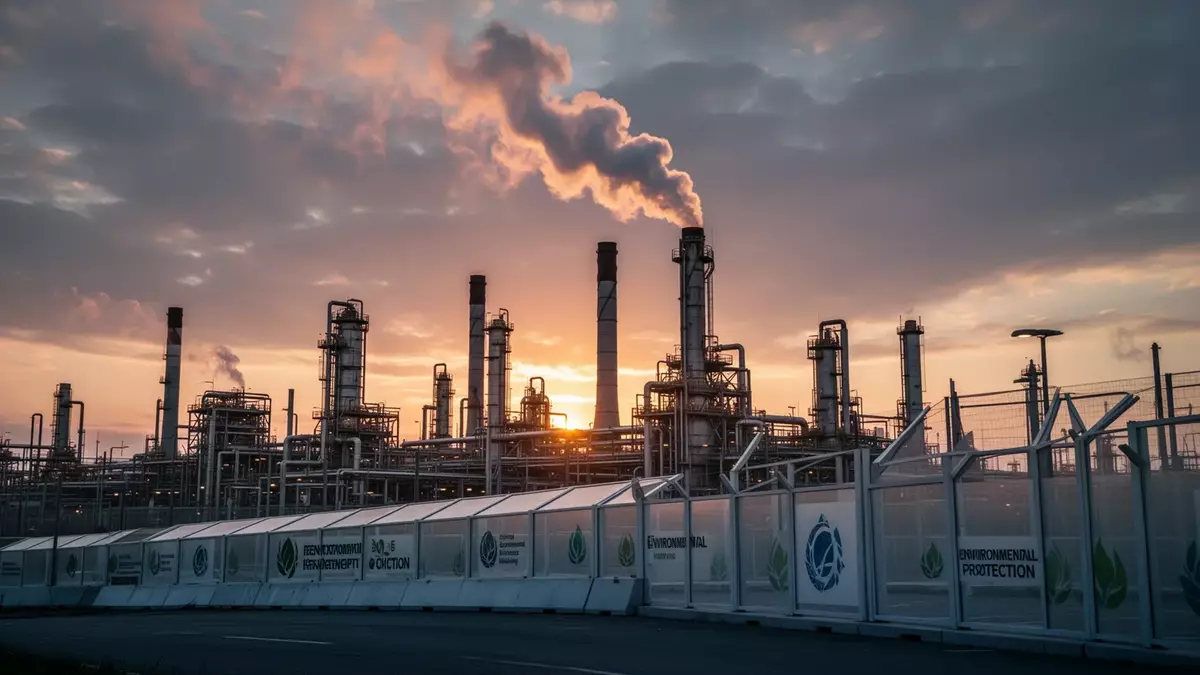
Industrial chemical disasters across the United States have surged by more than 50% in recent years, with deaths and injuries climbing roughly 20% based on 2025 data. The spike comes as state and federal authorities mount significant legal and financial challenges against major manufacturers and pipeline operators, while federal deregulation accelerates.
The trend carries direct implications for UK employers operating in the US or managing chemical supply chains across the Atlantic, highlighting the importance of robust safety protocols and regulatory compliance.
For UK employers managing chemicals across their operations, staying on top of hazardous substance compliance is non-negotiable — especially as incidents abroad raise the regulatory stakes. A free COSHH Risk Assessment Toolkit provides 43 ready-to-use templates, checklists and toolbox talks designed to help you meet your legal duties under COSHH regulations. Download your free COSHH Risk Assessment Toolkit
New York Takes on PFAS Giants
In the second week of July 2026, New York Attorney General Letitia James launched a major civil action against several prominent chemical firms, including 3M, DuPont, Chemours, Corteva, and EIDP. The complaint, filed on July 10 and 11, alleges the companies were responsible for PFAS contamination and provided misleading statements about the health hazards of these substances.
The lawsuit seeks to recover cleanup costs and damages while mandating public warnings and consumer notifications. 3M declined to comment on the filing. Representatives for DuPont and Corteva stated their companies were wrongly named in the suit, while Chemours indicated it would defend itself against the allegations.
Keystone Pipeline Settlement Reached
On the same day, the Environmental Protection Agency (EPA) finalised a $26 million settlement with South Bow LP, owner of the Keystone Pipeline. The agreement addresses a December 2022 spill in Washington County, Kansas, which released over 540,000 gallons of oil into local farmland and Mill Creek, affecting or killing approximately 2,700 animals.
Beyond the civil penalty, the company agreed to invest $40 million in repairs and provide $3 million to the state of Kansas for environmental restoration.
Catastrophic Events Mark Spring and Summer 2026
The surge in chemical incidents has been marked by several devastating events. In late May, a tank collapse at a paper plant in Washington resulted in 11 fatalities. Shortly after, a hazardous release at a California facility forced the evacuation of more than 40,000 residents.
These followed a major incident on May 21 at a GKN Aerospace facility in Garden Grove, California. An overheating 7,000-gallon methyl methacrylate tank prompted a state of emergency and the evacuation of approximately 50,000 people.
Recent data indicates that nearly 40% of the US population — roughly 131 million people — reside within three miles of a high-risk chemical facility.
OSHA Proposes Millions in Fines
Federal safety regulators have also proposed significant penalties for recent mismanagement. On June 26, 2026, OSHA proposed over $3.5 million in penalties related to a December 2025 sulfuric acid spill at BWC Terminals in Texas. The incident, caused by the improper mixing of fresh and spent acid, led to a tank overpressure and the release of 1 million gallons of acid. One Way Environmental faces the largest portion of the fine, exceeding $3 million.
Deregulation Under Fire
The increasing frequency of disasters has drawn attention to the Trump administration's decision to roll back the EPA Chemical Disaster Rule and shutter a public chemical database. Activists have expressed frustration with current EPA leadership under Administrator Zeldin. Although the agency promised a "Make America Healthy Again" (MAHA) agenda in late 2025, the programme had not materialised by July 10, 2026.
Critics point to recent EPA actions — such as the exclusion of microplastics from drinking water testing in late June and the freezing of clean energy funds — as evidence of a shift toward deregulation. Agency leadership maintains that the health agenda is an ongoing effort and has cited $945 million in PFAS-related grants as progress.
Europe Reaffirms Commitment to Industrial Safety
While US policy faces internal criticism, the European Commission reaffirmed its commitment to industrial safety on July 10, 2026. Marking 50 years since the Seveso disaster, the Commission stated it would work with member states to adapt the Seveso Directive — which covers 11,000 industrial sites — to modern risks involving climate change and cybersecurity.
As regulators on both sides of the Atlantic tighten their focus on industrial safety, having a thorough risk assessment process in place is essential. A free Risk Assessment Toolkit gives you 41 ready-to-use templates and checklists to help document hazards and meet compliance requirements — whether you are operating in the UK, US, or managing international supply chains. Download the free Risk Assessment Toolkit
Emergency Action at Washington Pulp Mill
Regional EPA offices are moving to preempt further disasters at aging industrial sites. In Cosmopolis, Washington, the EPA issued a time-critical removal action for the Cosmo Specialty Fibers pulp mill. The mill owner has been ordered to begin removing more than 700,000 gallons of hazardous chemicals, including sulfite liquor, by the end of July 2026. Investigators found at least eight leaking tanks at the site, with one discharging 45 gallons per day near the Chehalis River.
The move follows the closure of other problematic sites, such as the Braven Environmental plant in North Carolina. That facility, which operated from 2020 to 2025, was shuttered following hazardous waste violations involving benzene, arsenic, and hexavalent chromium.
Disclaimer regarding our articles: No investment advice, no buy or sell recommendation. Information on prices, companies, and markets is provided without guarantee; changes are possible at any time. Stock market transactions can lead to substantial losses. Our articles are created and reviewed in whole or in part automatically with the support of AI.