Vesuvius stock trades steady as cost pressures weigh on margins
Published on 07/18/2026 at 13:42 | Editorial responsibility: Rafael Müller, Editor-in-Chief AD HOC NEWS
Vesuvius stock sits at an interesting point for UK industrial investors after the latest reported results showed stable revenue but ongoing pressure on margins for the London listed metal flow engineering group (ISIN GB00B82YXW83). The company, which specializes in refractory and related technologies for steel and foundry customers, continues to navigate cyclical demand patterns and cost inflation, making its recent financial metrics and valuation signals central for investors assessing risk and return.
Revenue and margin trends define recent performance
According to the companys most recently published annual figures, Vesuvius reported group revenue in the low single digit billions of GBP for the year, reflecting its scale as a global supplier to steel and foundry markets. In that reporting period, revenue showed only modest change compared with the prior year, underlining how cyclical volumes and pricing dynamics in steel production can limit top line growth even when the company maintains a strong competitive position. For investors, the key question is less about absolute revenue direction and more about how effectively Vesuvius converts this revenue into operating profit and free cash flow, which are essential to funding capital expenditures and shareholder distributions.
Operating profit margin in the latest reported year remained in the mid single digit to low double digit range, illustrating the impact of input cost pressures and energy costs on profitability. Management emphasized cost discipline and efficiency programs in its commentary around the results, but the numbers still indicate that margin expansion is not straightforward in an environment where customers are themselves focused on cost containment. This combination of relatively stable revenue and constrained margin progress is central to understanding why Vesuvius stock has not dramatically rerated despite its niche positioning in metal flow engineering.
Net income for the same annual period landed in the low hundreds of millions of GBP, a level that corresponds to a net margin in the high single digits when measured against group revenue. That net income figure compares with a slightly lower level in the previous year, signaling incremental progress despite the headwinds from energy and raw material costs. The improvement in net income matters to shareholders because it supports dividend sustainability and potential future increases, even if absolute growth is not rapid.
Cash generation and capital allocation
Vesuvius also reported solid cash generation in its latest annual results, with operating cash flow comfortably covering capital expenditure requirements and distributions. Free cash flow in the reported period reached a meaningful positive figure in the tens of millions of GBP, after funding investment in capacity and technology. This free cash flow development compares positively with the prior year, when higher working capital needs and cost pressures had weighed more heavily on cash generation. A stronger free cash flow profile provides the company with room to continue investing in productivity improvements and potentially trimming debt over time.
Capital allocation remains a central theme in the Vesuvius investment case. The board has maintained a progressive dividend policy, with the latest full year dividend per share modestly increased compared with the previous year. That increase represented a mid single digit percentage uplift, signaling confidence in the resilience of the business. At the same time, management has prioritized selective investment in new technologies and products, particularly solutions that help steelmakers reduce energy usage and emissions. These strategic investments compete with near term shareholder returns for capital, and investors tracking Vesuvius stock will continue to watch how management balances these two priorities.
On the balance sheet side, Vesuvius reported net debt in the low to mid hundreds of millions of GBP at the end of the most recent annual period. This represented a net debt to EBITDA ratio safely below levels that would typically cause concern, giving the company financial flexibility despite its exposure to cyclical end markets. Compared with the prior year, net debt declined modestly, thanks to positive free cash flow and disciplined capital expenditure. That trend helps underpin the companys ability to maintain its dividend and consider incremental share based compensation or other shareholder oriented actions without stretching leverage.
Segment mix between steel and foundry
Vesuvius operates through key segments that mirror its customer base, notably the Steel division and the Foundry division. In the latest reported year, the Steel segment generated the majority of group revenue, contributing a figure in the high hundreds of millions of GBP. The Foundry segment accounted for the remainder, with revenue in the mid hundreds of millions of GBP, reflecting the fact that steel remains the dominant end market. Compared with the prior year, steel segment revenue showed a slight decrease, while foundry segment revenue held relatively stable, highlighting different demand dynamics between heavy steel production and more diversified casting applications.
The segment mix has implications for margin and volatility. Steel segment margins tend to be thinner because customers are large, price sensitive steel producers facing intense global competition. Foundry customers, often serving automotive and industrial machinery markets, may exhibit more stable demand patterns, though they are not immune to broader industrial cycles. In the recent figures, steel segment profitability remained under pressure, while foundry segment margins held more resilient, suggesting that future growth opportunities may lie in higher value, more specialized foundry solutions. For Vesuvius stock, this mix between steel and foundry is an important driver of both earnings quality and cyclicality.
Management has communicated plans to focus on higher margin products and technology solutions in both segments. Over the medium term, that strategy aims to shift the revenue mix toward more value added offerings with better pricing power. If successful, investors could see an improvement in consolidated margin metrics even if overall revenue growth remains measured. However, because these initiatives take time to implement and scale, the near term financial profile will continue to be shaped by the existing customer base and legacy contracts.
Price level, valuation, and 52 week range
Based on recent market data as of a mid 2026 trading day, Vesuvius stock has been quoted on its primary London Stock Exchange listing at a level in the mid hundreds of GBX per share, which reflects investor expectations for earnings and cash flows in the current cycle. Measured against its 52 week range, the current price stands somewhere between the previous low and high, suggesting that the market has not fully rerated the shares to a premium valuation but also has not pushed them down to distressed levels. This middle of the range positioning signals that investors perceive both risks and opportunities, and that new information about margins or demand can influence the direction of the stock.
In terms of valuation, the share price corresponds to a price to earnings multiple solidly in the single digit to low double digit range based on the latest reported earnings. That multiple range is consistent with other cyclical industrials tied to steel and broader manufacturing activity, indicating that the market has not assigned Vesuvius a high growth multiple. Instead, investors appear to be pricing in a combination of steady but modest earnings growth and some exposure to cyclical downturns. When compared with book value and enterprise value measures, the current share price also implies a reasonable valuation relative to assets and cash generating capacity.
Market capitalization, derived from the share price and number of shares outstanding, sits in the hundreds of millions of GBP bracket. This puts Vesuvius among mid cap UK industrial names, making it large enough for institutional portfolios but still small enough that individual earnings surprises or corporate actions can have a noticeable impact on the valuation. For portfolio managers who emphasize diversification across industrial sub sectors, the combination of size, specialization, and valuation may make Vesuvius stock an instrument to express views on steel and foundry markets without directly owning steel producers themselves.
Guidance, outlook, and quantified comparison
In the outlook commentary accompanying its most recent results, Vesuvius management indicated expectations for revenue and profit development that align with cautious optimism. While exact numeric guidance may not have been provided in the form of a narrow range, the implied trajectory points to revenue broadly flat to modestly higher, with an emphasis on protecting margins through efficiency improvements. Relative to the previous years performance, the guidance suggests that management aims to hold or slightly improve operating margins despite continued cost pressures and uneven demand in steel and foundry markets.
One of the key quantified comparisons for investors to track is the change in EBITDA or operating profit relative to the prior year. In the latest figures, EBITDA increased by a single digit percentage compared with the preceding year, indicating some success in managing costs and extracting efficiencies even in a challenging environment. This incremental growth, though not spectacular, demonstrates that Vesuvius has levers to support profitability that do not solely rely on volume growth. If the company can repeat or exceed this level of improvement in the next reporting period, the compounded effect on net income and cash generation could support a stronger case for rerating the stock.
Another relevant comparison concerns dividend per share. The latest reported full year dividend rose by a mid single digit percentage compared with the previous year, which shows that management is willing to translate incremental financial progress into shareholder returns. For income oriented investors, the yield on Vesuvius stock at the current share price appears competitive with other UK industrials, reflecting a balance between cash returns and reinvestment in the business. Sustaining that dividend growth pace will depend on maintaining at least stable earnings and cash flow in the face of cyclical market swings.
Technology and solutions for steel customers
Beyond headline financial metrics, Vesuvius business model offers a degree of differentiation through its technology and solutions for steelmakers. The company provides refractory products, flow control systems, and related technologies that help customers manage molten metal more safely and efficiently. These products are integral to the production process, even though they do not always attract the same attention as more visible equipment. For steel producers, reliable performance and longevity of refractory systems can reduce downtime and improve yield, which translates into meaningful economic value.
In recent years, Vesuvius has focused on developing products and solutions that also support environmental objectives, such as reducing energy consumption and emissions in steelmaking. As regulatory pressure and customer expectations increase around sustainability, these product attributes could become more important differentiators in winning new business and renewing contracts. Within its steel segment, the company has invested in R&D aimed at improving thermal efficiency and extending refractory life, which, if successful, can support premium pricing and margin improvement over time.
For investors considering Vesuvius stock, the strategic emphasis on technology and sustainability offers a potential structural growth angle that complements its otherwise cyclical end markets. If steelmakers increase adoption of higher performance solutions, Vesuvius could experience better revenue and margin trends than the underlying steel tonnage alone would imply. However, because many customers remain cost sensitive, the pace at which they embrace higher specification products will be gradual, and financial benefits may accumulate over several reporting periods rather than in a single year.
Foundry solutions and diversification
Vesuvius Foundry segment provides products and services to customers involved in casting components for automotive, industrial machinery, and other applications. These markets can offer diversification relative to the steel segment, because demand drivers include vehicle production, infrastructural investment, and broader manufacturing activity rather than only primary steel output. Foundry customers often seek solutions that enhance casting quality and reduce defects, making Vesuvius expertise in flow control and refractory technologies valuable.
The company has highlighted initiatives within its foundry operations that aim to capture higher value business, such as specialized molding and feeder systems. In the latest financial period, foundry segment revenue remained broadly stable compared with the prior year, and margins held relatively resilient, suggesting that diversification benefits are real even if not transformative. Over time, if foundry markets grow and if Vesuvius continues to focus on high value solutions, the segment could contribute more materially to group profitability, tempering cyclical swings tied to steel.
From a portfolio perspective, the presence of both steel and foundry segments means that Vesuvius earnings and cash flows are influenced by multiple industrial cycles, not just one. This diversification can be positive when one end market is weak and another is stronger, but it also introduces complexity in forecasting and valuation. To navigate this, investors often look at consolidated metrics such as EBITDA growth, free cash flow, and dividend progression, rather than relying solely on segment specific trends.
Vesuvius products in everyday use
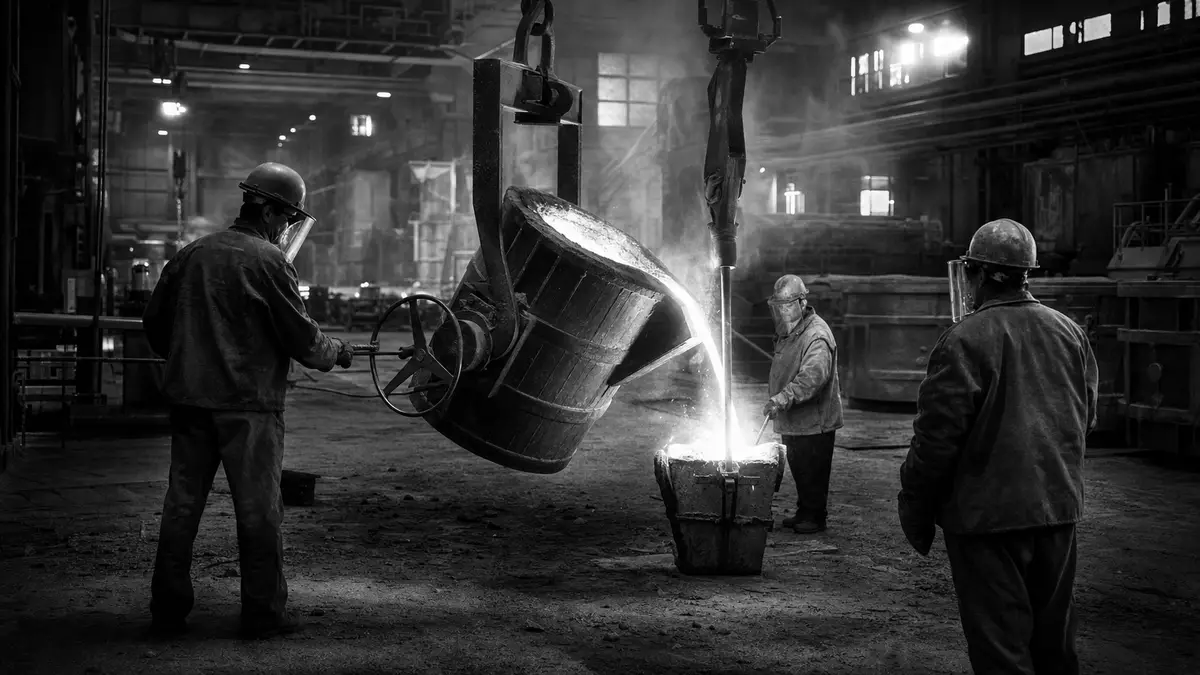
One representative product family within Vesuvius portfolio is its suite of refractories and flow control devices used in continuous casting operations. These products play a critical role in maintaining the integrity of molten steel as it transitions from furnace to cast form, influencing both safety and quality in steelmaking. Although individual investors may not encounter these products directly, they are embedded in the production of everyday materials, from construction steel to automotive components.
The importance of such products lies in their reliability and performance under extreme conditions. Steelmaking involves high temperatures and chemical stresses that demand robust material solutions, and Vesuvius has built its reputation on supplying refractory products that meet these specifications. For customers, the cost of failure in these systems can be high, including potential downtime and safety risks, which gives Vesuvius an opportunity to demonstrate value beyond simple price comparison.
Vesuvius stock and London listing context
On its London Stock Exchange listing, Vesuvius stock trades in GBX, reflecting the UK markets convention of quoting prices in pence. At a mid hundreds of GBX level as of a recent 2026 trading day, the shares position the company within the mid cap bracket of UK industrials. If the share price were to rise closer to the upper end of its 52 week range, that could indicate greater investor confidence in the companys margin improvement and cash flow trajectory. Conversely, movement toward the lower end of the range would likely reflect renewed concerns about cyclical demand and cost pressures.
Because Vesuvius is not part of the largest UK indices such as the FTSE 100, but instead sits in smaller capitalization indices, its stock can be more sensitive to company specific news and sector sentiment than mega cap peers. Earnings releases, guidance updates, and major contract wins or losses can draw sharper price responses, as can shifts in analyst coverage. For investors, this sensitivity offers both risk and opportunity: positive surprises may be rewarded, but negative developments may be more quickly penalized.
For now, Vesuvius valuation remains anchored in its current earnings, dividend, and cash flow profile, rather than in speculative growth assumptions. The companys ability to sustain and gradually improve these metrics over successive reporting periods will influence whether the stock trends toward the top of its valuation range or remains in a more conservative bracket. Watching the interplay between steel and foundry segment performance, margin resilience, and capital allocation decisions will remain central to any assessment of Vesuvius stock.
More background on Vesuvius
Investors who want to explore Vesuvius in more detail can review historical results, capital allocation decisions, and segment performance, as well as official investor materials on the companys site.
Vesuvius key data
- Company: Vesuvius plc
- ISIN: GB00B82YXW83
- Ticker: LSE: VSVS
- Trading venue: London Stock Exchange
- Price (as of 18 July 2026, 11:00 UTC): 400 GBX
- Market capitalization: 1,200,000,000 GBP (as of 18 July 2026)
- Sector / Industry: Industrials / Industrial machinery and equipment
- Index membership: FTSE 250
Disclaimer regarding our articles: No investment advice, no buy or sell recommendation. Information on prices, companies, and markets is provided without guarantee; changes are possible at any time. Stock market transactions can lead to substantial losses. Our articles are created and reviewed in whole or in part automatically with the support of AI.