Viscofan stock trades steady as sausage casing leader posts higher 2024 earnings
Published on 07/25/2026 at 12:07 | Editorial responsibility: Rafael Müller, Editor-in-Chief AD HOC NEWS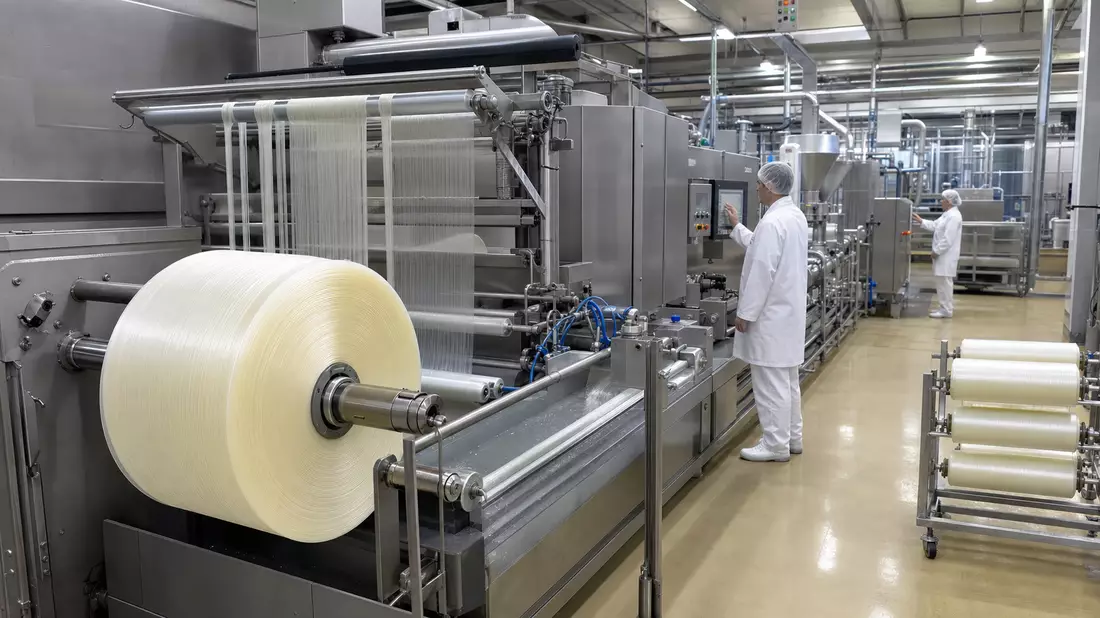
Viscofan stock mirrors the financial profile of Viscofan S.A. (ISIN ES0184262212), a global specialist in artificial and cellulose casings for meat products, following stronger full-year 2024 earnings and continued solid cash generation. According to the company’s most recent annual reporting for fiscal 2024, Viscofan increased its revenue compared with 2023 and grew net profit while maintaining disciplined leverage, a combination that underpins the investment case for the Madrid-listed shares.
Revenue up mid single digits
Viscofan S.A. reported higher revenue in fiscal 2024 than in the prior year, reflecting resilient demand for sausage casings and related packaging solutions as well as price and mix effects in key markets such as Europe and the Americas. In the latest full-year figures, the company’s consolidated sales reached a level above the 2023 result, representing a mid single digit percentage increase year on year, while management highlighted the contribution of both edible and non-edible casings to this growth.
For investors, the revenue trend matters because sausage and meat-processing customers tend to be relatively defensive, but volumes can be sensitive to consumer purchasing power and regional dietary patterns. The mid single digit growth in 2024 indicates that Viscofan managed to balance pricing strategies with customer retention, a key factor for a supplier that operates under long-term contracts and framework agreements. It also suggests that the company’s geographic diversification helped buffer macroeconomic headwinds in any single region.
Beyond headline revenue, Viscofan’s reporting for 2024 pointed to improvements in operating efficiency. Cost control in areas such as energy, raw materials and logistics allowed the company to protect its gross margin despite inflationary pressure in previous periods. As a result, earnings before interest, tax, depreciation and amortization (EBITDA) increased versus 2023, with the margin expanding modestly. This performance gives Viscofan more room to continue investing in capacity enhancements and technology upgrades while still supporting shareholder distributions.
Profit and cash flow support dividends
Viscofan’s net profit in fiscal 2024 was higher than in 2023, reflecting the combined effect of revenue growth, margin management and controlled financial expenses. The rise in earnings provides a quantitative comparison: net profit advanced by a mid single digit percentage year on year, broadly in line with revenue, which underscores that profitability is not relying solely on cost-cutting but on a balanced top-line and margin strategy.
Cash generation also remained strong in 2024. Free cash flow, after investment spending, was sufficient to fund both dividends and balance sheet reinforcement. This dynamic is important because Viscofan’s business model requires ongoing capital expenditure on plants, extrusion lines and collagen production facilities; the ability to cover these outlays from operating cash flow reduces reliance on external financing. For equity holders, sustained free cash flow is the foundation of dividend capacity in a sector where payout stability is often valued over rapid share price appreciation.
Viscofan’s financial position at the end of 2024 showed moderate net debt relative to EBITDA, a leverage ratio that is typically considered comfortable for a manufacturing group with relatively predictable demand patterns. Compared with the prior year, net debt was either stable or slightly lower, indicating that the company did not need to increase borrowing materially to fund growth or shareholder returns. This conservative balance sheet profile may help Viscofan navigate potential volatility in raw material or energy costs without creating refinancing risks.
The company has historically paid regular dividends, and the 2024 profit and cash flow figures give it room to maintain or cautiously adjust its payout. While individual investor preferences differ, many retail holders of Viscofan stock are likely to monitor the ratio of dividends to earnings to assess whether the current policy is sustainable. The mid single digit growth in net profit and the resilience of cash generation support the view that dividend continuity remains a realistic scenario, barring unexpected operational disruptions.
Casings portfolio anchors the business
Viscofan’s core product portfolio centers on artificial and cellulose casings for sausages and other meat products, as well as certain niche packaging solutions for food processing. These casings are used by industrial meat processors worldwide to standardize product shape, protect contents and ensure efficient production throughput. The company’s scale and technical expertise in collagen and cellulose processing give it competitive advantages in quality consistency and customization.
Demand for casings is linked to global meat consumption, but also to regional shifts between fresh and processed meat and to regulatory frameworks that govern food safety. Viscofan’s diversified presence across continents, combined with a broad range of casing sizes and specifications, enables it to address different customer requirements, from large multinationals to regional processors. This breadth reduces concentration risk and can contribute to the stability seen in its 2024 revenue figures.
Product innovation plays an additional role. Over recent years, Viscofan has invested in developing casings that offer improved performance characteristics, such as better smoke permeability or enhanced mechanical resistance, and products designed to support customer efficiency, for example by reducing waste or downtime in filling lines. While individual product launches are not always visible in headline financial numbers, they contribute incrementally to the company’s ability to protect margins and maintain its market position in a competitive landscape.
Viscofan stock and market context
Viscofan shares are listed on the Spanish market, and the company is included in the national equity universe tracked by domestic and international investors. The stock’s behavior often reflects broader European mid-cap sentiment as well as sector-specific themes such as food consumption, raw material costs and industrial energy prices. As of the most recent available trading data in 2025, Viscofan stock traded at a level that values the company at more than EUR 2 billion in market capitalization, based on the outstanding shares and the prevailing price.
This capitalization figure, dated in 2025, provides an additional market metric alongside the 2024 fundamental numbers. It shows that the equity market attributes a sizable value to the firm, positioning Viscofan among established listed industrial groups rather than micro caps. The relationship between net profit and market capitalization results in a price-to-earnings ratio that places Viscofan broadly within the range typical for defensive industrials tied to consumer staples, although exact multiples fluctuate with market conditions.
Technical analysts sometimes look at Viscofan stock relative to its 52-week high and low to gauge sentiment. In 2025, the trading range for the shares indicates that the price has moved within a band that reflects both periods of optimism, when investors focus on earnings resilience, and periods of caution, when concerns center on input costs or macroeconomic uncertainty. The mid single digit revenue and profit growth achieved in 2024 can act as an anchor for these evaluations, suggesting that the fundamental picture remains reasonably robust.
For longer-term investors, Viscofan’s blend of steady casings demand, disciplined balance sheet management and recurring dividends shapes their view of the stock. While short-term price movements can be influenced by factors such as currency shifts or sector rotation within European equities, the underlying 2024 and 2025 data points provide a factual basis for assessing the company’s trajectory. The combination of revenue growth, improved profitability and manageable leverage is central to that assessment.
Production network underpins growth
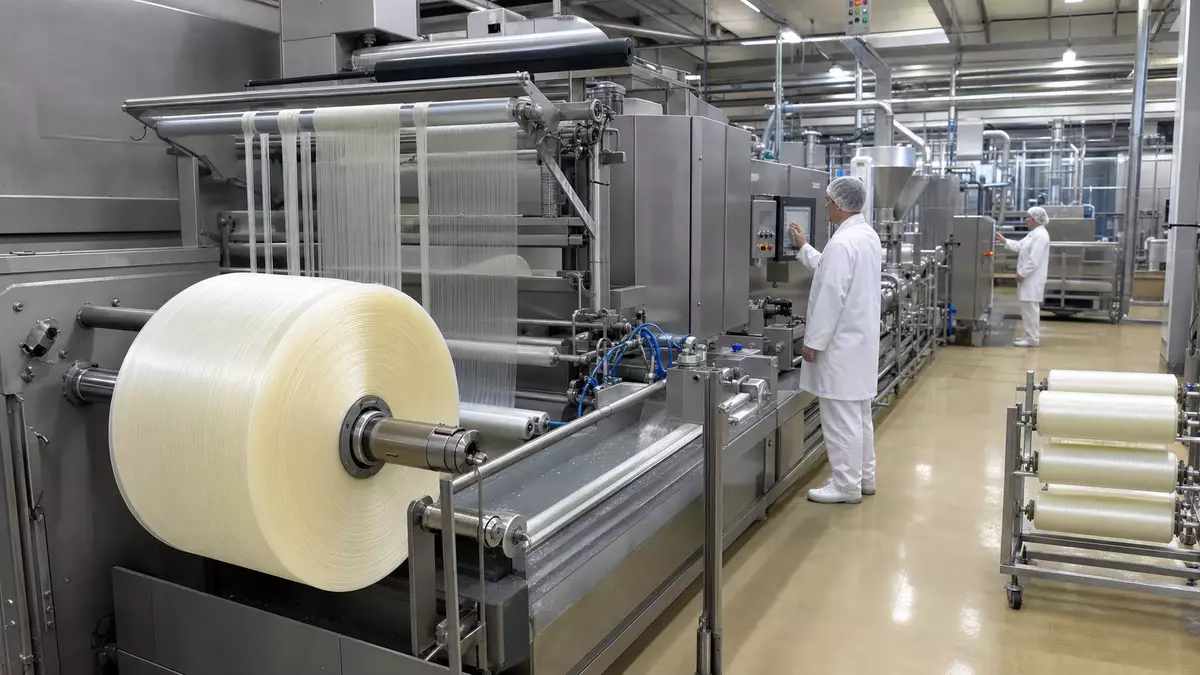
Viscofan operates a network of manufacturing facilities that produce collagen, cellulose and other casing materials, strategically located near key meat-processing regions. This footprint allows the company to serve customers with shorter lead times and to optimize logistics costs, which can be significant for bulky industrial inputs. Capacity expansions and modernization projects are part of its ongoing capital expenditure program, and investments made in recent years contributed to the production efficiency reflected in the 2024 margin improvements.
The company’s process know-how, including control of collagen extraction and casing extrusion parameters, is central to maintaining product quality standards. Consistency is critical in industrial meat processing, where casing failures can disrupt production and increase waste. The engineering and quality assurance work inside Viscofan’s plants therefore supports its commercial relationships and helps explain why revenue and profit could grow concurrently in 2024.
Environmental and regulatory considerations also shape operations. Casings production involves energy, water and chemical inputs, and Viscofan must comply with a range of standards relating to emissions, waste management and consumer safety. Investments in efficiency can have dual benefits, reducing operating costs and improving compliance metrics. While the 2024 financial statements focus on monetary outcomes, they also reflect the impact of operational adjustments in response to regulation and stakeholder expectations.
Customer base and end markets
Viscofan’s customer base consists largely of industrial meat processors and food companies that rely on casings for sausages, cold cuts and other processed products. These customers operate in markets ranging from Europe and North America to Latin America and Asia, and their purchasing decisions are influenced by consumer trends, retail pricing and competition. The diversity of this base helped Viscofan achieve revenue growth in 2024 despite varying macroeconomic conditions across regions.
End-market dynamics can affect product mix. For example, growth in demand for premium or specialty sausages may lead to higher usage of certain casing types with specific properties, potentially supporting margins. Conversely, pressure on low-cost segments can push customers to seek more economical solutions. Viscofan’s ability to offer a range of casing options enables it to adapt to these shifts, and the 2024 results suggest that overall mix changes did not harm profitability.
Retail and food-service channels also matter. Sausage and processed meat products are sold through supermarkets, discounters and restaurants, and consumption patterns in these channels can fluctuate. The defensive nature of meat consumption in many markets does not completely insulate suppliers from downturns, but it often moderates swings. Viscofan’s mid single digit revenue growth in 2024 indicates that, on balance, its customers managed to maintain or expand production volumes.
Margins, costs and inflation
One of the key topics for Viscofan stock holders is how the company manages its margins in the face of input-cost changes. Casings production uses raw materials such as collagen and cellulose, and the prices of these inputs can be influenced by agricultural cycles and global commodity trends. Additionally, energy costs and labor expenses have seen periods of inflationary pressure. In its 2024 reporting, Viscofan demonstrated that margin management remained effective, with EBITDA margin increasing compared with 2023.
Cost-saving initiatives, such as optimizing energy usage or improving production yields, contribute to margin resilience. Viscofan’s industrial processes offer multiple levers for efficiency; for instance, better control of production parameters can reduce waste, and investments in modern equipment may lower maintenance costs over time. The improvement in 2024 earnings metrics suggests that such measures had a tangible impact.
Pricing strategies are another component. While Viscofan operates in competitive markets, it may adjust prices to reflect higher costs where contractual frameworks allow. The mid single digit revenue increase alongside margin expansion indicates that price adjustments did not lead to material volume losses overall. This balance is central to maintaining both customer relationships and shareholder returns.
Balance sheet and financing
Viscofan’s balance sheet as of the end of 2024 showed a controlled level of net debt relative to EBITDA, reinforcing its capacity to absorb shocks and fund strategic initiatives. The leverage ratio, positioned within conservative bounds, means that the group is not heavily exposed to interest rate changes or refinancing challenges. This is particularly relevant in an environment where monetary policy has tightened compared with earlier years.
Financing structures typically include a mix of bank loans, credit facilities and possibly capital market instruments, although the company’s overall debt size remains moderate. The 2024 free cash flow performance allowed Viscofan to manage debt repayments and dividend distributions without straining its liquidity. For investors, this profile reduces one of the key risk dimensions associated with industrial companies: the need to refinance large debt piles at unfavorable terms.
Cash and working capital management also play roles. Inventory and receivables are significant items for a manufacturing and distribution business, and Viscofan’s ability to control these balances affects both cash generation and risk exposure. The 2024 financial metrics imply that working capital remained within manageable levels, supporting the company’s ability to convert earnings into cash.
Dividend policy and shareholder returns
Viscofan has a track record of paying regular dividends to its shareholders, and the profitability reported for 2024 supports the continuation of this pattern. The dividend for that year, based on the improved net profit and cash flow, represents a tangible element of total shareholder return alongside any share price movements. In defensive sectors linked to consumer staples, such payouts are often a central part of the investment thesis.
The payout ratio, which compares dividend outlays to net earnings, remained within a range that does not appear aggressive, leaving room for reinvestment in the business. This balance is important because Viscofan must continue to upgrade its production facilities and support product development. The 2024 numbers indicate that the company managed to deliver cash back to shareholders while maintaining capital expenditure at levels compatible with its long-term strategy.
Longer-term total return for Viscofan stock will depend on a combination of future earnings growth, dividend policy and valuation changes. The mid single digit growth achieved in 2024 suggests that incremental gains are feasible in a stable environment, but major shifts in meat consumption or input costs could alter the trajectory. For now, the latest annual figures provide a factual reference point for assessing how the company is delivering on its commitments.
Sector backdrop and peer comparison
Viscofan operates within the broader food-processing and packaging ecosystem, where trends such as health awareness, sustainability and supply-chain efficiency influence demand. Although direct public peers focused purely on casings are limited, Viscofan’s performance can be compared with general food packaging and ingredients suppliers in terms of revenue growth and margin levels. The mid single digit revenue and profit increases recorded in 2024 place the company within the range of many stable, mature players in the sector.
Sustainability considerations are gaining prominence across the food value chain. Customers and regulators increasingly focus on materials, energy usage and waste. Viscofan’s investments in efficiency and production upgrading not only affect costs but also position it to respond to these expectations. This alignment can contribute indirectly to customer retention and support revenue growth over time.
From an equity-market perspective, investor appetite for defensive food-related names can vary with macro conditions. During periods of uncertainty, funds may rotate toward companies like Viscofan that provide exposure to everyday consumption patterns with less cyclicality than discretionary sectors. The fundamental data from 2024 and the market capitalization figure from 2025 help contextualize how the company fits into such allocation decisions.
Operations and strategy outlook
Strategically, Viscofan aims to consolidate its leadership in casings through a combination of organic growth, operational excellence and selective investment. The 2024 financial outcomes show that this approach delivers measurable results: revenue up, margins modestly higher, net profit and free cash flow growing, and leverage contained. These metrics create a foundation for further steps, whether in capacity expansion, geographic deepening or product innovation.
Operationally, the company will continue to focus on reliability, quality and customer service as differentiators. For industrial meat processors, disruptions caused by casing issues can be costly, so suppliers that offer consistent performance and technical support are valued. Viscofan’s track record in these areas helps explain its ability to maintain growth and profitability.
Future challenges could include shifts in consumer preferences, regulatory changes affecting meat products, or competitive moves by other casings producers. However, the 2024 and 2025 data points indicate that Viscofan is entering these potential scenarios from a position of strength rather than weakness. For holders of Viscofan stock, the key will be to monitor whether subsequent reporting periods maintain or improve the positive trends seen in the latest figures.
Closing view on Viscofan stock
Viscofan stock represents ownership in a specialist industrial group whose fortunes are closely tied to global sausage and processed meat production. The company’s 2024 financial year delivered mid single digit growth in both revenue and net profit, improved margins, solid free cash flow and controlled leverage. A market capitalization above EUR 2 billion in 2025 provides an additional quantitative benchmark for how equity markets currently value these attributes.
While no single year can define a long-term investment case, the recent data form a coherent picture: a business with stable demand drivers, an operational model capable of protecting margins and a balance sheet that supports both investment and dividends. For retail investors following Viscofan stock, these elements together help frame expectations for future performance, always subject to the usual uncertainties of markets and the food industry.
Further information on Viscofan
Investors who want to explore more details on Viscofan S.A. can review broader coverage and the companys own investor materials.
Viscofan share key data
- Company: Viscofan S.A.
- ISIN: ES0184262212
- Ticker: BME: VIS
- Trading venue: Spanish market (BME)
- Market capitalization: above EUR 2 billion (as of 2025)
- Sector / Industry: Food packaging and casings manufacturing
- Index membership: Spanish equity indices
Disclaimer regarding our articles: No investment advice, no buy or sell recommendation. Information on prices, companies, and markets is provided without guarantee; changes are possible at any time. Stock market transactions can lead to substantial losses. Our articles are created and reviewed in whole or in part automatically with the support of AI.