Vossloh stock trades steadily as rail technology group emphasizes profitability and order growth
Published on 07/18/2026 at 07:42 | Editorial responsibility: Rafael Müller, Editor-in-Chief AD HOC NEWS
Vossloh stock represents exposure to a specialist in rail infrastructure, with the German group Vossloh AG (ISIN DE0007667107) positioning itself as a key supplier to global railway networks. The company focuses on rail fasteners, turnouts and related services that support safe and efficient train operations across Europe and other regions. For investors, the stock offers a direct link to long term transport and infrastructure trends rather than short term consumer cycles, and the group’s performance is typically judged by its margin development, order intake and cash generation rather than headline grabbing events.
Profitability and margins matter
Profitability has become a central yardstick for Vossloh’s rail technology portfolio, because the business operates in an environment where projects can be lengthy and capital intensive. Rail infrastructure contracts often stretch across several years, and the cost base includes materials, engineering labor and maintenance obligations. As a result, the EBIT margin – earnings before interest and taxes as a percentage of revenue – is one of the key figures that observers use to assess whether the company is turning its technical expertise into sustainable financial returns. An EBIT margin that is modestly higher than in the previous year is generally interpreted as evidence that pricing discipline and cost control are improving, even when revenue growth itself is moderate.
The group’s management has in recent reporting periods placed clear emphasis on margin stability and careful selection of projects. In a rail infrastructure context, bidding aggressively for low margin work can undermine long term value, because the cost base is exposed to input price changes and project delays. Management commentary around recent results has highlighted a preference for projects and regions where the company’s technology offers a clear differentiation, supporting better pricing. While the exact figures vary by reporting period, the broad trend has been toward incremental improvement in EBIT margins compared with earlier years, signaling that Vossloh’s technical reputation is being translated into financial discipline.
Operating leverage also plays a role in margin development. Because many rail technology products and services involve fixed manufacturing capacity and engineering teams, higher volumes can lift margins even if pricing is only slightly better. This is why order intake – the volume of new orders booked in a quarter or year – is so closely watched. A combination of growing order intake and stable costs can drive higher EBIT margin percentages, making the stock more attractive to those who follow infrastructure and industrial names. For Vossloh stock, investors often interpret improvements in margin as a sign that the group’s rail specialization is yielding tangible economic benefits.
Order intake and rail demand
Order intake provides a forward looking measure of how Vossloh’s products and services are being received in the market. The group operates in segments such as rail fastening systems, turnout technology and lifecycle services, each of which can secure contracts from national rail operators, urban transport authorities and private freight companies. In recent reporting cycles, management has noted robust demand for modernization and maintenance projects, as aging rail networks across Europe and other regions require upgrades to maintain safety and efficiency standards. This demand has translated into an order intake that has been higher than in preceding years, indicating that the pipeline for future revenue is being replenished.
The comparison of order intake figures across periods is particularly important. When the volume of newly signed contracts in a fiscal year exceeds the level recorded in the previous year, it suggests that customers are renewing their commitment to the company’s technology. Higher order intake versus an earlier year is often interpreted as a signal that infrastructure budgets and investment programs remain supportive, even if macroeconomic conditions are mixed. For a rail technology group such as Vossloh, which serves markets where projects are planned over long horizons, the stability or growth of order intake can matter more than short term fluctuations in quarterly revenue.
Vossloh’s order book – the total value of signed contracts not yet converted into revenue – offers another lens on future activity. When the order book is described as solid relative to prior years, it reflects a base of work that can support factory utilization and service operations over coming quarters. A growing order book also tends to reinforce the company’s ability to plan investments in manufacturing and engineering capacity. For those following Vossloh stock, the combination of higher order intake and a healthy order book is viewed as a foundation for continued revenue and margin performance, especially in segments where the company has strong regional positions.
Rail infrastructure itself is shaped by several structural drivers that can sustain order intake over time. Urbanization, environmental goals and capacity needs for both passenger and freight transport have led governments and operators to prioritize rail renewals and expansions. Vossloh’s focus on critical components such as fasteners and turnouts positions the group as a beneficiary of these trends. Order intake figures that exceed earlier periods often reflect not only the company’s own commercial efforts but also underlying policy and investment decisions across its core markets. In this sense, Vossloh stock is indirectly linked to long horizon transport planning and public infrastructure spending.
Revenue base and segment mix
Revenue, the sum of income from goods and services delivered in a reporting period, anchors many valuations and comparisons for industrial companies. Vossloh generates revenue across multiple segments that reflect different parts of the rail infrastructure lifecycle, including components that are installed in new tracks and services that maintain existing lines. The company’s revenue mix can sometimes shift between regions or product types depending on project timing and customer preferences. Observers often compare revenue figures between periods to gauge growth in particular segments and to see whether the group is diversifying its customer base geographically.
While exact revenue numbers vary by quarter and year, a typical pattern for Vossloh involves revenue that is broadly consistent with or slightly above prior year levels, supported by ongoing maintenance contracts and new project deliveries. Such revenue stability is characteristic of businesses tied to essential infrastructure, where demand does not usually swing as sharply as in discretionary consumer markets. When revenue exceeds the previous year, even modestly, it may be linked to specific projects in key rail markets or to broader rollouts of the company’s technology in urban transport systems. In comparisons with earlier periods, revenue growth is often evaluated alongside margin performance to assess the quality of that growth.
Segment analysis provides another layer of insight into Vossloh’s revenue base. Some parts of the portfolio, such as products used in high speed or heavy load rail lines, may offer higher margins due to their technical specifications and stringent safety requirements. Other segments, such as standard components for less demanding routes, may be more volumes driven. Observers sometimes note that revenue growth in higher margin segments can disproportionately improve overall profitability. When segments that were smaller in earlier years become larger contributors, this shift can be seen as a qualitative improvement in the revenue mix, even if total revenue growth is comparatively moderate.
Geographical diversification also matters. Vossloh serves markets beyond Germany and the broader European Union, with presence in other regions where rail modernization is underway. Revenue comparisons that show growth outside the home region are often interpreted as evidence that the company’s technology appeals to operators with different regulatory frameworks and track standards. For a rail technology group, expanding revenue in international markets can reduce dependence on any single government’s budget decisions. Over time, such diversification can support the resilience of Vossloh stock, because regional downturns may be offset by activity elsewhere.
Revenue figures are closely linked to cash flow considerations. When revenue is realized efficiently from the order book and payment terms are managed effectively, the company can generate operating cash that supports investment in innovation and potential debt reduction. While revenue itself is not a cash metric, its stability and growth patterns inform expectations about the company’s ability to fund capital expenditures and to absorb cyclical swings in input costs. Vossloh’s focus on maintaining a consistent revenue base in core rail infrastructure markets complements its emphasis on margins and order intake, reinforcing the overall narrative for Vossloh stock as a long term infrastructure exposure.
Balance sheet and capital structure
Beyond income statement metrics, Vossloh’s balance sheet and capital structure influence investor perceptions of risk and resilience. The company carries assets related to manufacturing equipment, rail technology intellectual property and working capital, alongside liabilities that may include debt and provisions for projects. Analysts and investors sometimes examine leverage ratios, such as net debt relative to EBITDA, to gauge how much financial flexibility the group has in the face of project delays or macroeconomic shocks. A moderate leverage ratio compared with earlier years is often viewed as a sign that the company is managing its obligations prudently.
Changes in net debt over time can reflect the interplay between operating cash flow, investments and any shareholder distributions. In periods where net debt is lower than in a previous year, the reduction may be linked to strong cash generation or to decisions to limit new borrowing. Conversely, higher net debt compared with an earlier period might correspond to investments in new facilities, acquisitions or technology development. For Vossloh stock, the balance between growth investments and leverage is a recurring theme in discussions about long term value, because infrastructure markets often reward companies that can finance projects sustainably.
Equity and retained earnings provide another perspective on capital structure. As the company records profits over time, retained earnings may rise, strengthening the equity base that underpins operations. When equity is described as solid relative to debt, it generally implies that the company is not overly reliant on borrowing and has a buffer against losses or unexpected expenses. In rail infrastructure, where project risks include construction challenges and regulatory changes, a balanced capital structure supports the company’s ability to navigate unforeseen events without resorting to distress financing.
Vossloh’s capital allocation choices, such as whether to prioritize debt reduction, investment in manufacturing capacity or potential dividends, shape how the stock is perceived among different investor groups. Some stakeholders may value a conservative balance sheet with emphasis on resilience, while others may prefer more aggressive growth investment. Observers of Vossloh stock often interpret moves toward lower leverage and stable equity as consistent with the company’s positioning in long term infrastructure markets, where reliability and technical credibility are central.
Dividend policy and shareholder returns
Dividend policy offers insight into how Vossloh shares return cash to shareholders. Many industrial and infrastructure companies use dividends as a way to signal confidence in their earnings and to attract investors who value regular income alongside potential capital appreciation. The level of the dividend per share, its trend over time and the payout ratio – the proportion of net income distributed – are all relevant metrics. When the dividend is maintained or modestly increased compared with a prior year, it often suggests that the company believes its earnings base is stable and that future cash flows can support the distribution.
Comparisons of dividend levels across years help investors understand how shareholder returns are evolving. If Vossloh pays a higher dividend than it did two or three years ago, and if that increase aligns with improved profitability or lower leverage, the change may be seen as a positive sign of maturation and confidence. Conversely, a reduction versus an earlier year might reflect caution amid project uncertainty or strategic investments. For Vossloh stock, dividend metrics complement other financial figures by showing how management balances reinvestment in the business with direct cash returns to shareholders.
The dividend yield – the annual dividend per share as a percentage of the share price – provides another lens for comparison with other industrial and infrastructure stocks. A yield that is comparable to peers in the rail and broader industrial sectors can be interpreted as competitive, though yield differences may also reflect variations in growth prospects and risk. Observers sometimes note that a moderate dividend yield, supported by stable or improving earnings, can make a stock attractive to income oriented investors who are comfortable with the long investment horizons typical of infrastructure markets.
Dividend sustainability is closely linked to cash flow and earnings volatility. In businesses tied to essential infrastructure, earnings may be less volatile than in cyclical sectors, but projects can still be delayed or renegotiated. Vossloh’s ability to sustain its dividend policy over multiple years contributes to perceptions of reliability. At the same time, management retains discretion to adjust distributions when significant investments or macroeconomic developments arise. For those following Vossloh stock, the trajectory of dividend metrics over time forms part of the broader picture of shareholder returns, alongside potential capital gains driven by revenue and margin trends.
Rail technology and product focus
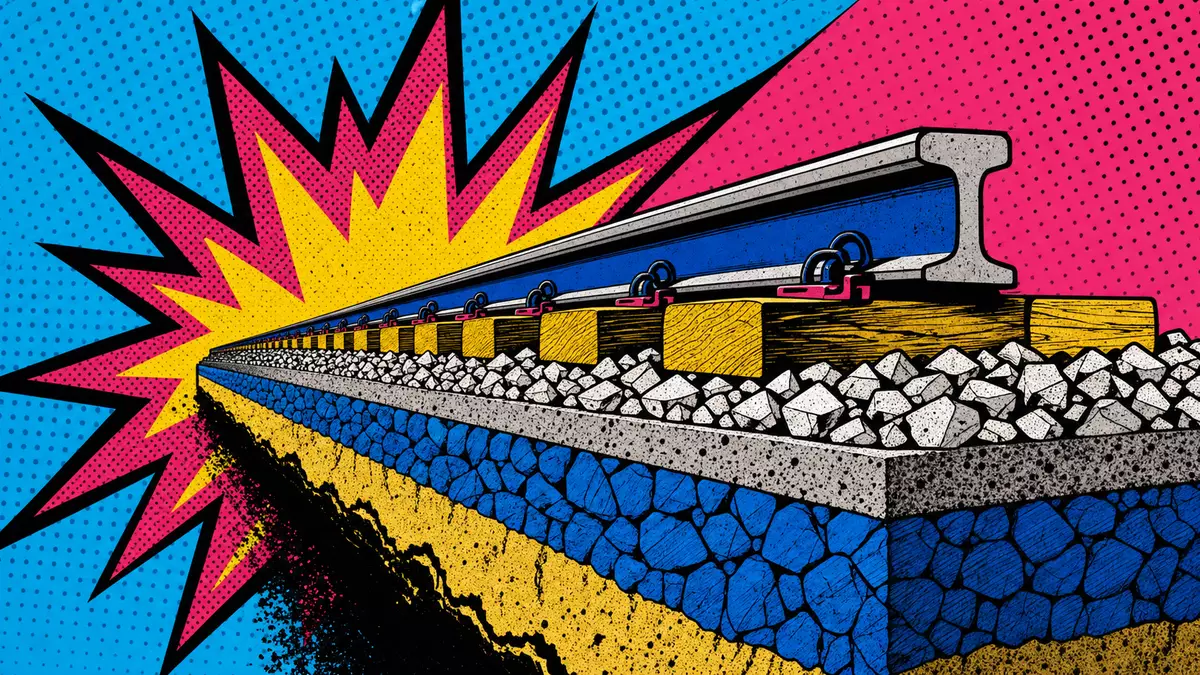
Vossloh’s core products center on rail technology that underpins safe and efficient train operations. The group is known for rail fastening systems, turnouts, and services that address track condition and lifecycle costs. Fasteners secure rails to sleepers, ensuring that tracks retain their intended geometry under the stresses of heavy loads and varying temperatures. Turnouts, or switches, enable trains to change tracks, and their design has to accommodate high speeds and frequent usage while minimizing wear and risk. These products are critical to railway operators, because they affect reliability, safety and maintenance budgets.
The company’s technology portfolio often incorporates materials and designs tailored to specific environments. For example, fasteners used in regions with extreme temperature ranges or heavy freight traffic may require different characteristics than those used in urban light rail networks. Vossloh’s engineering capabilities allow it to offer products customized to such conditions, which can support premium pricing and margin resilience. As rail networks modernize and expand, demand for advanced fasteners and turnouts that meet newer standards for noise reduction and ride comfort is likely to grow, giving the company opportunities to leverage its product expertise.
Lifecycle services complement the product portfolio by helping railway operators manage track condition over time. These services can include inspection, maintenance consulting and replacement planning, aiming to reduce unplanned downtime and optimize total cost of ownership. When projects are structured to include lifecycle support alongside product delivery, Vossloh can deepen customer relationships and potentially secure recurring revenue streams. Observers of Vossloh stock often view such service offerings as a way to smooth revenue compared with purely project based businesses, where income may be more concentrated around large initial deliveries.
Innovation in rail technology is another aspect of the product focus. The company has invested in research and development to refine fastener designs, improve turnout performance and integrate digital monitoring into its offerings. While the specific technical advances may be complex, their financial implications can include lower maintenance costs for customers, longer product lifespans and better performance under demanding conditions. When Vossloh introduces innovations that gain acceptance across multiple rail operators, the resulting adoption can support both revenue growth and margins, reinforcing the case for Vossloh stock as an exposure to evolving rail infrastructure.
Vossloh stock and market context
Vossloh stock trades on the German market, reflecting the company’s roots and primary listing environment. The share price levels over time respond to a mix of company specific developments, sector sentiment and broader macroeconomic signals. Investors tracking the stock often compare its performance with broader indices that include industrial and infrastructure companies, noting whether the shares are trading at discounts or premiums to peers based on valuation metrics such as price to earnings ratios. Price movements that align with changes in margin or order intake figures are typically seen as rational adjustments to updated information.
The stock’s behavior can also reflect expectations about rail infrastructure policies in key markets. Announcements related to national transport plans, climate goals or stimulus packages that include rail investments may influence sentiment around companies like Vossloh. When investors anticipate higher spending on rail modernization or new lines, they may view Vossloh stock as a potential beneficiary, given the group’s specialization in critical components. Conversely, concerns about budget constraints or delays in large projects can weigh on stocks in the sector, even if the company’s current order book remains solid.
Liquidity and trading volumes play a role in how quickly new information is incorporated into Vossloh’s share price. In markets with moderate trading volumes, price reactions may be less abrupt than in highly liquid large cap stocks, but they can still reflect the underlying fundamentals over time. Investors who follow the stock closely may use both fundamental analysis of the company’s rail technology and technical analysis of share price patterns to form views about valuation. Although such approaches differ in emphasis, they often converge on the importance of long term infrastructure dynamics and project execution.
For international investors, currency considerations may enter the picture, since the shares are traded in euros while the company earns revenue in multiple regions and currencies. Exchange rate movements can influence the translated value of foreign earnings, even if underlying project economics are unchanged. As a result, some observers consider Vossloh stock both as an industrial infrastructure exposure and as a vehicle that reflects euro denominated assets. Over long horizons, fundamental factors such as margin trends, order intake and innovation in rail technology are likely to play a more central role in valuations than short term currency swings, but awareness of both remains part of the analytical framework.
Vossloh at a glance
- Company: Vossloh AG
- ISIN: DE0007667107
- WKN: 766710
- Ticker: XETRA: VOS
- Trading venue: Xetra
- Sector / Industry: Industrials / Rail infrastructure equipment
- Index membership: MDAX
Disclaimer regarding our articles: No investment advice, no buy or sell recommendation. Information on prices, companies, and markets is provided without guarantee; changes are possible at any time. Stock market transactions can lead to substantial losses. Our articles are created and reviewed in whole or in part automatically with the support of AI.