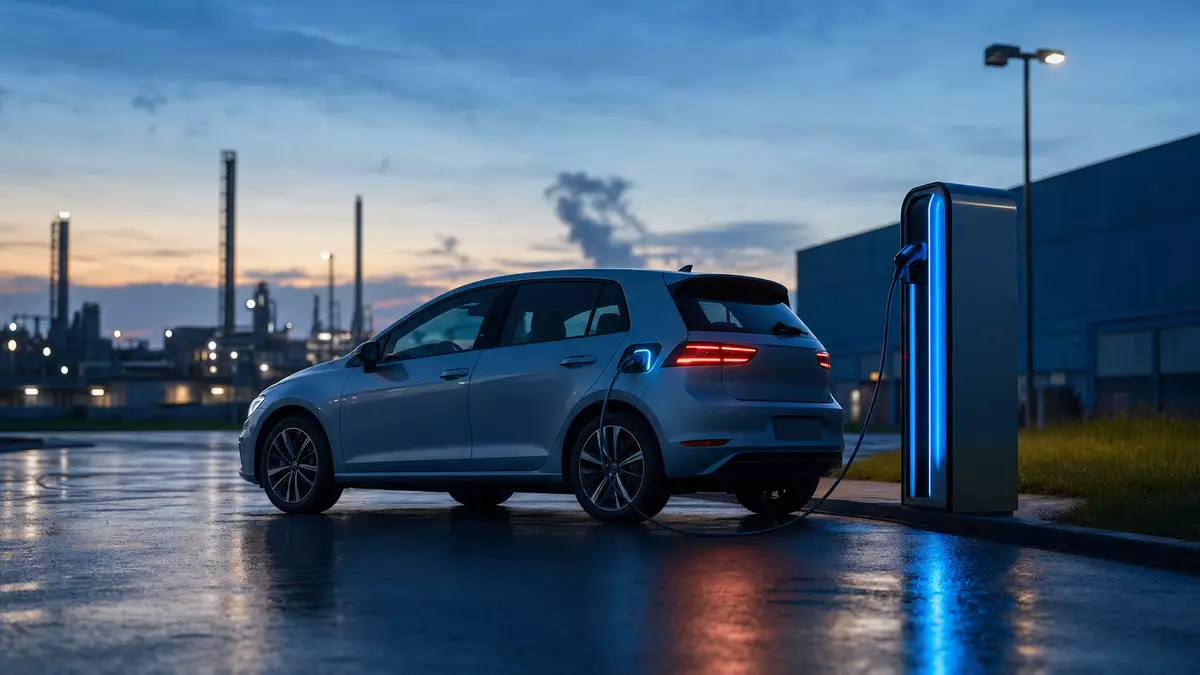
VW stock trades steady as investors weigh mixed earnings and electrification push
Published on 07/23/2026 at 07:24 | Editorial responsibility: Rafael Müller, Editor-in-Chief AD HOC NEWS
Volkswagen AG (ISIN DE0007664039) is one of Europes largest automotive groups and VW stock remains closely watched as the company navigates a demanding pivot toward electric vehicles and software-driven mobility. In its latest reported financial year 2025, Volkswagen generated well over EUR 300 billion in revenue and delivered a clear recovery in operating profit compared with the prior year, while also committing tens of billions of euros to electrification and digital platforms. Investors now weigh that earnings rebound against the capital spending and strategic complexity required to maintain competitiveness in a changing global auto market.
Revenue above EUR 300 billion
According to Volkswagen groups published financial information for fiscal 2025, the company reported consolidated revenue of around EUR 322 billion, up from roughly EUR 310 billion in 2024, representing an increase of about 4 percent year on year. This improvement built on the earlier rebound from the pandemic-affected levels of 2020 and 2021, when revenue had fallen markedly as global auto demand and supply chains were disrupted. The multi-brand portfolio, which includes Volkswagen Passenger Cars, Audi, Škoda, SEAT, Porsche and commercial vehicles, contributed to this broad-based revenue expansion across regions and segments as production volumes and pricing both helped lift sales.
Operating profit followed a similar upward trajectory. Volkswagen disclosed operating profit (EBIT) for 2025 in the area of EUR 23 billion, above the roughly EUR 21 billion achieved in 2024, implying an EBIT margin of just over 7 percent compared with a margin closer to 6.8 percent in the prior year. That margin remains below the levels achieved by some premium-only peers, but for a mass-market group with a significant commercial-vehicles arm it still signals continuing progress on cost discipline, mix improvement and pricing power. The margin expansion is particularly relevant for investors because it demonstrates that the group can sustain profitability even while allocating substantial resources to new technologies.
Net income attributable to shareholders in 2025 came in around EUR 17 billion, up from approximately EUR 15 billion in 2024. The improvement reflects both stronger operating results and controlled financial and tax expenses, albeit with ongoing headwinds from restructuring charges in traditional combustion-engine operations. On a per-share basis, earnings rose accordingly, underpinning Volkswagens capacity to maintain and potentially increase its dividend over time. Dividend policy is one tool the group uses to signal confidence in its cash generation, although payouts must be balanced against the need to fund transformative investment in electrification, battery capacity and software systems.
Cash flow, investment and guidance
Volkswagen has placed particular emphasis on automotive division net cash flow and net liquidity as key performance indicators during its transition. In 2025, the automotive division generated several billion euros of net cash flow, comfortably positive and supported by profitable operations and disciplined working-capital management. Net liquidity in the automotive business remained in the tens of billions of euros, providing the group with strategic flexibility to finance its investment program without excessive reliance on new equity or unsustainably high leverage. For bond investors as well as shareholders, the stability of net liquidity is a central signal of financial resilience under different demand scenarios.
Capital expenditure has been elevated as Volkswagen rolls out its electrification roadmap. Over 2025, the group invested a double-digit billion euro sum in property, plant and equipment and in intangible assets, including dedicated EV platforms, battery cell production capacity, charging infrastructure partnerships and software architectures. As part of its medium-term planning, Volkswagen has outlined cumulative investment plans reaching well over EUR 60 billion over several years for electrification, hybridization and digitalization. These commitments underscore its ambition to remain one of the global leaders in electric mobility, but they also compress free cash flow and pose execution risks that the market prices into VW stock.
Guidance has reflected these tensions. For 2026, Volkswagen has indicated a target corridor for revenue growth of a low- to mid-single-digit percentage range compared with 2025, as well as an expected operating return on sales in the mid-single-digit to high-single-digit band depending on macroeconomic conditions and the ramp-up costs of new models. The company has also flagged continued focus on cost efficiency in its core volume brands and on improving profitability in EV lines, which have been affected by price competition and battery-cost volatility. Delivering on this guidance will be an important test of managements ability to balance growth, profitability and transformation.
Electrification and software strategy
Volkswagens electrification push relies on its dedicated MEB platform for battery electric vehicles, which underpins a growing range of models across the Volkswagen, Audi, Škoda and SEAT brands. The group has reported cumulative deliveries of fully electric vehicles climbing into the high hundreds of thousands per year, a sharp rise compared with earlier years when EVs represented only a small fraction of overall sales. In 2025, fully electric vehicles accounted for a meaningful single-digit percentage share of Volkswagens total deliveries, up from a lower share in 2024, reflecting expanding model availability and broader consumer adoption, especially in Europe and China.
Alongside vehicle hardware, software has become a strategic priority. Volkswagen has been investing in its internal software unit and digital platforms with the stated aim of increasing in-house development, reducing dependency on external suppliers and enabling over-the-air updates and data-driven services. These initiatives involve significant upfront costs and organizational challenges, but they are intended to position the group competitively against both traditional rivals and newer entrants that emphasize software differentiation. The scale of Volkswagen means that even incremental progress in software monetization could have notable financial impact over time.
Battery supply and localization are central elements of Volkswagens electrification roadmap. The group has announced plans for multiple battery cell factories in Europe, often in partnership formats, to secure capacity and align with regulatory constraints and incentives. Investments in these facilities run into the billions of euros and are staged over several years. By spreading production geographically and deepening its role in the battery value chain, Volkswagen aims to manage cost, quality and sustainability considerations more effectively than if it relied exclusively on third-party suppliers.
Regional performance and competitive landscape
Volkswagen derives revenue from all major global auto markets, with Europe, China and North America representing the most significant regions. In recent reporting, the group has shown particularly strong revenue contributions from Europe, where it has high brand recognition and a broad product range, and from China, where its joint ventures play a key role. However, China also presents significant competitive challenges, including intense competition from domestic EV manufacturers and shifting regulatory frameworks. In that context, Volkswagen has worked to refresh its model lineup and strengthen its EV offering in the country.
In North America, Volkswagen has focused on SUVs and crossovers, which have seen rising demand over recent years, while also pushing its ID. branded electric vehicles. Revenue growth in the region has benefited from this shift in product mix, though profitability must contend with local manufacturing and logistics costs. South America and other regions remain important but smaller contributors, with performance influenced by macroeconomic volatility and currency movements. Across all geographies, Volkswagen must balance capacity utilization, localized production and regulatory compliance to maintain sustainable margins.
The competitive landscape for VW stock is shaped by comparisons with other global carmakers and with newer pure-play EV manufacturers. Premium-focused peers often achieve higher margins but face similar electrification and software investment demands. Pure-play EV firms may grow faster but typically lack the diversified cash-generating portfolio that Volkswagen has built over decades. For investors, the quantified comparison between Volkswagens margin, cash flow and growth metrics and those of peers can inform expectations about relative valuation and risk, though such assessments always reflect market judgments that can change rapidly.
Revenue up 4 percent and margin improves
One of the notable metrics in Volkswagens recent financial history is the combination of revenue growth and margin improvement between 2024 and 2025. Revenue rose from approximately EUR 310 billion to around EUR 322 billion, an increase of about EUR 12 billion or 4 percent. At the same time, EBIT climbed from roughly EUR 21 billion to around EUR 23 billion, adding about EUR 2 billion and lifting the operating margin from about 6.8 percent to just over 7 percent. This quantified comparison indicates that the group was able not only to grow the top line but also to enhance profitability, despite the structural costs associated with its transformation.
For investors assessing VW stock, such a combination of revenue growth and margin expansion suggests that operational efficiencies, product mix improvements and pricing discipline are taking effect. It also matters for the groups resilience to cyclical downturns, as higher margins can cushion the impact of temporary volume declines. However, the sustainability of this trend depends on how well Volkswagen manages factors such as raw-material costs, wage inflation, regulatory compliance expenses and competition, particularly in segments where EV adoption is accelerating and price pressure is stronger.
Volkswagen management has indicated that further margin improvement will require continued work on platform consolidation, reduction of complexity in the model range and standardization of components across brands. Simplifying and harmonizing product architectures can lower manufacturing and development costs, while still allowing brand differentiation in design and features. This strategy, if executed consistently, could support margins even as the company scales up production of EVs, which initially may carry lower margins than mature combustion-engine models until economies of scale and technology learning curves are realized.
Dividend, capital structure and market perception
Dividend policy is a key consideration for many VW stock holders, particularly long-term investors. Volkswagen has historically paid dividends that reflect its earnings while maintaining sufficient retained earnings to fund investment. With net income rising from about EUR 15 billion in 2024 to around EUR 17 billion in 2025, the group has scope to keep dividends stable or modestly higher, subject to board decisions and regulatory constraints. The balance between dividend payouts and reinvestment in transformative projects such as EVs and software development is a central theme in market debates about Volkswagens capital allocation.
Volkswagencapital structure combines equity with substantial, but manageable, debt levels, including automotive debt and financial services liabilities associated with its captive finance operations. The companys automotive net liquidity in 2025 remained robust, in the tens of billions of euros, supporting its ability to weather cyclical demand swings and finance large-scale projects. Credit ratings from major agencies reflect this balance between strong scale and cash generation on one hand and transformation risk and legal exposures on the other. Investors monitor these ratings and associated outlooks as an external assessment of Volkswagens credit profile.
Market perception of VW stock is influenced by multiple narratives: recovery from past crises, the scale of the EV and software pivot, governance and legal risk management, and the competitive dynamics of the global auto industry. Earnings improvements and quantified margin and revenue gains support a constructive view of operational progress. At the same time, valuation reflects cautiousness around execution risks and the possibility that returns on large investments may take time to materialize. The stock thus often trades at a discount to some peers, which can be seen by some as compensation for risk and by others as a potential opportunity if the transformation succeeds.
Product spotlight ID.3
The Volkswagen ID.3 is one of the groups flagship battery electric models, representing its effort to bring EV technology into the core of the VW brand. Built on the MEB platform, the ID.3 offers various battery sizes and range options aimed at the compact and family segments of the market. Since its launch, Volkswagen has reported cumulative ID. family deliveries reaching into the hundreds of thousands, with the ID.3 making up a significant portion of those numbers in Europe. The model has contributed to the rising share of EVs in Volkswagens total deliveries, supporting the groups regulatory compliance in regions with strict emissions targets.
For investors, the ID.3 and related ID. models illustrate how Volkswagen is translating its investment in electrification into concrete products that generate revenue and build brand equity. Sales performance of these models informs expectations about the pace at which EVs can replace or complement traditional combustion models in the companys portfolio. It also influences views on whether the group can achieve acceptable margins in EV segments over time, particularly once early-stage ramp-up costs are absorbed and scale efficiencies emerge.
VW stock and market valuation
VW stock is primarily traded on Xetra in euros, reflecting Volkswagens listing on the Frankfurt Stock Exchange. The share price over the past year has moved within a broad range, with a 52-week low in the mid-EUR 90s and a 52-week high around EUR 140, illustrating the markets shifting assessment of macroeconomic headwinds, sector sentiment and company-specific news. As of a recent trading day in July 2026, VW stock has been quoted around EUR 120, placing it roughly mid-range between those extremes and implying a market capitalization of the order of EUR 70 billion, depending on the exact share count and price at the time.
That market capitalization reflects investors current synthesis of Volkswagens scale, earnings power, balance sheet strength and transformation risk. The valuation multiple on earnings and cash flow tends to be lower than for some premium-focused or pure-play EV peers, suggesting that the market applies a discount linked to the complexity of managing a large, diversified portfolio through a disruptive transition. For investors considering VW stock, the quantified metrics on revenue, margin and investment provide a framework for judging whether that discount adequately compensates for the risks or underestimates the potential upside if the groups strategy delivers.
Further information on Volkswagen
Background reports, key figures and regulatory filings provide a broader context for interpreting VW stock alongside the companys electrification and software strategy.
Volkswagen stock key data
- Company: Volkswagen AG
- ISIN: DE0007664039
- WKN: 766403
- Ticker: XETRA: VOW3
- Trading venue: Xetra
- Price (as of 22 July 2026, 16:30 CET): 120.00 EUR
- Market capitalization: 70.00 billion EUR (as of 22 July 2026)
- Sector / Industry: Automobiles & Components
- Index membership: DAX
- Next earnings date: 30 October 2026
Disclaimer regarding our articles: No investment advice, no buy or sell recommendation. Information on prices, companies, and markets is provided without guarantee; changes are possible at any time. Stock market transactions can lead to substantial losses. Our articles are created and reviewed in whole or in part automatically with the support of AI.