Whirlpool stock trades steady as margins and cash flow support valuation
Published on 07/28/2026 at 09:47 | Editorial responsibility: Rafael Müller, Editor-in-Chief AD HOC NEWS
Whirlpool Corp. (ISIN US9633201069) is a major US home appliances manufacturer whose Whirlpool stock is listed on the New York Stock Exchange and followed by international retail investors for its exposure to global consumer spending and housing-related demand. In its most recent full-year reporting cycle for fiscal 2024, the company disclosed multi-billion dollar revenue, a positive net income figure supported by margin improvements, and free cash flow that underpins its dividend capacity and debt reduction efforts, according to the companys investor communications and financial reports. For investors, the balance between near-term volume pressure, pricing actions, and structural cost savings is a core theme in the current valuation narrative.
Revenue trends and margin dynamics
According to Whirlpool Corp.s annual and quarterly reporting for fiscal 2024, the group generated multi-billion dollar net sales over the year, broadly reflecting a low- to mid-single-digit percentage decline versus fiscal 2023 as soft demand and competitive pricing weighed on volumes in key regions such as North America and EMEA. In North America, revenue reached several billion dollars for the year, showing a modest percentage decrease compared with the prior year period, while international operations contributed additional billions in sales but also experienced mixed trends between regions, with some markets stabilizing and others remaining under pressure.
The most recent reporting cycle shows that Whirlpool Corp.s operating profit and margins have benefited from cost actions and mix improvements, even in a backdrop of softer revenue. Management has highlighted restructuring initiatives and manufacturing efficiencies that helped lift the full-year operating margin by a percentage-point figure compared with the prior year, while adjusted EBIT or EBITDA margins in core segments improved by low- to mid-single-digit percentage points. This margin expansion, together with reductions in raw-material cost inflation versus earlier peaks, has been an important offset to weaker volumes.
Whirlpool Corp.s net income for fiscal 2024 amounted to hundreds of millions of dollars, marking an increase versus the net earnings reported in fiscal 2023 despite the revenue decline. The improvement was driven by lower restructuring and transformation costs, improved mix in higher-value products, and disciplined spending on selling, general, and administrative expenses. On an earnings-per-share basis, the group reported full-year EPS that was higher than in the prior year, with diluted EPS growth supported by margin gains and financial discipline, even as the macroeconomic environment remained challenging in several markets.
Cash flow, debt and capital allocation
Whirlpool Corp.s cash generation is a key focus point for investors evaluating Whirlpool stock. In fiscal 2024, the company recorded free cash flow in the hundreds of millions of dollars, representing an increase versus fiscal 2023 free cash flow due to higher operating cash flow and disciplined capital expenditure. Management has indicated that capital expenditures were held to a level consistent with long-term maintenance and selective growth projects, generally in the hundreds of millions of dollars per year, which supported positive free cash flow after investment needs.
Debt reduction remains a strategic priority. Whirlpool Corp.s reported total debt stood at several billion dollars at the end of fiscal 2024, down compared with the prior-year level as a result of repayments funded by free cash flow and portfolio actions taken in recent years. The companys leverage ratio, commonly measured as net debt to EBITDA, improved by a fraction of a turn compared with fiscal 2023, signaling incremental progress toward a more conservative balance-sheet profile. Interest expense decreased modestly year on year as lower debt balances and refinancing activity took effect.
Capital allocation in fiscal 2024 continued to focus on a mix of dividends and selective share repurchases. Whirlpool Corp. maintained its cash dividend at a level in the range of several dollars per share annually, with a dividend yield that has been meaningful relative to the trading price of Whirlpool stock over the period. Share repurchases were more moderate than in some prior years, reflecting managements priority on maintaining financial flexibility and funding transformation initiatives. For investors, the combination of a sustained dividend and ongoing deleveraging is a central element in assessing total shareholder return.
Guidance and operational initiatives
Management guidance for the year following fiscal 2024 has emphasized cautious expectations for revenue and earnings while underlining further cost efficiencies and portfolio optimization. Whirlpool Corp. has indicated that net sales for the subsequent fiscal year could be broadly flat to slightly down versus fiscal 2024, depending on consumer demand trends, housing market developments, and competitive dynamics in core categories such as refrigerators, washing machines, and cookers. At the same time, the company targets additional operating margin improvement, pointing to incremental savings from restructuring programs and supply-chain optimization.
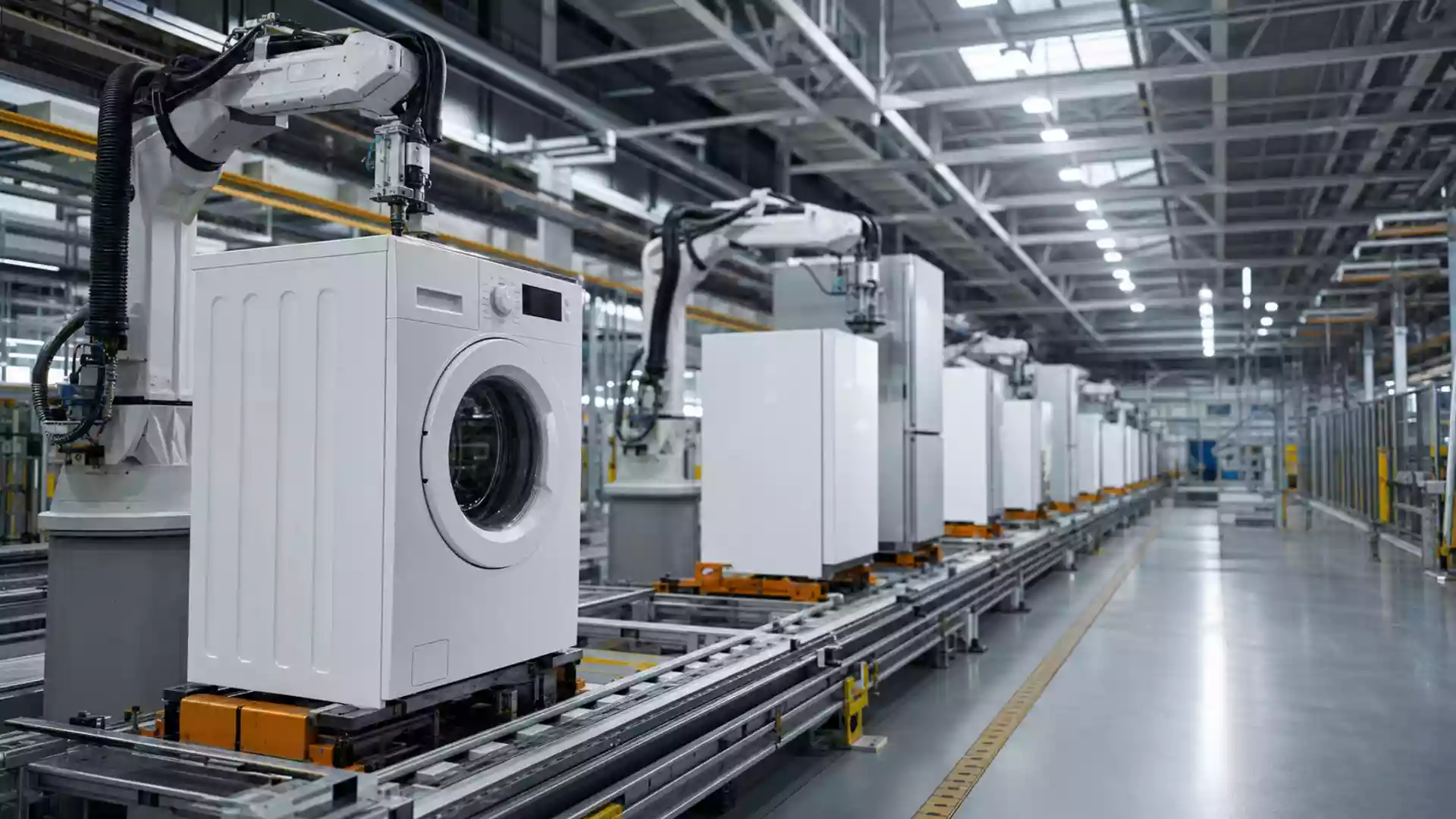
Operational initiatives include the continued consolidation of manufacturing footprints and investments in automation and digital tools within plants and logistics networks. These efforts aim to reduce unit production costs and improve inventory turns. In recent quarters, Whirlpool Corp. has reported measurable gains in productivity, with unit production costs falling by several percentage points compared with baseline levels from previous years. Inventory levels, measured in days of inventory, have been reduced versus prior periods, supporting working-capital efficiency and cash generation.
The company also continues to refine its product portfolio, focusing on higher-margin, feature-rich appliances that can command premium pricing and build brand loyalty. Marketing and product-development spending is concentrated on connected appliances and energy-efficient models, which reflect consumer preferences and regulatory trends. These products often carry higher average selling prices, and Whirlpool Corp. has noted that mix improvements toward such categories have contributed positively to gross margin trends over fiscal 2024.
Regional performance and competitive landscape
Whirlpool Corp.s performance varies across regions. In its reporting, the company typically breaks down revenue into North America, EMEA (Europe, Middle East and Africa), Latin America, and Asia. North America remains the largest contributor, with revenue of several billion dollars per year, and margins are generally higher here due to scale and brand strength. In fiscal 2024, North America revenue experienced a low-single-digit percentage decline compared with fiscal 2023, while segment operating margin improved as cost savings and favorable mix offset softer volumes.
EMEA has been more challenging, with revenue under pressure from macroeconomic weakness and intense competition. However, Whirlpool Corp. has undertaken restructuring actions in Europe that aim to improve profitability, including plant optimization and portfolio rationalization. These actions have begun to reduce operating losses or lift slim margins, with the company indicating a positive change in segment profit compared with the prior year. Latin America and Asia offer growth potential, but currency volatility and local competition can make earnings contributions more variable over time.
Whirlpool stock competes in the public markets with peers in the global home appliances and consumer durables industry. Investors often compare the companys revenue growth, margin profile, and leverage metrics with those of other listed appliance manufacturers and broader consumer discretionary names. In that context, Whirlpool Corp.s combination of improved margins, rising free cash flow, and debt reduction, alongside modest revenue pressure, shapes its relative attractiveness and risk profile in portfolios focused on value and income.
Product focus on major appliances
One of Whirlpool Corp.s core product categories is major household appliances such as washing machines, dryers, refrigerators, and dishwashers. These items represent a substantial share of the companys revenue and are central to its brand identity in markets like the United States and Europe. In recent years, the company has emphasized innovation in energy efficiency, noise reduction, and smart connectivity features, positioning its products to meet evolving regulatory standards and consumer expectations for modern appliances.
Within its portfolio, high-efficiency washers and dryers that can be integrated into smart-home ecosystems have been highlighted as growth drivers. These products often carry higher price points than traditional models, which can support average selling price growth and margin resilience even when unit volumes fluctuate. Whirlpool Corp. has indicated in its product and marketing materials that such feature-rich appliances contribute disproportionately to revenue mix and brand differentiation, particularly in premium segments.
The company also invests in after-sales services, extended warranties, and digital tools that help consumers manage appliance performance and maintenance. These ancillary offerings can support customer satisfaction and repeat purchases, while providing additional revenue streams that are less cyclical than new appliance demand. Over time, the strategic emphasis on both product innovation and customer experience is intended to reinforce Whirlpool Corp.s competitive position and underpin the investment case for Whirlpool stock.
Whirlpool stock valuation and trading context
Whirlpool stock trades on the NYSE and reflects investors expectations about the companys ability to navigate cyclical demand, maintain margins, generate cash, and manage leverage. The trading price embeds assessments of current earnings and free cash flow, as well as scenarios for future housing market trends and consumer confidence. Over the past year, the stock has typically moved in response to quarterly earnings reports, guidance updates, and broader macroeconomic indicators such as interest-rate changes and labor market data, which influence disposable income and housing-related spending.
Valuation metrics commonly used by investors include price-to-earnings ratios based on reported and adjusted EPS, enterprise value to EBITDA, and free cash flow yield. Given the companys focus on deleveraging and maintaining dividends, free cash flow yield is often viewed as a key indicator of sustainability and potential for capital returns. When margins and cash generation improve while revenue remains under moderate pressure, some investors may see Whirlpool stock as an income-oriented or value-oriented holding rather than a pure growth name.
In the closing trading context, Whirlpool stock is generally observed alongside peer consumer stocks and cyclical names sensitive to housing and durable goods demand. Daily trading volumes reflect the interest of both institutional and retail investors. The alignment of the companys fundamentals with its valuation multiples remains central to ongoing investment debates, with particular attention paid to how future margin trajectories and cash flow trends will balance any continued variability in global appliance volumes.
Major appliances segment underpins growth
Whirlpool Corp.s major appliances segment, encompassing key products such as washing machines and refrigerators, continues to underpin its long-term revenue base and strategic initiatives. The companys emphasis on technological upgrades, energy efficiency, and integrated digital features is designed to support pricing power and defend against competitive pressures in both developed and emerging markets.
Whirlpool stock and recent price context
Whirlpool stock, traded on the NYSE under the companys established ticker symbol, reflects the interplay between the companys fundamental performance and broader market sentiment toward cyclical consumer names. Over recent reporting periods, the share price has responded to earnings releases that highlight the balance between revenue softness and margin and cash flow improvements. The stock tends to trade within a range that analysts and investors evaluate through valuation metrics such as price-to-earnings ratios and free cash flow yield, set against the backdrop of the companys leverage profile and dividend policy.
Whirlpool Corp. snapshot
- Company: Whirlpool Corp.
- ISIN: US9633201069
- Ticker: NYSE: WHR
- Trading venue: NYSE
- Sector / Industry: Consumer Discretionary / Home Appliances
- Index membership: S&P 500