Xiaomi's 7.77% Weekly Rebound Masks a Looming 50% Memory-Chip Cost Surge
Published on 07/05/2026 at 06:23 | Redaktion boerse-global.de
The stock closed Friday at €2.65, good for a 3.31% daily gain and a 7.77% weekly advance. For a moment, Xiaomi shareholders could breathe. But the relief is thin: the stock still sits 41% lower since the start of the year, and beneath the surface a far more menacing story is taking shape in the semiconductor supply chain. The real question is not whether this bounce can hold, but whether Xiaomi can survive a structural explosion in memory-chip costs that threatens to crush its smartphone margins.
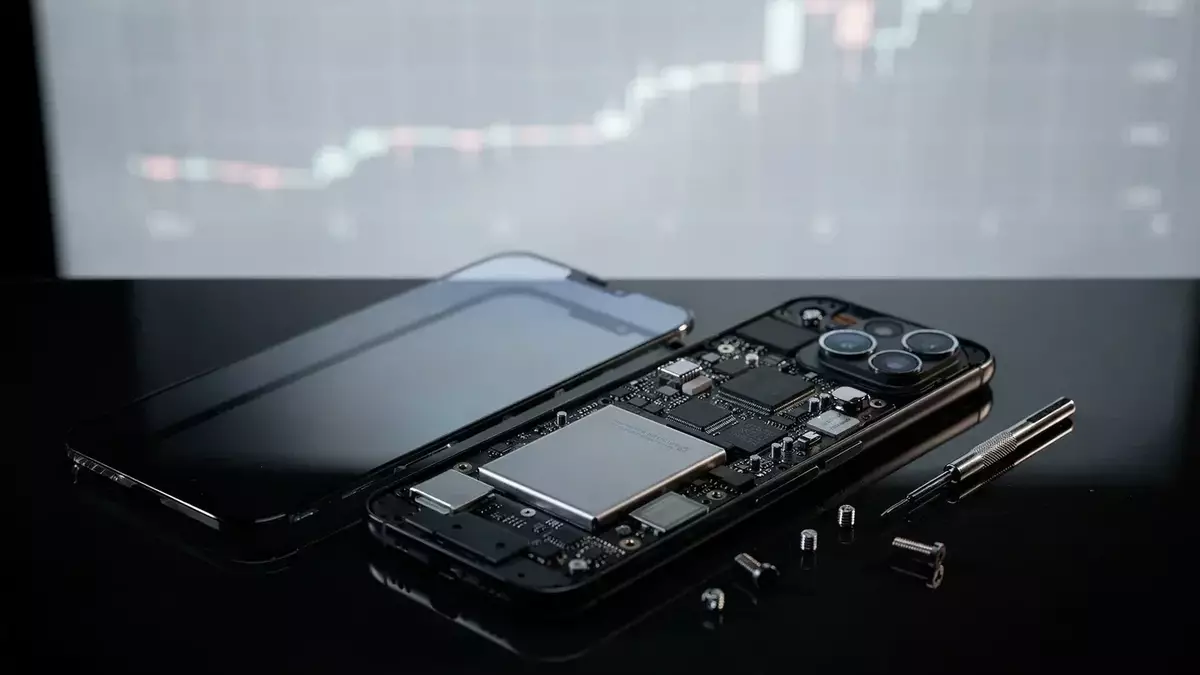
Investment bank Jefferies has sounded the alarm on what it calls an imminent price shock. DRAM and NAND prices are expected to surge by 50% in the third quarter of 2026, followed by another 40% hike thereafter. No relief is visible before at least 2028, when new fabrication capacity finally comes online. The bottleneck is driven by hyperscale cloud providers, which have locked up roughly half of global memory output through long-term contracts, starving smartphone makers of supply. Samsung is compounding the squeeze by pushing through price increases of up to 20% for mobile DRAM, particularly the 8 GB LPDDR5X chips that are vital to high-end handsets.
Xiaomi is already bleeding from the hardware side. First-quarter net income plunged 57% to 4.72 billion yuan on an 11% drop in revenue to 99.14 billion yuan. Smartphone sales fell 12.5% to 44.3 billion yuan, with global unit volumes sinking 19% to 33.8 million devices — the steepest decline among the top five manufacturers. The smartphone segment's gross margin slid from 12.4% to 10.1%. President Lu Weibing told investors that contract prices for memory chips used in smartphones have multiplied roughly fivefold since the third quarter of 2025; for televisions, the jump is nearly tenfold. Chairman Lei Jun has warned that cost pressure could persist for two more years.
Should investors sell immediately? Or is it worth buying Xiaomi?
The trouble is structural, not cyclical. Samsung, SK Hynix and Micron have shifted production capacity toward AI data centers, leaving consumer electronics to scramble for leftovers. Counterpoint Research sees no price normalisation until at least the end of 2027. That timeline means Xiaomi will have to pass along higher costs to customers while defending its market share in an already vicious price war. The company's electric-vehicle and AI division did not help: it posted an operating loss of 3.1 billion yuan in the first quarter, reversing a briefly profitable period a year earlier.
Management is fighting back with a new share buyback programme worth up to 20 billion Hong Kong dollars, to run for twelve months and replace an earlier plan under which Xiaomi had already repurchased roughly 399.6 million Class B shares for about 14.6 billion Hong Kong dollars. The company insists it has the liquidity to fund the expanded buyback without straining the balance sheet. So far, however, the repurchase effort has failed to arrest the slide: the stock hit a 52-week low of €2.34 on June 26.
Analysts are wildly split on what comes next. Jefferies recommends selling the stock with a target of around 25 Hong Kong dollars, citing the margin headwinds. Goldman Sachs sees value at 40 Hong Kong dollars and advises buying. The technical picture offers no clear steer. The stock trades 13.50% below its 50-day moving average of €3.06 and a daunting 33.24% below the 200-day average of €3.97. The relative strength index at 40.5 suggests the oversold condition has eased, but it is nowhere near bullish territory.
The next hard test will come when second-quarter 2026 results are released, likely in the third quarter. Until then, the trajectory of memory-chip prices and monthly EV delivery numbers will act as the twin compass points. If the cost surge accelerates or auto losses deepen, the buyback alone will struggle to keep the stock from testing its recent low again. A successful reclaim of the 50-day line, by contrast, would be the first real signal that the market is giving the margin story a second chance.
Ad
Xiaomi Stock: New Analysis - 5 July
Fresh Xiaomi information released. What's the impact for investors? Our latest independent report examines recent figures and market trends.
Disclaimer regarding our articles: No investment advice, no buy or sell recommendation. Information on prices, companies, and markets is provided without guarantee; changes are possible at any time. Stock market transactions can lead to substantial losses. Our articles are created and reviewed in whole or in part automatically with the support of AI.