XRP’s Supply Squeeze and Institutional Entries Drowned Out by Retail Exodus Below $1.10
Published on 07/09/2026 at 03:14 | Redaktion boerse-global.de
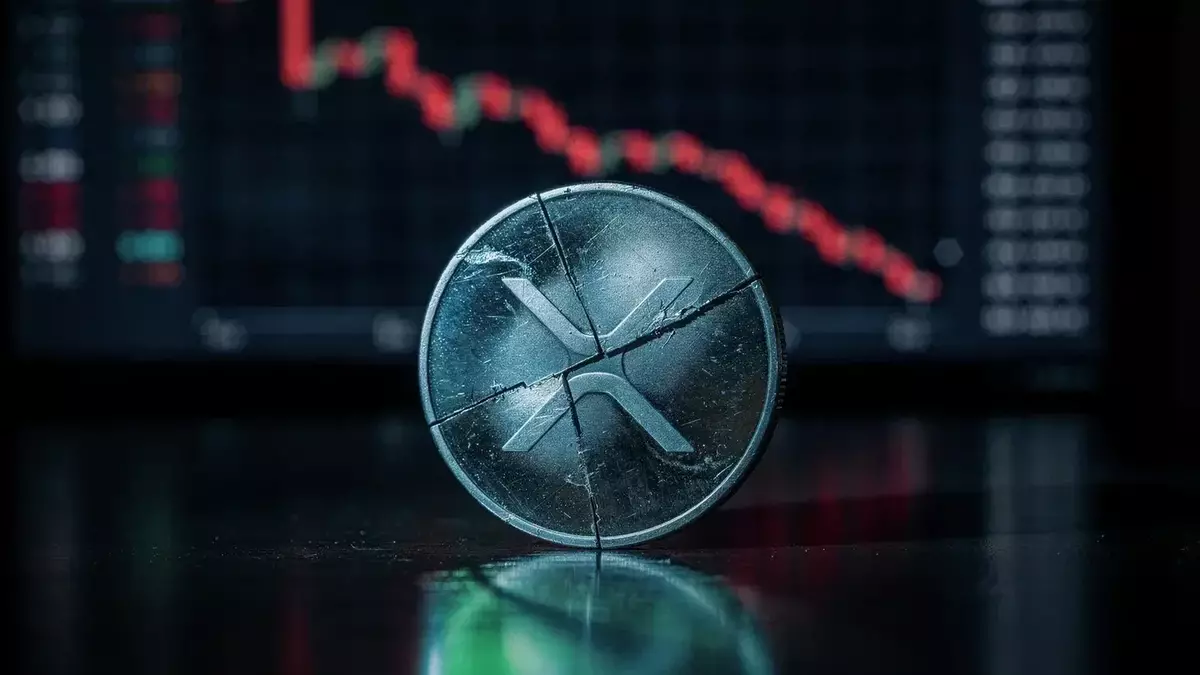
XRP finds itself in a peculiar standoff. Strong fundamentals — a fresh EU regulatory license, a deepening real-world asset tokenization boom, and the first foray by a major European bank into the digital asset — are failing to budge the price above the $1.10 mark. Instead, the token continues to trade near technical support levels as retail investors retreat from exchange-traded products and speculative positions unwind.
The cryptocurrency changed hands at around $1.08 late Thursday, after a midweek slide of more than 4% pushed it as low as $1.07. It has since staged a marginal recovery, leaving it up roughly 3.7% over the past seven days but still more than 70% below the 52-week high of $3.65 reached in July 2025. The price action underscores a disconnect between emerging institutional demand and persistent selling pressure from smaller holders.
Scarcity on Binance Fails to Ignite a Rally
Supply dynamics on the largest crypto exchange are tightening. Binance’s XRP reserves have dwindled to a two-year low, falling from roughly 2.8 billion tokens in May to 2.6 billion at the start of July — a decline of about 20% since November 2024. The exchange’s scarcity index, which measures the ratio of reserves to trading volume, climbed to 0.77, its highest level since mid-2024. In theory, a shrinking pool of available tokens should amplify any fresh demand, but so far the trigger for a sustained move higher has not materialised. A brief rally last week that pushed XRP to $1.13 and delivered an 8% gain has already fizzled.
Intesa Sanpaolo Adds to the Institutional Footprint
Meanwhile, a landmark institutional vote of confidence arrived from Italy. Intesa Sanpaolo, the country’s largest bank with roughly $1.1 trillion in total assets, disclosed an $18 million exposure to XRP through purchases of shares in the Grayscale XRP Trust. The bank’s total crypto allocation more than doubled between the fourth quarter of 2025 and the first quarter of 2026, jumping from $100 million to $235 million. Market observers note that this commitment stands in sharp contrast to the behaviour of retail participants who dominate XRP-linked products.
Should investors sell immediately? Or is it worth buying XRP?
Retail-Dominated ETF Flows Dry Up
Data from the spot XRP ETF market reveals a stark slowdown. Net inflows that topped $132 million in May have dwindled to less than $5 million so far in July. Two of the past three trading days recorded zero net inflows. Bloomberg Intelligence attributes the drop to the composition of the investor base: 84% of the capital in these products comes from retail rather than institutional accounts. Retail traders tend to bolt at the first sign of weakness, a pattern now playing out. Among individual funds, the Bitwise XRP ETF has crossed $500 million in cumulative net inflows, while the Franklin Templeton XRP ETF (XRPZ) stands at $413 million, but these figures reflect earlier buying, not current momentum.
Network Activity Slips While Tokenisation Surges
On-chain metrics paint a mixed picture. Active addresses on the XRP Ledger have slumped from 31,000 to 14,500, and daily transactions run at roughly 1.3 million — about 29% below the three-month average. Open interest in XRP derivatives on Binance has crept up from 405 million to 419 million tokens, but the estimated leverage ratio remains a low 0.158, suggesting spot purchases rather than speculative futures bets. The total handelable volume across exchanges fell 31% over 24 hours to $1.21 billion, though South Korea’s Upbit bucked the trend by recording $52.33 million in XRP volume, surpassing Bitcoin and Ethereum on that venue.
A bright spot lies in the tokenisation of real-world assets. The value of tokenised assets on the XRP Ledger has reached roughly $4 billion, nearly four times the total assets under management in XRP spot ETFs. That growth reflects Ripple’s expanding ecosystem, which recently added a multi-year partnership with Kansas Athletics — placing the XRP logo on the Kansas Jayhawks' uniforms, a first for a major college sports programme — and the full MiCA crypto-asset service provider licence from Luxembourg’s CSSF, enabling regulated operations across all 30 European Economic Area countries.
XRP at a turning point? This analysis reveals what investors need to know now.
Technical Risks Loom Near $1.00 Support
The chart remains the most pressing concern. XRP sliced through the key support at $1.12 on July 8, breaking the 61.8% Fibonacci retracement level. The token now trades 8.94% below its 50-day moving average of $1.18 and far beneath the 200-day average of $1.47. The next line of defence sits between $1.05 and $1.07, with a more critical floor at the 52-week low of $1.01 set on June 26. A decisive break below the $1.00 round number would negate the entire recovery structure of recent weeks. On the upside, the $1.20 level has repeatedly capped rallies since mid-June.
The relative strength index reads 42.2, indicating neither oversold nor robust conditions. Analysts caution that while low Binance reserves and institutional interest provide a cushion above $1.04, the thin retail-driven buying and falling network activity leave XRP vulnerable to a sharper correction. All eyes now turn to the US Senate debate on the CLARITY Act, set to begin July 13, which could bring regulatory clarity to crypto markets — or if delayed beyond the August recess, add another layer of uncertainty.
Ad
XRP Stock: New Analysis - 9 July
Fresh XRP information released. What's the impact for investors? Our latest independent report examines recent figures and market trends.
Disclaimer regarding our articles: No investment advice, no buy or sell recommendation. Information on prices, companies, and markets is provided without guarantee; changes are possible at any time. Stock market transactions can lead to substantial losses. Our articles are created and reviewed in whole or in part automatically with the support of AI.