Airbus's Year-End Delivery Sprint Meets a Fresh EASA Inspection Mandate
Published on 11/19/2026 at 02:41 | Editorial boerse-global.de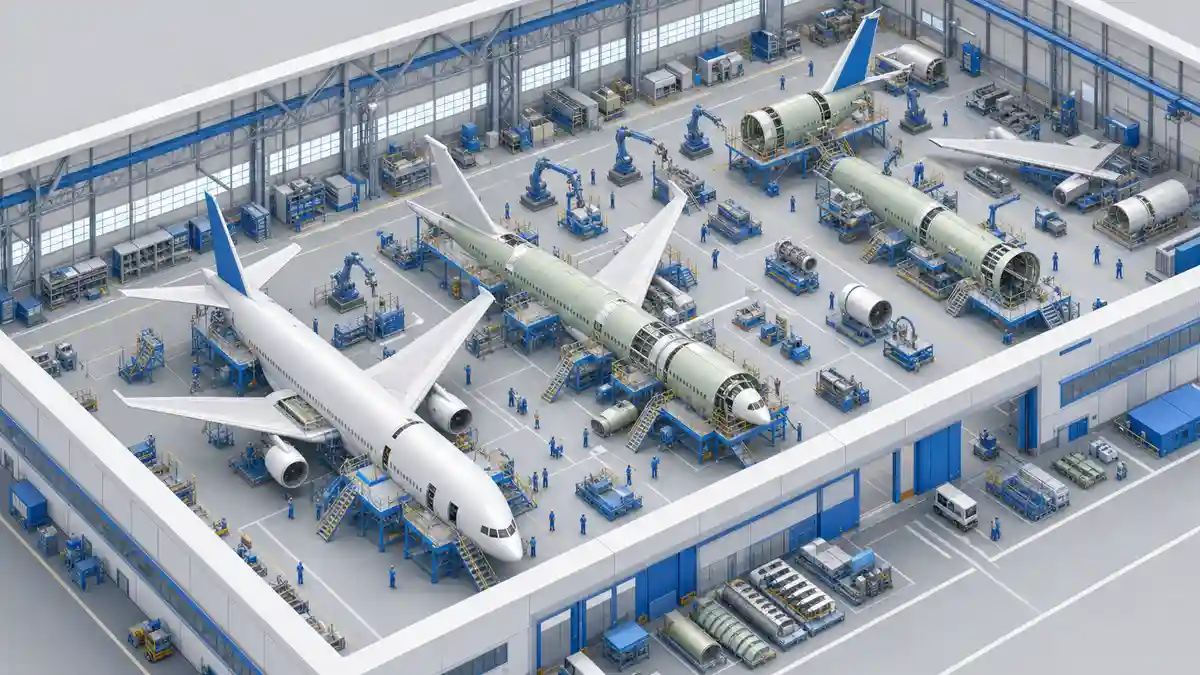
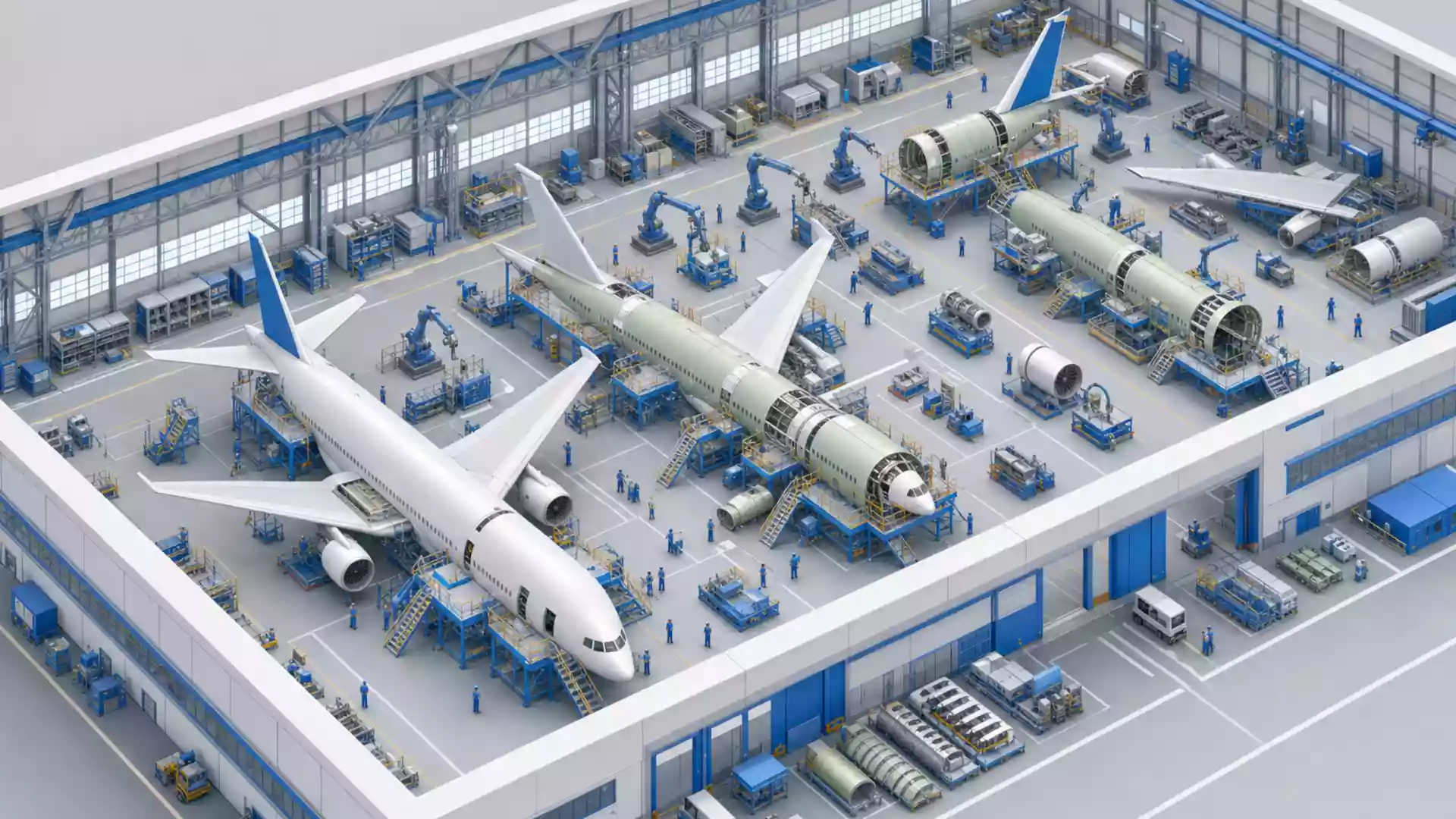
Airbus has reaffirmed its 2026 delivery target, but the confirmation arrives with a caveat that investors would do well to note: the plan hinges on handing over roughly 250 aircraft in November and December alone. Lars Wagner, who heads the planemaker's commercial aircraft division, told La Dépêche that every one of those airframes is already in final assembly or on the delivery lines. That is a concrete industrial starting point rather than a mere statement of intent — though it is not the same thing as a completed handover.
The distinction matters because the numbers so far this year set a demanding bar. Between January and October 2026, Airbus delivered 621 aircraft, a 6.2% increase on the same period a year earlier, according to Reuters. October alone accounted for 74 machines. Hitting Wagner's year-end expectation therefore requires a monthly pace above October's. The question for shareholders is not whether Airbus has planes in the works — it plainly does — but whether advanced manufacturing translates into signed-off deliveries before the calendar runs out.
Demand Is Not the Constraint
On the order side, Reuters reported 1,305 net orders through the end of October. Fresh business keeps arriving: the Cathay Group placed a firm order on 11 November for 14 more aircraft, split between eleven A330-900s and three A321neos. Bookings and completed deliveries are, of course, different measures, and a healthy backlog does little to answer the near-term execution question.
Capacity planning is moving in parallel. Francisco Javier Sánchez Segura, president of Airbus España, said yesterday that Spanish industrial capacity will be expanded, with the A350 monthly build rate targeted to reach twelve units by 2028, according to comments carried by Cinco Días. Wagner, for his part, said Airbus is examining whether A350 output can climb beyond the current twelve-per-month capacity. No decision has been taken on a second A350 final assembly line, and possible stretched versions of the A220 and A350 remain under study only. Those are options, not committed production programmes.
Should investors sell immediately? Or is it worth buying Airbus?
A Safety Directive Enters the Calculus
Since yesterday, a European Union Aviation Safety Agency airworthiness directive has applied to the A350-941 and A350-1041 variants. It requires repeated inspections of fastening elements in the mid-section of the horizontal stabiliser over a possible risk to structural integrity. The directive does not automatically imply delivery delays or derail the production plans, but it belongs in any risk assessment: a ramp-up has to remain compatible with meeting such safety requirements, and higher unit counts alone are not a sufficient yardstick of success.
The bear case, then, does not require a collapse in demand. A gap between announced and achieved output would be enough to dent confidence in the growth story — and would invite a more cautious reading of the wider capacity ambitions.
Buyback Runs Its Own Course
Separately, Airbus reported on 13 November the repurchase of around 441,000 shares for approximately EUR 91.4 million. The first tranche runs until 23 December 2026 and covers up to EUR 800 million; the acquired stock is earmarked for cancellation. The full programme is sized at up to EUR 5 billion and ends no later than 31 July 2029. This is a standalone capital measure — it does not answer the operational question and should not be treated as a substitute for credible deliveries.
Airbus at a turning point? This analysis reveals what investors need to know now.
One more contract award rounds out the picture: France's DGA on 9 November assigned the IRIS military Earth-observation satellite programme, with Airbus Defence and Space in the lead and Thales Alenia Space as co-contractor.
For now, the proof point is the November and December handover schedule. If Airbus converts its advanced assembly work into completed deliveries, the case for a capacity expansion underpinned by operational progress holds together. If the delivery expectation slips, investors would be right to weigh the longer-term growth plans more skeptically.
Ad
Airbus Stock: New Analysis - 19 November
Fresh Airbus information released. What's the impact for investors? Our latest independent report examines recent figures and market trends.