AMD's 8.6% Slide Puts a $17 Billion Forecast on Trial
Published on 11/14/2026 at 14:01 | Editorial boerse-global.de
Fresh server silicon meets a harder question about AI payback
AMD shares fell 8.6% as a broad selloff swept through AI and semiconductor names, with the Associated Press pointing to investor doubts over whether future AI profits can justify the industry's hefty capital commitments. The drop lands just as the chipmaker pushes a wave of new server products into the market — a juxtaposition that turns the coming weeks into a test of execution rather than technology.
The central debate is straightforward: can AMD's expected business growth restore confidence, or does the risk of overstretched expectations still dominate? Product announcements alone won't settle it. What matters is whether they convert into customer deployments and, ultimately, revenue.
A $17 Billion Target Becomes the Yardstick
On November 3, AMD guided fourth-quarter 2026 revenue to roughly $17 billion, plus or minus 3%. That forecast now serves as the key checkpoint after the share-price setback, bundling expectations for the business more effectively than any single performance specification. The company also expects an adjusted gross margin of about 55% for the quarter — meaning profitability, not just volume, will be scrutinized.
The operating base is already visible. AMD posted third-quarter 2026 revenue of $13.4 billion and adjusted diluted earnings per share of $2.09. Hitting the guided increase would underpin the growth thesis; falling short would hand the skeptics an argument. And because the margin target accompanies the revenue target, investors face a double test: demand must materialize and the business must deliver the profitability AMD itself has promised.
Should investors sell immediately? Or is it worth buying AMD?
Server Rollout Moves From Announcement to Delivery
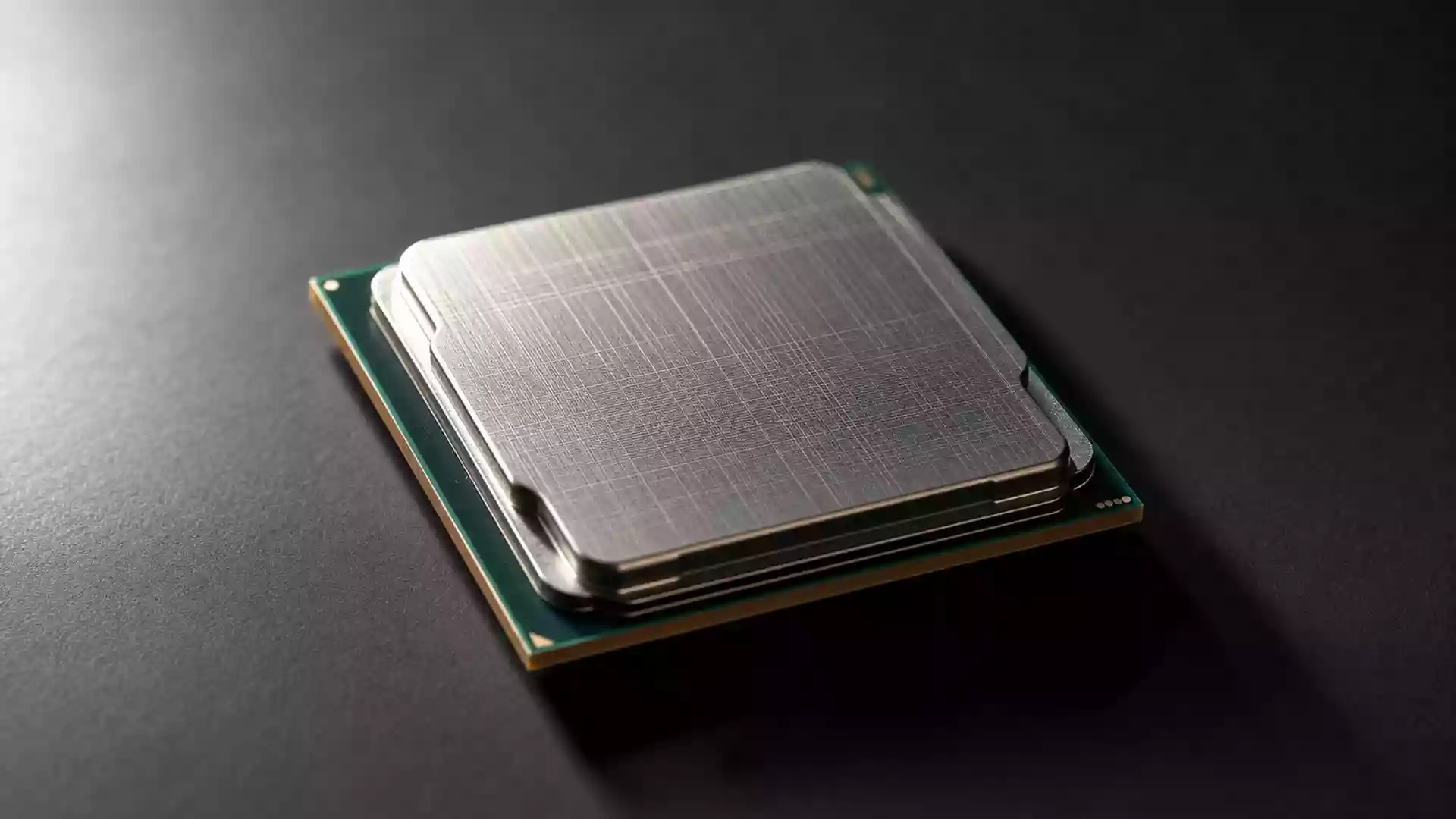
The product cadence has been brisk. On Tuesday, AMD reported general availability of its sixth-generation EPYC server processors for SP7, built on the Zen-6 architecture. Systems have already shipped from leading server vendors, according to the company, while Microsoft Azure HDv2 was in preview. Azure and Oracle Cloud Infrastructure offerings are expected to reach general availability shortly.
Those cloud launches are the next tangible checkpoint. Once the announced instances go live, access to the new processors widens — and the thesis gains a step beyond the product launch toward actual use. How much that is worth economically will be decided by demand for those offerings.
The breadth of the lineup offers a second leg. AMD's additional EPYC family is slated to deliver up to 256 cores and a seven-year product lifetime, extending the server portfolio into more workloads. Customer commitments stemming from that expansion would say more than the raw count of new SKUs.
Timing matters here too. AMD's Venice-X EPYC processors, aimed at high-performance computing, are reportedly planned for the second half of 2027. For near-term investment decisions, the systems already shipping and the imminent cloud offerings therefore carry more weight than the longer-range roadmap.
Embedded Chips Add a Near-Term Catalyst
AMD also introduced the EPYC Embedded 9006 series on Tuesday. The 128-core variant is due to become available on November 15, with shipments of the remaining variants expected to begin by year-end. That schedule gives investors an immediate, checkable milestone — and a template for judging whether AMD delivers on its stated timelines.
On the AI accelerator side, the company rounded out its Instinct MI400 family on Thursday. The MI450X carries 288 GB of HBM4 memory per GPU, while AMD also detailed the MI430X, intended for scientific computing. Analyst sentiment has followed: Oppenheimer upgraded AMD from "Perform" to "Outperform" on Monday and lifted its price target to $600 following the quarterly results.
AMD at a turning point? This analysis reveals what investors need to know now.
The Bear Case: Returns, Not Roadmaps
The counterargument rests on the collision between lofty business expectations and a more skeptical sector backdrop. The doubts AP described concern the economics of AI spending. Should that skepticism persist, it could weigh on AMD even if the company expands its portfolio exactly as planned.
That creates a dual burden for investors. Demand must support the guided revenue, and the business must simultaneously hit its margin ambitions. Weakness on either front could erode willingness to price in further growth. The scenario turns especially demanding if product progress and financial returns diverge: technical improvements bolster AMD's offering only if they generate enough business, and a shortfall against the company's own targets would turn the ambitious revenue forecast itself into a drag.
For now, the favorable case remains defensible as long as AMD makes its products available on schedule and backs the revenue guidance operationally. The next checkpoint is the announced availability on November 15; the broader yardstick remains delivery against the revenue and margin targets. If shipments or business momentum fall behind, skepticism about high AI expectations is likely to carry more weight — and the product roadmap alone will convince fewer investors.
Ad
AMD Stock: New Analysis - 14 November
Fresh AMD information released. What's the impact for investors? Our latest independent report examines recent figures and market trends.