Auckland Builder Fined for Faking Supervisor Credentials
Published on 08/10/2026 at 07:47 | Redaktion boerse-global.de
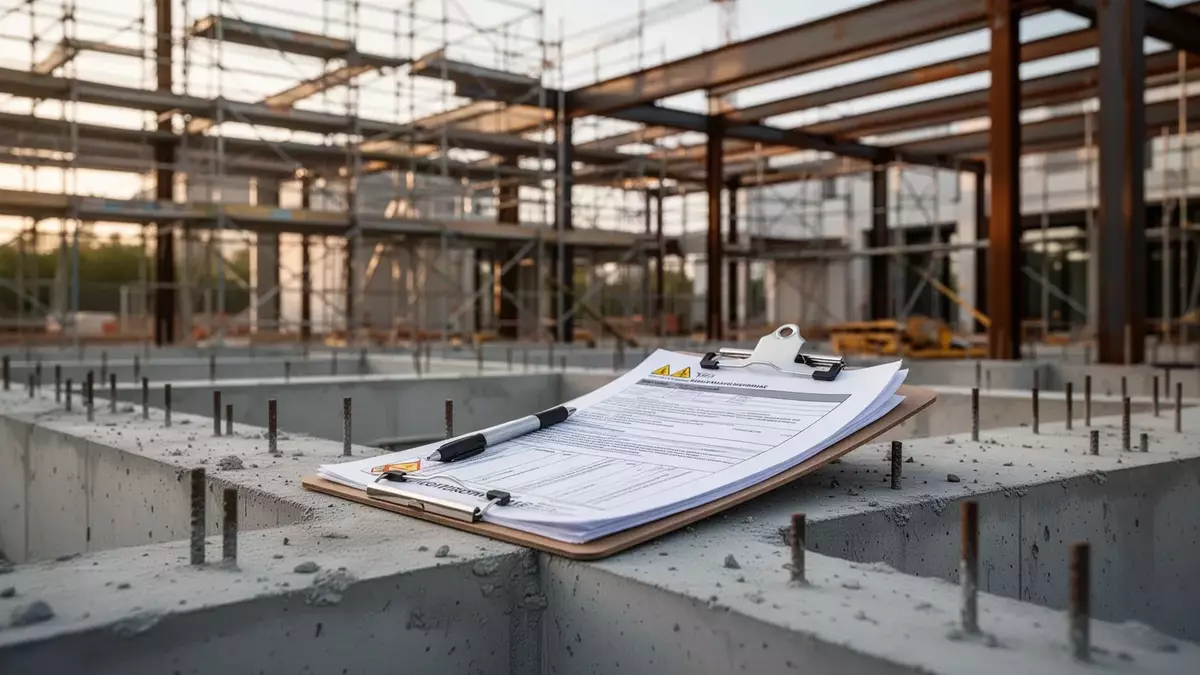
A New Zealand builder has been fined $8,000 after admitting he lied to regulators about his qualifications and the supervision of his work. The case, heard at Manukau District Court, centres on unlicensed foundation work and serves as a reminder to UK employers of the legal consequences of misrepresenting professional oversight.
Deception During Inspection
Angelo Madut was prosecuted by the Ministry of Business, Innovation and Employment (MBIE) after providing false statements to inspectors. He claimed that a licensed practitioner was supervising the construction, when in fact the work was being carried out without the required professional oversight.
The deception was designed to conceal that the work was unlicensed. Under New Zealand's Building Act 2004, such violations carry penalties of up to NZ$50,000 for non-compliance and fraudulent claims.
Misrepresenting professional oversight isn't just a legal risk — it's a safety risk to everyone who relies on your work. UK employers face similar scrutiny under the Health & Safety at Work Act 1974, where failing to document and manage risks properly can lead to costly enforcement action. A free toolkit with 9 ready-to-use tools, including risk assessments and director liability guides, helps you stay compliant and protect your workforce. Download the free Health & Safety at Work Act Toolkit
Wider Lessons on Building Safety
The enforcement action comes amid growing international scrutiny of building safety management. In late July, a building collapse in Bhiwandi, Thane, killed 10 people and injured several others after civic authorities incorrectly classified the structure. While that incident stemmed from a clerical error rather than deliberate deception, both cases underscore how critical accurate assessments and proper supervision are to public safety.
Recent research published in the International Journal of Urban and Rural Management highlights the role of emerging technologies in strengthening building resilience. The 2026 study suggests that Building Information Modeling (BIM), artificial intelligence and advanced materials can improve safety outcomes — but only where management processes are robust enough to support them.
Tougher Oversight Elsewhere
Other regions are also stepping up their checks on structural and operational safety. Earlier this year, during the Qingming holiday, the Zhenjiang Taoist Association carried out extensive inspections across multiple sites, including Danyang and Jurong, targeting fire and gas hazards. The inspections, led by Sun Mincai, stressed the need for immediate rectification of safety risks — echoing the enforcement priorities cited by MBIE in its prosecution of unlicensed and unsupervised building work.
The same enforcement priorities apply to fire safety in UK workplaces. When inspectors arrive, they expect to see documented risk assessments, evacuation plans, and staff training records — and gaps can be costly. A free Fire Safety Toolkit provides everything you need, from risk assessment templates to evacuation plans, to help you meet current UK regulations and protect your premises. Get the free Fire Safety Toolkit