
BMW's Munich Assembly Line Fires Up the i3 — But the Stock's Fate Hangs on a Margin Story, Not a Model Launch
Published on 08/15/2026 at 12:20 | Redaktion boerse-global.de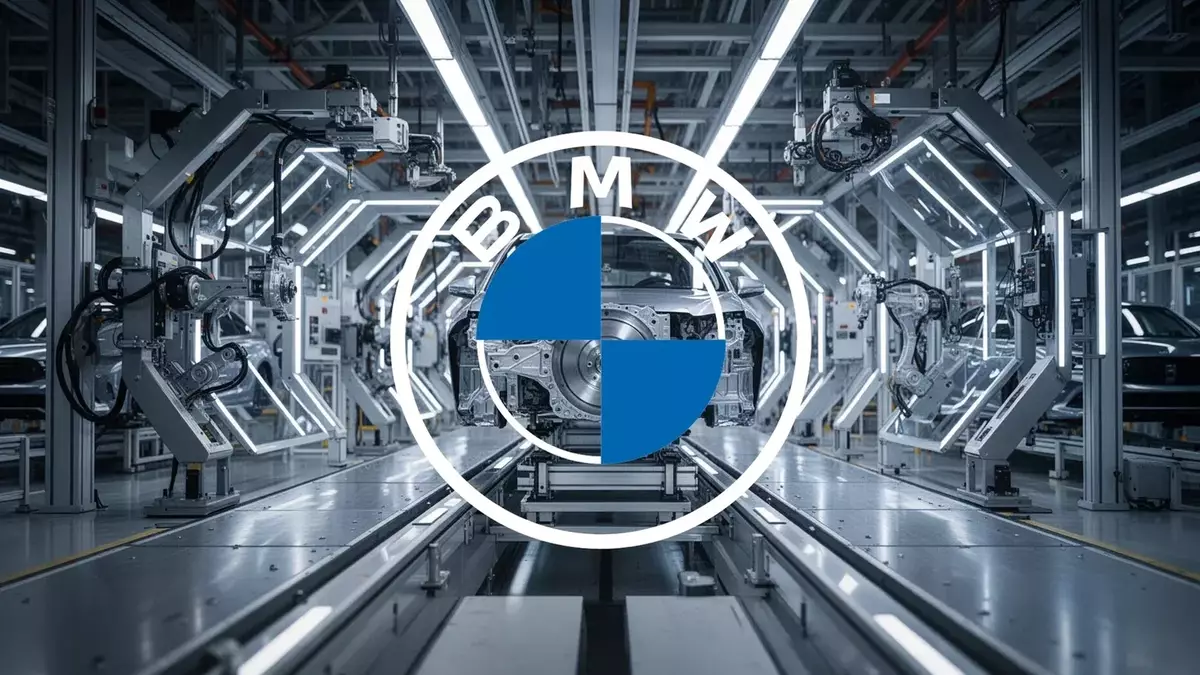
The i3 that rolled off BMW's Munich production line on Thursday represents more than just the second model in the Neue Klasse family. After four years of rebuilding the plant while keeping assembly running, the facility now has the capacity to turn out up to 1,000 vehicles a day. Yet for investors, the question isn't whether the factory can build the car — it's whether the company can rebuild its profitability before the share price runs out of room to fall.
At €59.60, BMW's stock sits just 5.7% above its 52-week low of €56.40 and roughly 39% below the high it touched at the end of last year. The margin for error has all but vanished. The company's automotive EBIT margin has collapsed into a range of 1% to 3%, and the operating profit in its core business tumbled more than 60% in the second quarter. Global deliveries slipped 4.9% over the same period, with China — BMW's single most important market — suffering a decline of more than 30%.
A Stock Caught Between Two Scenarios
The bull case rests on momentum that is already visible in the order books. Battery-electric deliveries rose 5.2% in the second quarter, BMW expects roughly 100,000 orders for the iX3 that has already launched, and the company reports strong pre-market demand for the i3. If the Munich ramp-up goes smoothly and the i3's 800-volt architecture and modular battery packs with higher energy density resonate with buyers, the fourth quarter could deliver the first positive delivery signals. European customer deliveries of the i3, however, are not scheduled to begin until the autumn.
Cost relief is also in the pipeline. CFO Walter Mertl has put last year's savings from the restructuring programme at €2.5 billion, with further efficiency measures planned — though the company has ruled out compulsory redundancies. The settlement with AUMOVIO, which secures BMW more than €1 billion in new orders alongside a €350 million compensation payment, has also eased supplier tensions.
The bear case, meanwhile, is concentrated in two words: China and margin. First-half deliveries in China fell more than 20%, and the structural loss of ground in that market is not something a successful European launch will automatically reverse. Chinese manufacturers have increased their share of the European market from 0.5% in 2021 to nearly 10%, according to the German automotive industry association VDA, and the pricing pressure that comes with that influx is squeezing margins across the sector. Industry-wide automotive profits fell 12% in the second quarter on a 1.2% revenue decline — evidence that BMW's pain is not company-specific.
Just as BMW is under pressure to protect its margins, UK employers face their own compliance squeeze — and the cost of getting it wrong is steep. A free Health & Safety Toolkit gives you ready-to-use risk assessments and checklists that align with the Health & Safety at Work Act 1974, COSHH and PUWER. Download the free Health & Safety Toolkit
Analysts Hold Their Ground
RBC Capital Markets lowered its price target on BMW from €62 to €60 on 14 August, keeping a "Sector Perform" rating. Analyst Tom Narayan cited weak China sales and intensifying competitive pressure on European manufacturers. The stock closed that Friday at €59.60, up 0.8% — barely above the new target and a signal that at least one major house sees limited near-term upside.
The technical picture does little to argue otherwise. The shares are trading 1.5% below their 50-day moving average of €60.48 and roughly 24% below the 200-day average — a configuration that typically speaks to persistent weakness rather than an imminent reversal.
The Broader Industry Squeeze
BMW's planned reduction of 8,000 positions is part of a wider contraction rippling through German automotive employment. Industry headcount fell to 691,500 as of 30 June, a decline of 42,300 jobs or 5.8% year-on-year — the lowest level since 2005. Bosch is cutting up to 22,000 positions worldwide, while ZF plans to shed 14,000 in Germany alone. The layoffs are a symptom of the margin pressure, not the cause of it.
One potential relief valve is trade policy. VW CEO Oliver Blume has called for the EU to extend tariffs to plug-in hybrids, a proposal currently under discussion by the VDA. Should such tariffs materialise, the competitive pressure on European manufacturers in their home market could ease. If they don't, the margin squeeze is likely to persist.
Restructuring and headcount reductions bring their own workplace safety obligations. When teams are stretched and roles change, keeping your risk assessments current becomes even more critical. A free Risk Assessment Toolkit with 41 templates and checklists helps you document hazards properly and stay compliant. Get the free Risk Assessment Toolkit
What to Watch Next
BMW continues to refresh its electric portfolio even amid the uncertainty. The M Concept Neue Klasse was unveiled in mid-August at Monterey Car Week, and the iX2 eDrive20 is launching in South Africa with a WLTP range of 450 kilometres. Product momentum, however, only translates into share-price momentum if it shows up in the margin line.
Two dates stand out. On 1 September, Dorothea von Boxberg, currently CEO of Brussels Airlines, takes over the personnel portfolio from Ilka Horstmeier — just as the voluntary severance programme tied to the 8,000 job cuts is set to begin. And the VDA's decision on extending EU tariffs to plug-in hybrids will shape the competitive landscape for the rest of the year.
For now, the stock appears stuck between its 52-week low and the 50-day average. A smooth production ramp in Munich and convincing delivery numbers this autumn could push it back toward the €60 mark that RBC still considers fair value. A stumble in either the i3 launch or the China market would make the path to the year's low considerably shorter than the road back to the 50-day line.


