
CATL's Debrecen Lines Stir to Life as Customer Loyalty Gets Tested
Published on 09/23/2026 at 18:10 | Editorial boerse-global.de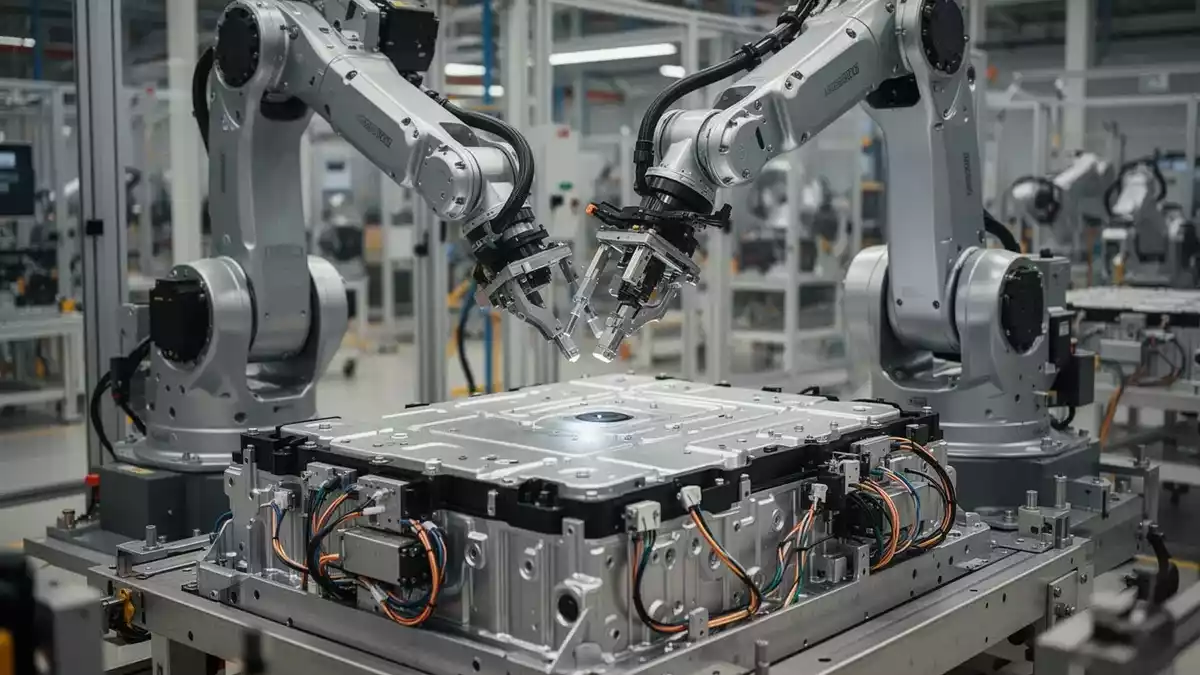
CATL has begun commissioning its first European cell plant, a step that shifts the company from a China-centric exporter into a manufacturer with genuine local footing in the world's second-largest EV market. The first two lines at the Debrecen facility in Hungary are now running setup and validation work, with equipment being tuned ahead of volume production. Hungarian regulators cleared the site for use in August after earlier administrative objections and environmental conditions were resolved.
Once fully built out, Debrecen is slated to reach 100 gigawatt-hours of annual capacity, which would make it CATL's single largest production base outside China and a direct supply anchor for European automakers. The ramp-up runs alongside a fresh financing push at home: CATL has filed a prospectus for a green innovation bond totaling 4.5 billion yuan, split into two tranches with maturities of up to five years. Proceeds are earmarked for operations and maintenance at four major domestic complexes — Fuding, Jiangsu, Sichuan and Shandong — which together carry a targeted capacity of roughly 460 gigawatt-hours.
Demand Holds, Even as Beijing Changes the Rules
Management has moved to quiet nerves over China's new consumption tax on batteries, which took effect in September. Chief technology officer Lin Jiubiao said the levy has had only a limited effect on domestic orders, according to Bloomberg. Order flow has shown some fluctuation, he acknowledged, but the full-year 2026 business outlook stands unchanged.
Utilization figures back up the confident tone. CATL's own plants ran at 95% of capacity in the first half of 2026, well above the industry average. The company also deepened its ties to China's auto sector in mid-September, securing regulatory approval to take a stake in Chongqing Yaoning New Energy Technology, a battery maker backed by Geely Automobile that is currently building its own factory. Neither side disclosed the size of the holding.
Should investors sell immediately? Or is it worth buying CATL?
Commercial Vehicles Get a New Cell
A joint launch with automaker Wuling added a product dimension to the week's news. The two companies unveiled a battery generation aimed at commercial delivery vehicles, built around a dedicated thermal-control system and thin-film technology. CATL says the cell manages 10,000 charge cycles at normal temperatures and 5,000 cycles under elevated heat. It debuts in the Wuling Yangguang L.
The Customer Base Is No Longer a Given
What unsettles investors is not capacity but loyalty. Automakers are steadily reducing their reliance on any single supplier. Li Auto said in early September that it will migrate to in-house cells in stages — its flagship Li Mega moves off CATL to homegrown batteries, while the smaller Li i6 will draw on rival CALB. Xiaomi, for its part, has widened cell sourcing to four suppliers.
Those shifts, combined with mid-September reports of possible production cuts and pressure on per-unit margins, have weighed on the stock. On Wednesday the shares fell 1.2% to 300.83 CNY, leaving them just about 1.8% above the 52-week low touched only on Monday. Over the past 30 days the equity has shed roughly 22% of its value.
CATL has pushed back partly through capital measures, buying 604,293 of its own A-shares on September 11 under a repurchase program. Scale remains its strongest card: the group is still the world's largest battery maker, shipping 289.6 gigawatt-hours in the first seven months of the year, according to SNE Research.
Ad
CATL Stock: New Analysis - 23 September
Fresh CATL information released. What's the impact for investors? Our latest independent report examines recent figures and market trends.


