
Global Industrial Safety Failures Highlight Persistent Workplace Risks
Published on 08/15/2026 at 11:37 | Redaktion boerse-global.de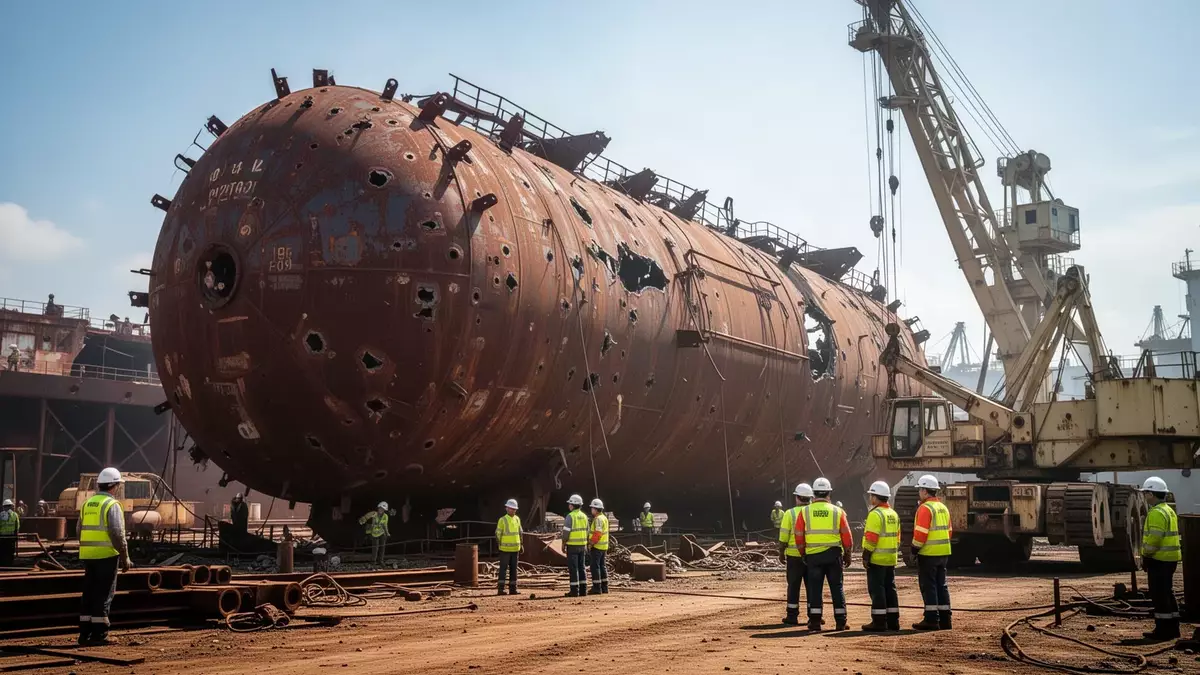
Recent events across Asia have exposed serious gaps in workplace safety protocols, from toxic gas exposure at a Bangladeshi shipbreaking yard to fall protection failures at a Hong Kong construction site. These incidents serve as a reminder to UK employers of the critical importance of rigorous safety systems, particularly in high-risk industries.
Toxic Gas Leak at Sitakunda Shipbreaking Yard
Investigators recorded 10.8 parts per million (ppm) of hydrogen sulfide inside a vessel at the Ferdous Steel Shipbreaking Yard in Sitakunda, Chattogram, on August 15. The reading came just one day after a fatal accident at the same facility, where at least eight workers died from toxic gas exposure while dismantling an LNG carrier.
Experts believe gas concentrations may have exceeded 100 ppm at the time of the incident — a level capable of causing death within minutes. Preliminary findings from the fire service suggest the vessel was not properly cleared of gas before cutting operations began.
The Bangladesh Ship Breakers and Recyclers Association (BSBRA) has formed a five-member committee, led by Captain Anam Chowdhury, to investigate the tragedy. Finance Minister Amir Khosru Mahmud Chowdhury announced that an additional probe committee would be established, while an army team was dispatched to the site.
The BSBRA confirmed it is providing Tk 10 lakh in compensation to the families of the victims, who included brothers Mansur Ali and Nasir Uddin.
Fall Protection Failures in Hong Kong
In a separate development, the Hong Kong Housing Department ordered a contractor to suspend high-altitude work at a public housing site in Yuen Long. The decision followed footage filmed between August 13 and 14 showing scaffolders working without proper fall protection.
The recordings captured a worker on a rooftop more than 10 storeys high at the Kam Sheung Road No. 6 Phases 1 and 2 site. The individual was observed without a safety harness or visible fall prevention equipment.
Officials noted that the site has recorded four minor accidents since October 2024 and emphasized that safety protocols must be tightened immediately.
Hydropower Tunnel Surge in Uttarakhand
In northern India, rescue operations continued following a surge of water and debris into an under-construction hydro tunnel at the Vishnugad-Pipalkoti project in Chamoli, Uttarakhand. The incident on August 13 resulted in seven confirmed deaths, with three workers still missing as of Friday.
Rescuers from the NDRF, SDRF, and ITBP used makeshift rafts and 10 pumps to navigate chest-deep water inside the tail race tunnel. While 12 workers were rescued shortly after the surge, search efforts for the remaining missing personnel are ongoing. The workers involved hailed from the states of Uttarakhand, Jharkhand, and Bihar.
Global Fatality Trends and UK Legal Action
Recent data from the International Council on Mining and Metals (ICMM) indicates a slight decrease in industry fatalities, with 39 deaths reported among member companies in 2025 compared to 43 the previous year. Underground mines accounted for 69% of these fatalities, with the most common hazards being ground falls, mobile equipment accidents, and gas outbursts.
In the United Kingdom, legal proceedings are advancing regarding construction defects. Poplar HARCA is suing Rydon Construction for £3.4m over combustible cladding and insulation at high-rise buildings in east London. The claim asserts the structures were not fit for human habitation upon their completion in 2013.
Investigators in East Sussex are also examining a train derailment near Lewes that occurred on August 14. The incident, which left two people seriously injured and 18 others hurt among 150 passengers, may have been influenced by high temperatures affecting the rail infrastructure.


