Hensoldt Wins an Upgrade and a €3 Billion Opening, but Delivery Is the Real Test
Published on 11/11/2026 at 09:31 | Editorial boerse-global.de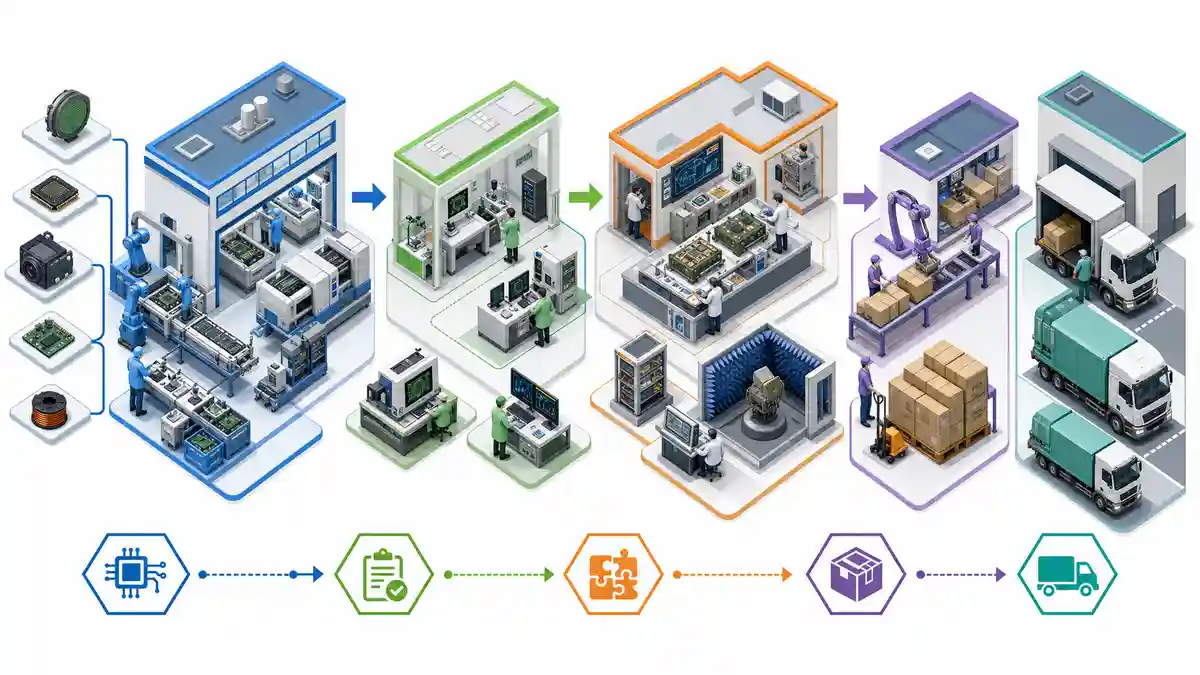
Hensoldt has rarely had so much to prove at once. Within roughly a week the defence-electronics group has reaffirmed its medium- and long-range revenue ambitions, been handed a more favourable rating by JPMorgan, flagged a German programme worth more than €3 billion, and flown its sensor suite on a partner's drone. Each item points the same way — toward growth — yet none of them pays a bill until capacity, contracts and margins line up together.
JPMorgan moved first. Analyst Lucy Fitzgerald lifted her recommendation to "Overweight" from "Neutral" and raised the twelve-month price target to €105 from €100, calling Hensoldt a long-term winner. Her conviction, she said, was reinforced by the capital markets day and by the belief that the investments now under way will support the revenue momentum the company is forecasting. The study behind the call, published yesterday, looks out to 2030 — and Fitzgerald is upbeat about the years beyond that as well.
The longer horizon is precisely what makes execution the crux. A thesis that stretches over a decade stands or falls on whether capital spent today turns into deliverable hardware and profitable sales tomorrow, rather than on the size of the target price.
Radar Output Doubles as the Order Book Waits
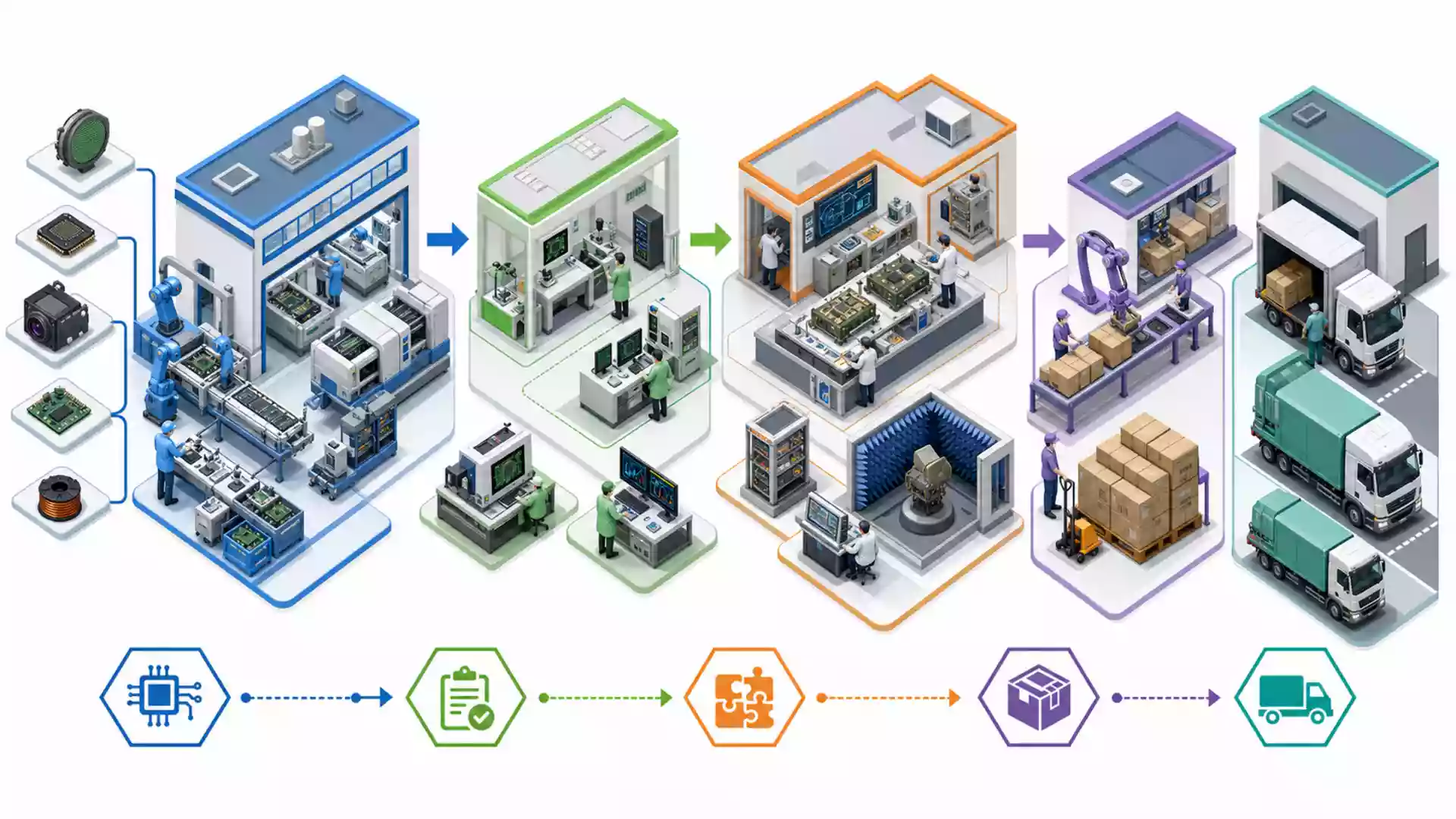
Concrete evidence of that build-out is already visible in the TRML-4D radar. Hensoldt intends to double capacity for the system within two years, having already multiplied it fivefold over the preceding three. The next step is the one that matters: whether the added lines translate into usable production.
The revenue framework gives investors a yardstick. Hensoldt is targeting €6 billion of sales in 2030 and has set its sights on as much as €10 billion a year by 2035. For 2026 it has guided to roughly €2.8 billion of revenue at a clean EBITDA margin of about 19.0%. By 2026 the margin should sit near 19%, and by 2030 the company wants around 21% — meaning it plans to grow and become more profitable at the same time. Expansion only earns its keep if it also sharpens the ability to turn extra business into earnings.
Should investors sell immediately? Or is it worth buying Hensoldt?
LuWES: A €3 Billion Yardstick
Then there is LuWES, Berlin's programme for airborne electronic warfare. Hensoldt puts the business opportunity at more than €3 billion, a figure that surfaced yesterday. Media reports suggest the tender has now reached the company, giving the growth debate a specific reference point: a named programme, a stated order of magnitude, and a sequence of steps investors can follow toward a possible award.
That €3 billion is Hensoldt's own assessment and should be read as a measure of potential while no contract exists. What counts for valuation is how much of it the company can capture and on what commercial terms. A large prospective order strengthens the credibility of the long-term plan only if Hensoldt wins the work and then delivers it — the point where engineering capability meets business discipline.
A Black Swan Takes Flight
The same theme ran through yesterday's demonstration with Dronamics. The two companies test-flew the Black Swan unmanned aircraft carrying Hensoldt's integrated MissionGrid sensor suite, then showed the systems to prospective end users, including ISTAR and AEW functionality alongside MDOcore.
What stands out is the pairing of technologies on a real airframe before an audience of potential operators. It supports the growth case to the extent that a technical showcase becomes a commercially usable capability; the next meaningful milestone would be a commercial agreement. Read together, LuWES and the flight point to a single idea — electronic capabilities working in tandem with airborne platforms — and the investment case for integrated systems grows stronger the more often Hensoldt converts such skills into concrete projects.
The Next Financial Checkpoint
The near-term calendar offers a hard test. Preliminary full-year 2026 results are due on 24 February 2027, giving investors a financial reference point against which to weigh both the tender and the flight demonstration.
That argues for a sober reading of large programme volumes. A business opportunity creates value for shareholders when it pairs revenue with sustainable profitability — the flight showing tested integration, the tender a named procurement possibility. The capital markets day set the direction with the €6 billion 2030 revenue ambition and a clean EBITDA margin of around 21%; individual projects and their execution will supply the economic substance.
My own view stays cautiously positive and project-focused. The upgrade persuades more through its reasoning than through the higher target, and Hensoldt offers a comprehensible growth story as long as deliverability and profitability advance in step. LuWES represents substantial potential if the opportunity becomes an award, and the flight demonstration adds to the picture if commercial applications follow. The value driver to watch is the successful execution of the investments.
Ad
Hensoldt Stock: New Analysis - 11 November
Fresh Hensoldt information released. What's the impact for investors? Our latest independent report examines recent figures and market trends.