
Nvidia's Doubling Promise Has Two Bottlenecks: Memory Chips and Substations
Published on 09/18/2026 at 22:31 | Editorial boerse-global.de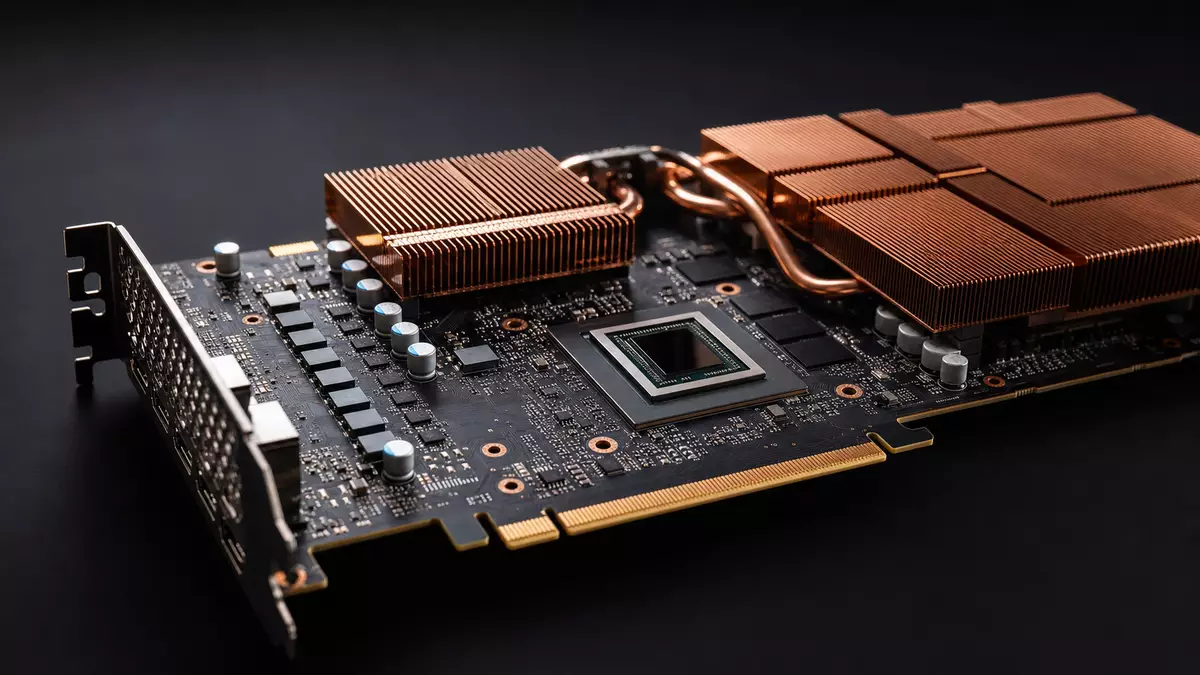
Jensen Huang used a royal audience to make his boldest volume pledge yet. Speaking before the AI summit in Scotland in the presence of King Charles III, the Nvidia chief said the company would sell twice as many chips in 2027 as in 2026 — a figure measured in units, not revenue.
That claim, rather than the modest 2.54 percent gain the stock posted on Thursday to $219.34, is the real story. A doubling of unit volume sits awkwardly beside Nvidia's own revenue guidance of roughly 70 percent growth to about $673 billion for the fiscal year ending January 2028. Either average selling prices fall sharply, or the 70 percent target is quietly conservative. Both readings matter to investors, and neither can be confirmed yet.
Suppliers Are Voting With Their Wallets
The market's reaction was telling. Samsung Electronics climbed 3.37 percent on Friday, SK hynix jumped 6.42 percent, and the Philadelphia Semiconductor Index and Korea's Kospi both advanced. High-bandwidth memory prices are reportedly rising 30 to 50 percent per generation, and Morgan Stanley calculates that Nvidia, Alphabet and AMD will together absorb about 85 percent of global HBM supply in 2027 — with Nvidia alone accounting for 37.3 percent.
HBM's share of a GPU's material costs is said to be climbing from around 20 percent to more than 50 percent. That ties Huang's doubling plan to a memory chain that SK Hynix, Samsung and Micron have already sold out for 2027. Fresh capacity will not arrive before late 2027 or 2028. The genuine risk here is not weak demand but physical scarcity.
Near-term operations, at least, back Huang's confidence. Nvidia's second quarter of fiscal 2027 brought record revenue of $96.2 billion, up 106 percent year over year, powered by the data-center segment at $89 billion. GAAP gross margin stood at 75 percent. For the third quarter, management guided to $108 billion, plus or minus 2 percent — a forecast that excludes China data-center revenue, a caveat that should not be skimmed over.
Should investors sell immediately? Or is it worth buying Nvidia?
A Second Constraint: The Grid Itself
Chips are only half the equation. Data centers can be built in a matter of quarters; high-voltage transmission lines and substations cannot. While Huang promises to ship twice as many semiconductor components next year as in 2026, the real growth brake sits at the transformer yard, not in the fabs of Taiwan.
To attack that bottleneck, Nvidia is teaming up with Google and the startup Emerald AI under a newly formed AI Energy Management Alliance. The group intends to run data centers so that their power draw flexes dynamically with grid load. Emerald AI chief Varun Sivaram points out that U.S. data centers sometimes wait a full decade for a grid connection, even though existing networks run at only about half their capacity on average.
By shifting non-time-critical computing tasks away from peak-load windows, the alliance reckons it can unlock a theoretical 100 gigawatts of additional capacity for data centers within the existing U.S. power network. Utilities including Constellation and National Grid have signed on. In exchange for such flexibility commitments, the alliance is pressing for faster permits and grid access.
For Nvidia this is not a side project in sustainability — it is core sales protection. Cloud providers pouring billions into infrastructure need those facilities energized quickly, and when conventional interconnection approvals drag on for years, multi-billion-dollar investment programs risk stalling. Deliberately throttling training workloads during peak demand could be what gets new sites approved at all.
Huawei Closes In, on Paper at Least
Competitive pressure is building from the other direction. At Huawei Connect in Shanghai, Huawei released brought-forward roadmap data: the Ascend 960DT is now slated for the first quarter of 2027 rather than later, with up to 4 PFLOPS of FP4 compute. By the published comparisons, the chip doubles the memory and performance of its predecessor but delivers roughly half the FP8 throughput and about a third of the FP4 performance of Nvidia's B300.
The gap is narrowing; it is not closing. Huang himself has acknowledged that China could bring advanced lithography into mass production by 2030 — a sign he takes the long-term threat seriously.
What the Tape Says
Nvidia's market capitalization of EUR 4,460.06 billion puts it in territory that seemed unthinkable a few years ago. The shares trade at EUR 191.34, essentially flat on the day, and sit 5.5 percent below their record high. Measured in dollars, the stock is about 5.4 percent under its 52-week peak of EUR 202.50, yet more than 34 percent above its March 30 low. It holds roughly 3 percent above its 50-day moving average and 12 percent above the 200-day line — moderate strength rather than overheating, consistent with an RSI reading of 53.
Whether the flexibility pledges win over utilities and regulators is an open question; the economics of dynamically throttled hyperscale data centers remain unproven across the industry. Pull off the link between chip architecture and grid control, and the market leader clears a path for its next expansion wave. Fail, and the pace of growth will be set not by order books but by blocked transmission corridors — and by memory suppliers who have already sold every wafer they can make.
Ad
Nvidia Stock: New Analysis - 18 September
Fresh Nvidia information released. What's the impact for investors? Our latest independent report examines recent figures and market trends.


