
Rheinmetall's €30 Billion Capacity Gamble Collides With a Stock Stuck Below Its 200-Day Line
Published on 09/22/2026 at 12:01 | Editorial boerse-global.de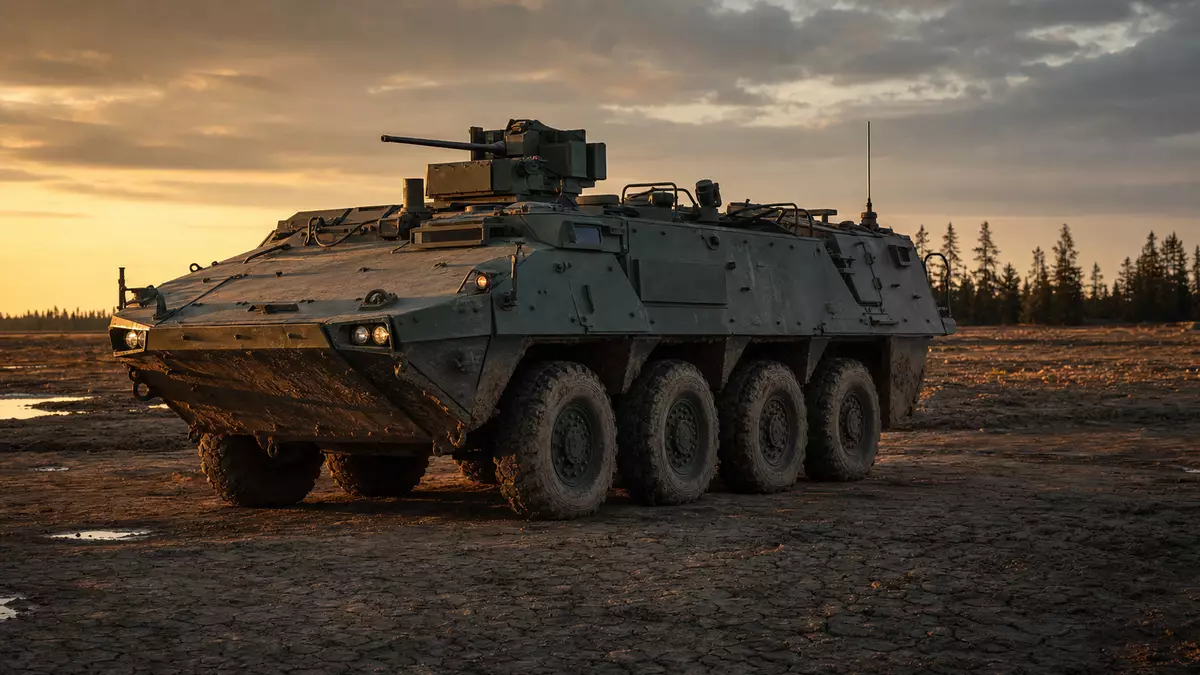
Armin Papperger is betting that scale will solve Rheinmetall's problems. The defense group's chief executive told Handelsblatt on Tuesday that the company intends to sink roughly €30 billion into its operations over six years, a capital program designed to digest an order pipeline that has outgrown its factories. Management is targeting 40% revenue growth for the current fiscal year alone.
That build-out comes with a hefty upfront bill. Ramping capacity at this pace dragged liquidity into negative territory during the first half, with free cash flow landing at minus €1.6 billion. Rheinmetall expects the tide to turn by year-end or early next year, when it projects a return to positive cash generation.
JPMorgan Flags Margin Risk as Product Mix Shifts
The investment case is not without friction. On September 10, JPMorgan placed the stock on a "Negative Catalyst Watch" while keeping its rating at "Neutral." The analysts pointed to mounting margin pressure stemming from a changing product mix: as Rheinmetall pivots toward missiles, drones and digital systems, the heavy front-loaded spending those programs require could weigh on operating profitability.
It is a double-edged transition. The shift locks in future market share in modern warfare technologies, but the legacy ammunition and vehicle divisions have historically been the group's most dependable profit engines. Rebuilding those revenue streams around new products tempers near-term earnings momentum.
Should investors sell immediately? Or is it worth buying Rheinmetall?
The broker's caution landed in an already jittery climate. Berlin's decision to cancel the F126 frigate program set the tone, and the company has guided toward a significantly negative operating free cash flow for the full year. Reports of delivery delays on the wheeled armored vehicle and the Skyranger air-defense system, along with quality checks on protective plating, added to the sour mood.
Industrial Ramp-Up Meets Reality
Those snags illustrate a broader problem facing Europe's defense manufacturers: capacity cannot be scaled overnight after years of underutilization. Stringent acceptance procedures and demanding technical specifications mean even minor defects in supplier components can throw entire production runs off schedule.
The fundamental backdrop nonetheless remains formidable. Rheinmetall reported an order backlog of €80.5 billion at mid-year, with rolling ammunition orders underpinning baseline utilization for years to come. Filling those volumes requires substantial bridge financing for raw materials and intermediate production stages — the same dynamic pinning liquidity in the short term.
Autonomous Systems Advance on Two Fronts
While the financial picture dominates headlines, Rheinmetall's operating units are logging milestones. Its Rheinmetall Electronics subsidiary completed factory acceptance testing in Bremen for the training simulator of the Schwerer Waffenträger Infanterie, the Bundeswehr's heavy infantry weapon carrier. Representatives from procurement agency BAAINBw, the Army Development Office and the Infantry School took part in the review.
Five of the simulation systems are due for handover to the armed forces by mid-2027, with the first scheduled to reach troops in autumn 2026 — early enough to train crews before the first combat vehicles arrive. The simulator builds on the existing Puma infantry fighting vehicle training platform, which is already in series production.
Rheinmetall at a turning point? This analysis reveals what investors need to know now.
Overseas, the unmanned segment is also gaining traction. Rheinmetall is supplying twelve units of its Mission Master SP autonomous ground vehicle to the U.S. Marine Corps under a $7.28 million contract. And at the multinational REPMUS26 military exercise in Portugal, the company is putting networked maritime systems through their paces, testing modular command-and-control centers designed to protect harbors and coastal waters.
Market Waits for Proof
Investors remain unconvinced. The shares slipped 0.2% in today's session to €1,009.60, leaving the stock 26% below its 200-day moving average. Tuesday's close had been €1,012.00, and pre-market indications on Wednesday pointed to €1,015.00.
For traders, the question is no longer whether the orders exist — it is how quickly Rheinmetall can convert its swollen backlog into high-margin revenue. Until that translation becomes visible in the numbers, the market appears content to watch from the sidelines.
Ad
Rheinmetall Stock: New Analysis - 22 September
Fresh Rheinmetall information released. What's the impact for investors? Our latest independent report examines recent figures and market trends.


