
Rheinmetall's Trust Deficit: A Defence Giant Caught Between Record Operations and a Halved Share Price
Published on 09/02/2026 at 11:01 | Editorial boerse-global.de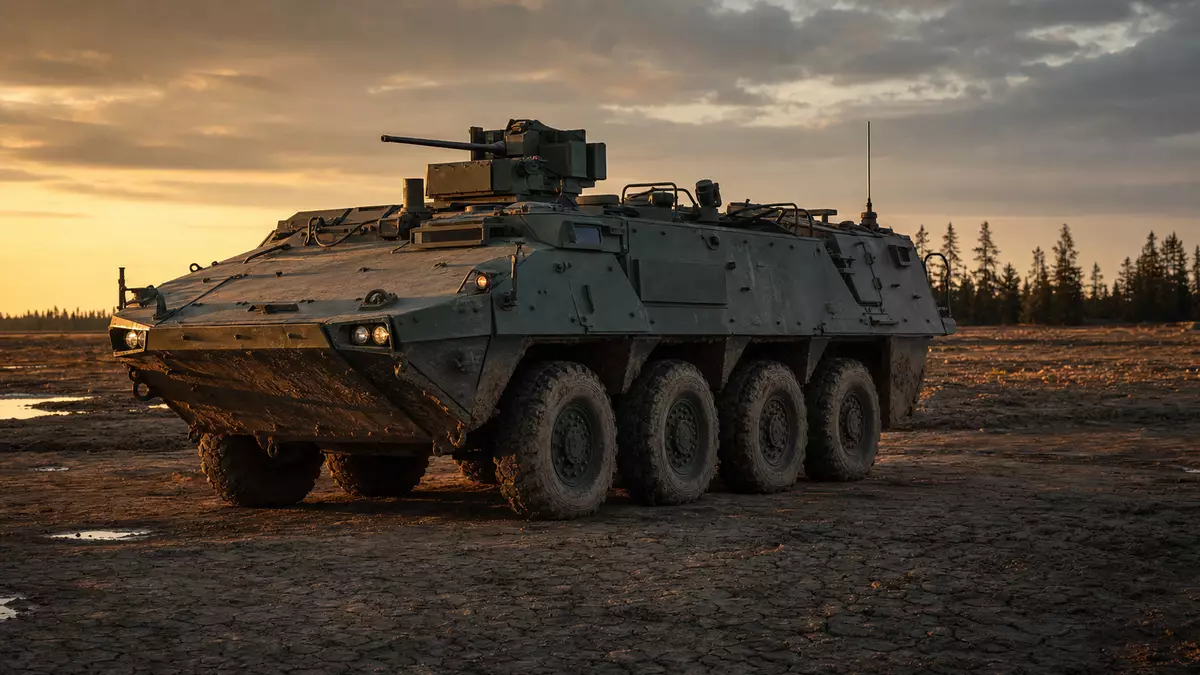
There is a peculiar arithmetic at work in Rheinmetall's current market story. The Düsseldorf-based defence group is delivering milestones at a pace that would have sent most European industrials soaring — a prototype handed to the US Army, fresh investment commitments in Germany, a first contract in Lithuania. Yet the share price has shed nearly half its value from last autumn's peak, and the gap between corporate achievement and market reception has become the defining feature of the stock.
The numbers frame the disconnect starkly. Rheinmetall shares changed hands at €1,078.00 in recent trading, a marginal improvement on the previous session's €1,075.00 close but a far cry from the 52-week high of roughly €2,007.00 touched on 3 October 2025. The equity now sits 46 percent below that watermark and has surrendered 31 percent since the start of the year. Over the past month alone, the decline approaches ten percent.
The XM30 Prize and the Long Wait
At the centre of Rheinmetall's transatlantic ambitions sits the XM30 programme, a competition to replace more than 4,000 M2 Bradley infantry fighting vehicles for US ground forces. Rheinmetall has entered its Lynx vehicle into the race against General Dynamics, and the first of eight prototypes has already been delivered. Testing runs through the end of the year, after which a decision is expected.
Chief executive Armin Papperger has made no secret of the stakes, most recently posing for a test drive in a Boxer armoured vehicle — imagery clearly intended to signal that Rheinmetall intends to win in America, not merely participate. The company has simultaneously announced plans to build what it describes as the world's largest tank factory, though notably without a signed contract underpinning that investment. It is a bet on future demand that has yet to be validated on paper.
The company is also circling Germany's SatcomBw Stufe 4 satellite communications programme as part of a consortium, with OHB serving as prime contractor and a decision pending between Bremen and Saxony. Another significant opportunity, another outcome that remains unresolved.
Should investors sell immediately? Or is it worth buying Rheinmetall?
Berlin Tightens the Purse Strings
The more immediate contradiction, however, sits closer to home. While Rheinmetall chases billions in US defence spending, its own government is pulling back. Berlin plans to reduce ammunition expenditure from €11 billion to €9.6 billion in 2027 — a cut that cuts against the narrative of a European defence supercycle that has powered Rheinmetall's rise for years.
When the domestic market applies the brakes while international contracts remain stuck in decision phases, the uncertainty begins to show in the chart. Technical indicators reinforce the picture of sustained weakness: the stock trades well below its 200-day moving average of €1,404.96 (or €1,408.23, depending on the data feed), and sits marginally under its 50-day average of €1,089.21. A relative strength index of 39.7 points to soft momentum rather than oversold conditions.
A Market That Refuses to Cheer
The pattern has become almost perverse. Rheinmetall announced, within a matter of days, a roughly €270 million investment in Kassel covering tank production, a drone testing centre and a new logistics hub at Kassel Airport; its first order under the German Armed Forces Contractor Augmentation Program II for a modular camp in Lithuania; and — together with Hensoldt — the successful integration of passive sensor technology into an air defence system. The Lynx prototype handover followed. The share price fell 3.7 percent on the day.
It is as if the market had priced the news before it was announced, or simply no longer trusts it. The more plausible explanation is that investors have shifted their focus from individual contract announcements to a broader question: can the extraordinary growth rates of recent years translate into durable, repeatable results? A multi-day protest camp against Rheinmetall is planned in Cologne for the first week of September — a political undercurrent that may weigh on sentiment without altering the operational picture.
The Macro Squeeze
Nor is the share price weakness occurring in isolation. Global bond markets are in the midst of a sell-off, with ten-year US Treasury yields climbing to 4.81 percent, near a three-year high, while Japan's ten-year yield has pushed above 3 percent for the first time in three decades. Rising rates disproportionately burden capital-intensive industrial groups like Rheinmetall, which is committing enormous sums to new factory capacity in an environment where financing costs are heading upward.
Deutsche Bank Research reaffirmed its "Buy" rating on Tuesday with a price target of €1,800 — implying substantial theoretical upside from current levels. But a single daily price target does not constitute a broad analyst consensus, and the stock's annualised 30-day volatility of 38 percent suggests the ride will remain bumpy.
Substance Versus Sentiment
The coming months will test whether operational achievements can offset two headwinds at once: a domestic government that is tightening defence spending and a global rate environment that makes growth fantasies more expensive to fund. The Lynx programme could prove a genuine inflection point if it converts into a production order, and the company's appearance at the Morgan Stanley industrials day on 8 September may offer clues as to which narrative gains traction.
The defence boom was never solely a story of contracts and backlogs. It was equally a story of confidence — and that, for now, is proving harder to measure in prototypes than in test drives through Boxer armoured vehicles. Rheinmetall's operational substance is real; the market's willingness to pay for it, at least at current valuations, is clearly not.
Ad
Rheinmetall Stock: New Analysis - 2 September
Fresh Rheinmetall information released. What's the impact for investors? Our latest independent report examines recent figures and market trends.


