
Rolls-Royce Lifts Guidance as Payouts, Hybrid Engine Role and Trent Upkeep Converge
Published on 09/23/2026 at 20:21 | Editorial boerse-global.de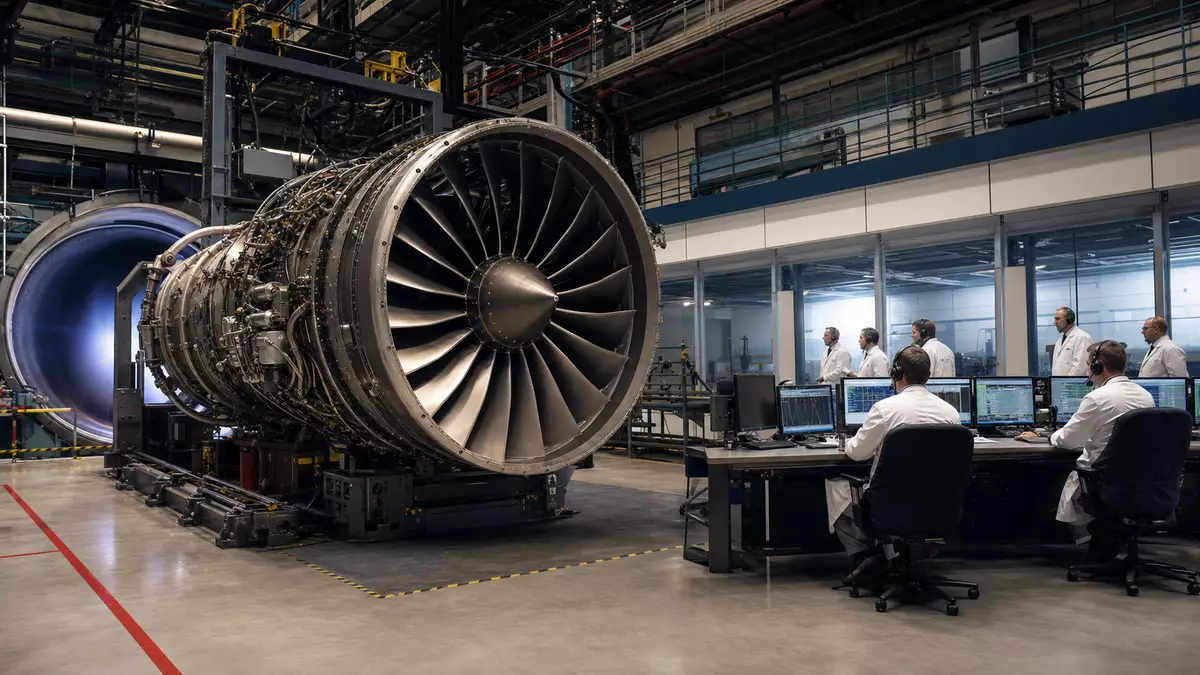
Rolls-Royce has handed investors a tangible reward while simultaneously raising the bar for its own performance. The British engine maker paid out an interim dividend of 6.0 pence per share on Friday, a distribution that signals a return to routine shareholder returns after years of restructuring. The stock, at EUR 17.46, has climbed 32% since the start of the year and sits just 5.5% below its 52-week high — a level that leaves little room for error.
The payout arrives alongside a significant upgrade to full-year 2026 guidance. Management now expects adjusted operating profit of GBP 4.7bn to GBP 4.9bn, up from a previous target of GBP 4.0bn to GBP 4.2bn. Free cash flow is projected at GBP 3.8bn to GBP 4.0bn. Those figures rest on a first half in which adjusted operating profit jumped 46% to GBP 2.5bn, with revenue advancing 24.5% to GBP 11.3bn and the adjusted operating margin reaching 22.5%.
Flight hours remain the engine behind the numbers
The single most important variable in hitting those targets is the flying activity of large civil engines. Rolls-Royce bills airlines under long-term service agreements based on actual flight hours, which means the top line moves with global long-haul traffic rather than with unit deliveries alone. That mechanism powered much of the first-half profit surge. Should long-haul demand stall, margins would come under pressure, and efficiency gains in Power Systems and Defence could only partially offset a shortfall in civil aftermarket revenue.
Operational initiatives are aimed squarely at keeping that service engine running smoothly. At London Heathrow, Rolls-Royce and maintenance specialist HAECO have launched a modular exchange process for Trent 1000 engines, refurbishing compressor modules on site to cut turnaround times and ease maintenance bottlenecks. The nuclear unit, Rolls-Royce SMR, separately secured an exclusive agreement with Czech firm Škoda JS to supply reactor actuators, with each tranche valued at roughly CZK 1bn.
Should investors sell immediately? Or is it worth buying Rolls-Royce?
Europe taps mtu to lead hybrid-electric work
Longer-term technology ambitions received a boost when the EU's Clean Aviation programme selected the German subsidiary mtu to lead the ELEVATED project. The initiative centres on testing a hybrid-electric gas turbine propulsion system for future short- and medium-haul aircraft. For market participants, the assignment marks a shift in emphasis: alongside strict cost discipline, long-horizon technology programmes and direct cash returns are moving back to the fore. Such development work absorbs substantial engineering capacity and capital without contributing measurable earnings for the foreseeable future.
Analyst sentiment has followed the operational momentum. Morgan Stanley recently raised its price target on the stock to GBP 20. The broader consensus remains moderately positive, with an average target of around 1,690 pence. Buyback activity provides further support: of the GBP 2.5bn repurchase programme, Rolls-Royce has already completed GBP 1.4bn. Insider buying has reinforced the narrative — non-executive director Angela Strank acquired 1,383 shares on 10 September, a move typically read as a sign that internal targets rest on solid ground.
Valuation leaves no cushion for disappointment
The bull case rests on sustained margin expansion and consistent capital returns. Keeping pricing discipline in maintenance contracts and ramping up new business in Power Systems — such as rail projects in Latin America — would help justify the premium. With the shares trading at up to 50 times expected earnings after a multi-year rally, however, the valuation offers no buffer against setbacks. A missed annual target could trigger swift profit-taking.
Supply chains present the most immediate industrial risk. The global aerospace industry continues to grapple with shortages among specialised suppliers and long lead times for critical components. Delays in engine delivery or overhaul feed directly into margins. Geopolitical tensions in the Middle East could raise fuel costs and dampen demand on international routes, while rising commodity prices threaten the profitability of fixed-price contracts. If airlines adjust long-haul capacity, Rolls-Royce's billing base would take a direct hit.
Chart levels and the next operational test
From a technical standpoint, the picture is finely balanced. Holding free cash flow within the upgraded GBP 3.8bn to GBP 4.0bn corridor would keep institutional confidence intact and open the path to new highs above EUR 18.47. A break of key support around 1,475 pence in London could instead trigger declines towards 1,450 pence. The next concrete milestone comes in October 2026, when the first train powered by an mtu drive system enters service in Teresina, Brazil — a test of whether the industrial segment can deliver on schedule. Final annual results will ultimately determine whether the newly demonstrated earning power is durable or merely a temporary catch-up effect in aviation.
Ad
Rolls-Royce Stock: New Analysis - 23 September
Fresh Rolls-Royce information released. What's the impact for investors? Our latest independent report examines recent figures and market trends.


