
Rolls-Royce Takes the Helm on Hybrid-Electric Propulsion as Insiders and Analysts Signal Confidence
Published on 09/21/2026 at 08:20 | Editorial boerse-global.de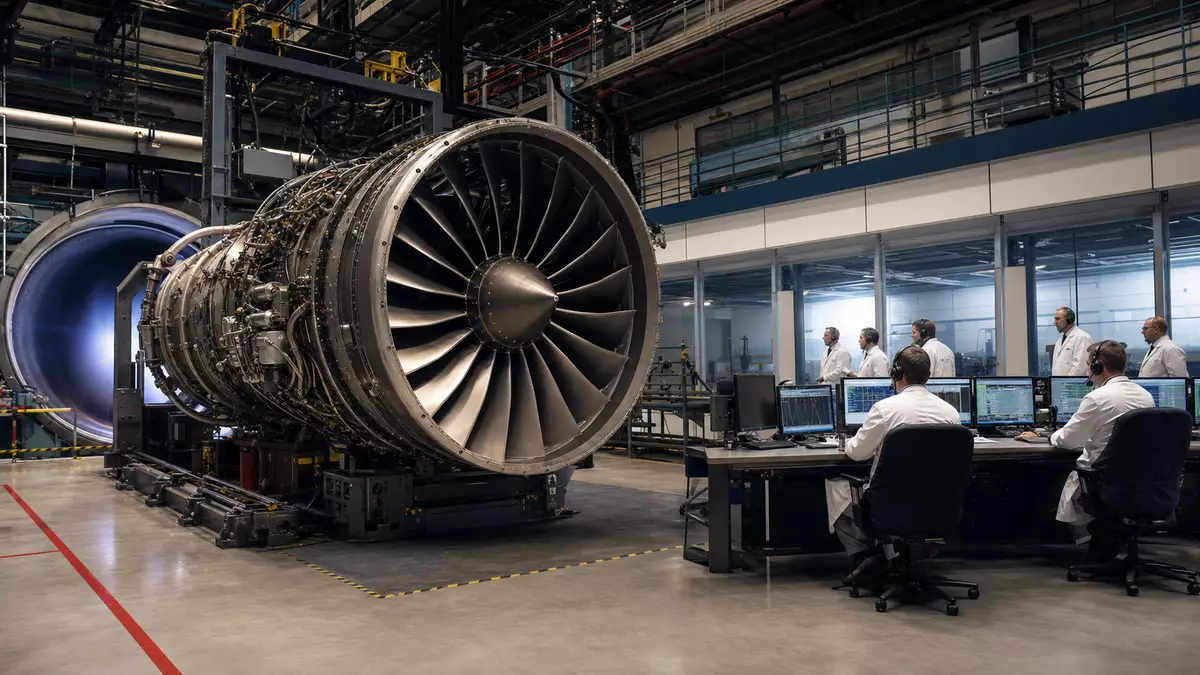
Rolls-Royce has been handed leadership of ELEVATED, a European research programme run under the Clean Aviation initiative that aims to demonstrate a hybrid-electric gas turbine propulsion system for the short- and medium-haul aircraft of tomorrow. For the British engine maker, the appointment cements its standing in next-generation powerplant technology and marks another step in civil aviation's broader shift toward architectures designed to curb fuel burn and emissions on the busiest routes. Alongside its established large-engine business, Rolls-Royce is steadily building out alternative propulsion concepts.
The company's transformation is already showing through in the numbers. Speaking at the Jefferies Global Industrials Conference on 9 September, chief executive Tufan Erginbilgiç said the overhaul has lifted profit by roughly 50 percent year on year. He was quick to flag the headwinds, though, pointing to supply-chain inflation and execution risk as reasons why the improvement effort cannot afford to pause.
Those comments came after Rolls-Royce raised its full-year targets at the end of July alongside its 2026 half-year results. Management is now guiding toward an adjusted operating profit of between GBP 4.7 billion and GBP 4.9 billion for 2026, with free cash flow expected to land in a range of GBP 3.8 billion to GBP 4.0 billion. The small modular reactor (SMR) unit, meanwhile, has notched up successes in European tenders — a result that reinforces the group's strategic push beyond conventional aerospace.
Should investors sell immediately? Or is it worth buying Rolls-Royce?
Insider Buying and a Reiterated Buy Case
Confidence in the longer-term outlook is also visible closer to home. Two independent supervisory board members picked up stock on 10 September during a preceding consolidation. Birgit Behrendt acquired 6,900 shares at 1,427 pence apiece, while Dame Angela Strank bought 1,383 shares at 1,435 pence on the same day. Transactions of this kind are widely read in the markets as a sign that those closest to the business regard the current valuation as attractive.
Analysts appear to share that view. On 14 September, Berenberg reaffirmed its buy rating on Rolls-Royce and left its price target unchanged at 1,900 pence, according to media reports.
Share Buyback Rolls On
Capital returns to shareholders are proceeding in parallel with the technological work. Rolls-Royce is working through the buyback programme announced on 26 February, which carries a total volume of GBP 2.3 billion. In mid-September the company continued to snap up its own stock in several tranches, repurchasing shares daily between 8 and 14 September in volumes ranging from the six- to seven-digit range. The peak came on 9 September, when more than two million shares changed hands. Management is using the purchases to gradually tighten the free float and further refine the capital structure.
A Pause After a Strong Run
The equity has given back some ground after a powerful advance. On Friday, the stock posted a daily loss of 2.1 percent and closed at EUR 16.87. Media reports attributed the pullback primarily to profit-taking following the share's substantial gains. Even so, the longer-term picture remains firmly positive: since the start of the year, Rolls-Royce shares are up 28 percent.
Ad
Rolls-Royce Stock: New Analysis - 21 September
Fresh Rolls-Royce information released. What's the impact for investors? Our latest independent report examines recent figures and market trends.


